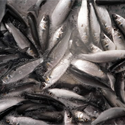
Every fall in Florida as the temperatures begin to cool the fishing gets red hot. The falling temperatures trigger the natural instincts in mullet to head south along the Atlantic coast.
**Content:** Every fall, one of Florida’s most exciting shore-fishing events begins along the Atlantic coast. Thousands upon thousands of mullet gather into dense schools and begin moving through Florida’s coastal waters. Behind them come some of the state’s most sought-after predators: **snook, tarpon, [redfish](https://www.floridashorefishing.com/how-to-catch-redfish), jack crevalle, sharks, Spanish mackerel, bluefish and more**. This is the **Florida mullet run**. For shore anglers, it can produce some of the most spectacular fishing of the year. You might see mullet spraying from the surface as tarpon crash through a school, snook feeding in the wash only a few feet from dry sand, or jacks pushing bait against a jetty. The best part is that you don’t need a boat to participate. Beaches, piers, bridges, jetties and inlets can all put you directly in the path of migrating mullet and the predators following them. The original Florida Shore Fishing guide described the run as beginning as temperatures fall from late summer into fall, with schools moving south and predators concentrating around them. That basic pattern remains the foundation of the fishery. The challenge isn’t convincing fish to eat during the mullet run. It’s figuring out **where the bait is, where the predators are positioned around it, and how to make your bait stand out among thousands of real mullet.** Here’s how. ## What Is the Florida Mullet Run? The Florida mullet run is a seasonal migration associated with mullet gathering into large schools and moving out of estuarine and coastal habitats toward spawning areas. Striped mullet (*Mugil cephalus*) are particularly important to this event. These fish spend much of their lives in Florida’s estuaries, rivers, lagoons, canals, bays and coastal waters. As fall arrives, adult striped mullet form large schools and eventually migrate offshore to spawn. FWC describes adult striped mullet as migrating offshore in large schools for spawning, while the Florida Museum notes that spawning migrations occur during autumn and winter. But anglers aren’t necessarily interested in catching the mullet themselves. We’re interested in what follows them. Mullet are an important prey species for many Florida gamefish. FWC specifically identifies species including **redfish, snook, tarpon, speckled trout, billfish and sharks** as predators of striped mullet. Put thousands of those baitfish together in a relatively confined area and you’ve essentially created a moving buffet. Predators know it. So do Florida anglers. ## When Is the Florida Mullet Run? There isn’t a date you can circle on your calendar and confidently say: **“The mullet run starts today.”** It’s a natural migration, not a scheduled event. Generally, anglers begin watching for increased mullet activity in **late August and September**, with the migration progressing through fall. Timing differs according to location and conditions. FWC describes the spawning migration as occurring as temperatures drop during fall, when adult mullet leave freshwater and brackish environments, combine into increasingly large schools and migrate along the coast before eventually heading offshore. The important thing for Florida shore anglers is that the run **progresses geographically**. Mullet don’t simultaneously appear along every Florida beach. Schools generally work south along the Atlantic coast, so northeast Florida can experience significant movement before anglers farther south see peak concentrations. By September and October, the event can become especially important farther down Florida’s Atlantic coastline. South Florida’s prime activity often develops around late September into October, although conditions can shift the timing from year to year. That variability is important. Don’t plan your entire fishing season around one specific weekend because somebody told you that’s “mullet run weekend.” Instead, watch what’s actually happening. ## How to Know When the Mullet Run Has Reached Your Area The easiest indicator is obvious: **Look for mullet.** Large schools can sometimes be visible from the beach as dark patches moving through the water. You may also see individual fish jumping. But predators can make the signs impossible to miss. Watch for: - Mullet repeatedly jumping - Large dark schools moving parallel to shore - Baitfish showering from the water - Birds diving repeatedly - Tarpon rolling or exploding through bait - Sharks cutting through schools - Jacks aggressively crashing the surface - Snook feeding in the shore break - Sudden bursts of activity along otherwise quiet water Birds can be particularly useful. If you’re walking onto the beach and notice a group of birds intensely working one section of water, investigate before setting up somewhere else. The birds may be seeing bait you can’t see from ground level. Also pay attention to fishing reports **north of your location**. Because the Atlantic migration generally progresses southward, reports of major concentrations farther north can provide an early indication that increasing numbers of mullet may soon reach your area. ## Best Places to Fish the Florida Mullet Run From Shore One reason the mullet run is such a great event for Florida Shore Fishing readers is accessibility. A huge amount of the action occurs within casting distance of land. Some of the best places include: - Beaches - Inlets - Jetties - Piers - Bridges - Seawalls - Intracoastal shorelines Each offers different opportunities. ## Fishing the Mullet Run From the Beach The beach can provide some of the most visually exciting mullet-run fishing you’ll ever experience. Schools may move directly along the shoreline. Sometimes they’re far outside casting range. Other times they’re practically at your feet. This is why mobility matters. Instead of arriving at the beach, planting four sand spikes and waiting six hours, consider traveling light enough that you can move. If the bait is 300 yards down the beach, **go to the bait**. ### Watch the First Trough Don’t assume the action will be far offshore. Snook and other predators can push mullet directly into the first trough or shore break. A school traveling along the beach may suddenly become trapped between predators and shallow water. That’s exactly the situation you’re looking for. ### Look for Cuts and Sandbar Openings Cuts through offshore sandbars naturally concentrate moving water. They can also concentrate bait. If a school of mullet approaches one of these areas, predators may use the structure and current to their advantage. ### Watch Which Direction the School Is Moving Don’t chase directly behind the bait if you can avoid it. If you can determine the direction the school is traveling, move ahead of it. Get into position. Then wait. It’s much easier to intercept a school than continually run behind one. ## Fishing Florida Inlets During the Mullet Run If I had to choose one type of location for experiencing the mullet run from shore, **inlets would be near the top of the list**. Florida Shore Fishing’s original article emphasized inlets because they act as natural bottlenecks for moving bait. That’s still exactly why they’re so productive. An inlet connects two large bodies of water through a comparatively narrow opening. Add tidal current and structure, and you have an ideal ambush area. Mullet moving along the beach may encounter fish moving into or out of the inlet. Other schools may be traveling through the Intracoastal Waterway. Predators can take advantage of all of it. Look around: - Jetty tips - Current seams - Rock edges - Eddies - Channel edges - Beaches immediately beside the inlet - Protected water behind structure Pay particular attention to places where fast current meets slower water. Predators often don’t want to spend unnecessary energy fighting the strongest current. They can hold near the edge and attack bait carried past them. ## Fishing Jetties During the Mullet Run Jetties combine structure, current and access to deeper water. That makes them natural predator habitat even before the mullet arrive. Add thousands of migrating baitfish and things can get interesting quickly. Fish may attack mullet: - Along the rocks - At the end of the jetty - In current seams - On the protected side - Along the beach beside the jetty The biggest challenge is landing them. A good snook, tarpon, jack or shark can make short work of tackle that’s too light around rocks. Match your equipment to both your target species and the structure you’re fishing. ## Fishing Piers During the Mullet Run A Florida fishing pier gives you an elevated view that can be incredibly useful. Instead of trying to interpret the water from beach level, you may actually be able to watch schools approach. Don’t immediately run to the end of the pier. Mullet often travel close to the beach, and predators may follow them. That means the productive water could be underneath the middle of the pier—or even close to shore. Watch first. Fish second. If a school passes underneath you, pay attention to what’s happening around its perimeter and below it. ## Fish the Edges of Mullet Schools This may be the single most important mullet-run fishing tip. Imagine you’re a snook. There are 5,000 mullet swimming in front of you. Now imagine an angler casts another perfectly healthy mullet directly into the middle. Why would yours get eaten? It’s surrounded by thousands of identical meals. Instead, look at what predators naturally try to accomplish. They attack schools, create confusion and isolate vulnerable individuals. You want your bait to look like one of those vulnerable fish. **Fish the outside edge of the school.** The original FSF guide recommended exactly this approach: put your presentation around the outside rather than burying it among thousands of other mullet. That can dramatically increase your bait’s visibility. Look for: - The front edge - Back edge - Outside edge - Stragglers - Smaller groups separated from the main school - Injured bait - Areas where predators are actively attacking Think like a predator. You’re looking for the easiest meal, not necessarily the largest concentration of food. ## Best Live Bait for the Florida Mullet Run This one isn’t complicated. ### Mullet. When predators are surrounded by mullet and actively eating mullet, a live mullet is one of the most natural presentations you can use. Matching the dominant forage is a basic fishing principle, and during the mullet run the answer is swimming directly in front of you. ### How Big Should the Mullet Be? Match your bait reasonably closely to the mullet in the school. If predators are feeding on finger mullet, start with finger mullet. You don’t need an exact match, but throwing an enormous bait into a school of tiny mullet may not be your best first choice. Observe the bait before selecting yours. ## How to Rig Live Mullet A **free-lined mullet** can be extremely effective when current and conditions allow it. The setup can be remarkably simple: **Main line → leader → hook → mullet** That’s it. The lack of weight allows the bait to swim naturally. Mullet naturally spend considerable time near the surface, so eliminating unnecessary weight can allow the bait to swim more freely and create a more natural presentation. However, free-lining isn’t always practical. Strong current can carry your bait somewhere you don’t want it. Sometimes predators are underneath the school. Sometimes you need to get your bait deeper. In those situations, add enough weight to control the presentation. The rule is simple: **Don’t add weight because you think a fishing rig is supposed to have a sinker. Add weight because conditions require it.** ## What If You Can’t Reach the Edge of the School? This happens frequently from fixed structures. Imagine you’re standing on a pier. A gigantic school surrounds the entire structure. You physically can’t cast outside it. Now what? Go underneath. Predators don’t always attack horizontally from the sides. Some position themselves below the bait. Adding enough weight to drop your bait underneath the school can present it to predators waiting below. This can also produce surprise catches. Flounder, for example, may remain near the bottom beneath concentrations of baitfish. The original FSF article specifically recommended slowly working bottom presentations beneath large schools for this reason. ## Best Lures for the Florida Mullet Run Live bait isn’t required. Artificial lures can be extremely productive because predators are already primed to attack baitfish-shaped objects. Good choices include: ### Paddle Tails A 4- to 6-inch paddle tail is an excellent general-purpose mullet imitation. Choose a jighead appropriate for the water depth and current. You can retrieve it steadily, work it erratically or let it sink beneath a school. ### Topwater Plugs Few things are more exciting than a big fish exploding on a topwater lure during the mullet run. Topwaters can be particularly useful when predators are actively attacking bait near the surface. Walk-the-dog style plugs imitate an injured or disoriented baitfish extremely well. ### Hard-Bodied Mullet Imitations Suspending and swimming plugs can also be excellent. Again, try to roughly match the size of the available forage. ### Spoons Spoons provide casting distance, flash and durability. That last characteristic matters. A lot. ## Use Tough Lures The Florida mullet run can be brutal on fishing tackle. You’re not necessarily going to catch only the species you intended to target. Your lure could encounter: - [Snook](https://www.floridashorefishing.com/snook-fishing-how-to-catch-snook) - Tarpon - Jack crevalle - Bluefish - Spanish mackerel - Sharks - Barracuda Some have serious teeth. Others are simply powerful enough to destroy cheap hardware. Inspect: - Split rings - Hooks - Leaders - Knots - Lure bodies Check everything after a hard strike or landed fish. A slightly damaged leader may look fine until the next tarpon grabs your lure. ## How to Work Lures Around a Mullet School Don’t mindlessly throw directly into the center. Use the same strategy as live bait. **Work the perimeter.** Cast ahead of the school and retrieve across its path. Cast beyond an outside edge and bring the lure toward it. If predators are visibly attacking one particular side, concentrate there. Try to make your lure look different from the thousands of healthy mullet around it. An injured mullet might: - Fall behind - Swim erratically - Separate from the school - Pause - Drop deeper - Struggle near the surface Your lure can imitate those vulnerabilities. If a steady retrieve isn’t working, change it. Speed up. Slow down. Pause. Twitch. Let the lure fall. You’re trying to trigger the predator’s instinct to attack the easiest target. ## Best Fish to Catch During the Florida Mullet Run The species available depend heavily on where you’re fishing, but the diversity is part of what makes the run special. ### Snook Snook and mullet are a classic Florida combination. Look for snook around beaches, inlets, bridges, seawalls and other ambush points. Don’t overlook extremely shallow water. A large snook can feed surprisingly close to dry sand when mullet are pushed against the beach. ### Tarpon Seeing tarpon crash through a school of mullet is something every Florida angler should experience. They may roll quietly one minute and erupt violently the next. If you’re specifically targeting them, make sure your tackle is appropriate for both the fish and fishing location. ### Redfish Redfish also take advantage of the seasonal abundance. Look around inlets, beaches, channels, oyster areas and other productive inshore structure. ### Jack Crevalle Jacks can turn a calm school of mullet into complete chaos. They hit hard, fight even harder and aren’t particularly subtle about feeding. If you see water exploding as predators slash through bait, jacks are one possible culprit. ### Sharks Where there are huge numbers of baitfish, sharks won’t be far behind. Shore anglers may encounter multiple species depending on location. ### Spanish Mackerel and Bluefish Both can tear through schools of baitfish and readily attack fast-moving artificial lures. Their teeth also explain why you should inspect your leader frequently. ### Flounder While everyone is staring at the surface, don’t forget the bottom. A flounder doesn’t need to join the chaos above. It can simply wait underneath for an easy meal to come within range. ## Don’t Leave Fish to Find Fish The mullet run encourages anglers to chase action. That’s part of the fun. But don’t become so obsessed with finding the biggest school that you abandon productive water. If you’re getting bites, stay with them. A relatively small group of mullet surrounded by actively feeding predators can be much better than a gigantic school with little predator activity. Remember: **Mullet aren’t what you’re really searching for. You’re searching for predators feeding on mullet.** There’s a difference. ## Don’t Assume Every Mullet School Holds Feeding Fish This is another important lesson. You can find a massive school and see almost no predatory activity. That doesn’t necessarily mean predators aren’t present, but don’t automatically assume thousands of mullet guarantee instant hookups. Fish the perimeter. Try beneath the school. Experiment with live bait and lures. Watch carefully. If nothing happens and another active school is nearby, move. The run is dynamic. A quiet school can explode five minutes later—or continue swimming peacefully down the coast. ## Mullet Run Tackle for Shore Anglers There’s no single perfect setup because catching a 4-pound jack from an open beach is very different from trying to stop a big snook beside jetty rocks. For general shore fishing, you want tackle that gives you: - Good casting distance - Enough backbone for larger fish - Adequate line capacity - Reliable drag - Leader strength appropriate for the target - Strong hooks and terminal tackle If you’re around rocks, pilings or other heavy structure, consider stepping up your tackle. The fish may only need a few seconds to reach cover. On an open beach, you have more room to let a fish run. Match your equipment to the situation rather than simply fishing the heaviest tackle possible. ## Mullet Run Fishing From the Atlantic Coast vs. Gulf Coast The famous **Florida fall mullet run** is most closely associated with the Atlantic side and the dramatic southward movement of bait along the east coast. However, mullet are found throughout Florida. Florida’s Department of Agriculture notes that mullet occur in bays and estuaries along both coasts, and large schools move from shallow coastal waters toward deeper spawning areas during late fall. So Gulf Coast anglers certainly experience seasonal mullet movements and excellent predator fishing. But if you’re specifically talking about the iconic spectacle of giant schools moving down beaches while tarpon, snook, jacks and sharks attack them, **Florida’s Atlantic coast is the centerpiece of the traditional fall mullet-run fishery.** ## A Simple Mullet Run Game Plan If you’re heading out specifically to fish the run, don’t make things unnecessarily complicated. **1. Find the bait.** Look for jumping mullet, dark schools, birds and surface activity. **2. Determine which direction they’re moving.** Try to get ahead of them instead of chasing from behind. **3. Look for predators.** Exploding bait, rolling tarpon and sudden surface disturbances are obvious signs. **4. Fish the edge.** Don’t bury your bait or lure among thousands of mullet unless you have no alternative. **5. Match the forage.** Use live mullet or artificial lures with a similar profile. **6. Change depth if necessary.** If nothing attacks near the surface, fish beneath the school. **7. Stay mobile.** The fish are moving. You may need to move too. **8. Inspect your tackle.** Powerful fish and toothy predators can damage leaders, hooks and lures. **9. Don’t abandon active fish.** A smaller school producing strikes is better than a giant school doing nothing. **10. Be ready for anything.** That’s half the fun. ## Florida Mullet Regulations Always check the [FWC Mullet Regulations](https://myfwc.com/fishing/saltwater/recreational/mullet/) to be up to date. ## Why the Florida Mullet Run Is Worth Fishing Florida has excellent shore fishing throughout the year. But the mullet run is different. It’s visual. You aren’t simply casting into water and hoping something happens. You can watch the entire food chain unfold in front of you. A dark patch appears down the beach. The patch gets closer. Individual mullet begin jumping. Birds arrive. Suddenly the surface erupts. Mullet scatter in every direction while something much larger crashes through the middle. Your next cast might produce a snook. Or a jack. Or a tarpon. Or a shark. Sometimes nothing happens at all. Then 20 minutes later the ocean comes alive again. That’s the Florida mullet run. For shore anglers, the basic strategy is remarkably simple: **Find the mullet. Find the predators. Fish the edges.** Don’t worry about making the longest cast on the beach. Don’t automatically throw your bait into the densest portion of the school. And don’t stay anchored to one location when the entire fishery is moving past you. Follow the bait, watch what the predators are doing and adjust your presentation accordingly. When everything comes together, the Florida fall mullet run can deliver some of the most exciting fishing you’ll experience from shore all year. [](https://www.floridashorefishing.com/profile/dan/)##### Author: [Daniel Hagan](https://www.floridashorefishing.com/profile/dan/) Daniel Hagan has been fishing Florida’s shores since 1985 and writing about it for more than 20 years. As Managing Editor of FloridaShoreFishing.com, he shares firsthand experience covering surf and pier fishing, tackle, techniques, and Florida’s coastal species.  [Daniel Hagan](https://www.floridashorefishing.com/profile/dan) Daniel Hagan has been fishing Florida’s shores since 1985 and writing about it for more than 20 years. As Managing Editor of FloridaShoreFishing.com, he shares firsthand experience covering surf and pier fishing, tackle, techniques, and Florida’s coastal species. [](https://www.facebook.com/groups/FloridaShoreFishing "Facebook") **Categories:** Bait, Bait and Lures, Fishing Articles **Tags:** Live Bait, mullet, Seasonal --- ### [How to Catch Redfish in Florida: Shore Fishing Guide](https://www.floridashorefishing.com/how-to-catch-redfish) **Published:** October 19, 2014 **Author:** Daniel Hagan **Content:** Redfish are one of Florida’s most popular inshore game fish, and one of the great things about them is that you don’t need a boat to catch them. Redfish can come within casting distance of anglers fishing from beaches, bridges, causeways, seawalls, docks, inlets, mangrove shorelines and wadeable flats. They can be caught on live bait, dead bait and artificial lures, and they’re available somewhere in Florida throughout the year. But consistently catching redfish from shore requires more than casting a shrimp into the water and waiting. The biggest key is learning **where redfish are likely to feed**. Redfish are strongly associated with structure, current and food. Find oyster bars, grass edges, creek mouths, mangroves, bridge pilings, channels or beach troughs where moving water concentrates bait, and you’ve found the type of water worth fishing. This guide covers everything you need to get started catching redfish from Florida’s shores, including where to find them, the best bait and lures, rigs, tackle, tides and seasonal strategies. ## Redfish Quick Guide CategoryGood Starting Point**Best habitat**Oyster bars, grass edges, mangroves, creek mouths and channels**Best live bait**Shrimp, finger mullet, mud minnows and pinfish**Best dead bait**Fresh cut mullet, shrimp and crab**Best artificial lures**Paddletails, spoons, jigs and topwater plugs**Best bait rig**Fish-finder/sliding-sinker rig**Shallow-water rig**Free-lined bait or popping cork**Best tide**Moving water around productive structure**Where to shore fish**Bridges, flats, beaches, inlets, causeways and seawalls**Best strategy**Find structure + current + bait ## Where to Find Redfish in Florida One mistake new redfish anglers make is looking at a huge body of water and thinking the fish could be anywhere. Technically, they could. But they usually aren’t. Redfish have reasons for being where they are. They are looking for food while also taking advantage of depth, current and structure. That means you can eliminate a tremendous amount of unproductive water before making your first cast. ### Oyster Bars Oyster bars are classic Florida redfish habitat. Oysters create structure while also supporting crabs, shrimp, small fish and other food. But don’t automatically cast directly onto the oysters. Look for: - Ends of oyster bars - Deeper edges - Small channels - Pockets between oyster beds - Points - Current flowing around the structure A redfish can position itself beside the oysters and let the current deliver food. Oysters are extremely abrasive, so keep that in mind when choosing your leader and when fighting a fish. ### Grass Flats Shallow grass flats can be excellent redfish water. Instead of looking at an entire flat as one fishing spot, look for something different. Pay attention to: - Grass edges - Sandy potholes - Channels - Drop-offs - Points - Bait activity If you’re wading, move slowly. In shallow water, you may see redfish before you catch them. Watch for wakes, nervous water and occasionally tails breaking the surface. ### Creek Mouths Creek mouths become especially interesting when water is moving. Imagine a tidal creek draining a large area of flooded grass or mangroves. Shrimp, minnows and other prey moving with that water eventually have to pass through a relatively small opening. Redfish don’t need to chase food all over the flat if they can wait near that opening. Fish: - Both sides of the mouth - The center of the current - Current seams - The deeper water immediately outside the creek This is particularly useful on a falling tide. ### Mangrove Shorelines Mangroves provide excellent habitat for baitfish and crustaceans. But again, look for differences. A long, perfectly straight mangrove shoreline isn’t as interesting as: **Mangroves → point → small creek → pocket → deeper edge** Those transitions deserve your attention. Cast parallel to productive edges when possible rather than always casting directly toward shore. ### Bridges and Causeways Bridges are particularly valuable for shore anglers because they give you access to deeper water and strong current without a boat. Look for: - Pilings - Current breaks - Shadow lines - Channels - Drop-offs - Rock - Shoreline corners FSF’s current [bridge guide](https://www.floridashorefishing.com/the-florida-bridge-fishing-playbook-where-gamefish-hold-during-every-tide-stage) emphasizes exactly these kinds of structural and current features, and redfish are among the species regularly encountered around Florida bridges. One important lesson: **Don’t assume the deepest water is automatically the best water.** Fish the shoreline end of the bridge too. ### Docks and Seawalls Docks create shade, cover and vertical structure. Try: - Ends of docks - Pilings - Deeper sides - Current-facing sides - Shadow lines With seawalls, look for something that interrupts an otherwise featureless wall: - Drain - Dock - Corner - Creek - Depth change - Current - Bait A small difference can create a feeding spot. ### Inlets Florida’s inlets can offer opportunities for much larger redfish. They also require more attention to current, tackle and safety. Look for: - Current seams - Eddies - Rocks - Bridge pilings - Channel edges - Bait moving through the inlet You may need more weight and heavier tackle than you’d use on a shallow grass flat. ### Beaches Redfish also travel Florida’s beaches. Pay attention to: - Troughs - Cuts - Holes - Inlets - Points - Bait schools This is where your broader [**Florida Surf Fishing**](https://www.floridashorefishing.com/basic-surf-fishing-techniques) strategy becomes useful. [FSF’s Surf Fishing guide](https://www.floridashorefishing.com/basic-surf-fishing-techniques) emphasizes finding troughs, sandbars, cuts and current rather than simply making the longest possible cast. That same principle applies when you’re looking for redfish in the surf. ## Look for Signs of Feeding Redfish Sometimes the water tells you where to fish. Pay attention to: ### Mullet Mullet activity doesn’t guarantee redfish. But active bait is generally much more interesting than lifeless water. If mullet are concentrated around a point, creek mouth or grass edge, investigate it. ### Nervous Water Shallow fish can create visible disturbances as they move. Watch for water moving differently from the surrounding surface. ### Wakes A redfish traveling through shallow water can push a noticeable wake. Don’t cast directly onto the fish. Try to anticipate where it’s going and place the lure ahead of it. ### Tailing Fish Redfish feeding nose-down in shallow water can occasionally expose their tails. This is one of the classic signs of feeding redfish. ### Mud A patch of suddenly disturbed bottom can sometimes indicate fish feeding in shallow water. ### Birds Working birds may reveal bait. Don’t only look at the birds themselves. Ask: **Why is the bait concentrated there?** There may be current or structure underneath that’s also attracting redfish. ## Best Bait for Redfish Redfish eat a wide variety of prey, which gives Florida shore anglers plenty of options. If you’re just getting started, you don’t need ten different baits. Start with a few proven choices. ## Live Shrimp Live shrimp are one of Florida’s most versatile inshore baits. They’re widely available and can catch redfish along with trout, snook, black drum, sheepshead, snapper and numerous other species. You can fish a live shrimp: - Free-lined - Under a popping cork - On a jig head - On a sliding-sinker rig - Near bridge structure - Along mangroves - Around oyster bars FSF’s existing [shrimp guide](https://www.floridashorefishing.com/live-or-frozen-shrimp-for-bait) also identifies live shrimp as particularly useful when targeting sportfish such as redfish. ### Finger Mullet Finger mullet are another outstanding redfish bait. When mullet are naturally abundant, they’re especially worth trying. You can: - Free-line them - Fish them under a float - Put them on a fish-finder rig - Fish them near creek mouths - Drift them around bridges - Present them along channels If you see redfish actively working around schools of mullet, matching the available forage is an obvious place to start. ### [Mud Minnows](https://www.floridashorefishing.com/mud-minnows) Mud minnows are sometimes overlooked, but they are extremely useful shore-fishing baits. They’re hardy, stay alive well and naturally occur around many of the environments where you’ll find redfish. FSF’s complete mud-minnow guide recommends fishing them for redfish around oyster bars, mangrove edges, creek mouths, grass edges, drop-offs and bridge structure. That’s almost a checklist of prime shore-accessible redfish habitat. ### Pinfish Small pinfish can work well around: - Bridges - Channels - Docks - Deeper grass - Inlets Match the size of the bait and hook to the redfish you’re targeting. ### Cut Mullet Don’t overlook dead bait. Fresh cut mullet has several advantages for shore fishermen. It: - Produces plenty of scent - Stays in the strike zone - Doesn’t require an aerated bait bucket - Works well on bottom - Can attract fish traveling through an area It’s particularly useful when fishing channels, bridges, inlets and beaches where you’re waiting for fish to move through. ### Crab Crab is another natural redfish food. It’s worth considering around oyster areas, channels, passes and inlets, especially when targeting larger fish. ## Best Artificial Lures for Redfish Live bait is excellent, but artificials have one major advantage: **You can cover water.** Instead of waiting for a redfish to find you, you can actively search for fish. ### Paddletail Soft Plastics If I had to choose one versatile artificial for searching Florida redfish water, a paddletail would be high on the list. It can be worked: - Across grass - Through sandy potholes - Along mangroves - Around oyster edges - Through creek mouths - Beside bridge structure - Across beach troughs Adjust the jig-head weight to the water. You don’t need a heavy jig head in two feet of calm water just because that’s what is tied on your rod. ### Soft-Plastic Jigs Jigs allow you to control depth very effectively. Try different retrieves. A steady swimming retrieve might work one day. Another day the fish may want the lure moving slowly near bottom. Don’t change lure color five times before experimenting with **depth and speed**. ### Spoons Weedless spoons are excellent search baits. They: - Cast well - Cover water quickly - Produce flash - Produce vibration - Can work over relatively shallow grass They’re particularly useful when exposed-hook soft plastics continually collect vegetation. ### Topwater Plugs A redfish hitting a topwater is hard to beat. Topwaters can be effective over shallow flats and along shorelines when fish are actively feeding. They’re particularly appealing during lower-light periods. But don’t force the topwater bite. If fish are present and repeatedly refusing a surface presentation, change tactics. ## Best Tackle for Redfish There isn’t one perfect redfish rod and reel because Florida redfish fishing ranges from sight-fishing small fish on shallow flats to targeting large fish around inlets. For general shore fishing, however, you don’t need excessively heavy equipment. A practical setup is a saltwater spinning rod and reel capable of handling the fish while still casting shrimp, soft plastics and other relatively light presentations effectively. ### Rod A medium or medium-heavy spinning rod works for a broad range of inshore situations. Longer rods can help when fishing: - Beaches - Large causeways - Inlets - Areas requiring additional casting distance ### Reel Choose a saltwater-capable spinning reel with a smooth drag. The exact size should match your rod, line and the environment. Fishing an open flat and pulling a redfish away from bridge pilings are two very different jobs. ### Main Line Braided line is popular because of its: - Small diameter - Casting ability - Sensitivity - Strength Add a leader appropriate to water clarity and abrasion risk. ### Leader Leader requirements depend heavily on where you’re fishing. Open grass or sand presents relatively little abrasion. Oysters, bridge pilings and rocks are another story. Use enough leader strength to handle the environment without automatically reaching for unnecessarily heavy line. ## Best Redfish Rigs Your rig should match your bait and where you’re fishing. ## Fish-Finder Rig A simple fish-finder rig is extremely useful for shore-based redfish fishing. The basic arrangement is: **Main line** ↓ **Sliding sinker** ↓ **Bead** ↓ **Swivel** ↓ **Leader** ↓ **Circle hook** Use it with: - Live mullet - Cut mullet - Shrimp - Pinfish - Crab The sliding sinker allows the bait some freedom while keeping it near bottom. This is particularly useful on: - Beaches - Channels - Inlets - Bridges Use enough weight to maintain the presentation—not simply the heaviest sinker available. ## Free-Line Rig In shallow water, the best rig may barely be a rig at all. **Main line → leader → hook → bait** Free-lining allows a live shrimp, mud minnow or baitfish to move naturally. Try it around: - Mangrove edges - Grass flats - Docks - Creek mouths - Calm shorelines Add weight only when conditions require it. ## Popping Cork Rig A popping cork can be very effective over shallow grass and around edges. It: - Keeps the bait at a selected depth - Provides casting weight - Helps detect strikes - Creates sound A live shrimp below a popping cork is an excellent simple setup for someone learning to target redfish. ## Jig Head and Shrimp Another extremely simple combination: **Jig head + shrimp** This allows you to cast accurately and keep the bait near bottom while still moving it through productive water. ## Best Tide for Redfish Anglers frequently ask: > **Is incoming or outgoing tide better for redfish?** The more useful answer is: **Fish moving water around productive structure.** A tide doesn’t make an otherwise bad spot good. What matters is how the tide changes: - Depth - Current - Bait position - Access to shallow habitat - Redfish travel routes ## Incoming Tide As water rises, redfish gain access to areas they couldn’t reach at low tide. They may push toward: - Mangrove edges - Flooded grass - Shallow oyster structure - Flats - Shorelines For a shore angler, this can be particularly useful because rising water may bring fish **toward you**. ## High Tide High water opens a lot of habitat. That can be good. It can also spread fish out. Instead of simply fishing because the tide chart says high tide, look for something that concentrates fish: **point + current** **mangrove opening + bait** **oyster edge + depth** **dock + shade** ## Outgoing Tide Falling water can make creek mouths and drains particularly interesting. As water leaves shallow habitat, bait has fewer routes available. Look for: - Creek mouths - Drains - Cuts - Channel edges - Points A redfish can wait near one of those funnels rather than searching an entire flat. ## Low Tide Low tide is useful even when you aren’t catching fish. It reveals the bottom. Take advantage of it. Look for: - Oyster bars - Channels - Sandy potholes - Grass edges - Holes - Drop-offs Remember those features. When the water comes back, you’ll know what’s underneath the surface. ## Best Time of Day for Redfish Early morning and evening are popular redfish periods, especially during warm weather. But don’t make the mistake of believing the clock matters more than everything else. A combination of: **good tide + active bait + productive structure** can be more important than whether it’s 7:00 a.m. or 2:00 p.m. During hot summer conditions, however, cooler periods can certainly make shallow-water fishing more comfortable and productive. ## Best Seasons for Redfish in Florida Redfish can be caught throughout the year in Florida. The trick is adjusting to seasonal changes rather than fishing exactly the same spot with exactly the same technique every month. ## Spring Spring brings warming water and increasing bait activity. Good areas can include: - Grass flats - Creek mouths - Oyster bars - Mangrove shorelines Artificial lures are useful because they allow you to cover water until you find active fish. ## Summer During Florida’s hottest months, think about: - Early mornings - Moving water - Deeper channels - Bridges - Shade - Areas with stronger tidal flow A shallow flat that’s productive shortly after sunrise may feel completely different during the hottest part of the afternoon. ## Fall Fall can be one of the most exciting periods for redfish. Pay attention to concentrations of mullet and other bait. Shore anglers should investigate: - Inlets - Beaches - Bridges - Creek mouths - Passes - Causeways This is also a time when larger redfish may become particularly important around nearshore and inlet environments. ## Winter Don’t stop fishing for redfish because it’s winter. Change your strategy. Fish may use: - Deeper areas - Muddy bottoms - Protected creeks - Oyster structure - Grass - Areas warmed by afternoon sun Slow down when conditions call for it. ## How to Catch Redfish From a Bridge Bridges deserve special attention because they give shore anglers access to fish that might otherwise require a boat. Start by identifying: - Current direction - Pilings - Eddies - Channel edge - Bait - Depth changes Then determine how your bait or lure needs to move through that structure. Don’t just drop a bait straight down and hope. Present it naturally with the current. And be ready when a redfish eats. Bridge fish have an immediate escape route: **the pilings.** You may need heavier tackle and more drag than you would on an open flat. ## How to Catch Redfish From the Beach Beach redfish require a slightly different strategy. Don’t look at the ocean as one giant fishing hole. Read the beach. Look for: - Troughs - Cuts - Holes - Points - Inlets - Bait schools Most importantly: **Don’t automatically cast over the fish.** FSF’s main Surf Fishing guide makes the same point for beach fishing generally: a shorter cast into the correct trough can outperform a long cast into unproductive water. When targeting redfish from the beach, fresh cut mullet, live baitfish and shrimp are all worth trying. Artificial anglers can cover water with spoons, jigs and paddletails. ## How to Catch Redfish From Flats and Shorelines Shallow-water fishing can be much more visual. Move slowly. Look for: - Wakes - Tails - Bait - Sandy potholes - Oyster - Grass edges - Current - Mullet If you see a fish, don’t throw your lure onto its head. Cast ahead of it. Let the fish encounter the presentation naturally. If you’re blind-casting, work systematically rather than repeatedly casting to the same spot. Fan-cast the area. Then move. ## A Simple Redfish Strategy for Beginners Redfish fishing can become extremely technical. It doesn’t have to start that way. If you’re new to Florida redfish fishing, try this: **1. Find good habitat.** Look for a public-access shoreline with grass, oyster, mangroves, a creek, bridge or channel. **2. Fish moving water.** Don’t obsess over finding the universally “best” tide. **3. Bring live shrimp.** They’re simple and effective. **4. Start with a popping cork or free-lined shrimp.** Match the presentation to depth. **5. Fish structure before open water.** **6. Look for bait and activity.** **7. Move if the area appears dead.** Once you start learning where redfish are positioned, begin experimenting with paddletails, spoons and other artificials. ## Common Redfish Fishing Mistakes ### Fishing Featureless Water A huge open flat may contain redfish. But a grass edge beside a sandy pothole gives you something specific to target. Look for differences. ### Ignoring Current Structure becomes much more valuable when current interacts with it. ### Casting Too Far This is particularly common on beaches, bridges and seawalls. Fish the nearby structure first. ### Using Too Much Weight Use enough weight to control the presentation. Nothing more. ### Making Your Rig Too Complicated A hook, leader and live shrimp can catch a redfish. Don’t add hardware unless it serves a purpose. ### Staying in Dead Water If you’re fishing artificials and haven’t seen bait, wakes, birds, strikes or other activity, consider moving. ### Obsessing Over Lure Color Before changing from pearl to slightly-different-pearl, ask: **Am I fishing where the redfish are?** Then consider: **Am I fishing at the correct depth?** **Am I retrieving too quickly?** Those questions can matter far more. ## Florida Redfish Regulations Always verify current redfish regulations before fishing. Florida redfish regulations can vary by management region, including differences in harvest rules and vessel limits. Don’t rely on an old article—including this one—for your final regulatory decision. Check the **current Florida Fish and Wildlife Conservation Commission red drum regulations** for the exact region where you’ll be fishing. ## The Three Things That Catch Redfish If you remember nothing else from this guide, remember: ### Structure Oysters, grass, mangroves, pilings, channels, troughs and creek mouths give redfish places to feed. ### Current Moving water transports bait and creates feeding opportunities. ### Food Shrimp, mullet, minnows, crabs and other forage give redfish a reason to be there. Put all three together: **STRUCTURE + CURRENT + FOOD** and you’ve found the kind of place worth fishing. That’s the real secret to catching more redfish from Florida’s shores. Instead of looking at an entire bay, beach or lagoon and wondering where to cast, start breaking it into smaller pieces. Find the structure. Figure out what the tide is doing to it. Look for bait. Then put your shrimp, mullet, jig, spoon or paddletail where a feeding redfish is likely to encounter it. That’s how you turn random casting into **redfish fishing**. [](https://www.floridashorefishing.com/profile/dan/)##### Author: [Daniel Hagan](https://www.floridashorefishing.com/profile/dan/) Daniel Hagan has been fishing Florida’s shores since 1985 and writing about it for more than 20 years. As Managing Editor of FloridaShoreFishing.com, he shares firsthand experience covering surf and pier fishing, tackle, techniques, and Florida’s coastal species.  [Daniel Hagan](https://www.floridashorefishing.com/profile/dan) Daniel Hagan has been fishing Florida’s shores since 1985 and writing about it for more than 20 years. As Managing Editor of FloridaShoreFishing.com, he shares firsthand experience covering surf and pier fishing, tackle, techniques, and Florida’s coastal species. [](https://www.facebook.com/groups/FloridaShoreFishing "Facebook") **Categories:** How To **Tags:** How To, Redfish --- ### [Keeping Shrimp Alive](https://www.floridashorefishing.com/keeping-shrimp-alive) **Published:** March 13, 2021 **Author:** Daniel Hagan **Content:** One of the absolute best baits for fishing in Florida waters is live shrimp. Live shrimp can be bought at most bait shops near the coast in Florida and are fairly affordable. The most difficult part of using live shrimp is keeping them alive throughout a fishing trip! There are three main factors that kill shrimp in bait buckets. Overcrowding, lack of oxygen and heat! **Overcrowding** Many anglers will buy a large amount of live shrimp to last them the entire day of fishing. They place them all in a small bucket only to find that within a few hours they are all dead. As with all living animals, shrimp excrete pollutants into the water and the higher concentration of shrimp, the higher and more toxic the concentration of pollutants becomes. To help avoid this it is best to keep large amount of shrimp in a large container or multiple small ones. A good rule of thumb is to keep no more than one dozen shrimp per gallon of container for any long period of time. If all other conditions are met, 50-60 shrimp can live almost all day in 5 gallons of water. **[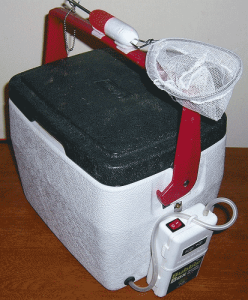](http://www.floridashorefishing.com/wp-content/uploads/2010/07/baitcooler1.png)Lack of Oxygen** Shrimp in a small container will quickly deplete the oxygen in their water and die shortly after. A good solution to this is either a bubbler or a water circulation pump. Both of these disturb that water surface quite a bit and cause the water to absorb more oxygen. The more shrimp that are in a container the more water movement and oxygen that is needed. Another simple solution for this is to use flow through bait buckets. These are the buckets that have holes in them and all the angler to lower them into the water so the bait always has a source for clean and aerated water. **Heat** Heat is a killer of all bait, and in when keeping live bait outside, this is always a concern. When trying to keep bait alive for long periods of time it is best to keep the container in the shade. One of the best bait containers is a modified cooler. A cooler that has just a small hole drilled in it for an airline to fit through. These types of bait containers help keep the water at a stable and cool temperature. Another good idea is to place a small frozen bottle of water in with the bait to keep the water cool. Do not put ice directly into the water as this will dilute the salt and possibly kill the shrimp! **More Live Shrimp Info** - [Live or Frozen Shrimp for Bait](http://www.floridashorefishing.com/live-or-frozen-shrimp-for-bait) [](https://www.floridashorefishing.com/profile/dan/)##### Author: [Daniel Hagan](https://www.floridashorefishing.com/profile/dan/) Daniel Hagan has been fishing Florida’s shores since 1985 and writing about it for more than 20 years. As Managing Editor of FloridaShoreFishing.com, he shares firsthand experience covering surf and pier fishing, tackle, techniques, and Florida’s coastal species.  [Daniel Hagan](https://www.floridashorefishing.com/profile/dan) Daniel Hagan has been fishing Florida’s shores since 1985 and writing about it for more than 20 years. As Managing Editor of FloridaShoreFishing.com, he shares firsthand experience covering surf and pier fishing, tackle, techniques, and Florida’s coastal species. [](https://www.facebook.com/groups/FloridaShoreFishing "Facebook") **Categories:** Bait, Bait and Lures, Featured, Fishing Articles, How To **Tags:** bait, How To, Live Bait, live shrimp, Shrimp --- ### [Surf Fishing for Whiting in Florida](https://www.floridashorefishing.com/surf-fishing-for-whiting) **Published:** May 16, 2014 **Author:** Daniel Hagan **Content:** Surf [fishing for whiting](https://www.floridashorefishing.com/how-to-catch-whiting) is one of the simplest and most productive ways to fish Florida’s beaches. You don’t need a boat, specialized equipment, or the ability to cast halfway to the horizon. In many cases, the whiting you’re looking for are feeding surprisingly close to shore. Whiting spend much of their time searching sandy areas for shrimp, sand fleas, marine worms, small crustaceans, and other bottom-dwelling prey. Florida’s beaches provide exactly that kind of habitat. The trick isn’t necessarily casting farther. It’s learning **where food is being concentrated by waves and current** and putting a small bait there. Once you understand the troughs, sandbars, cuts, wash, and moving water along a beach, finding whiting becomes much easier. This guide focuses specifically on **surf fishing for whiting in Florida**—where to look, how far to cast, what conditions to fish, and how to locate feeding fish after you arrive at the beach. ## Why Florida Beaches Are So Good for Whiting Whiting are built for feeding around sandy bottoms. Rather than depending heavily on reefs, rocks, docks, or other obvious structure, whiting commonly search areas where waves and current expose small creatures hiding in the sand. That’s what makes Florida’s beaches such productive whiting habitat. Every breaking wave moves water and sand. That movement can expose or dislodge: - Small shrimp - Sand fleas - Marine worms - Tiny crabs - Mollusks - Other small bottom-dwelling organisms Whiting patrol these feeding areas looking for opportunities. This is also why seemingly featureless stretches of beach aren’t necessarily featureless to the fish. A small change in depth, a break in a sandbar, or an area where water is moving differently can create a feeding zone. Learning to recognize those differences is one of the most useful skills you can develop as a Florida surf angler. ## Where Whiting Hold in the Surf When you’re **surf fishing for whiting**, don’t look at the entire ocean as one giant fishing spot. Break the beach into smaller pieces. You’re looking for places where depth, current, waves, and bottom structure make it easier for whiting to find food. ### The First Trough The first trough should be one of the first places you fish. A trough is a deeper channel running roughly parallel to the beach. Depending on the beach, the first trough may be only a short distance from dry sand. This is important because many anglers unknowingly cast completely over it. Water moving through the trough can carry shrimp, sand fleas, worms, and other small prey. Whiting can move through the channel looking for food without traveling far from shore. The trough isn’t always dramatically deeper than the surrounding bottom. Sometimes a relatively subtle change is enough to concentrate fish. ### The Edges of the Trough Don’t think only about the deepest part. The edges where shallow water drops into the trough can also be productive. Food disturbed from shallower sand may wash down the slope, creating an easy feeding opportunity. If you’re not getting bites in the center of the trough, move your bait slightly shallower or deeper. A difference of only a few yards can matter. ### Cuts Through Sandbars Look for breaks or cuts in an offshore sandbar. Water moving toward shore eventually has to move back out. Breaks in a sandbar can concentrate that movement. Moving water can also transport food. Whiting may position themselves near these areas and feed on whatever the current carries past them. A cut may appear as an area where waves break differently—or don’t break at all—compared with the surrounding water. ### The Wash Don’t ignore the turbulent water immediately along the beach. Waves constantly wash across the sand and then retreat. That action can uncover small prey. Whiting sometimes move into remarkably shallow water to take advantage of it. If you’ve ever seen sand fleas exposed as a wave retreats, you already understand why this area can attract feeding fish. ### Sandbar Edges The deeper water immediately before and after a sandbar is another area worth investigating. Whiting may move along these depth changes rather than sitting in one location. You don’t necessarily need to put your bait directly on top of the bar. Try fishing its edges. ### Current Current is one of the most important pieces of the puzzle. Look for areas where water is visibly moving differently from its surroundings. That doesn’t mean the strongest current is automatically best. Instead, you’re looking for **fishable moving water that may be carrying food**. If you can keep your bait on the bottom while current moves through an area, it’s worth trying. For a more complete explanation of troughs, sandbars, cuts, wave patterns, and other beach structure, see our **How to Read a Florida Beach** guide. ## Don’t Cast Over the Whiting One of the most common mistakes in surf fishing is assuming that a longer cast is always a better cast. It isn’t. There are certainly days when fish are feeding farther offshore, but whiting can also be surprisingly close to the beach. You may have fish feeding in the first trough while your bait sails completely over them. That’s why I don’t recommend beginning every trip with the longest cast you can possibly make. ### Start Close Make your first cast relatively close to shore. You’re trying to investigate the first trough and nearby wash. If you don’t get bites, cast a little farther. Continue working outward until you find activity. If you’re fishing multiple rods, make the process even easier by staggering your distances. For example: **Rod 1:** Close to shore **Rod 2:** Middle distance **Rod 3:** Farther out Now you’re searching three zones simultaneously. When one rod starts getting repeated bites, you have valuable information. Move another bait into that same general zone. ### Casting Distance Isn’t the Goal The goal is not to cast far. The goal is to put your bait where the whiting are feeding. Sometimes those are the same thing. Often they aren’t. An angler making an accurate 30-yard cast into a productive trough can easily outfish someone throwing 100 yards into relatively empty water. ## Best Surf Conditions for Whiting You don’t need a perfectly flat ocean to catch whiting. Some wave action can actually be beneficial because moving water disturbs the bottom and may expose the food whiting are searching for. The bigger question is whether you can effectively fish the conditions. ### Water Clarity Extremely dirty water can make fishing more difficult, particularly when heavy surf has stirred up large amounts of sand and debris. On the other hand, the water doesn’t need to be perfectly clear. A little color combined with manageable surf can still produce excellent fishing. Pay attention to how the water looks along different portions of the beach. Conditions can vary significantly even over relatively short distances. ### Wave Action Moderate wave action can create feeding opportunities. Breaking waves stir the bottom and move food around. Problems begin when the surf becomes strong enough that you can’t keep your bait where you want it. If your sinker immediately rolls down the beach after every cast, either adjust your tackle or find more protected water. ### Current Some current is useful. Too much current makes presentation difficult. The practical test is simple: **Can you keep your bait in a productive area long enough for a fish to find it?** If the answer is yes, the current is fishable. ### Wind Wind primarily matters because of what it does to the water and your ability to fish. Strong onshore wind can create rough surf, make casting difficult, and push additional debris toward the beach. A light or manageable wind isn’t necessarily a problem. Instead of judging the day solely by wind direction, look at the resulting surf conditions. ### Seaweed and Debris Heavy floating vegetation can shut down an otherwise promising stretch of beach. If every cast results in a large clump of seaweed collecting on your line, moving may be more productive than repeatedly cleaning your rig. Sometimes walking a few hundred yards—or changing beaches entirely—can put you in much cleaner water. ## Best Time of Day for Surf Fishing for Whiting Morning is an excellent time to fish Florida beaches, but that doesn’t mean whiting stop feeding once the sun gets higher. Early morning has several practical advantages. Temperatures are often more comfortable, beaches may be less crowded, and you can fish before swimmers and beach traffic increase. Evening can offer similar advantages. However, I wouldn’t skip a fishing trip simply because you can’t arrive at sunrise. Whiting can feed throughout the day. Beach conditions, tide, food availability, and the location of the fish can matter more than the number showing on the clock. If you can fish early, great. If you can’t, go when you can and concentrate on finding productive water. ## Best Tide for Surf Fishing for Whiting There isn’t one magical tide that guarantees whiting. What matters is how the tide affects the specific beach you’re fishing. Changing water levels alter trough depth, current, wave action, and access to feeding areas. A spot that looks unremarkable at one stage of the tide can become much more productive later. Moving water is generally worth paying attention to because it can help move food through the surf zone. Rather than automatically deciding that you must fish only high tide or only low tide, learn how different stages affect your beach. Our dedicated **Best Tide for Whiting** guide covers this topic in much greater detail. ## Best Whiting Surf Rig You don’t need complicated tackle for whiting. For most Florida beach fishing, a **two-hook double-drop rig** is an excellent starting point. A typical setup might include: - 10–20 lb main line - Small barrel swivel - 15–25 lb leader - \#2 to #1 circle hooks - Two dropper lines - 2–4 oz pyramid sinker Adjust your sinker according to the surf. The correct sinker is the lightest one that reliably keeps your bait where you want it. A standard pompano-style rig can also work extremely well for whiting, particularly if you downsize the hooks and bait. For the complete setup, hook sizes, leader choices, sinkers, and alternatives, see **Best Whiting Rig for Florida Surf Fishing**. ## Best Bait for Surf Fishing for Whiting Fresh shrimp is one of the most reliable whiting baits you can put on a hook. The key is keeping the bait relatively small. Whiting don’t have huge mouths, and a massive piece of shrimp can make it more difficult for them to take the hook. Other productive choices include: - Sand fleas - Frozen shrimp - Scented artificial bait - Clams - Small pieces of other natural bait Sand fleas are especially worth trying when they’re abundant on the beach you’re fishing. A two-hook rig lets you test different baits simultaneously. Put shrimp on one hook and a sand flea or scented bait on the other. Then let the fish make the decision for you. For bait sizes, hook placement, fresh versus frozen shrimp, sand fleas, and scented alternatives, see **Best Bait for Whiting in Florida**. ## How to Find Whiting When You Arrive at the Beach Instead of choosing a random spot, casting as far as possible, and waiting, use a simple search process. ### 1. Look at the Beach Before Fishing Spend a few minutes watching the water. Look for: - Troughs - Sandbars - Cuts - Changes in wave patterns - Moving water - Areas of cleaner water - Current seams - Wash that looks different from the surrounding beach You don’t need to understand everything you’re seeing. You’re simply identifying areas that deserve investigation. ### 2. Start Close Fish the first trough or wash before making a long cast. This is especially important when the beach has an obvious nearshore depression. Don’t assume the fish are offshore. ### 3. Fan-Cast Different Distances If close isn’t producing, move progressively farther out. You’re searching for a feeding zone. Multiple rods make this easier, but you can accomplish the same thing with one rod by changing casting distance after each soak. ### 4. Pay Attention to Every Bite A bite tells you more than simply whether a fish is hungry. It tells you that something is using that section of water. If several bites occur at roughly the same distance, that’s a clue. ### 5. Concentrate on the Productive Zone Once you begin catching whiting consistently, stop searching randomly. Put your bait back into that zone. Try to reproduce the casting distance and direction. ### 6. Move When Necessary Don’t become emotionally attached to a piece of sand. If you’ve covered multiple distances with good bait and aren’t getting activity, consider moving. Sometimes walking down the beach is all that’s required. Surf fishing is often a search game. You’re trying to find feeding fish rather than waiting indefinitely for feeding fish to find you. ## Florida Atlantic vs. Gulf Coast Whiting Whiting can be caught from beaches on both Florida’s Atlantic and Gulf coasts, but the beaches themselves can fish differently. Atlantic beaches frequently experience more pronounced surf, which can make troughs, sandbars, cuts, and wave patterns easier to recognize. Stronger surf and current may also require heavier sinkers to hold your rig in place. Many Gulf beaches can be considerably calmer. In calmer conditions, beach structure may appear less dramatic, and lighter tackle can sometimes be used effectively. But these are broad tendencies rather than rules. A calm Atlantic morning can be easier to fish than a windy Gulf afternoon. Local conditions should always determine how you approach the beach. The underlying strategy remains the same on either coast: **Find sandy bottom, identify moving water and depth changes, locate areas holding food, and search different casting distances until you find the fish.** ## Other Fish You’ll Catch While Targeting Whiting One of the enjoyable things about **Florida surf fishing for whiting** is that you never know exactly what will eat your bait. Shrimp and sand fleas aren’t exclusively whiting food. Many Florida species search the same surf zone for similar prey. Depending on your location and season, you may encounter: ### Pompano Pompano are probably the most obvious bonus catch. They frequently occupy the same sandy beach habitat and readily eat shrimp and sand fleas. That’s one reason pompano rigs work so well for whiting. ### Black Drum Black drum also search sandy areas for crustaceans and other bottom-dwelling prey. Smaller drum can readily take a whiting-sized bait. ### Redfish Redfish frequently move through beach troughs, cuts, and areas near inlets. A larger redfish on light whiting tackle can turn into an interesting fight very quickly. ### Croakers Whiting belong to the drum and croaker family, and other members of that family can show up while you’re bottom fishing. ### Bluefish Bluefish occasionally intercept baits intended for whiting. Their teeth can make short work of light leader, so don’t be surprised if a fish suddenly cuts you off. ### Spanish Mackerel When baitfish are abundant near the beach, Spanish mackerel may also be present. They’re generally better targeted with moving lures, but their presence is another reminder of how diverse Florida’s surf can be. ### Sharks and Rays Small sharks and rays may also pick up bottom baits. That possibility is another reason to avoid using tackle so light that you’re completely unprepared for anything larger than a whiting. ## Keep Moving Until You Find the Whiting Successful **surf fishing for whiting in Florida** has less to do with making heroic casts and more to do with understanding what is happening directly in front of you. Look for troughs. Watch the waves. Identify cuts and moving water. Pay attention to where the surf is disturbing the sand. Then start close. Fish several distances rather than automatically throwing as far as possible. When you get bites, remember exactly where they occurred and concentrate your effort there. Use a simple bottom rig with small hooks, keep your bait appropriately sized, and use enough sinker to hold the bottom. If nothing happens after you’ve thoroughly covered an area, move. Florida beaches are constantly changing, and so are the fish. Once you begin viewing the surf as a collection of troughs, bars, cuts, edges, and feeding zones instead of one giant body of water, finding whiting becomes much more systematic. That’s the real key to catching whiting from the beach: **Don’t worry about reaching the farthest water. Find the right water.** For more detailed information, continue with [**How to Catch Whiting**](https://www.floridashorefishing.com/how-to-catch-whiting), [**Best Whiting Rig for Florida Surf Fishing**](https://www.floridashorefishing.com/best-whiting-rig-for-florida-surf-fishing),[ **Best Bait for Whiting in Florida**](https://www.floridashorefishing.com/best-bait-for-whiting-in-florida), , [**How to Read a Florida Beach**](https://www.floridashorefishing.com/how-to-read-a-florida-beach-like-a-fish-finding-troughs-cuts-and-sandbars), and our complete [**Florida Surf Fishing**](https://www.floridashorefishing.com/basic-surf-fishing-techniques) guide. [](https://www.floridashorefishing.com/profile/dan/)##### Author: [Daniel Hagan](https://www.floridashorefishing.com/profile/dan/) Daniel Hagan has been fishing Florida’s shores since 1985 and writing about it for more than 20 years. As Managing Editor of FloridaShoreFishing.com, he shares firsthand experience covering surf and pier fishing, tackle, techniques, and Florida’s coastal species.  [Daniel Hagan](https://www.floridashorefishing.com/profile/dan) Daniel Hagan has been fishing Florida’s shores since 1985 and writing about it for more than 20 years. As Managing Editor of FloridaShoreFishing.com, he shares firsthand experience covering surf and pier fishing, tackle, techniques, and Florida’s coastal species. [](https://www.facebook.com/groups/FloridaShoreFishing "Facebook") **Categories:** Fishing Articles **Tags:** Beach, surf, Surf Fishing, Whiting --- ### [Best Bait for Whiting in Florida](https://www.floridashorefishing.com/best-bait-for-whiting-in-florida) **Published:** August 13, 2026 **Author:** Daniel Hagan **Content:** [Whiting](https://www.floridashorefishing.com/fish-profiles/whiting) are one of the most dependable fish you can catch from Florida’s beaches. They aren’t usually difficult to convince to eat, but choosing the right bait can make the difference between occasionally picking up a fish and catching whiting consistently. So, what is the **best bait for whiting in Florida?** For most situations, **fresh shrimp is the best all-around whiting bait**. It’s readily available, easy to use, and closely matches the small crustaceans whiting naturally feed on. Sand fleas are another excellent choice, particularly when they’re abundant in the surf. Scented artificial baits, clams, and combinations of natural and scented bait can also be very effective. The important thing is to remember how whiting feed. They have relatively small mouths and spend much of their time searching the bottom for small prey. You usually don’t need a giant bait. In fact, a small, fresh piece of shrimp presented naturally in the right part of the surf is often all it takes. ## What Is the Best Bait for Whiting? If you’re heading to a Florida beach specifically to [catch whiting](https://www.floridashorefishing.com/how-to-catch-whiting), here’s a good order of preference: 1. **Fresh shrimp** – Best overall choice 2. **Sand fleas** – Excellent natural surf bait 3. **Scented artificial bait** – Convenient and durable 4. **Clams** – Excellent where locally available 5. **Frozen shrimp** – Convenient backup when fresh bait isn’t available There isn’t one bait that wins every day. Whiting feed on small crustaceans, worms, and other organisms found along sandy bottoms. The best bait often resembles whatever they’re already finding in the surf. That’s why shrimp and sand fleas are so dependable. If you’re unsure what to buy before your trip, start with fresh shrimp. ## Fresh Shrimp — First Choice for Whiting Fresh shrimp is difficult to beat for whiting. It has several advantages for shore fishermen. Shrimp is easy to find at Florida bait shops and seafood markets, simple to cut into appropriately sized pieces, and attractive to many of the other fish you’re likely to encounter while targeting whiting. You also don’t need live shrimp. For whiting, **fresh dead shrimp can be excellent bait**. ### Fresh vs. Frozen Shrimp When both are available, I generally prefer fresh shrimp. Fresh shrimp usually has a firmer texture and strong natural scent. It also tends to remain on the hook better than shrimp that has been repeatedly frozen and thawed. That doesn’t mean frozen shrimp doesn’t work. Whiting will absolutely eat frozen shrimp, and keeping a bag in the freezer can be convenient when you decide to fish at the last minute. The biggest problem with frozen shrimp is texture. After thawing, some shrimp becomes soft and falls apart easily. In rough surf, that can mean losing your bait before a fish ever gets an opportunity to find it. For a more detailed comparison, see our guide to **Live or Frozen Shrimp for Bait**. ### Should You Peel Shrimp for Whiting? You can catch whiting with both peeled and shell-on shrimp. Removing some or all of the shell exposes more scent and creates a softer bait that small whiting can easily take. Leaving the shell on can help the bait remain attached to the hook longer. There is no reason to make this complicated. If the surf is calm and bait stays attached easily, try peeled pieces. If waves, current, or small bait-stealing fish are stripping your hook, leave more of the shell intact. ### How Much Shrimp Should You Put on the Hook? One of the most common mistakes is using too much. You generally don’t need an entire shrimp to catch a whiting. Cut the shrimp into small pieces appropriate for your hook. The bait should provide enough scent and food to attract the fish without creating a large chunk that a whiting struggles to get into its mouth. A small piece also leaves the hook point exposed, improving your chances of a solid hookup. ### How to Hook Shrimp for Whiting Thread the shrimp onto the hook so it is secure but don’t completely bury the hook point. With small pieces, run the hook through the bait once or twice. If the shrimp continually flies off during casting, you may be using pieces that are too soft or hooking them too lightly. Bait elastic can help in rough conditions, but with reasonably fresh shrimp and appropriately sized casts, it often isn’t necessary. ## Sand Fleas for Whiting Sand fleas are another excellent **whiting bait**, and they come with a major advantage: They may already be living on the beach you’re fishing. Sand fleas, also called mole crabs, live in the swash zone where waves wash onto sandy beaches. They’re natural prey for several Florida surf species, including whiting and pompano. When you see sand fleas in the surf, they’re an obvious bait to try. ### Finding Sand Fleas Watch the wet sand as waves recede. In areas holding sand fleas, you may notice small V-shaped marks or disturbances as they bury themselves. A sand flea rake makes collecting them much easier. Scoop through the sand as the water recedes and check the rake for fleas. If you don’t have a rake, you can sometimes find them by digging carefully with your hands in productive areas. ### How to Hook a Sand Flea Use a relatively small sand flea that matches the size of your hook. Pass the hook carefully through the shell while keeping the hook point exposed. You want the flea attached firmly enough to survive the cast without destroying it. Because whiting have relatively small mouths, don’t assume the biggest sand flea in your bucket is automatically the best bait. ### When Do Sand Fleas Work Best? Sand fleas are particularly attractive when they’re naturally abundant on the beach. If fish are already feeding on them, presenting the same prey can be extremely effective. This is a perfect example of matching your bait to what’s naturally available. If you’re catching sand fleas at your feet, there’s a good chance the fish know they’re there too. ## Artificial and Scented Baits for Whiting Natural bait isn’t your only option. Scented artificial baits can catch plenty of whiting and are particularly useful when natural bait is difficult to obtain or won’t stay on the hook. Products designed to release fish-attracting scent into the water can be cut into small pieces and placed on a whiting rig much like natural bait. Their biggest advantage is durability. A scented strip can survive: - Long casts - Strong surf - Small bait stealers - Repeated soaking - Multiple bites That makes scented bait an excellent addition to a surf-fishing tackle box. I wouldn’t necessarily abandon fresh shrimp whenever it’s available. Instead, consider scented bait another tool. It can serve as your primary bait or supplement natural bait. ## How Big Should Whiting Bait Be? **Small.** This is one of the most important things to understand about catching whiting. Whiting have relatively small mouths and naturally consume small prey along the bottom. Putting an enormous piece of shrimp on the hook doesn’t necessarily make your presentation more attractive. It can actually make hooking the fish more difficult. Your bait should generally be just large enough to cover part of the hook while leaving the point exposed. Think bite-sized. Small pieces of shrimp, appropriately sized sand fleas, and short pieces of scented bait are usually better choices than oversized offerings. There is another advantage to using smaller pieces: one shrimp can produce several baits. When the whiting bite is good, that can stretch a small supply of fresh shrimp a surprisingly long way. ## Fresh vs. Frozen Bait for Whiting Both catch fish. If you’re deciding between the two, here’s the simple comparison: BaitAdvantagesDisadvantages**Fresh Shrimp**Excellent scent, good texture, reliable whiting baitMust be purchased or collected fresh**Frozen Shrimp**Convenient, easy to store, catches whitingCan become soft after thawing**Sand Fleas**Natural surf prey, can sometimes be collected freeAvailability varies**Scented Bait**Durable, convenient, stores easilyMay not always outperform fresh natural bait**Clams**Strong natural scent and excellent bottom baitCan be soft and difficult to keep on the hook If I had to choose only one, I’d take **fresh shrimp**. If I wanted to be prepared for almost anything, I’d bring fresh shrimp plus a package of durable scented bait. ## Best Bait Combinations for Whiting Sometimes the best approach isn’t choosing between natural and artificial bait. Use both. A small piece of fresh shrimp combined with a tiny piece of scented bait can give you natural scent and flavor while adding something durable that remains on the hook. This can be particularly helpful when small fish are stealing soft shrimp. You can also take advantage of a two-hook whiting or pompano rig to test different baits. For example: **Top hook:** Fresh shrimp **Bottom hook:** Sand flea Or: **Top hook:** Fresh shrimp **Bottom hook:** Scented bait Don’t immediately switch both hooks when one starts catching fish. Pay attention to the pattern. If five fish choose shrimp and none touch the sand flea, the fish are telling you something. Put shrimp on both hooks. Your rig can essentially become a small bait experiment every time you cast. ## Best Whiting Bait by Conditions Different conditions can favor different choices. Fishing ConditionFirst Bait to TryGeneral [Florida surf fishing](https://www.floridashorefishing.com/basic-surf-fishing-techniques)Fresh shrimpSand fleas abundant on beachSand fleasClear, calm waterSmall fresh shrimp piecesRough surfShell-on shrimp or durable scented baitHeavy bait stealersScented baitNo fresh bait available[Frozen shrimp](https://www.floridashorefishing.com/live-or-frozen-shrimp-for-bait)Bait keeps falling offScented bait or firmer shell-on shrimpUnsure what fish wantDifferent bait on each hook Don’t treat this table as a set of absolute rules. Whiting aren’t reading it. Use it as a starting point and adjust according to what happens after your bait enters the water. ## How to Rig Bait for Whiting Whiting spend most of their time feeding near the bottom, so your bait needs to reach their feeding zone. A simple two-hook bottom rig is one of the easiest ways to accomplish that. Use relatively small hooks and enough sinker weight to keep the rig where you want it without using unnecessary weight. Place a small piece of bait on each hook and cast into likely feeding water. That might be the first trough rather than somewhere near the horizon. For hook sizes, sinker selection, leader material, and the complete setup, see our **Best Whiting Rig** guide. The important point here is simple: **Keep your whiting bait near the bottom and make it easy for the fish to eat.** ## Frequently Asked Questions About Whiting Bait ### Can You Catch Whiting With Frozen Shrimp? Yes. **Frozen shrimp catches whiting.** Fresh shrimp is generally my first choice because of its texture and natural scent, but frozen shrimp is an excellent backup. Try to avoid repeatedly freezing and thawing it because the meat can become increasingly soft. ### Are Sand Fleas Good Bait for Whiting? Absolutely. Sand fleas are natural prey found in the same sandy surf environments where whiting feed. They’re particularly worth using when you can see or collect sand fleas on the beach you’re fishing. ### Does Scented Bait Catch Whiting? Yes. Scented artificial bait can be very effective for whiting, particularly when you need something durable. It can be fished alone or combined with natural bait. ### Can You Use Dead Shrimp for Whiting? Yes—and it doesn’t need to be alive to be excellent bait. Fresh dead shrimp is one of the **best baits for whiting in Florida**. For whiting, I’d generally prioritize freshness and good texture over whether the shrimp is still alive. ### Should I Peel Shrimp Before Using It for Whiting? You can. Peeled shrimp exposes more of the meat, while leaving the shell on makes the bait more durable. Try both. If your shrimp is disappearing from the hook too quickly, leaving some shell attached can help. ### What Size Bait Should I Use for Whiting? Use relatively small pieces. Whiting have small mouths and naturally feed on small prey. A bite-sized piece of shrimp or small sand flea is usually all you need. Make sure the hook point remains exposed. ### What Is the Best Bait for Bigger Whiting? Don’t automatically assume a bigger fish requires a bigger bait. Larger whiting still eat shrimp, sand fleas, worms, and other relatively small prey. Location can matter more than increasing bait size. Finding deeper troughs, areas with concentrated food, and locations holding better fish will usually be more productive than simply putting a giant piece of shrimp on your hook. ## What Should You Put on Your Hook for Whiting? If you’re standing in a Florida bait shop wondering what to buy, keep it simple: **Get fresh shrimp.** Cut it into small pieces, put it on appropriately sized hooks, keep your bait near the bottom, and fish the troughs where whiting naturally travel and feed. If sand fleas are abundant on the beach, try those too. And keep some scented bait in your tackle box as a durable backup. Whiting aren’t complicated feeders. They’re looking for small crustaceans and other prey along the sandy bottom. The closer your bait resembles the type of food they’re already searching for, the better your chances become. For most Florida shore anglers, that makes **fresh shrimp the best bait for whiting**, with sand fleas running a very close second. [](https://www.floridashorefishing.com/profile/dan/)##### Author: [Daniel Hagan](https://www.floridashorefishing.com/profile/dan/) Daniel Hagan has been fishing Florida’s shores since 1985 and writing about it for more than 20 years. As Managing Editor of FloridaShoreFishing.com, he shares firsthand experience covering surf and pier fishing, tackle, techniques, and Florida’s coastal species.  [Daniel Hagan](https://www.floridashorefishing.com/profile/dan) Daniel Hagan has been fishing Florida’s shores since 1985 and writing about it for more than 20 years. As Managing Editor of FloridaShoreFishing.com, he shares firsthand experience covering surf and pier fishing, tackle, techniques, and Florida’s coastal species. [](https://www.facebook.com/groups/FloridaShoreFishing "Facebook") **Categories:** Bait, Bait and Lures, Fishing Articles --- ### [Live or Frozen Shrimp for Bait](https://www.floridashorefishing.com/live-or-frozen-shrimp-for-bait) **Published:** March 6, 2021 **Author:** Daniel Hagan **Content:** Live or Frozen Shrimp for bait… That is the Question. The most popular bait used from Florida Shores is by far Shrimp and live Shrimp can be found in just about any bait shop throughout the state and frozen shrimp can be found in even more locations. But which option is better, frozen or live Shrimp? Related: [Keeping Shrimp Alive](http://www.floridashorefishing.com/keeping-shrimp-alive) ### Shrimp as Bait Shrimp inhabit most coastal and inshore areas around the state in large numbers. They are a primary food source for many fish, and a secondary food source for almost all others. Just about every fish that is not a vegetarian (such as mullet) will eat shrimp. Because Shrimp are so widely accepted as a meal by most fish, this makes them a popular bait choice. ### Frozen Shrimp The single most widely available bait in Florida is the Frozen Shrimp. Many bait shops bag and freeze any shrimp that die in their live shrimp holding tanks at a discounted price. Other frozen shrimp come strait from a distributor, these frozen shrimp range in quality from freshly frozen to shrimp that have been frozen and thawed many times (reducing the quality of the bait) *Pros of Frozen Shrimp* - *Widely available across the state* – Just about every bait shop across Florida sells frozen shrimp, as do many convince stores and even general stores near the coast. - *Ease of transport **–*** Frozen shrimp can be stored in a cooler, a tackle box, or just about any container. When ready to use, just thaw it out in water! - *Less costly than live shrimp* – The cost of frozen shrimp is quite a bit lower than the cost of live shrimp, in some cases less than half the cost. *Cons of Frozen Shrimp* - *No live action –* A frozen shrimp will not attract fish that are keying in on the movements of their prey. - *Attracts more bait thieves –* Frozen Shrimp tend to attract the attention of bait thieves more than live. These small fish can eat a frozen shrimp off a hook with out the angler knowing it was ever there. - *Comes of Hook Easier –* The freezing and thawing process softens the shell and meat of a shrimp, the softer shell and meat allows the bait to come off the hook easier. ### Live Shrimp The single bait that accounts for more game fish catches in Florida than any other is the Live Shrimp. Live shrimp can be found almost all quality bait shops that are near the coast line. They are of caught in the Gulf of Mexico and shipped across the state to be used as bait. *Pros of Live Shrimp* - *Available at most bait shops* – Most quality bait shops will carry live shrimp, very high quality shops will carry a variety in size. - *Motion and Noise attracts fish* – The movement and noise caused by a live shrimp on a hook is very attractive to fish and can draw them in for quite a distance. - *Not easily taken by small bait thieves* – While all shrimp, alive or frozen, are attractive to most fish, live shrimp are less likely to be taken by small bait thieves than frozen. *Cons of Live Shrimp* - *More Expensive than frozen shrimp* – Live Shrimp can cost up to 3 times what frozen shrimp costs. - *Can be difficult to keep alive* – Live Shrimp require temperature regulated and aerated buckets or flow through bait buckets kept in the water. [(Learn how to Keep Live Shrimp Alive here)](http://www.floridashorefishing.com/keeping-shrimp-alive) - *Availability can be limited in cold weather* – In the colder months bait shrimp will often dig under the sand and be hard to catch so their availability may be limited during cold spells. ### Considerations for Live or Frozen Shrimp Depending on the targeted fish, frozen shrimp can often times catch just as many fish as live shrimp. With species like [Whiting](https://www.floridashorefishing.com/how-to-catch-whiting) and [Black Drum](http://www.floridashorefishing.com/fish-profiles/blackdrum) peeled frozen shrimp can sometimes out perform live shrimp. When targeting sport fish, such as Redfish, Sea Trout or Snook live shrimp will always do better than frozen. The choice between live shrimp and frozen shrimp is one that should be made based on intended target species. If targeting sport fish live shrimp will out perform frozen shrimp, targeting any other fish frozen shrimp will do well, and sometimes even better than live shrimp! [](https://www.floridashorefishing.com/profile/dan/)##### Author: [Daniel Hagan](https://www.floridashorefishing.com/profile/dan/) Daniel Hagan has been fishing Florida’s shores since 1985 and writing about it for more than 20 years. As Managing Editor of FloridaShoreFishing.com, he shares firsthand experience covering surf and pier fishing, tackle, techniques, and Florida’s coastal species.  [Daniel Hagan](https://www.floridashorefishing.com/profile/dan) Daniel Hagan has been fishing Florida’s shores since 1985 and writing about it for more than 20 years. As Managing Editor of FloridaShoreFishing.com, he shares firsthand experience covering surf and pier fishing, tackle, techniques, and Florida’s coastal species. [](https://www.facebook.com/groups/FloridaShoreFishing "Facebook") **Categories:** Bait, Bait and Lures, Fishing Articles **Tags:** frozen bait, frozen shrimp, Live Bait, live shrimp, Shrimp --- ### [Top 10 Pier Fishing Tips](https://www.floridashorefishing.com/top-10-pier-fishing-tips) **Published:** April 4, 2021 **Author:** Daniel Hagan **Content:** Some of the best fishing to be found along Florida's coasts is found fishing from a pier. Florida offers a wide range of public and private piers all along its shores. Here are the top 10 pier fishing tips to help you enjoy your trip more and make that trip more productive! **Top 10 Pier Fishing tips** 1. **Don't always fish the deep end** 2. **Use a variety of bait to find what works best** 3. **Look for pot holes under the pier** 4. **Learn to read the water** 5. **Bring A Hoop Net (or fish at a pier that provides one)** 6. **Allow fish to untangle themselves** 7. **Find the through behind breaking waves** 8. **Use appropriate gear** 9. **On crowded days use enough weight to hold bottom to avoid tangles** 10. **Have Fun** **1. Don't always fish the deep end** The deepest end of the most piers almost always fills up with anglers first. These anglers believe that the deeper the water the more fish there will be and the bigger the fish will be. Experienced anglers have found that this is not always the case, and in fact, it is most frequently wrong. Many larger fish as well as large schools of fish congregate in the shallow water. The bait fish use the shallows to hide in, the larger fish are in search of a meal! **2. Use a variety of bait to find what works best** Most anglers that have fished more than a few times have a go-to bait. One that they have supreme confidence in and will use almost every time they go fishing. But, sometimes the fish do not want to eat that bait. A great tactic to use from a pier is to use a dropper rig with 2 hooks. One hook will have one type of bait, the other hook a different type. If the fish favor one bait of the other that day, this technique will help identify the bait they favor. **3. Look for pot holes under the pier** Most piers will have [surf](https://www.floridashorefishing.com/basic-surf-fishing-techniques) and/or tidal action underneath them. This water movement will often times cause pot holes to form in the sand/mud under the pier. These pot holes attract bait fish and predators alike. When looking down in clear water they are relatively easy to spot. In murky water look for areas of darker water, normally behind a pylon. Put the bait just up current of the hole and allow the current to take it into the pothole and hold on tight! **4. Learn to read the water** Watching the water under and around a pier will tell you a lot about what is happening bellow the surface. For example, if there is a boil of water in an area that is unexpected there is most likely some sort of sub-surface structure. Areas like that will quite frequently hold fish. When fishing is slow, take some time and just look at the water. Learn how it SHOULD move and take note of areas where it moves differently. The areas where the water moves differently than it should will almost always hold fish. **5. Bring a Hoop Net (or fish on pies that provide them)** Most piers found around the Florida coast are pretty high above the water. This height has its advantages (keeps the anglers dry and provides good visibility) but it also has one major disadvantage. Pulling a fish from the water to the pier with out a net can be difficult when the fish is either large or quite active on the way up. Many fish are lost trying to just pull the fish up because of broken lines or the fish simply pulling the hook. A hoop net solves this problem. Bring one with you if you are fishing a pier that does not have one. Also, be willing to help others land their fish using a hoop net and they will be more than happy to help you when its your turn! **6. Allow fish to untangle themselves** Many fish that are lost on piers are lost when a fish wraps its self around a pylon. The line will sometimes break from the friction, but many times it is broken by the angler who either looses patients or attempts to pull the fish away from the pylon. A trick that works many times is to simply allow the fish to untangle its self. When a fish wraps around a pylon simply feed line out to allow some slack. Put the pole in a secure area and let it sit for a few minutes. Often the fish will figure out how to reverse course and untangle its self. **7. Find the through behind breaking waves** Most beaches will have 2 areas where waves break. The first area is a sand bar, the second is close to the beach. More often than not there will be a through (a deeper area that runs parallel to the beach) behind the breaking waves. This area is a five star restaurant to larger fish, the surf kicks up forage and the depth provides cover! Locate these areas and fish are almost certain to be there. **8. Use appropriate gear** One of the most common mistakes witnessed on piers is anglers fishing with inappropriate gear. Using gear that is either to small or to large will lead to a lack in fishing productivity. For most piers a spinning real that can handle 20lb test line with rods of no longer than 7' will work great. The majority of fish that are caught from piers can be handled by this type of gear. When targeting larger fish, such as sharks or kingfish use much larger equipment. **9. Avoid tangles on crowded days** The single biggest complaint about fishing from piers is that they can get crowded and lines get tangled up. Some techniques to avoid getting tangled are to use enough weight to stop your bait from moving into others lines, fish strait down instead of casting far out (more fish are caught strait down anyway), avoid fishing by those that are obviously inexperienced and find a spot with fewer people. Tangles are a part of fishing from any structure or party boat that has multiple people on it, but using steps to avoid it and a calm demeanor when it does happen will make for a better fishing day for all involved. **10. Have fun** Fishing from a pier in Florida can be one of the most rewarding types of fishing. It is relaxing, can often be quite productive and there are many unique traits to pier fishing. Many piers have restaurants, gift shops, bars and other amenities on the pier. These amenities can make the slow fishing hours even more enjoyable than they normaly would be. On top of all that, most piers have a great view! So get out there and have fun fishing from one of Florida's Piers! [](https://www.floridashorefishing.com/wp-content/uploads/2015/02/Top-10-Pier-Fishing.png) [](https://www.floridashorefishing.com/wp-content/uploads/2018/06/Generic.jpg) [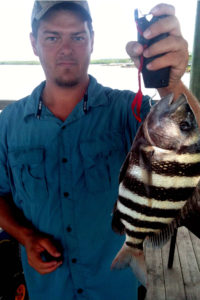](https://www.floridashorefishing.com/wp-content/uploads/2015/02/Sheepshead-1.jpg) [](https://www.floridashorefishing.com/profile/dan/)##### Author: [Daniel Hagan](https://www.floridashorefishing.com/profile/dan/) Daniel Hagan has been fishing Florida’s shores since 1985 and writing about it for more than 20 years. As Managing Editor of FloridaShoreFishing.com, he shares firsthand experience covering surf and pier fishing, tackle, techniques, and Florida’s coastal species.  [Daniel Hagan](https://www.floridashorefishing.com/profile/dan) Daniel Hagan has been fishing Florida’s shores since 1985 and writing about it for more than 20 years. As Managing Editor of FloridaShoreFishing.com, he shares firsthand experience covering surf and pier fishing, tackle, techniques, and Florida’s coastal species. [](https://www.facebook.com/groups/FloridaShoreFishing "Facebook") **Categories:** Fishing Articles **Tags:** Pier, pier fishing, structure, structure fishing --- ### [5 Pier Fishing Tips](https://www.floridashorefishing.com/5-pier-fishing-tips) **Published:** May 28, 2018 **Author:** Daniel Hagan **Content:** Piers can be one of the best places to fish in Florida but they can also be one of the most difficult. Here are 5 tips to help you have a more successful trip and avoid some of the headaches associated with pier fishing. 1. ***Don’t always fish at the end of the pier*** 2. ***Find the troughs behind surf breaks*** 3. ***Find the holes under the pier*** 4. ***Avoid crowded areas when possible*** 5. ***Pay close attention to the current and use it to your advantage*** **1. Don’t Always Fish the End of the Pier** On most piers across the state anglers tend to congregate at the end of the pier. Their theory is the deeper water will hold more and larger fish. This is not always the case, and in fact, more frequently than not, flawed logic. The majority of larger fish (with the exception of Kingfish) and a much larger number of fish are caught in the shallower waters around piers. Species such as Whiting and Redfish have been known to go so shallow that their tails and sometimes even their backs are exposed to the air. If the fishing is HOT at the end of the pier, migrate there, but do not only focus on the end. **2. Find the Troughs Behind Surf Breaks** Oftentimes some of the best fishing around piers will be in the deeper channels that are just behind a surf break, known as troughs. These troughs are where many fish move along the beach in search of food that is stirred up by the surf. Using just enough weight to hold bottom, cast into this zone and you are sure to find fish such as Redfish, Snook, Trout and Whiting. **3. Find the Holes Under the Pier** Wave action against pylons that hold a pier up cause odd currents. These currents cause deeper holes to form in some areas around the pylons. These hole can hold all kinds of fish, and fairly large fish as well. The fish use the holes as cover to ambush prey that is moved around the structure of the pier. Find these holes and drop live bait in them and success will come! **4. Avoid Crowded Areas When Possible** One of the headaches associated with pier fishing is the crowds and the tangled lines that can happen in these crowds. To avoid these headaches, avoid the crowds when possible. Using tips number 2 and 3 will help you find a good fishing spot on the pier that may not be crowded, or fished at all. **5. Pay Attention to the Current** Most days on piers there will be a current. Some days it will be barely detectable and some days it will be rolling like a fast flowing river. Paying attention to the current and using it to your advantage will lead to less headaches (tangled lines with other anglers) and more fish. When fishing for Whiting, Pompano, Spanish Mackerel and other popular [surf fish](https://www.floridashorefishing.com/basic-surf-fishing-techniques) that move through the current a lot, note the current and cast parallel to it with the current pulling your bait away from you (this will prevent the bait from coming back at you and tangling up). If fishing under the pier drop strait down on the side that will allow the current to pull the bait under the pier. No matter where you are fishing be aware of where other anglers have their baits and try not to cast in an area that the current will cause a tangle. [](https://www.floridashorefishing.com/profile/dan/)##### Author: [Daniel Hagan](https://www.floridashorefishing.com/profile/dan/) Daniel Hagan has been fishing Florida’s shores since 1985 and writing about it for more than 20 years. As Managing Editor of FloridaShoreFishing.com, he shares firsthand experience covering surf and pier fishing, tackle, techniques, and Florida’s coastal species.  [Daniel Hagan](https://www.floridashorefishing.com/profile/dan) Daniel Hagan has been fishing Florida’s shores since 1985 and writing about it for more than 20 years. As Managing Editor of FloridaShoreFishing.com, he shares firsthand experience covering surf and pier fishing, tackle, techniques, and Florida’s coastal species. [](https://www.facebook.com/groups/FloridaShoreFishing "Facebook") **Categories:** Fishing Articles **Tags:** lists, Pier, Tips --- ### [How to Catch Pompano](https://www.floridashorefishing.com/how-to-catch-pompano) **Published:** March 20, 2021 **Author:** Daniel Hagan **Content:** A favorite fish to catch for most [surf](https://www.floridashorefishing.com/basic-surf-fishing-techniques) and pier anglers across Florida is the Pompano. They are rated as one of the best tasting fish in the sea and one of the best fighters pound-for-pound. **Where to find Pompano** Pompano migrate along the entire coast of Florida. They can be found from the Atlantic border with Georgia to the Gulf of Mexico border with Alabama. Pompano primarily are found along the surf line. They are most frequently found in the trough between sandbars feeding on any crustaceans that are churned up by the breaking surf. **When to find Pompano** Pompano are highly migratory fish. They are on a constant search for the perfect water temperatures and travel north in the summer and south in the winter to find the water conditions that they favor. Pompano will migrate many miles to stay in the 78-82 degree water temperature range. Most parts of Florida will have a fall and a spring run of Pompano. Keep an eye on surf temperatures to know when they will be in your area. **Equipment for catching Pompano** While Pompano are one of the hardest fighting fish, pound for pound, found in Florida they do not get very large. Because of their relatively small size any surf or inshore gear will work just fine. When fishing in the surf longer rods and heavier lines can be required for longer casts, but when pier and dock fishing, a 10-15 pound class spinning combo will work very well. **How to Catch Pompano** Pompano almost exclusively eat crustaceans, with a rare bait fish as the exception. The most effective live bait is sand fleas (also known as mole crabs), followed by fresh clams and fresh pealed shrimp. The best place to catch Pompano is in the surf, between sand bars. Cast into the through (the area of deeper, calmer water between breaking waves) with a double dropper set up. Use a sand flea on one hook and clam or shrimp on the other. When the Pompano start to feed, pay attention to which bait is producing better and put it on both hooks. Some anglers have great success using Pompano Jigs. These are VERY popular and South West Florida and are used with great sucess from piers and docs. **Florida Pompano Regulations** - [Check with FWC for current Pompano Regulations](https://myfwc.com/fishing/saltwater/recreational/) **More Pompano Information** - [Pompano Species Profile](http://www.floridashorefishing.com/fish-profiles/pompano) - [How to Catch Pompano Infographic](http://www.floridashorefishing.com/how-to-catch-pompano-infographic) [](https://www.floridashorefishing.com/profile/dan/)##### Author: [Daniel Hagan](https://www.floridashorefishing.com/profile/dan/) Daniel Hagan has been fishing Florida’s shores since 1985 and writing about it for more than 20 years. As Managing Editor of FloridaShoreFishing.com, he shares firsthand experience covering surf and pier fishing, tackle, techniques, and Florida’s coastal species.  [Daniel Hagan](https://www.floridashorefishing.com/profile/dan) Daniel Hagan has been fishing Florida’s shores since 1985 and writing about it for more than 20 years. As Managing Editor of FloridaShoreFishing.com, he shares firsthand experience covering surf and pier fishing, tackle, techniques, and Florida’s coastal species. [](https://www.facebook.com/groups/FloridaShoreFishing "Facebook") **Categories:** Fishing Articles, How To **Tags:** How To, inshore, Pompano --- ### [Florida Surf Pompano Fishing](https://www.floridashorefishing.com/florida-surf-pompano-fishing) **Published:** April 29, 2023 **Author:** Daniel Hagan **Content:** Pompano fishing is a popular pastime in Florida, especially in the surf. Pompano is a species of fish that is prized for its firm, white meat and sweet flavor. These fish are commonly found in the surf zone along the beaches of Florida, where they feed on sand fleas and other small crustaceans. In this article, we will discuss the basics of catching pompano in the Florida surf, including the equipment, bait, and techniques used by experienced anglers. **Pompano Fishing Equipment** To catch pompano in the Florida surf, you will need a few key pieces of equipment. First and foremost, you will need a [surf fishing](https://www.floridashorefishing.com/basic-surf-fishing-techniques) rod. These are longer and more flexible than conventional fishing rods, allowing you to cast your bait farther out into the surf. A good surf fishing rod should be at least 8-10 feet long and have a fast action. You will also need a spinning reel that is designed for saltwater fishing. Look for a reel that has a high line capacity and a smooth drag system. The drag system is especially important when fishing for pompano, as these fish are known for their strong, fast runs. In addition to the rod and reel, you will need a few other pieces of gear. A fishing line with a test strength of 8-12 pounds is ideal for pompano fishing in the surf. You will also need a few weights, or sinkers, to help your bait sink down to the bottom where the pompano are feeding. Egg sinkers or pyramid sinkers are commonly used for surf fishing. **Bait to use when Fishing for Pompano in the Florida Surf** One of the keys to successful pompano fishing in the Florida surf is using the right bait. Sand fleas, or mole crabs, are the preferred bait for pompano. These small crustaceans are found in abundance in the sand along the beaches of Florida. They can be caught using a sand flea rake or purchased from a local bait shop. Another popular bait for pompano is shrimp. Fresh or frozen shrimp can be used, but fresh is always preferred. Look for shrimp that still have the head and shell intact, as these will have a stronger scent and attract more fish. Other baits that can be effective for pompano include clams, mussels, and squid. These baits are usually fished on a two-hook rig, with one hook baited with a small piece of the bait and the other hook left bare to increase the chances of a hook-up. **Pompano Fishing Techniques** Once you have your equipment and bait, it’s time to hit the surf and start fishing. Here are some tips and techniques that will help you catch more pompano in the Florida surf: ***Look for the right conditions*** Pompano tend to feed in the surf zone when the water is calm and clear. Look for areas where the waves are breaking gently and the water is not too rough. A rising tide is also ideal, as it brings in fresh bait and triggers the feeding activity of the pompano. ***Use the right rig*** A simple pompano rig is all you need to catch these fish in the surf. This rig consists of a leader line with two hooks and a weight at the bottom. The weight should be heavy enough to hold the bait in place in the surf, but not so heavy that it drags along the bottom and snags on rocks or other obstructions. ***Cast out and wait*** Once you have your rig set up and baited, cast it out into the surf and let it settle on the bottom. Pompano are bottom feeders, so you want your bait to be on or near the sand where the fish are feeding. Be patient and wait for the fish to find your bait. ***Use a slow retrieve*** When retrieving your bait, it’s important to use a slow and steady motion. Pompano are known for their delicate mouths, so it’s important to avoid jerking the line or pulling too hard. A slow retrieve will allow the fish to take the bait without feeling too much resistance. ***Pay attention to the tides*** As mentioned earlier, a rising tide can be ideal for catching pompano in the surf. But it’s also important to pay attention to the changing tides throughout the day. Pompano tend to feed during the incoming and outgoing tides, so try to time your fishing trip accordingly. ***Watch for signs of feeding activity*** Pompano are often seen jumping out of the water or chasing baitfish along the shoreline. These are signs of feeding activity, and a good indication that pompano are in the area. If you see this kind of activity, cast your bait in that direction and try to get in on the action. ***Move around*** If you’re not having any luck in one spot, don’t be afraid to move around and try a different location. Pompano can be found in different areas along the surf, so it’s important to explore different spots until you find the right one. **Final Tips** Here are some additional tips that will help you catch more pompano in the Florida surf: - Use a fluorocarbon leader line to increase your chances of hooking a pompano. These fish have excellent eyesight and can often spot a fishing line, so a clear leader can make all the difference. - Check your bait frequently to make sure it hasn’t been stolen by small fish or crabs. Pompano have small mouths, so you want to make sure your bait is still ntact and on the hook. - Keep your bait moving slightly to attract more fish. A small twitch or jiggle can make all the difference in getting the attention of a hungry pompano. - Stay aware of your surroundings and be respectful of other anglers on the beach. Surf fishing can be crowded at times, so it’s important to give other anglers plenty of space and not interfere with their fishing. **Conclusion** Catching pompano in the Florida surf can be a rewarding experience for anglers of all skill levels. With the right equipment, bait, and techniques, you can increase your chances of hooking one of these prized fish. Remember to be patient, pay attention to the conditions and tides, and keep your bait moving to attract more fish. With a little practice and persistence, you’ll be well on your way to becoming a successful pompano angler in the Florida surf. [](https://www.floridashorefishing.com/profile/dan/)##### Author: [Daniel Hagan](https://www.floridashorefishing.com/profile/dan/) Daniel Hagan has been fishing Florida’s shores since 1985 and writing about it for more than 20 years. As Managing Editor of FloridaShoreFishing.com, he shares firsthand experience covering surf and pier fishing, tackle, techniques, and Florida’s coastal species.  [Daniel Hagan](https://www.floridashorefishing.com/profile/dan) Daniel Hagan has been fishing Florida’s shores since 1985 and writing about it for more than 20 years. As Managing Editor of FloridaShoreFishing.com, he shares firsthand experience covering surf and pier fishing, tackle, techniques, and Florida’s coastal species. [](https://www.facebook.com/groups/FloridaShoreFishing "Facebook") **Categories:** Fishing Articles, How To **Tags:** Pompano --- ### [Florida Beach Fishing](https://www.floridashorefishing.com/florida-beach-fishing) **Published:** September 20, 2012 **Author:** Daniel Hagan **Content:** One of the most popular types of fishing in Florida is [fishing from the beach](https://www.floridashorefishing.com/basic-surf-fishing-techniques). Florida offers 1197 miles of shoreline with 663 miles of that shoreline being beach. While some beaches do not allow fishing (check the local regulations before going), most beaches can be quite productive. **Equipment** Most beach fishermen, also known as surf fishermen, prefer to use a very long rod with either a spinning reel or a bait caster. Rods with lengths of 10+ feet allow the beach fishermen to cast out beyond the breakers in most conditions. **Tackle rigging** There are two main rigs that are used most frequently when fishing from Florida beaches. The double dropper rig and the fish finder rig. The double dropper is a rig that consists of a weight at the bottom with two hooks about 2 feet apart attached above. The hooks are attached to a drop loop, and above the hooks is a barrel swivel. This rig is most frequently used with fresh dead bait and smaller baits like sand fleas. The fish finder rig is also known as the Carolina rig. It consists of a single hook on a 2-5 foot leader, attached to a barrel swivel with a glass bead and an egg sinker above the swivel. This rig is often used with live bait. **Bait and Lures** The single most popular bait in the Florida surf is shrimp. Frozen and live are both frequently used with great success being found with both ([Live Shrimp or Frozen Shrmp](http://www.floridashorefishing.com/live-or-frozen-shrimp-for-bait)). Any popular live minnows work well for sport fish, such as finger mullet, mud minnows and glass minnows. Popular lures to throw while fishing Florida beaches are Gotcha Plugs, Gold Spoons and Berkeley Gulp baits. The vast wide-open spaces of the 600+ miles of beach in Florida means there is plenty of room to cast. Work a lure up and down a promising section of beach for the best success. **Techniques** Experienced surf fishermen look at the surf and can tell where the best place to cast is. Many beaches will have 2 places where waves break, and right behind the breakers is the best place to put a bait or lure. When using live or frozen bait, it is best to have 2 poles set up. Cast one behind the first set of breakers and one behind the second. A pattern will emerge showing whch area will be the better place to cast. If one area is out fishing the other significantly, cast both poles to that area. Another consideration is structure. Fish often congregate around structure. Near shore reefs, pylons and rocks will attract fish seeking safety and are often great areas to fish. **Tips and Tricks** - Be sure to watch out for bathers and surfers. - Areas with many bathers/surfers should be avoided - Use only as much weight as needed to hold bottom - If fishing is slow, you are on a FLORIDA BEACH! ENJOY IT! - [Whiting are often caught on Florida beaches!](https://www.floridashorefishing.com/how-to-catch-whiting) [](https://www.floridashorefishing.com/profile/dan/)##### Author: [Daniel Hagan](https://www.floridashorefishing.com/profile/dan/) Daniel Hagan has been fishing Florida’s shores since 1985 and writing about it for more than 20 years. As Managing Editor of FloridaShoreFishing.com, he shares firsthand experience covering surf and pier fishing, tackle, techniques, and Florida’s coastal species.  [Daniel Hagan](https://www.floridashorefishing.com/profile/dan) Daniel Hagan has been fishing Florida’s shores since 1985 and writing about it for more than 20 years. As Managing Editor of FloridaShoreFishing.com, he shares firsthand experience covering surf and pier fishing, tackle, techniques, and Florida’s coastal species. [](https://www.facebook.com/groups/FloridaShoreFishing "Facebook") **Categories:** Fishing Articles **Tags:** Surf Fishing, Techniques --- ### [Florida Surf Fishing: The Complete Guide to Fishing Florida Beaches](https://www.floridashorefishing.com/basic-surf-fishing-techniques) **Published:** February 6, 2021 **Author:** Daniel Hagan **Content:** Florida has nearly everything a surf fisherman could ask for: miles of sandy beaches, warm coastal waters, year-round fishing opportunities, and an incredible variety of saltwater fish that can be caught without owning a boat. From pompano and whiting cruising the troughs to snook patrolling just a few feet from the sand, some of Florida’s best fishing can happen while you’re standing on the beach. That’s one of the great things about **Florida surf fishing**. You don’t need a boat, expensive electronics, or a complicated collection of tackle to get started. A surf rod, a reliable spinning reel, a few basic rigs, the right bait, and an understanding of how to [read the beach](https://www.floridashorefishing.com/how-to-read-a-florida-beach-like-a-fish-finding-troughs-cuts-and-sandbars) can put you in position to catch fish. But there’s a big difference between simply casting a bait into the ocean and consistently catching fish from the surf. Successful surf fishermen learn to read the water. They understand tides, sandbars, troughs, cuts, currents, bait movement, wind, and seasonal fish migrations. Instead of trying to cast as far into the ocean as possible, they learn to recognize the areas where fish are actually feeding. This guide is your starting point for **surf fishing in Florida**. Whether you’ve never fished from the beach before or you’re looking to improve your success, we’ll cover the fundamentals and point you toward more detailed Florida Shore Fishing guides that can help you master individual techniques and species. ## What Is Surf Fishing? Surf fishing is simply fishing from the shoreline into the ocean. Most Florida surf fishermen fish from sandy beaches, although similar techniques can sometimes be used around coastal points and areas near inlets. The traditional setup involves casting bait beyond or between breaking waves and placing the rod in a sand spike while waiting for a bite. But that’s only one way to surf fish. You can also walk the beach casting artificial lures for snook, Spanish mackerel, bluefish, jacks, and other predators. You can fish small pieces of shrimp close to shore for [whiting](https://www.floridashorefishing.com/how-to-catch-whiting). You can cast sand fleas and [pompano](https://www.floridashorefishing.com/how-to-catch-pompano) rigs into deeper troughs. You can throw plugs at schools of baitfish. There isn’t one correct way to fish the surf. The technique should depend on the fish you’re targeting and the conditions you’re facing. ## Why Florida Is Such a Great Place for Surf Fishing Florida’s long coastline gives shore anglers an enormous variety of opportunities. Atlantic beaches can have substantial waves, well-defined sandbars, strong currents, and deep troughs. Florida’s Gulf beaches can be considerably calmer, creating a different style of surf fishing where lighter tackle and shorter casts may sometimes be appropriate. Then there are seasonal differences. Pompano may move through an area during cooler periods. Whiting can provide action from the beach. Snook move along portions of Florida’s shoreline during warmer weather. Spanish mackerel and bluefish may appear when schools of bait move within casting distance. That’s why there is no single “best” Florida surf fishing setup. The more you understand the beach in front of you, the easier it becomes to choose the right tackle and technique. ## Learn to Read the Beach Before You Cast If there’s one skill that can transform your surf fishing, it’s learning how to read a beach. Beginners frequently walk onto the sand, make the longest cast they can, place the rod in a holder, and hope. Sometimes that works. But you can dramatically improve your odds by identifying the underwater structure that concentrates fish. The beach may look relatively featureless from shore, but underneath the waves there can be sandbars, troughs, holes, cuts, points, and channels. These features affect current and create natural travel routes and feeding areas for fish. ### Find the Troughs A trough is a deeper section of water running between the beach and a sandbar or between two sandbars. Troughs are extremely important to surf fishermen. Fish can use them as underwater highways, traveling parallel to the shoreline while looking for food. One of the biggest beginner mistakes is assuming the fish are always farther offshore. They aren’t. Sometimes the most productive trough is surprisingly close to the beach. That means a 30-yard cast into the right water can catch more fish than a 100-yard cast into the wrong water. ### Find the Sandbars Breaking waves can help reveal the location of sandbars. When incoming waves encounter shallower water over a bar, they often begin to rise and break. Watch where waves consistently break, and you’ll start developing a picture of what’s underneath the water. Pay particular attention to irregularities. A perfectly straight sandbar may be less interesting than one containing a cut or deeper opening. ### Look for Cuts Cuts through sandbars allow water to move between deeper and shallower areas. They can also funnel bait. Predatory fish take advantage of these natural feeding opportunities, which makes cuts excellent places to try. ### Watch the Current Water movement matters. Look for differences in surface texture, foam moving in a particular direction, areas where waves aren’t breaking normally, and other signs of moving water. Fish often position themselves along the edges of current rather than directly in its strongest flow. ### Look for Bait and Birds Sometimes the fish tell you exactly where to cast. Watch for: - Baitfish jumping from the water - Dark schools moving through the surf - Birds diving - Fish striking the surface - Pelicans repeatedly feeding in one area - Nervous water - Schools of mullet moving along the beach When predators push bait within casting distance, surf fishing can go from quiet to incredible very quickly. For a much deeper look at identifying productive water, read our guide to **How to Read a Florida Beach Like a Fish: Finding Troughs, Cuts, and Sandbars**. ## Scout at Low Tide One of the easiest ways to learn a beach is to visit during lower water. Features that are difficult to identify at high tide can become much more obvious. Look for depressions, sandbars, cuts, points, shells, and changes in beach contour. Take pictures or make mental notes. Then return when the tide rises. You’ll have a much better idea of what lies underneath the water. Remember that beaches constantly change. Storms, waves, currents, and seasonal weather can reshape sandbars and troughs, so don’t assume a productive feature will remain exactly the same forever. ## Best Tides for Florida Surf Fishing There is no tide that guarantees fish. However, moving water generally gives you more to work with than completely slack conditions. Tides influence water depth, current, bait movement, and where fish can comfortably feed. An incoming tide can bring fish closer to shore as water covers areas that were previously too shallow. An outgoing tide can concentrate moving water through cuts and channels. Instead of deciding that you will only fish high tide or only fish low tide, learn how your particular beach changes throughout the tidal cycle. Keep records. If you consistently catch fish at the same location during a particular stage of the tide, you’ve discovered a pattern worth remembering. ## Essential Florida Surf Fishing Gear You don’t need to fill your garage with equipment before your first trip. A relatively simple setup can catch a tremendous variety of fish. ### Surf Fishing Rod Long rods are popular because they help anglers cast heavier rigs and keep fishing line above some of the breaking waves. A rod somewhere around **9 to 12 feet** is a useful general range for traditional bait fishing from Florida beaches. That doesn’t mean shorter rods are useless. A lighter 7- or 8-foot spinning rod can be excellent for walking the beach throwing lures, targeting whiting close to shore, or fishing calm Gulf beaches. Match the rod to what you’re trying to accomplish. ### Spinning Reel Spinning reels are popular with surf fishermen because they’re easy to use and capable of making long casts. Choose a reel large enough to hold sufficient line while balancing comfortably with your rod. You don’t necessarily need the largest reel in the tackle shop. For general Florida surf fishing, a quality medium-to-large spinning reel is usually more versatile than an unnecessarily heavy setup. ### Fishing Line Both braid and monofilament can work. Braided line offers: - Excellent sensitivity - Small diameter - Good casting performance - Minimal stretch - High strength for its diameter Monofilament offers more stretch and is inexpensive and forgiving. Whichever you choose, inspect your line regularly. Sand, shells, structure, and repeated casting with heavy sinkers can eventually cause damage. ### Fluorocarbon Leader Fluorocarbon is an excellent leader material for surf fishing because it offers abrasion resistance and is less visible underwater than many conventional lines. Leader strength should match the target species and conditions. Don’t automatically use extremely heavy leader. Clear water and smaller fish may call for lighter tackle, while snook, bluefish, large drum, or abrasive conditions may require something heavier. ## Best Surf Fishing Rigs You could fill an entire tackle box with specialized surf rigs, but beginners can catch plenty of fish with two basic designs. ### Double-Drop or Pompano Rig This is one of the most useful rigs for Florida beach fishing. A sinker sits at the bottom while two hooks are positioned above it on separate droppers. This rig allows you to present two baits at slightly different positions. It’s particularly effective for species such as: - Pompano - Whiting - Croaker - Other bottom-feeding surf species You can also experiment with different baits on each hook. For example, put a sand flea on one hook and shrimp on the other. If fish repeatedly choose one, you’ve learned what they prefer that day. ### Fish Finder Rig A fish finder rig is an excellent choice when fishing larger natural baits. The sinker is positioned on the main line above a swivel, with a leader and hook extending beyond it. This arrangement allows the bait more freedom to move naturally. It can be particularly useful when fishing live or cut bait for larger species. ## Choosing the Right Surf Fishing Sinker Your sinker has an important job: keep your bait where you want it. Use too little weight and your rig may roll down the beach. Use too much and you’re carrying unnecessary tackle, reducing sensitivity, and potentially making your presentation less natural. The basic rule is simple: **Use enough weight to hold bottom under the conditions you’re fishing.** ### Pyramid Sinkers Pyramid sinkers are among the most common choices for surf fishing because their shape helps them dig into the sand. They’re useful when waves and current would otherwise move your rig. ### Egg Sinkers Egg sinkers are better suited to rigs where you want some movement. They’re commonly used with fish finder or Carolina-style presentations. ### Sputnik and Sinker Variations When current becomes stronger, specialized surf sinkers with wires or more aggressive holding designs can help anchor your bait. Conditions should determine the sinker—not habit. ## Best Baits for Florida Surf Fishing Natural bait remains one of the easiest and most productive ways to catch fish from Florida beaches. Some of the most useful options include: - Sand fleas - [Fresh shrimp](https://www.floridashorefishing.com/live-or-frozen-shrimp-for-bait) - Live shrimp - Clams - [Finger mullet](https://www.floridashorefishing.com/top-5-inshore-live-baits) - Cut mullet - Other locally available baitfish - Fish-attracting synthetic bait strips ### Sand Fleas Sand fleas are one of the classic Florida surf baits, particularly when targeting pompano. The best part? You may be able to collect them directly from the beach you’re fishing. ### Shrimp Shrimp catch an enormous variety of Florida saltwater fish. Fresh pieces of shrimp can be particularly effective for whiting and other bottom feeders. ### Mullet and Baitfish Live finger mullet or fresh cut mullet can attract larger predators. When schools of mullet are moving down the beach, matching the available forage can be especially effective. ## Using Artificial Lures from the Beach Surf fishing doesn’t have to mean putting bait in a rod holder. Artificial lures can be extremely productive when predators are actively feeding. Good choices include: - Spoons - Jigs - Paddle-tail soft plastics - Swimming plugs - Topwater lures - Metal casting lures Artificial lures also allow you to cover much more water. Instead of waiting for a fish to find your bait, you’re actively searching for feeding fish. This can be particularly effective for snook, Spanish mackerel, bluefish, jacks, and other aggressive species. ## How Far Should You Cast? This might be the most misunderstood question in surf fishing. The answer is: **As far as necessary to reach the fish.** Nothing more. Casting farther does not automatically produce more fish. If the fish are feeding in the first trough, launching your bait beyond them is counterproductive. A better strategy is to cover several distances. If you’re fishing multiple rods, place one relatively close, another at medium distance, and another farther out if conditions allow. When one distance starts producing consistently, adjust. You’re trying to locate fish—not win a casting competition. ## Accuracy Is More Important Than Distance Once you learn to identify troughs, cuts, and sandbars, casting accuracy becomes much more important. Your goal should be to put the bait into a specific zone. Practice your casting away from crowded beaches if necessary. Develop a smooth, controlled motion. Heavy surf sinkers can be dangerous, so always check behind you before casting and give other beachgoers plenty of space. ## Setting the Hook How you respond to a bite depends heavily on the hook you’re using. With traditional J-hooks, a controlled hookset may be appropriate. Circle hooks are different. When fishing circle hooks, avoid aggressively jerking the rod. Allow the fish to tighten the line, lift the rod smoothly, and reel. Circle hooks are designed to move toward the corner of the fish’s mouth as pressure increases. ## Landing Fish from the Surf Getting a fish through breaking waves can sometimes be harder than hooking it. Keep steady pressure on the fish and use the incoming waves to your advantage. Avoid allowing the line to go slack. If you’re planning to release the fish, handle it carefully. Wet your hands before touching it, minimize time out of the water, and avoid unnecessarily dragging it across dry sand. Have your pliers and other release tools ready before the fish reaches shore. ## Popular Fish You Can Catch from Florida Beaches One reason Florida surf fishing is so much fun is that you never know exactly what might pick up your bait. Depending on location and season, common catches can include: ### Pompano Pompano are one of Florida’s premier surf species. They’re fast, hard fighting, excellent on the table, and frequently targeted with sand fleas, shrimp, and pompano rigs. Read our **Florida Surf Pompano Fishing** guide for a detailed look at targeting them from the beach. ### Whiting Whiting are perfect for beginning surf fishermen. They often feed close to shore, readily eat shrimp and other natural baits, and are excellent table fare. See our complete [**How to Catch Whiting**](https://www.floridashorefishing.com/how-to-catch-whiting) guide for rigs, baits, locations, and techniques. ### Snook Many visitors are surprised to learn just how close snook can travel to Florida beaches. During the right seasons and conditions, they may cruise only a short distance from the sand. Instead of automatically making a long cast, look along the shoreline before stepping into the water. ### Redfish and Black Drum Both drum species can appear in the surf, particularly around areas offering the right bottom structure, food, and nearby inlets. ### Spanish Mackerel and Bluefish When baitfish are abundant, fast-moving predators can come within casting distance. This is when spoons and other fast-moving artificial lures can shine. ### Sharks Florida beaches also offer opportunities to encounter sharks. Targeting larger sharks requires specialized tackle, knowledge, safe handling practices, and awareness of applicable fishing regulations. It should be treated as a more advanced form of shore fishing rather than something a beginner casually attempts with ordinary surf gear. ## Atlantic Coast vs. Gulf Coast Surf Fishing Not every Florida beach fishes the same way. The Atlantic coast frequently offers more pronounced surf, stronger wave action, and obvious bars and troughs. Many Gulf beaches are calmer and shallower. That means techniques need to adapt. A heavy sinker and 12-foot rod that make perfect sense during rough Atlantic conditions might be excessive on a calm Gulf morning. Likewise, tackle that works beautifully on a protected Gulf beach may struggle to hold bottom in stronger Atlantic surf. Let the conditions determine your setup. ## Best Time of Day for Surf Fishing Early morning is popular for good reason. Beaches are often less crowded, temperatures are comfortable, and predatory fish may be actively feeding. Late afternoon and evening can also be productive. But don’t assume fish stop biting when the sun rises. Tide, current, weather, water clarity, bait movement, and season can all be more important than the number on the clock. The best time to fish is when several favorable conditions come together. ## Wind and Surf Conditions Wind can completely change a beach. Strong onshore wind can increase wave height, stir the water, and make holding bottom difficult. Offshore wind can flatten the surf and sometimes improve casting conditions. Neither is automatically good or bad. The important thing is adjusting. Carry multiple sinker sizes. Change casting distance. Move to a more protected beach when conditions become unfishable. And always prioritize safety. Florida weather can change quickly, particularly during summer. Leave the beach when thunderstorms or dangerous conditions approach. ## Don’t Forget Florida Fishing Regulations Before fishing, check current regulations for the species you’re likely to encounter. Size limits, bag limits, seasons, and other rules can change. Some species also have regional regulations. Never rely on an old photograph, social media post, or years-old fishing article when deciding whether a fish is legal to keep. Check current Florida Fish and Wildlife Conservation Commission regulations before your trip. ## Build a Simple Surf Fishing Setup If you’re completely new to surf fishing, don’t overcomplicate things. Start with: - One surf rod and spinning reel - Appropriate main line - Fluorocarbon leader - Circle hooks - Double-drop rigs - Fish finder rigs - Several sinker sizes - Fresh shrimp or sand fleas - Pliers - Bait knife - Sand spike - Cooler - Measuring device Learn to use that equipment well. You can add specialized gear as you discover what type of surf fishing you enjoy most. ## The Most Important Surf Fishing Lesson Your biggest advantage isn’t casting farther. It’s understanding the water. Learn to recognize where waves break. Find the trough. Look for cuts through the sandbar. Watch the current. Notice where baitfish gather. Pay attention to birds. Experiment with casting distance. Remember where you catch fish. After enough trips, the beach stops looking like one enormous body of water. You’ll begin seeing individual fishing spots within it. That’s when surf fishing really starts to make sense. ## Explore More Florida Surf Fishing Guides This page is your starting point for learning how to surf fish Florida’s beaches. As you build your skills, dive deeper into the topics that will help you catch more fish. **Reading the Beach:** Learn how to identify troughs, sandbars, cuts, current, and other areas that concentrate feeding fish in **How to Read a Florida Beach Like a Fish: Finding Troughs, Cuts, and Sandbars**. **Pompano Fishing:** Learn how to target one of Florida’s most popular beach species in our **Florida Surf Pompano Fishing** guide. **Whiting Fishing:** Discover the best baits, rigs, and techniques for catching these abundant surf fish in **How to Catch Whiting**. **Surf Fishing Gear:** Build the right beach setup with our **Surf Fishing Gear** guide. **Florida Beach Fishing:** Explore additional techniques and information in our guide to **Florida Beach Fishing**. As Florida Shore Fishing continues adding new surf fishing articles, this guide will serve as the central resource connecting you with our latest techniques, species guides, tackle advice, and beach-fishing strategies. ## Final Thoughts on Surf Fishing in Florida Florida surf fishing can be as simple or as technical as you want to make it. You can take a single rod, a handful of shrimp, and a few rigs to the beach and catch fish. Or you can spend years learning how tides, currents, weather, sandbars, bait migrations, seasons, and water temperatures influence different species. That’s part of what makes fishing from Florida’s beaches so rewarding. There’s always something new to learn. If you’re just starting out, concentrate on the fundamentals. Learn to read the beach. Use a simple rig. Choose fresh bait. Experiment with casting distance. Pay attention to tides and current. Watch what successful anglers are doing without crowding them. Most importantly, remember that the longest cast isn’t necessarily the best cast. The fish might be much closer than you think. Once you learn where fish travel and feed in the surf, you’ll spend less time blindly casting into the ocean and more time putting your bait where fish are actually likely to find it. And that’s the foundation of successful **Florida surf fishing**. ### Basic Surf Fishing Helpful Links - [Surf Fishing Gear](http://www.floridashorefishing.com/surf-fishing-gear) [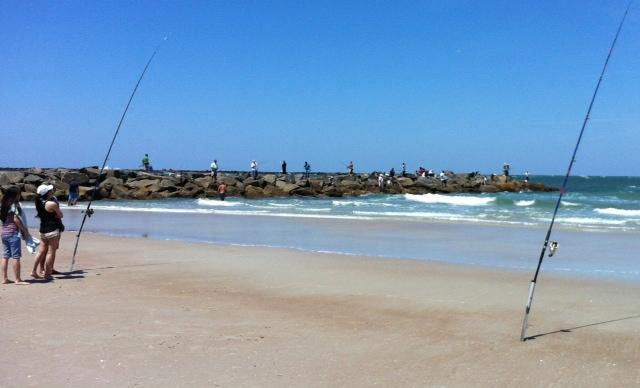](http://www.floridashorefishing.com/wp-content/uploads/2014/07/pompano2.png) [](https://www.floridashorefishing.com/profile/dan/)##### Author: [Daniel Hagan](https://www.floridashorefishing.com/profile/dan/) Daniel Hagan has been fishing Florida’s shores since 1985 and writing about it for more than 20 years. As Managing Editor of FloridaShoreFishing.com, he shares firsthand experience covering surf and pier fishing, tackle, techniques, and Florida’s coastal species.  [Daniel Hagan](https://www.floridashorefishing.com/profile/dan) Daniel Hagan has been fishing Florida’s shores since 1985 and writing about it for more than 20 years. As Managing Editor of FloridaShoreFishing.com, he shares firsthand experience covering surf and pier fishing, tackle, techniques, and Florida’s coastal species. [](https://www.facebook.com/groups/FloridaShoreFishing "Facebook") **Categories:** Fishing Articles **Tags:** basics, Beach, beach fishing, surf, Surf Fishing --- ### [Beer-Battered Fried Whiting: A Crispy Florida Fish Recipe](https://www.floridashorefishing.com/beer-battered-fried-whiting) **Published:** December 7, 2011 **Author:** Daniel Hagan **Content:** [Whiting](https://www.floridashorefishing.com/fish-profiles/whiting) are a favorite catch among Florida shore anglers for a good reason. They’re common along Florida’s beaches, relatively easy to clean, and have mild white meat that works especially well when fried. If you’ve brought home a few fresh whiting after a morning of surf fishing, **beer-battered fried whiting** is one of the simplest and tastiest ways to prepare your catch. The original Florida Shore Fishing recipe used just four basic ingredients: whiting fillets, pancake batter, lager-style beer, and vegetable oil. This updated version keeps that simple approach while providing better measurements, cooking temperatures, preparation instructions, and tips for producing a light, crispy coating. The result is golden-brown fried whiting with a crunchy exterior and tender, flaky fish inside. ## Why [Whiting](https://www.floridashorefishing.com/how-to-catch-whiting) Is Great for Frying Whiting has mild, delicate white meat without an overpowering fishy flavor. That makes it an excellent choice for anglers who enjoy freshly caught fish but prefer a lighter-tasting fillet. The relatively thin fillets are also well suited to frying because they cook quickly. A properly heated fryer can crisp the batter before the fish has a chance to dry out. Beer batter works particularly well because it creates a light coating around the fish rather than burying the delicate fillets underneath a thick breading. ## Beer-Battered Fried Whiting Recipe **Prep Time:** 15 minutes **Cook Time:** About 10–15 minutes **Servings:** 4 **Cooking Method:** Deep frying ### Ingredients - 1½ to 2 pounds boneless, skinless whiting fillets - 2 cups complete pancake mix - 1½ cups cold lager-style beer, approximately - ½ teaspoon salt - ½ teaspoon black pepper - ¼ teaspoon garlic powder, optional - Vegetable or canola oil for frying - Lemon wedges for serving - Tartar sauce for serving You can adjust the amount of batter depending on how many whiting you’ve brought home. ## Preparing the Whiting Start with cleaned, boneless, skinless whiting fillets. Check each fillet for any remaining bones and remove them if necessary. Rinse the fish only if needed, then thoroughly pat the fillets dry with paper towels. That last step is important. Excess moisture can prevent batter from adhering properly and can cause hot oil to splatter when the fish enters the fryer. If your whiting fillets are particularly large, cut them into smaller portions. Pieces of relatively similar size will cook more evenly. Lightly season the fish with salt and black pepper. ## How to Make the Beer Batter Place the pancake mix in a large mixing bowl. Add the salt, pepper, and optional garlic powder. Slowly pour cold beer into the pancake mix while gently stirring. You’re looking for a batter that’s thinner than traditional pancake batter but still thick enough to coat the fish. When you lift a spoon from the mixture, the batter should flow easily while leaving a thin coating behind. Don’t worry about making it perfectly smooth. Overmixing can result in a heavier coating. ### Why Use Cold Beer? Keeping the batter cold until it hits the hot oil helps produce a crisp exterior. A simple lager is an excellent choice because it provides carbonation without adding an overpowering flavor to the fish. You don’t need an expensive or strongly flavored beer. For this recipe, mild and simple works well. ## Heat the Frying Oil Pour enough vegetable or canola oil into a deep, heavy pot or fryer to allow the fish to cook without sitting against the bottom. Heat the oil to approximately **375°F**. The original Florida Shore Fishing recipe called for frying at 400°F. For this updated version, 375°F gives you a little more control while still producing a crisp coating. An inexpensive kitchen thermometer makes maintaining the correct temperature much easier. If the oil isn’t hot enough, the batter can absorb excessive oil and become greasy. If it’s too hot, the outside may brown before the fish finishes cooking. ## Batter the Whiting Once the oil is hot, you’re ready to fry. Working with one fillet at a time, dip the whiting completely into the beer batter. Allow excess batter to drip back into the bowl for a second or two. Carefully lower the battered fillet into the hot oil, placing it away from yourself to reduce the chance of being splashed. Don’t overcrowd the pot. Adding too many cold fillets at once causes the oil temperature to drop rapidly, which can result in soggy batter. Depending on the size of your fryer, two or three pieces at a time is usually plenty. ## How Long to Fry Whiting Fry the whiting until the batter becomes crisp and golden brown and the fish is cooked through. Because whiting fillets are relatively thin, this usually doesn’t take long. Expect approximately **3 to 5 minutes**, depending on the thickness of the fish and the temperature of your oil. Turn the fillets if necessary so both sides brown evenly. The USDA recommends cooking fish to an internal temperature of **145°F**. The flesh should also be opaque and separate easily with a fork. ## Drain the Fried Fish Properly Remove each piece using a slotted spoon or frying basket and allow excess oil to drain. The original recipe suggested placing the cooked fish on paper towels. That works, but placing freshly fried whiting on a wire rack set over a baking sheet can keep the bottom of the batter crispier. If you’re cooking several batches, keep finished pieces warm in a low oven while you fry the remaining fish. Don’t cover them tightly with foil. Trapped steam can quickly soften that crispy beer batter you just worked to create. ## What to Serve with Beer-Battered Whiting Serve your fried whiting immediately while it’s still hot and crispy. A squeeze of fresh lemon is hard to beat. Tartar sauce is the traditional accompaniment, but plenty of sides work well with fried Florida fish. Try serving your whiting with: - French fries - Hush puppies - Coleslaw - Cheese grits - Corn on the cob - Potato salad - Baked beans - Fresh garden salad You can also turn the fried fillets into excellent **fish sandwiches or fish tacos**. For a sandwich, place a fillet on a toasted bun with lettuce, tomato, pickles, and tartar sauce. For tacos, cut the fried whiting into smaller pieces and serve in warm tortillas with shredded cabbage, lime, and your favorite sauce. ## Tips for Perfect Fried Whiting **Dry the fish thoroughly.** Moisture makes it harder for the batter to stick. **Keep the batter cold.** Don’t prepare it an hour before cooking and leave it sitting beside the fryer. **Watch your oil temperature.** Maintaining approximately 375°F is one of the biggest factors in producing crispy rather than greasy fish. **Don’t overcrowd the fryer.** Cook in small batches so the oil remains hot. **Serve it quickly.** Fried fish is at its best within minutes of leaving the oil. **Use fresh whiting when possible.** One of the advantages of catching your own fish is being able to go from surf to dinner table while the fillets are exceptionally fresh. ## From the Florida Surf to the Dinner Table Whiting don’t have to be complicated to be delicious. That’s what made the original beer-battered whiting recipe so appealing: pancake batter, beer, fresh fish, and hot oil were essentially all you needed. This updated version keeps that simplicity while making the cooking process more predictable. If you’ve spent the morning catching whiting from a Florida beach, clean your catch, chill a lager, heat the oil, and give this recipe a try. A plate of crispy **beer-battered fried whiting** might become one of your favorite reasons to go surf fishing. [](https://www.floridashorefishing.com/profile/dan/)##### Author: [Daniel Hagan](https://www.floridashorefishing.com/profile/dan/) Daniel Hagan has been fishing Florida’s shores since 1985 and writing about it for more than 20 years. As Managing Editor of FloridaShoreFishing.com, he shares firsthand experience covering surf and pier fishing, tackle, techniques, and Florida’s coastal species.  [Daniel Hagan](https://www.floridashorefishing.com/profile/dan) Daniel Hagan has been fishing Florida’s shores since 1985 and writing about it for more than 20 years. As Managing Editor of FloridaShoreFishing.com, he shares firsthand experience covering surf and pier fishing, tackle, techniques, and Florida’s coastal species. [](https://www.facebook.com/groups/FloridaShoreFishing "Facebook") **Categories:** Fishing Articles **Tags:** recipies, Whiting --- ### [How to Catch Whiting - Page 2](https://www.floridashorefishing.com/how-to-catch-whiting-page-2) **Published:** March 16, 2014 **Author:** Daniel Hagan **Content:**  *Continued from: [How to Catch Whiting](http://www.floridashorefishing.com/how-to-catch-whiting)* The single best bait for Whiting is the Sand Flea. Sand Fleas are small (about the size of a large thumbnail to the size of a quarter) crabs that live in the sand along Florida’s beaches. Sand fleas can be either caught using a sand flea rake (watch for the tell tail V shaped ripples above the sand) or bought at select bait shops. Other popular baits include live shrimp, fresh peeled shrimp, cut clams and oysters. When using sand fleas insert the hook on their softer under belly and run it through the top shell, this will keep the bait on the hook as well as release a sent. Peeled shrimp, clams and oysters should be kept to a size small enough to fit in a whitings mouth and threaded on the hook to where the point and barb are just barely visible. When using live shrimp, thread the hook through its shell just behind the horn. While whiting have been known to take an artificial bait from time to time (primarily jigs and scented artificial shrimp) they are not frequently targeted with lures. **Fishing for Whiting – Presentation** When fishing for whiting from Florida’s shores it is best to look for areas that have two sets of breaking waves. The first set will break near the beach and the second a little further off shore. The second set is breaking on a sand bar (the sand bar moves in and off shore slowly because of currents and tides over days/weeks). Between these two areas is what is known as the trough, that is the single best place to fish for whiting. After locating and identifying a trough, set up a 2 hook dropper rig that has enough weight on the bottom to cast out to the trough and to prevent the waves and current from moving the bait out of the trough. If more than 3oz of weight is needed, a sputnik weight may be called for (a weight with small arms that grab the sand to stop it from moving). A popular presentation for whiting is to use two different types of bait until the most successful one is determined for the day. Place a sand flea on the bottom hook and a piece of pealed shrimp or clam on the top. The bait that catches the most whiting that day can then be used on both hooks to increase the amount of fish caught! [](https://www.floridashorefishing.com/profile/dan/)##### Author: [Daniel Hagan](https://www.floridashorefishing.com/profile/dan/) Daniel Hagan has been fishing Florida’s shores since 1985 and writing about it for more than 20 years. As Managing Editor of FloridaShoreFishing.com, he shares firsthand experience covering surf and pier fishing, tackle, techniques, and Florida’s coastal species.  [Daniel Hagan](https://www.floridashorefishing.com/profile/dan) Daniel Hagan has been fishing Florida’s shores since 1985 and writing about it for more than 20 years. As Managing Editor of FloridaShoreFishing.com, he shares firsthand experience covering surf and pier fishing, tackle, techniques, and Florida’s coastal species. [](https://www.facebook.com/groups/FloridaShoreFishing "Facebook") **Categories:** Fishing Articles --- ### [How to Catch Whiting – Fresh Shrimp](https://www.floridashorefishing.com/how-to-catch-whiting-fresh-shrimp) **Published:** April 8, 2013 **Author:** Daniel Hagan **Content:** One of the most abundant, and popular fish found in the Florida Surf is the Whiting. Whiting are popular not only because of their abundance but also because of their great flavor, and one of the best baits for catching whiting is Fresh Shrimp. **Fresh Shrimp for Whiting** Whiting, like all fish in the croaker family, have a great sense of smell (because of the barbells located on the bottom of their mouth). This sense of smell helps the whiting find its food in murky and churned up waters. One of the best baits to catch whiting is FRESH peeled shrimp. A fresh shrimp, one that was alive in the last few hours or frozen only hours after death, will released oils into the water. Peeling the shrimp before putting it on a hook will increase the amount of oils released into the water. These oils are very attractive to whiting and the fish will hone in on the cause of the smell and eat the tasty treat on the end of the line. **Tips** - Half a bait sized shrimp per hook works great - Use a 2-hook dropper rig with the sinker at the bottom - There a no limits on Whiting, but keep only what you will eat - [How to Catch Whiting in Florida](https://www.floridashorefishing.com/how-to-catch-whiting) [](https://www.floridashorefishing.com/profile/dan/)##### Author: [Daniel Hagan](https://www.floridashorefishing.com/profile/dan/) Daniel Hagan has been fishing Florida’s shores since 1985 and writing about it for more than 20 years. As Managing Editor of FloridaShoreFishing.com, he shares firsthand experience covering surf and pier fishing, tackle, techniques, and Florida’s coastal species.  [Daniel Hagan](https://www.floridashorefishing.com/profile/dan) Daniel Hagan has been fishing Florida’s shores since 1985 and writing about it for more than 20 years. As Managing Editor of FloridaShoreFishing.com, he shares firsthand experience covering surf and pier fishing, tackle, techniques, and Florida’s coastal species. [](https://www.facebook.com/groups/FloridaShoreFishing "Facebook") **Categories:** Fishing Articles **Tags:** bait, frozen shrimp, live shrimp, Whiting --- ### [How to Catch Black Drum](https://www.floridashorefishing.com/how-to-catch-black-drum-2) **Published:** July 1, 2014 **Author:** Daniel Hagan **Content:** A very close relative of the Redfish (also known as the Red Drum) is the Black Drum, *Pogonias Cromis*, a common and welcome catch from Florida’s Shores. **Where to Find Black Drum** [](http://www.floridashorefishing.com/wp-content/uploads/2014/06/blackdrum-1.png)The Black Drum’s range extends all the way from the Delaware bay down through Florida and all of the Gulf Coast. They are found everywhere in Florida from the surf line to the Inter Coastal Waterway, to back waters and flats. On the coast they are frequently found around piers. They tend to use the deeper holes caused by the piers pylons as staging points for feeding. They are also occasionally found free swimming the surf line, most frequently in the zone just behind the breaking waves. Inshore Black Drum tend to relate to deeper water that is near a constant food source. Deeper holes in the Inter Coastal Waterway close to the channel will frequently hold very large Black Drum. The largest of the species are often found around bridges feeding on the crabs that congregate there. Areas of soft bottom near oyster beds are prime inshore areas to catch Black Drum. **Equipment and Bait for Black Drum** The average Black Drum catch around Florida is around 20″. The average fish can be caught on just about any type of ocean rated rods and reels. A medium weight spinning combo, spooled with 20lb test monofiliment will do best for most Black Drum caught. If targeting the VERY large fish that are often caught around bridges stout ocean gear is required. The state record is near 96lbs and fish approaching this size are very strong and live near heavy cover. A conventional reel spooled with 40-50lb test will work well for the biggest Black Drum. [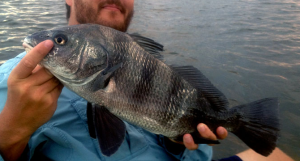](http://www.floridashorefishing.com/wp-content/uploads/2014/06/blackdrum-2.png)The most popular baits for catching Black Drum are: - Crabs (blue crab works the best) - Live Shrimp (dead and pealed also works well) - Clams - Oysters **How to Catch Black Drum** Black Drum are primarily bottom feeders. They have barbels on their chin (looks like a fleshy beard) that are used to help in scent detection. Because Black Drum are heavily reliant on scent anglers can use fairly heavy gear with out affecting the fishing. Once a potential Black Drum holding area is identified, using a Fish Finding Rig with a 3-4/0 circle hook on a 30lb fluorocarbon leader with just enough weight to hold bottom, put the bait in place. If using blue crab, quarter it, and remove the outer top shell. Any other bait use whole or peeled in the case of frozen shrimp. Black Drum are active feeders and when they take a bait they will often take off rather quickly, causing any non-secured pole to go strait into the water. Because of their size and muscular build, Black Drum are good fighters, and can have quite a bit of endurance. Black Drum do not normally have more than one or two runs except for the largest of them. **Regulations** [Check the current FWC Black Drum Regulations](https://myfwc.com/fishing/saltwater/recreational/black-drum/) [](https://www.floridashorefishing.com/profile/dan/)##### Author: [Daniel Hagan](https://www.floridashorefishing.com/profile/dan/) Daniel Hagan has been fishing Florida’s shores since 1985 and writing about it for more than 20 years. As Managing Editor of FloridaShoreFishing.com, he shares firsthand experience covering surf and pier fishing, tackle, techniques, and Florida’s coastal species.  [Daniel Hagan](https://www.floridashorefishing.com/profile/dan) Daniel Hagan has been fishing Florida’s shores since 1985 and writing about it for more than 20 years. As Managing Editor of FloridaShoreFishing.com, he shares firsthand experience covering surf and pier fishing, tackle, techniques, and Florida’s coastal species. [](https://www.facebook.com/groups/FloridaShoreFishing "Facebook") **Categories:** Fishing Articles --- ### [Florida Flounder Migrations](https://www.floridashorefishing.com/florida-flounder-migrations) **Published:** June 17, 2014 **Author:** Daniel Hagan **Content:** A very popular and quite tasty fish to catch from Florida Shores is the Flounder. In Florida there are 2 primary species of Flounder that are caught, the Southern Flounder and the Gulf Flounder. Both species can be caught state wide and the only real difference is that the Southern Flounder gets much larger and that the Gulf Flounder has 3 pronounced spots in a triangle pattern. **Flounder Migrations** Technically there are two Flounder Migrations each year. The migration offshore and then the migration back inshore. During late fall and early winter adult Flounder migrate offshore to breed. The offshore migration can lead to large numbers of adult fish all moving through the inlets and passes at the same time, this is the migration that most Flounder anglers target. After they are finished breeding offshore they being to migrate back inshore. The migration inshore normally starts at the end of winter beginning of spring and is much more sporadic than the offshore migration. **Where to Find Migrating Flounder** The best place to find migrating flounder is near inlets and passes. Flounder use these ares to move from inshore creeks and flats to the deeper waters offshore. Flounder tend to be lazy fish and during migration they move using tidal currents. During out going currents they will use the current to help them swim offshore. During incoming currents they will often times be found feeding on the edge of a fast moving current and slower tidal flow. **Migrating Flounder Equipment** The basic gear needed to catch migrating Flounder does not differ very much from catching Flounder any other time of year. Here is what is recommended: - Saltwater Spinning Reel with 10-15lb test main line. - An egg sinker heavy enough to get the bait to the bottom, but still be moved by the current slowly, threaded on the main line. - Swivel (20lb class) - 8-12" fluorocarbon 12-15lb leader. - A 2/0 circle hook Traditional J hooks can be used, but they lead to a much higher rate of gut hooking and fish injuries. When using a circle hook, it is important to note that the hook does not need to be set in a traditional manner. Simply reel the line in until pressure is felt, lift the rod tip and begin to pull in the fish. **How to Catch Migrating Flounder** When Flounder are migrating the best time to catch them is during slack tides and the slower ends of an incoming tide. Find an area of shoreline that is close to an inlet or pass that has some sort of current break in the middle of the channel (an island or sand bar are perfect for this). *Recommended Baits:* - Finger Mullet - Mud Minnows - Large Live Shrimp On either end of an incoming tide cast up current of the sandbar or island and allow the current to bring the bait through the slower moving water up-current of the sandbar/island. Flounder are ambush predators and will sit in these areas waiting for food to come to them. When they hit the bait, often times they will take it into their mouths and not move, the clue that this has happened is that the bait will stop moving with the current. When the bait stops moving, it is either a flounder or a snag (treat a snag the same way you would a flounder until it is verified that it is a snag, sometimes Flounder can feel just like a sang on the bottom). Slowly reel in the slack, but allow the founder time to get the entire bait in its mouth (about 5-10 seconds). Begin to reel the fish in slowly, once the Flounder feels pressure it will try to get away, that is when it is time to set the hook. Flounder are not the hardest fighting fish in the ocean so the fight will not be long or suspenseful. A doormat Flounder will put up a decent fight, but is no match for most marine class fishing gear. If the bait passes the targeted area, reel it in and recast about 5-10 feet away from the first. Repeat this process using a fan casting technique to find where the fish are holding. **Tips** 1. The offshore migration happens in cooling water and Flounder are lazy to begin with, so fish very slowly 2. The more lively the bait, the better the chance of catching a fish [](https://www.floridashorefishing.com/profile/dan/)##### Author: [Daniel Hagan](https://www.floridashorefishing.com/profile/dan/) Daniel Hagan has been fishing Florida’s shores since 1985 and writing about it for more than 20 years. As Managing Editor of FloridaShoreFishing.com, he shares firsthand experience covering surf and pier fishing, tackle, techniques, and Florida’s coastal species.  [Daniel Hagan](https://www.floridashorefishing.com/profile/dan) Daniel Hagan has been fishing Florida’s shores since 1985 and writing about it for more than 20 years. As Managing Editor of FloridaShoreFishing.com, he shares firsthand experience covering surf and pier fishing, tackle, techniques, and Florida’s coastal species. [](https://www.facebook.com/groups/FloridaShoreFishing "Facebook") **Categories:** Fishing Articles **Tags:** Flounder, Seasonal --- ### [5 Tips to Catch More Flounder](https://www.floridashorefishing.com/5-tips-to-catch-more-flounder) **Published:** June 18, 2018 **Author:** Daniel Hagan **Content:** In Florida there are two types of [Flounder](http://www.floridashorefishing.com/fish-profiles/flounder) that shore-bound anglers are most likely to catch, the Southern Flounder and the Gulf Flounder. Both species have the same size and bag limit [(check FWC for current regulations)](https://myfwc.com/fishing/saltwater/recreational/flounder/) No matter the species you are targeting, here are 5 tips that will help you catch more fish! 1\. Fish in Flounder’s Preferred Habitat 2\. Use Water Flow to Your Advantage 3\. Fish Low and Slow 4\. Hesitate Before Hook Set 5\. Live Bait Works Well, But so do Lures **1. Fish in Flounder’s Preferred Habitat** Flounder and an ambush predator that spends the vast majority of its life on the bottom. They have a sensitive belly (which is actually one of their sides) and as such Flounder spend most of their time on a muddy or sandy bottom. Another feature that Flounder are fond of is current. Because they are ambush predators they prefer to set up in an area that has current bringing their prey to them. While Flounder do prefer areas that have current, they are not the most athletic swimmers so they are not very active in excessively strong current. Find an area that has a sandy or muddy bottom with a light to moderate current that has baitfish in the area, and you are likely to find flounder. > ***PRO TIP:** If you spot a large school of bait in an area suspected to hold flounder, there is a good chance that there will be flounder beneath that school* **2. Use Water Flow to Your Advantage** Since we now know that Flounder prefer a bit of current it is now time to use that current to your advantage. Most fish that are ambush predators, which Flounder are part of that group, will face into the current and allow the current to bring their meal to them, or watch for prey that is struggling to fight the current. Set up down current from an area suspected to hold flounder. Cast far beyond the strike zone and work the bait slowly back to you. Doing so will cause the Flounder to think the bait is strugling to fight the current and entice a strike. **3. Fish Low and Slow** Flounder spend most of their lives hanging out on the bottom waiting for food to pass by them. They are also not very strong swimmers (compared to the faster fish like Mackerel) so they tend not to chase fast moving prey. When fishing for Flounder it is best to keep the bait on or as close to the bottom as possible and use a slow retrieve. > ***PRO TIP:** Using a slow jigging retrieve has proven to be one of the most effective methods of catching flounder. They will often hit the bait on the fall, so be aware of weight on the end of the line after the bait falls.* **4. Hesitate Before Hook Set** One of the most common reasons that anglers struggle catching Flounder is the hook set. Flounder, more times than not, will not take an entire bait into their mouth on first strike. They will hit the bait, hold it and adjust it to take it into their mouths. This process takes just a few moments, and hesitating before setting the hook once a strike is detected will help increase the amount of Flounder caught. There is an old saying is that says once a strike is detected “light a cigarette and when it is finished, set the hook”. That amount of time is certainly not necessary, but 1-2 seconds delay can mean the difference between a successful day and many missed strikes! **5. Live Bait Works Well, But so do Lures** This is pretty much two tips in one! ***Live Bait*** The best live bait for Flounder in Florida is a live finger mullet. Mullet ranging from juvenile to over 20lbs have been caught on this bait! Other live baits that work well are Mud Minnows, Scaled Sardines, small Pinfish, Live Shrimp and just about any baitfish found in Florida. ***Lures*** The hands down best lure for Flounder is Gulp Alive Saltwater, either a swimming mullet or shrimp. These lures have a realistic feel and are scented and flavored. Because of the amount of time it takes a flounder to get a lure into its mouth at times, the scent and flavor will keep the fish interested in the lure for the amount of time it takes to get the hook in its mouth. Other successful lures include paddle tail soft plastics, large soft plastic grubs and tipped jigs. While Flounder can be quite a challenge at times, using the 5 tips above can help increase the amount of fish caught! Now get out there and catch a limit! [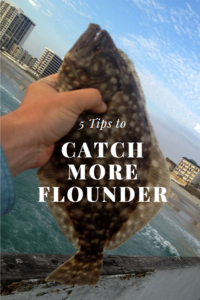](http://www.floridashorefishing.com/wp-content/uploads/2018/06/catch-more-flounder.png) [](https://www.floridashorefishing.com/wp-content/uploads/2018/06/Generic.jpg) [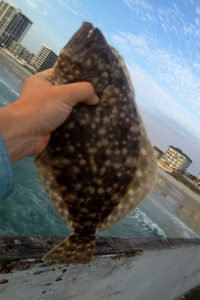](https://www.floridashorefishing.com/wp-content/uploads/2018/06/Flounder-1.jpg) [](https://www.floridashorefishing.com/profile/dan/)##### Author: [Daniel Hagan](https://www.floridashorefishing.com/profile/dan/) Daniel Hagan has been fishing Florida’s shores since 1985 and writing about it for more than 20 years. As Managing Editor of FloridaShoreFishing.com, he shares firsthand experience covering surf and pier fishing, tackle, techniques, and Florida’s coastal species.  [Daniel Hagan](https://www.floridashorefishing.com/profile/dan) Daniel Hagan has been fishing Florida’s shores since 1985 and writing about it for more than 20 years. As Managing Editor of FloridaShoreFishing.com, he shares firsthand experience covering surf and pier fishing, tackle, techniques, and Florida’s coastal species. [](https://www.facebook.com/groups/FloridaShoreFishing "Facebook") **Categories:** Fishing Articles **Tags:** Flounder, How To, lists, Tips --- ### [15 Mistakes Florida Shore Anglers Make (And How to Avoid Them)](https://www.floridashorefishing.com/15-mistakes-florida-shore-anglers-make-and-how-to-avoid-them) **Published:** August 11, 2026 **Author:** Daniel Hagan **Content:** Florida is one of the best places in the country to fish from shore. With thousands of miles of coastline, countless bridges, piers, beaches, jetties, seawalls, mangrove shorelines, and public fishing areas, you don’t need a boat to catch quality saltwater fish. Snook, redfish, speckled trout, pompano, sheepshead, flounder, Spanish mackerel, black drum, mangrove snapper, and plenty of other species can all be caught with your feet planted firmly on land. Yet shore fishing can also be frustrating. You arrive at what looks like the perfect spot. The weather is beautiful. Your tackle box is loaded. You’ve bought fresh bait and made cast after cast. Two hours later, nothing. Meanwhile, another angler walks up, makes a few casts, and catches a fish. What are they doing differently? Often, successful Florida shore fishing isn’t about having better equipment or knowing a secret fishing spot. It’s about consistently doing the small things correctly. Beginners commonly make mistakes that dramatically reduce their chances of catching fish. Even experienced anglers occasionally fall into these habits. The good news is that most are easy to correct. Here are **15 common Florida shore fishing mistakes** and, more importantly, how to avoid them. ## 1. Fishing the Wrong Tide One of the biggest mistakes shore anglers make is treating tides as an afterthought. In saltwater fishing, tides aren’t simply changes in water level. They create current, move bait, expose feeding areas, flood others, and influence where predators position themselves. You can fish an excellent location with perfect bait and still struggle if you’re there during the least productive stage of the tide. Generally, moving water is your friend. As an incoming tide pushes water toward shore and into estuaries, fish may follow bait onto flats, oyster bars, mangrove edges, and other feeding areas. An outgoing tide can pull shrimp, baitfish, crabs, and other food from those areas and funnel them through creek mouths, cuts, bridges, and channels. Slack tide—the period around high or low tide when water movement slows dramatically—can sometimes cause feeding activity to decrease. That doesn’t mean fish can’t be caught during slack water. They absolutely can. But when you’re trying to maximize limited fishing time, periods of stronger tidal movement are often a better starting point. ### How to Avoid This Mistake Check the local tide forecast before leaving home. Don’t look only at when high and low tide occur. Pay attention to the hours between them. Then learn how your favorite fishing locations respond to different tides. A beach trough might produce best during an incoming tide, while a creek mouth could come alive as water drains from the marsh on an outgoing tide. Over time, keep notes. You’ll begin discovering patterns that can turn an average fishing spot into a consistently productive one. ## 2. Using Hooks That Are Too Large Walk through the saltwater section of almost any tackle shop and you’ll see some enormous hooks. That doesn’t mean you need them. Beginners often assume saltwater fish require giant hooks. In reality, many popular Florida species can be caught with surprisingly small tackle. An oversized hook can make your bait look unnatural. It can interfere with the movement of shrimp and baitfish and make it harder for smaller fish to take the bait properly. Think about what you’re actually targeting. A sheepshead nibbling a small crab around a bridge piling doesn’t require the same hook you’d use for a large shark. ### How to Avoid This Mistake Match the hook to the bait and target species—not simply the possibility that something big might swim past. Your hook should be large enough to provide a solid hookup while allowing the bait to move naturally. Circle hooks are excellent choices for many live and cut-bait situations because they’re designed to catch near the corner of the fish’s mouth when used properly. With circle hooks, avoid the dramatic hookset you might use with an artificial lure. Instead, allow the line to tighten and begin reeling steadily. Smaller, appropriately sized tackle often results in more natural presentations and more bites. ## 3. Fishing Too Fast This mistake is especially common among anglers transitioning from freshwater bass fishing. They cast an artificial lure, retrieve it quickly, cast somewhere else, retrieve again, and continue moving. That can work wonderfully when Spanish mackerel, jacks, bluefish, or other aggressive predators are actively chasing bait. But it isn’t always the best approach. Species such as flounder, redfish, sheepshead, and even snook may prefer a slower presentation depending on conditions. Flounder are a perfect example. They’re ambush predators that frequently lie on the bottom waiting for prey to come within striking distance. Racing a lure several feet above them may never get their attention. ### How to Avoid This Mistake Experiment with retrieve speed. If you’re using a jig or soft plastic, let it reach the appropriate depth before beginning your retrieve. Try: - Slow, steady retrieves - Short hops along the bottom - Lift-and-drop retrieves - Long pauses - Slow dragging presentations Pay attention to when strikes happen. If fish consistently hit during pauses, you’ve learned something important. Let the fish tell you how they want the bait. ## 4. Ignoring Current Tides and current are related, but they’re not exactly the same thing from an angler’s perspective. Current determines where food travels. Predatory fish understand this extremely well. Instead of randomly swimming around burning energy, fish frequently position themselves where moving water delivers food directly to them. Bridge pilings are a great example. Water flows around the piling, creating areas of faster current and protected pockets. Baitfish can become disoriented as they’re swept around the structure, creating easy feeding opportunities. The same thing happens around rocks, points, oyster bars, jetties, seawalls, creek mouths, and channel edges. ### How to Avoid This Mistake Stop looking only at visible structure and start looking at how water interacts with it. Watch for: - Current seams - Eddies - Calm pockets beside fast water - Points where water accelerates - Creek mouths - Cuts between sandbars - Water flowing around pilings Cast so your bait moves naturally through these areas. Think like a predator. Where can a fish remain relatively comfortable while food is carried toward it? That’s where you want your bait. ## 5. Not Using a Fluorocarbon Leader Florida’s coastal water can become extremely clear, particularly during calm conditions. Attaching your lure or hook directly to highly visible braided line can sometimes cost you bites. Braided line is fantastic as a main line because it’s thin, strong, sensitive, and has very little stretch. But it isn’t always ideal as the final connection to your bait. That’s where fluorocarbon comes in. A fluorocarbon leader is less visible underwater and provides additional abrasion resistance around rocks, shells, pilings, and a fish’s mouth. ### How to Avoid This Mistake Add a fluorocarbon leader between your main line and lure or hook. Leader strength depends on the species and structure you’re fishing. Lighter leaders may generate more bites in clear water, while heavier leaders provide protection around abrasive structure or toothy fish. Don’t automatically reach for extremely heavy leader material. Use enough strength for the situation without unnecessarily sacrificing presentation. ## 6. Fishing Only One Depth You cast into the deepest water you can reach because deeper must mean better. Right? Not necessarily. Florida saltwater fish can feed in surprisingly shallow water. Redfish may cruise shorelines in water barely deep enough to cover their backs. Snook regularly hunt right along beaches and seawalls. Pompano can travel through troughs surprisingly close to shore. At other times, fish move into deeper channels. The mistake isn’t fishing deep or shallow. The mistake is fishing **only one depth**. ### How to Avoid This Mistake Fan-cast the area. Start relatively close. Then gradually increase your casting distance. Cover: - The shoreline - First trough - Sandbar edges - Drop-offs - Channels - Deeper water When you catch a fish, remember approximately where the strike occurred. If the next fish comes from the same depth, you’ve probably discovered a pattern. Then concentrate your casts there. ## 7. Leaving a Productive Spot Too Soon Mobility is valuable when shore fishing. But there’s a difference between covering water intelligently and constantly moving because you haven’t caught a fish within five minutes. Fish move. Tides change. Bait moves. A location that looks dead can suddenly become active when a school of bait arrives or the current reaches the right speed. This is particularly true at inlets, bridges, passes, and beaches. ### How to Avoid This Mistake Give good locations enough time to develop. If you’re seeing signs that fish should be nearby—baitfish, birds, moving current, feeding activity, good structure—don’t abandon the area immediately. Instead, change something. Try a different: - Bait - Lure - Retrieve - Casting angle - Depth - Leader size Sometimes the fish are there. You simply haven’t presented something they want yet. ## 8. Not Matching the Hatch “Match the hatch” is often associated with fly fishing, but the principle applies perfectly to Florida saltwater fishing. Predators tend to eat whatever forage is abundant. If tiny glass minnows are everywhere and you’re throwing a giant six-inch lure, your presentation may look completely out of place. Likewise, if mullet are running and predators are crushing them, a mullet-shaped bait can be extremely effective. ### How to Avoid This Mistake Before making your first cast, spend a few minutes observing the water. Look for bait. What size is it? What shape? What color? Is it near the surface or bottom? Then choose something similar. Common Florida forage includes: - Mullet - Pilchards - Shrimp - Pinfish - Sardines - Crabs - Sand fleas - Glass minnows Matching the general size and profile is often more important than finding an absolutely perfect imitation. ## 9. Using Poor Knots You can choose the perfect location, find feeding fish, select the right bait, and make a perfect cast. Then your knot breaks. Few fishing failures are more frustrating. Saltwater tackle is constantly subjected to stress. Knots encounter repeated casting, strong fish, abrasive structure, and sudden pressure. A poorly tied knot can become the weakest point in your entire setup. ### How to Avoid This Mistake Learn a small number of reliable fishing knots and become extremely good at tying them. Useful knots for Florida shore anglers include: - Palomar knot - Uni knot - Improved clinch knot - Loop knot - Double Uni knot - FG knot You don’t need to know twenty knots. You need to confidently tie a few excellent ones. After tying a knot, inspect it and pull firmly before casting. Also check your leader regularly. If you feel abrasion or damage, replace it. Five minutes spent retying is better than losing the biggest fish of your day. ## 10. Not Checking Florida Fishing Regulations This is one mistake that can cost considerably more than a fish. Florida fishing regulations can vary by species, region, season, size, and harvest method. Regulations may also change. Never assume that because a fish was legal to keep during your last trip, it’s automatically legal today. ### How to Avoid This Mistake Check current Florida Fish and Wildlife Conservation Commission regulations before your trip. Verify: - Minimum and maximum sizes - Bag limits - Closed seasons - Regional differences - Gear restrictions - License requirements When measuring fish, make sure you understand how that particular species must legally be measured. When in doubt, release it. A photograph lasts longer than a questionable fish in the cooler anyway. ## 11. Making Too Much Noise Shore anglers sometimes underestimate how easily sound and vibration travel through water. Slamming cooler lids, dropping tackle boxes on docks, stomping along a pier, or repeatedly throwing heavy objects into shallow water can alert nearby fish. This matters particularly when targeting fish close to shore. Snook and redfish can be surprisingly close to your feet. ### How to Avoid This Mistake Approach promising water quietly. On beaches, resist the temptation to immediately wade as far as possible. Fish the close water first. Around docks and bridges, avoid unnecessary banging and stomping. Treat shallow-water fishing more like hunting. Observe first. Cast second. ## 12. Casting as Far as Possible Every Time Long casts are fun. They’re also frequently unnecessary. Many anglers seem convinced the biggest fish must be located five feet beyond their maximum casting distance. Meanwhile, they’re throwing over fish. Beach anglers are particularly guilty of this. Fish often use troughs running parallel to the beach. Depending on the tide and beach structure, that productive trough could be remarkably close to shore. ### How to Avoid This Mistake Fish near to far. Your first cast doesn’t need to reach the horizon. Work nearby water before casting farther. If you’re fishing a seawall, pier, bridge, or jetty, look directly beneath you. Structure often attracts fish right under your feet. Distance is useful when fish are actually far away. Otherwise, accurate placement beats maximum casting distance. ## 13. Using Too Much Weight If one ounce keeps your bait on the bottom, four ounces must work even better. Not necessarily. Using excessive weight can make your presentation unnatural and reduce your ability to detect subtle bites. The goal is generally to use enough weight to accomplish what you’re trying to do. No more. In strong surf or heavy inlet current, that might require substantial weight. In a calm bay, you may need very little. ### How to Avoid This Mistake Use the lightest sinker or jig head that still allows you to maintain the necessary control. If you’re fishing moving bait, you may actually want it to drift naturally rather than remain completely stationary. Adjust your weight as conditions change. Don’t use the same sinker simply because that’s what was already tied on your rod. ## 14. Ignoring What’s Happening Around You Some of the best fishing information isn’t found on an app. It’s happening directly in front of you. Birds suddenly diving 100 yards down the beach? Investigate. Baitfish spraying from the surface? Something is probably chasing them. Another angler catches two fish from the same type of structure? Pay attention. Successful anglers constantly collect information. ### How to Avoid This Mistake Keep your head up. Look for: - Diving birds - Nervous water - Jumping baitfish - Mullet schools - Shrimp skipping across the surface - Fish wakes - Feeding explosions - Changes in water clarity - Current lines Your environment is constantly giving you clues. The better you become at reading them, the less fishing feels like guessing. ## 15. Changing Everything Except Location You’ve changed your lure five times. You’ve changed colors. You’ve changed leaders. You’ve changed hooks. You’ve tried shrimp, mullet, and artificial baits. Still nothing. At some point, the problem may not be your tackle. There simply may not be many fish where you’re standing. This is perhaps the most important lesson in shore fishing: **You can’t catch fish that aren’t there.** ### How to Avoid This Mistake Develop a balance between patience and mobility. Give promising areas a fair opportunity, especially when tides and conditions look good. But don’t spend your entire day trying to force an unproductive location to produce. Move down the beach. Try another bridge piling. Walk to another section of the jetty. Fish another dock. Change sides of the inlet. Sometimes a move of only 50 yards completely changes the day. ## The Best Florida Fishing Tip: Build Patterns The biggest difference between beginners and consistently successful shore anglers isn’t usually equipment. It’s pattern recognition. Experienced anglers begin connecting seemingly unrelated pieces of information. They remember that a particular beach fishes better two hours before high tide. They notice that redfish hold behind a certain oyster bar during outgoing water. They discover that pompano frequently travel through a particular trough. They realize flounder gather near one specific current break. Each fishing trip becomes another piece of information. Consider keeping a simple fishing log containing: - Date - Location - Tide - Water temperature - Weather - Wind - Water clarity - Bait present - Fish caught - Bait or lure used - Approximate depth You don’t need sophisticated software. A notebook or notes app works perfectly. After dozens of trips, patterns begin appearing. That’s when fishing becomes considerably more predictable. ## Don’t Assume Expensive Gear Catches More Fish Another lesson worth remembering is that successful Florida shore fishing doesn’t require thousands of dollars in equipment. Quality equipment certainly helps. A reliable reel, sensitive rod, good line, and strong terminal tackle make fishing more enjoyable. But equipment can’t compensate for poor decisions. A $500 fishing setup cast into empty water still catches nothing. An inexpensive setup placed correctly in front of feeding fish can produce the catch of a lifetime. Spend your energy learning: - Tides - Current - Structure - Bait movement - Seasonal patterns - Fish behavior Knowledge follows you to every fishing spot. ## Slow Down and Observe Before Fishing When many anglers arrive at the water, their first instinct is to immediately cast. Try something different next time. Spend five minutes watching. Where is the current moving? Can you see bait? Are birds working? Where does shallow water become deep? [Are there rocks, oyster beds, pilings, or submerged structure?](https://www.floridashorefishing.com/the-florida-bridge-fishing-playbook-where-gamefish-hold-during-every-tide-stage) Is the water clear or dirty? Which direction is the wind pushing surface water? Those five minutes may teach you more than the next hour of blind casting. Florida’s coastline constantly changes. Sandbars move. Tides rise. Current shifts. Bait appears and disappears. The angler who notices these changes has an enormous advantage over someone simply repeating the same cast. ## Final Thoughts on Florida Shore Fishing Mistakes Becoming a better shore angler doesn’t happen because you discover one magical lure or secret fishing location. It happens because you gradually eliminate mistakes. You start checking tides before leaving home. You select hooks that actually match your bait. You pay attention to current. You experiment with depth. You improve your knots. You watch what baitfish are doing. You learn when to stay and when to move. Most importantly, you begin understanding **why** fish are where they are. That’s when Florida shore fishing becomes really exciting. Instead of randomly casting and hoping something happens, you’re making decisions based on tides, structure, current, bait, and fish behavior. Some days will still be slow. That’s fishing. But every trip gives you an opportunity to learn something. Correct these 15 common **shore fishing mistakes**, apply these **Florida fishing tips** consistently, and you’ll put yourself in a much better position to catch fish whether you’re standing on a beach, bridge, pier, jetty, seawall, or mangrove shoreline. And when another angler watches you walk up, make a few casts, and catch a fish, they might start wondering what **you’re** doing differently. [](https://www.floridashorefishing.com/profile/dan/)##### Author: [Daniel Hagan](https://www.floridashorefishing.com/profile/dan/) Daniel Hagan has been fishing Florida’s shores since 1985 and writing about it for more than 20 years. As Managing Editor of FloridaShoreFishing.com, he shares firsthand experience covering surf and pier fishing, tackle, techniques, and Florida’s coastal species.  [Daniel Hagan](https://www.floridashorefishing.com/profile/dan) Daniel Hagan has been fishing Florida’s shores since 1985 and writing about it for more than 20 years. As Managing Editor of FloridaShoreFishing.com, he shares firsthand experience covering surf and pier fishing, tackle, techniques, and Florida’s coastal species. [](https://www.facebook.com/groups/FloridaShoreFishing "Facebook") **Categories:** Fishing Articles --- ### [Best Florida Fish to Catch at Night During the Summer](https://www.floridashorefishing.com/best-florida-fish-to-catch-at-night-during-the-summer) **Published:** August 4, 2026 **Author:** Daniel Hagan **Content:** Summer in Florida is famous for hot days, crowded beaches, and scorching temperatures. That’s exactly why so many experienced anglers wait until the sun goes down before heading to the water. Night fishing is one of the best ways to catch quality fish during the summer. Cooler water temperatures, less fishing pressure, and active feeding periods combine to create some of the best fishing opportunities of the year. Whether you’re fishing from the beach, a dock, bridge, pier, or shoreline, nighttime can produce incredible action. If you’re looking for the best Florida night fishing experience, these are the species you should target. ## Why Night Fishing Is Better During the Summer Florida fish react to the summer heat just like people do. During the hottest part of the day, many species become less active and move into deeper water or heavy cover. Once the sun sets, everything changes. Water temperatures begin to cool, baitfish gather around lights and moving water, and predators move in to feed. Boat traffic slows down, popular fishing spots become less crowded, and fish often become much more aggressive. For many anglers, summer night fishing is simply more productive than fishing during the day. ## Night Fishing Safety Tips Fishing after dark requires a little extra preparation. A few simple items can make your trip safer and more enjoyable. Always bring: - A quality LED headlamp - A backup flashlight - Extra batteries - A fully charged phone - Plenty of drinking water - Bug spray - A small first aid kit - A personal flotation device if fishing near deep water or from a kayak If you’re fishing alone, let someone know where you’ll be and when you expect to return home. ## 1. Snook Snook are the number one target for many Florida night anglers. Warm summer water pushes snook toward bridges, dock lights, seawalls, canals, and mangrove shorelines where they ambush baitfish under the cover of darkness. ### Best Places to Catch Snook - Lighted docks - Bridges - Residential canals - Inlets - Mangrove shorelines ### Best Baits - Live shrimp - Finger mullet - Pilchards - Paddle-tail swimbaits - Twitch baits - Topwater lures Cast beyond the light and retrieve your bait naturally through the shadow line where snook often wait to attack. ## 2. Tarpon Few fish are more exciting than a tarpon at night. Summer is peak tarpon season throughout much of Florida, and many large fish feed aggressively around bridges, passes, beaches, and deep channels after sunset. ### Best Places - Inlets - Bridges - Beaches - Deep channels ### Best Baits - Live mullet - Threadfin herring - Live crabs - Large swimbaits A nighttime tarpon strike is something every Florida angler should experience. ## 3. Black Drum Black drum feed confidently after dark and are often easier to catch during summer nights than during the middle of the day. ### Best Places - Bridges - Oyster bars - Docks - Deep channels ### Best Baits - Live shrimp - Blue crab - Fiddler crabs - Cut bait Because black drum rely heavily on scent, they continue feeding well throughout the night. ## 4. Sharks Summer nights are one of the best times to target sharks from Florida beaches. Large predators patrol the surf looking for mullet, rays, ladyfish, and other baitfish. ### Best Places - Surf beaches - Inlets - Sandbars ### Best Baits - Fresh cut mullet - Bonito - Ladyfish - Jack crevalle Always use heavy tackle and follow current Florida shark fishing regulations before targeting sharks. ## 5. Mangrove Snapper Mangrove snapper become very active after dark. Dock lights and bridges attract shrimp and baitfish, making these areas perfect feeding stations. ### Best Places - Lighted docks - Bridges - Pilings - Rock jetties ### Best Baits - Live shrimp - Pilchards - Small jigs - Cut shrimp Use light tackle and fish close to structure for the best results. ## 6. Redfish Redfish continue feeding throughout warm summer nights, especially when tides are moving. Look for them around oyster bars, mangrove shorelines, docks, and shallow grass flats. Live shrimp, finger mullet, and paddle-tail swimbaits all produce excellent results. ## 7. Spotted Seatrout Speckled trout often move onto shallow grass flats after sunset where they feed aggressively on shrimp and baitfish. Topwater lures can produce explosive strikes on calm summer nights. ## 8. Jack Crevalle If you’re looking for a hard fight, jack crevalle won’t disappoint. Schools often chase bait around bridges, docks, and lighted areas throughout the night. Fast-moving artificial lures usually trigger aggressive strikes. ## 9. Ladyfish Ladyfish provide nonstop action and are excellent bait for larger predators. Small spoons, soft plastics, and jigs work extremely well around bridges and dock lights. ## 10. Catfish Saltwater catfish become very active after sunset and are easy to catch using shrimp or cut bait. While they may not be everyone’s favorite fish, they can keep rods bending all night long. ## Live Bait vs. Artificial Lures Both live bait and artificial lures can be extremely effective during Florida night fishing. ### Live Bait Live bait is usually the best choice when targeting trophy fish. Top choices include: - Live shrimp - Finger mullet - Pilchards - Pinfish ### Artificial Lures Artificial lures work best when fish are actively feeding. Great nighttime choices include: - Paddle-tail swimbaits - Twitch baits - Topwater plugs - Bucktail jigs When fishing around dock lights, retrieve your lure across the edge of the light rather than directly through the brightest area. ## Fish the Tide, Not the Clock One of the biggest secrets to successful Florida night fishing is paying attention to the tide. Moving water concentrates bait and encourages fish to feed. The best fishing usually happens: - Two hours before high tide - Two hours after high tide - During a strong incoming tide around docks and bridges - During the first part of an outgoing tide around passes and inlets If the water isn’t moving, the bite often slows considerably. ## Final Thoughts Night fishing is one of the best ways to beat the Florida summer heat while catching more fish. Whether you’re fishing from a dock, bridge, beach, pier, or shoreline, nighttime offers cooler temperatures, fewer crowds, and some of the most exciting fishing of the year. Target active species like snook, tarpon, mangrove snapper, black drum, sharks, and redfish, fish during moving tides, and always put safety first. Once you experience a great summer night bite, you may never look at daytime fishing the same way again. [](https://www.floridashorefishing.com/profile/dan/)##### Author: [Daniel Hagan](https://www.floridashorefishing.com/profile/dan/) Daniel Hagan has been fishing Florida’s shores since 1985 and writing about it for more than 20 years. As Managing Editor of FloridaShoreFishing.com, he shares firsthand experience covering surf and pier fishing, tackle, techniques, and Florida’s coastal species.  [Daniel Hagan](https://www.floridashorefishing.com/profile/dan) Daniel Hagan has been fishing Florida’s shores since 1985 and writing about it for more than 20 years. As Managing Editor of FloridaShoreFishing.com, he shares firsthand experience covering surf and pier fishing, tackle, techniques, and Florida’s coastal species. [](https://www.facebook.com/groups/FloridaShoreFishing "Facebook") **Categories:** Fishing Articles --- ### [Fishing for Sheepshead](https://www.floridashorefishing.com/fishing-for-sheepshead) **Published:** July 16, 2026 **Author:** Daniel Hagan **Content:** [Sheepshead](https://www.floridashorefishing.com/fish-profiles/sheepshead) are one of the most popular inshore saltwater fish in Florida, and for good reason. They are abundant, fight hard for their size, and are widely regarded as one of the best-tasting fish found in Florida's coastal waters. They are also one of the most frustrating fish to catch. Nicknamed the **"convict fish"** because of their distinctive black vertical stripes, sheepshead have developed a reputation for stealing bait without anglers ever realizing they had a bite. Learning to detect their subtle strikes and understanding where they feed is the key to consistently catching them. Whether you're fishing from a dock, bridge, jetty, seawall, or shoreline, this guide covers everything you need to know about catching sheepshead in Florida, including the best gear, bait, locations, techniques, and seasonal patterns. ## What Is a Sheepshead? The sheepshead (*Archosargus probatocephalus*) is a member of the porgy family and is found throughout Florida's Atlantic and Gulf coasts. Their bodies are deep and compressed with six to eight bold black vertical bars over a silver, gray, or white background. Their most recognizable feature, however, is their mouth. Unlike most fish, sheepshead have strong, human-like teeth that closely resemble the teeth of sheep—hence their name. These powerful teeth allow them to crush barnacles, oysters, mussels, crabs, and other hard-shelled prey with ease. Because juvenile black drum have similar coloring, anglers often confuse the two species. The easiest way to tell them apart is by looking at their mouths. Juvenile black drum have small, rounded mouths, while sheepshead have large, prominent teeth that are impossible to miss. Another feature anglers should respect is their fins. The dorsal and anal fins contain extremely heavy, razor-sharp spines capable of causing painful puncture wounds. Always handle sheepshead carefully and avoid grabbing them across the top of the body. ## Why Sheepshead Are So Popular Florida anglers target sheepshead for several reasons: - Excellent table fare with firm, white fillets - Available from shore throughout much of Florida - Common around docks, bridges, jetties, and seawalls - Active during cooler months when many other inshore species slow down - Fun and challenging to catch Although they rarely make long runs like redfish or snook, sheepshead fight hard around heavy structure. Their first instinct after being hooked is to dive straight back into pilings, rocks, or oyster beds, making strong tackle an advantage. ## Best Time to Catch Sheepshead in Florida One of the biggest advantages of targeting sheepshead is their predictable seasonal movement. The best fishing typically occurs from **late fall through early spring**, with peak action usually happening between **December and March**. During the cooler months, larger fish move into bays, rivers, inlets, bridges, and docks to feed and eventually spawn. In summer, many mature sheepshead move offshore to reefs and wrecks, although smaller fish remain inshore year-round. Water temperature is often more important than the calendar. As temperatures begin cooling in autumn, sheepshead become increasingly active around shoreline structure. ## Best Rod and Reel for Sheepshead Since sheepshead are usually caught around heavy cover, your equipment needs to provide sensitivity while still offering enough power to pull fish away from structure quickly. ### Reel Both spinning reels and baitcasting reels work exceptionally well. Choose a quality saltwater-rated reel capable of handling: - 10-30 pound braided line - Strong drag system - Smooth retrieve - Corrosion resistance The size of the fish isn't the biggest concern. Most sheepshead weigh between **2 and 5 pounds**, while fish over **8 to 10 pounds** are considered trophies. Instead, your reel needs enough power to prevent hooked fish from wrapping your line around bridge pilings or dock posts. ### Rod The ideal sheepshead rod combines sensitivity with strength. Look for: - Medium or medium-heavy power - Fast action - Sensitive tip - Saltwater-rated guides A softer tip allows you to detect the incredibly subtle bites that sheepshead are famous for. The stronger backbone provides enough leverage to drive the hook into their hard mouths while quickly steering fish away from heavy cover. A rod between **6½ and 7½ feet** is ideal for most shore anglers. ## Best Fishing Line for Sheepshead Braided fishing line has become the preferred choice for sheepshead anglers. A **15-30 pound braid** offers several important advantages: - Outstanding sensitivity - Virtually no stretch - Excellent abrasion resistance - Better hooksets - Increased control around structure Because braid is highly visible underwater, a fluorocarbon leader should always be used. ### Leader A **20-pound fluorocarbon leader** approximately **10 to 18 inches long** is ideal for most situations. Fluorocarbon offers: - Lower visibility - Superior abrasion resistance - Excellent knot strength - Minimal stretch Keeping the leader fairly short also improves sensitivity, allowing you to feel even the lightest bites. ## Best Hooks for Sheepshead Hook selection is one of the most overlooked parts of sheepshead fishing. Sheepshead have incredibly hard mouths and powerful teeth capable of bending weak hooks. Choose hooks that are: - Extremely sharp - Heavy enough to resist bending - Small enough to fit inside their mouths Depending on bait size, hooks between **1/0 and 2/0** are excellent all-around choices. Always check the hook point frequently. If it doesn't immediately grab your fingernail, sharpen it or replace it. A razor-sharp hook dramatically increases hookup percentages. ## Best Weights and Rigs Use only enough weight to keep your bait where the fish are feeding. Too much weight reduces sensitivity and makes detecting bites more difficult. Common choices include: - Egg sinkers - Split shot - Small bank sinkers One of the most effective rigs is a sliding egg sinker above a swivel with a short fluorocarbon leader. This allows fish to pick up the bait naturally while maintaining excellent bite detection. Adjust your sinker size according to: - Current speed - Wind - Water depth The lighter your presentation, the better. ## Where to Find Sheepshead Finding sheepshead is usually much easier than catching them. Their diet determines exactly where they live. Since they feed primarily on barnacles, oysters, mussels, and crabs, they spend much of their lives around hard structure. Some of the best locations include: ### Bridge Pilings Bridge pilings are among the most productive sheepshead locations in Florida. Years of barnacle growth provide an endless food source. Fish each piling carefully from several angles before moving. ### Docks Residential docks and marina pilings regularly hold sheepshead. Older docks with heavy barnacle growth are usually more productive than newer structures. ### Oyster Bars Oyster beds attract sheepshead throughout the cooler months. Fish the edges carefully while avoiding snagging on shells. ### Rock Jetties Large granite rocks quickly become covered with barnacles, making jetties ideal habitat. Fish every crack, crevice, and current seam. ### Seawalls Older seawalls often develop thick barnacle growth below the waterline. Sheepshead frequently patrol these areas looking for easy meals. ### Riprap Rock-lined shorelines around bridges, causeways, and channels are excellent places to target sheepshead. ## Sight Fishing for Sheepshead One of the most enjoyable ways to catch sheepshead is by sight fishing. When water clarity is good, look closely around pilings. You will often see fish swimming sideways while picking barnacles directly off the structure. This feeding behavior makes them surprisingly easy to locate. If fish aren't visible, don't assume they aren't there. Drop a bait beside the structure anyway. Often they're simply deeper than you can see. ## Chumming for Sheepshead If fishing seems slow, attracting fish to your location can dramatically improve success. Effective chum options include: - Scraping barnacles off dock pilings - Crushed oysters - Broken mussels - Chopped shrimp These natural food items drift through the water and encourage nearby sheepshead to investigate. ## Best Bait for Sheepshead ### Fiddler Crabs Without question, **live fiddler crabs** are the best bait available. They are a natural food source that sheepshead rarely refuse. Hook the crab by inserting the hook from underneath and bringing the point out through the top of the shell. Leave the hook point fully exposed. On male fiddler crabs, remove the oversized claw before fishing. Otherwise, sheepshead often grab the claw and steal the bait without ever touching the hook. Fresh frozen fiddler crabs also work well if live bait isn't available. ### Mud Crabs Small mud crabs are another outstanding option. Rig them exactly as you would a fiddler crab. ### Sand Fleas Sand fleas are especially productive near beaches, jetties, and inlets. Use live sand fleas whenever possible. ### Shrimp Live shrimp catch almost every inshore species, including sheepshead. Fresh dead shrimp also work surprisingly well. Use smaller shrimp rather than oversized ones. ### Clams and Oysters Fresh clam and oyster meat can be deadly around dock pilings and oyster bars. Because these baits are softer, use enough hook exposure to improve hooksets. ## Best Sheepshead Fishing Technique Presentation matters more than casting distance. The most effective approach is simple. Lower your bait vertically beside the structure where fish are feeding. If current is present, position your bait slightly upstream and allow it to drift naturally alongside the piling or rocks. Avoid swinging the bait. Keep it as natural as possible. Maintain slight tension in your line while watching carefully for movement. ## How to Detect a Sheepshead Bite This is where many anglers struggle. Unlike redfish, snook, or trout, sheepshead rarely slam a bait. Instead, you'll usually feel: - A tiny tap - A slight tick - A faint pressure - The line simply becoming heavy Sometimes the only indication is that your bait suddenly feels different. Experienced anglers often describe the bite as a gentle "tap...tap." By the time many beginners recognize the bite, the bait is already gone. ## Setting the Hook The instant you detect anything unusual, set the hook aggressively. Don't wait. Their hard, bony mouths require a solid hookset. When fishing vertically, a quick upward sweep of the rod works extremely well. Even if the fish has already stolen the bait, setting the hook quickly gives you the best chance of connecting. ## Why Sheepshead Steal So Much Bait Sheepshead earned their reputation honestly. They use their powerful front teeth to carefully nip bait from the hook before swallowing it. Rather than attacking aggressively, they often: - Grab the bait - Crush it - Remove it from the hook - Swim away Many anglers don't even realize they've been robbed until they reel in an empty hook. Even experienced sheepshead fishermen expect to lose plenty of bait. Landing one fish for every three or four fiddler crabs is actually considered a successful outing. Patience is simply part of the game. ## Tips for Landing More Sheepshead Small adjustments can significantly improve your success. - Fish during moving tides whenever possible. - Stay as close to structure as you can without constantly snagging. - Check your bait after every missed bite. - Keep your hooks razor sharp. - Use the lightest weight possible while maintaining bottom contact. - Bring more bait than you think you'll need. ## Why Every Florida Shore Angler Should Target Sheepshead Sheepshead are one of Florida's most accessible and rewarding inshore fish. They can be caught from public fishing piers, bridges, docks, jetties, seawalls, and shorelines across both the Gulf and Atlantic coasts, making them an excellent target for anglers without a boat. While they are famous for stealing bait and testing an angler's patience, learning to catch sheepshead is incredibly rewarding. Once you master detecting their subtle bite and fishing tight to structure, you'll discover why so many Florida anglers eagerly anticipate sheepshead season every year. With the right tackle, fresh natural bait, and a little persistence, you'll be well on your way to landing one of Florida's best-tasting inshore fish. ## Quick Sheepshead Fishing Tips - Fish around docks, bridges, oyster beds, rock piles, jetties, and seawalls. - Use **15-30 lb braided line** with a **20 lb fluorocarbon leader**. - Fish with **live fiddler crabs** whenever possible. - Keep your bait close to barnacle-covered structure. - Watch for subtle bites and set the hook immediately. - Use razor-sharp, heavy-duty hooks. - Bring extra bait—sheepshead are legendary bait thieves. - Handle fish carefully to avoid the sharp dorsal and anal fin spines. Master these fundamentals, and you'll dramatically increase your chances of catching sheepshead anywhere along Florida's coastline. [](https://www.floridashorefishing.com/wp-content/uploads/2015/07/Fishing-for-Sheepshead.png) [](https://www.floridashorefishing.com/wp-content/uploads/2018/06/Generic.jpg) [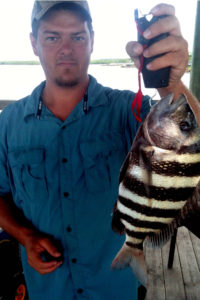](https://www.floridashorefishing.com/wp-content/uploads/2015/07/Sheepshead-1-1.jpg) [](https://www.floridashorefishing.com/profile/dan/)##### Author: [Daniel Hagan](https://www.floridashorefishing.com/profile/dan/) Daniel Hagan has been fishing Florida’s shores since 1985 and writing about it for more than 20 years. As Managing Editor of FloridaShoreFishing.com, he shares firsthand experience covering surf and pier fishing, tackle, techniques, and Florida’s coastal species.  [Daniel Hagan](https://www.floridashorefishing.com/profile/dan) Daniel Hagan has been fishing Florida’s shores since 1985 and writing about it for more than 20 years. As Managing Editor of FloridaShoreFishing.com, he shares firsthand experience covering surf and pier fishing, tackle, techniques, and Florida’s coastal species. [](https://www.facebook.com/groups/FloridaShoreFishing "Facebook") **Categories:** Featured, Fishing Articles, How To **Tags:** How To, Sheepshead, Sheepshead Fishing, Tips --- ### [Ultimate Florida Bridge Fishing Guide (2026): How to Catch More Fish from Florida Bridges](https://www.floridashorefishing.com/top-10-florida-bridge-fishing-techniques) **Published:** July 14, 2026 **Author:** Daniel Hagan **Content:** Florida’s thousands of coastal bridges provide some of the best shore fishing opportunities in the country. Whether you’re targeting trophy snook under dock lights, sheepshead around bridge pilings, or tarpon migrating through coastal passes, bridges create ideal conditions for anglers who don’t own a boat. In this updated 2026 guide, you’ll learn the best bridge fishing techniques, the right tides to fish, seasonal strategies, recommended rigs, and the best species to target throughout Florida. ## Why Bridge Fishing Works Bridges naturally concentrate fish by creating structure in otherwise open water. Pilings attract barnacles, crabs, shrimp, baitfish, and other marine life, which in turn attract larger predator fish. Bridges also create: - Shade during the day - Strong current breaks - Oxygen-rich moving water - Ambush points for predators - Nighttime feeding opportunities under bridge lights If you can learn to fish the current around bridge pilings, you’ll dramatically increase your chances of success. # Top 10 Florida Bridge Fishing Techniques ## 1. Fish Moving Water Current is one of the biggest keys to successful bridge fishing. Most game fish position themselves where moving water carries bait directly to them while allowing them to conserve energy. Look for: - Up-current sides of pilings - Current seams - Eddies behind bridge supports - Deep holes near the bridge The first few hours of incoming or outgoing tide are often the most productive. ## 2. Target Bridge Pilings Bridge pilings hold: - Barnacles - Mussels - Crabs - Shrimp - Small baitfish Species such as sheepshead, black drum, snapper, and snook stay surprisingly close to these structures. Cast close—but not directly into—the pilings to avoid snags while keeping your bait in the strike zone. ## 3. Fish During Tide Changes The strongest bites often occur during changing tides. ### Incoming Tide Best for: - Snook - Tarpon - Mangrove Snapper - Jack Crevalle ### Outgoing Tide Excellent for: - Redfish - Black Drum - Sheepshead - Flounder Avoid completely slack water whenever possible, as fish tend to become less active. ## 4. Fish Bridges at Night Night fishing around bridges can be outstanding. Artificial lighting attracts: - Glass minnows - Shrimp - Pilchards - Mullet Predators wait just outside the light line. Popular nighttime targets include: - Snook - Tarpon - Trout - Mangrove Snapper Cast beyond the illuminated water and retrieve naturally into the edge of the light for the best results. ## 5. Match Your Bait to Local Forage Live bait consistently produces excellent results. Top choices include: - Live shrimp - Finger mullet - Pinfish - Pilchards - Mud minnows - Fiddler crabs (for sheepshead) Artificial lures also work well: - Paddle-tail swimbaits - Bucktail jigs - Suspending twitch baits - Topwater plugs - Soft jerkbaits ## 6. Fish the Deeper Side of the Bridge Most bridges have one side with deeper water. This side often produces: - Tarpon - Snook - Snapper - Grouper (where legal) - Larger redfish During hot summer months, fish frequently move into deeper water during the middle of the day. ## 7. Use the Right Bridge Fishing Rig Several simple rigs consistently produce fish. ### Live Shrimp Rig - 20–30 lb fluorocarbon leader - 1/0 circle hook - Split shot if needed Perfect for: - Snapper - Sheepshead - Black Drum ### Knocker Rig Ideal for: - Snook - Redfish - Tarpon Allows your bait to stay close to structure while maintaining a natural presentation. ### Jig Head Rig Perfect for: - Paddle tails - Soft plastics - Shrimp imitations Excellent around bridge pilings. ## 8. Fish During Low-Light Conditions The best feeding windows are often: - Sunrise - Sunset - Cloudy days - Before storms (when safe) Many bridge predators become significantly more active during these periods. ## 9. Pay Attention to Water Clarity Clear water often calls for: - Smaller leaders - Natural bait colors - Longer casts Dirty water favors: - Larger profile baits - Brighter lure colors - More vibration Adjusting your presentation to the water conditions can make a noticeable difference. ## 10. Bring Heavy Tackle Bridges are unforgiving. Once hooked, fish immediately try to wrap your line around pilings. Recommended setup: - 4000–6000 size spinning reel - Medium-heavy to heavy rod - 20–30 lb braided line - 30–60 lb fluorocarbon leader For large tarpon, heavier tackle may be necessary. # Best Fish to Catch Around Florida Bridges ## Snook Bridges are among the best places to catch snook. Look for: - Strong current - Bridge shadows - Light lines at night - Pilings with moving water Best bait: - Live pinfish - Pilchards - Finger mullet - Large shrimp ## Tarpon During late spring through summer, tarpon migrate through many coastal bridges. Fish: - Deep channels - Bridge passes - Incoming tides - Nighttime around lights Large live baits and heavy tackle are essential. ## Mangrove Snapper Mangrove snapper stay close to bridge pilings throughout the year. Use: - Small live shrimp - Cut bait - Small jigs Keep your bait close to the structure. ## Sheepshead One of Florida’s most dependable bridge species. Best bait: - Fiddler crabs - Sand fleas - Live shrimp Target barnacle-covered pilings, especially during cooler months. ## Black Drum Black drum frequently feed around bridge structures. Use: - Shrimp - Blue crab - Clams Fish the bottom during slower-moving tides. ## Other Common Bridge Species You may also catch: - Redfish - Speckled Trout - Jack Crevalle - Ladyfish - Spanish Mackerel - Bluefish - Flounder # Best Florida Bridges by Region ## Northeast Florida - St. Johns River bridges - Mayport area bridges - Vilano Beach Bridge Popular species: - Redfish - Trout - Flounder - Sheepshead ## Central East Coast - Sebastian Inlet bridges - Eau Gallie Causeway - Pineda Causeway Popular species: - Snook - Tarpon - Mangrove Snapper ## Tampa Bay Area - Skyway Fishing Pier State Park - Gandy Bridge area - Courtney Campbell Causeway Popular species: - Snook - Spanish Mackerel - Tarpon - Redfish ## Southwest Florida - Matlacha Bridge - Sanibel Causeway - Fort Myers Beach bridges Popular species: - Snook - Redfish - Snapper - Sheepshead ## Florida Keys The Keys offer some of the best bridge fishing in the world. Well-known locations include: - Seven Mile Bridge area - Channel 2 Bridge - Bahia Honda area Popular species: - Tarpon - Snapper - Permit - Jack Crevalle - Barracuda Always check local regulations and access restrictions before fishing. # Summer Bridge Fishing Tips Florida summers bring warm water and changing fish behavior. To improve success: - Fish early in the morning or after sunset. - Focus on bridges with strong tidal flow. - Use live bait whenever possible. - Target deeper water during midday. - Watch for schools of baitfish and diving birds. Night fishing is often the most productive during the hottest months. # Florida Bridge Fishing Safety Tips Bridge fishing can be rewarding, but safety should always come first. - Watch for changing tides and strong currents. - Stay clear of vehicle traffic and obey posted signs. - Wear non-slip shoes on wet surfaces. - Keep tackle organized to avoid tripping hazards. - Be courteous to other anglers and pedestrians. # Frequently Asked Questions ## What tide is best for bridge fishing in Florida? The first few hours of an incoming or outgoing tide generally produce the best action because moving water concentrates bait and triggers feeding behavior. ## Can you fish bridges at night? Yes. Many Florida bridges offer excellent nighttime fishing, especially those with lights that attract baitfish and predators like snook and tarpon. Always verify local access rules before fishing after dark. ## What is the best bridge fishing rig? A live shrimp rig, knocker rig, or jig head with a paddle-tail soft plastic are versatile options that work well for a wide variety of Florida bridge species. ## What is the best bait for bridge fishing? Live shrimp is one of the most effective all-around baits. Finger mullet, pilchards, pinfish, and fiddler crabs are also excellent choices depending on your target species. # Final Thoughts Florida bridges offer year-round opportunities to catch a wide variety of saltwater species without needing a boat. By fishing moving water, targeting structure, using the right rigs, and timing your trips around changing tides, you’ll dramatically improve your chances of success. Whether you’re chasing trophy snook after sunset, battling a migrating tarpon in summer, or filling a cooler with mangrove snapper and sheepshead, Florida’s bridges remain some of the state’s most productive and accessible fishing destinations. [](https://www.floridashorefishing.com/profile/dan/)##### Author: [Daniel Hagan](https://www.floridashorefishing.com/profile/dan/) Daniel Hagan has been fishing Florida’s shores since 1985 and writing about it for more than 20 years. As Managing Editor of FloridaShoreFishing.com, he shares firsthand experience covering surf and pier fishing, tackle, techniques, and Florida’s coastal species.  [Daniel Hagan](https://www.floridashorefishing.com/profile/dan) Daniel Hagan has been fishing Florida’s shores since 1985 and writing about it for more than 20 years. As Managing Editor of FloridaShoreFishing.com, he shares firsthand experience covering surf and pier fishing, tackle, techniques, and Florida’s coastal species. [](https://www.facebook.com/groups/FloridaShoreFishing "Facebook") **Categories:** Fishing Articles, How To --- ### [The Florida Bridge Fishing Playbook: Where Gamefish Hold During Every Tide Stage](https://www.floridashorefishing.com/the-florida-bridge-fishing-playbook-where-gamefish-hold-during-every-tide-stage) **Published:** June 16, 2026 **Author:** Daniel Hagan **Content:** Florida’s thousands of bridges create some of the most productive fishing opportunities in the country. From the Panhandle to the Florida Keys, bridges concentrate bait, provide structure, and create powerful current breaks that attract everything from snook and tarpon to mangrove snapper and jack crevalle. Yet one of the biggest mistakes anglers make is fishing the same spot regardless of tide conditions. Successful bridge anglers understand that fish move constantly throughout the tidal cycle. The piling that produced a trophy snook on an incoming tide may be completely lifeless once the water starts falling. Learning how gamefish position around bridges during every stage of the tide is one of the fastest ways to improve your catch rates. This Florida bridge fishing playbook breaks down exactly where fish hold and how to target them effectively. ## Why Bridges Create Prime Feeding Zones Bridges are fish magnets because they combine several key ingredients gamefish need: - Structure - Current - Shade - Ambush points - Consistent bait movement As tidal water flows through bridge spans, current accelerates around pilings and creates eddies, seams, and pressure points. These current breaks allow predatory fish to conserve energy while waiting for baitfish, shrimp, and crabs to drift within striking distance. The bridge itself acts like an underwater buffet line. Every tide movement delivers food directly to waiting predators. During strong tidal exchanges, fish rarely position randomly. Instead, they choose specific holding locations that provide the best feeding opportunities with the least amount of effort. Understanding those locations is the foundation of successful Florida bridge fishing. ## Incoming Tide Positioning An incoming tide often brings cleaner, cooler, and more oxygen-rich water into Florida bays, inlets, and estuaries. Baitfish frequently move with this incoming water, followed closely by predators. ### Where Fish Hold During the incoming tide, many gamefish position on the up-current side of bridge pilings. As water pushes toward the bridge structure, fish can sit just behind the current flow and ambush bait that gets swept around the pilings. Key areas include: - Up-current corners of bridge pilings - Current seams between pilings - Bridge shadow lines - Channel edges adjacent to the bridge Snook are particularly aggressive during strong incoming tides. They often position within inches of bridge pilings, waiting for baitfish to be pushed directly toward them. ### Best Lures for Incoming Tide - Paddle-tail soft plastics - Bucktail jigs - Live pilchards - Live pinfish - Swimbaits Allow the current to carry your presentation naturally toward the structure. Artificial lures that drift with the tide often produce more strikes than aggressively retrieved baits. ### Reading the Current Watch for: - Rip lines - Water color changes - Surface disturbances - Concentrated bait activity These visual indicators often reveal exactly where predators are feeding. ## Outgoing Tide Positioning Many experienced anglers consider the outgoing tide the best bridge fishing window in Florida. As water drains from flats, mangroves, creeks, and backcountry areas, baitfish become concentrated and are forced through bridge openings. For predators, it’s an easy feeding opportunity. ### Where Fish Hold During an outgoing tide, fish typically reposition to the down-current side of bridge pilings. They use the turbulence behind the structure as a feeding station. Focus on: - Down-current eddies - Current breaks behind pilings - Bridge span funnels - Deep holes adjacent to the bridge Tarpon, snook, and jack crevalle often stack along these feeding lanes during strong outgoing flows. ### Target the Current Seam One of the most productive locations is where fast-moving water meets slower-moving water. These seams act like conveyor belts carrying bait directly to waiting predators. Cast slightly up-current and allow your bait to sweep naturally through the feeding zone. ### Best Baits for Outgoing Tides - Live mullet - Live threadfin herring - Shrimp - Large soft plastics - Diving plugs Natural presentations are especially effective when current speeds increase. ## Slack Tide Strategies Many anglers leave when the tide stops moving. That can be a mistake. While feeding activity often slows during slack tide, fish do not disappear. They simply reposition. ### Where Fish Move During Slack Water Without current, fish no longer need to sit directly behind current breaks. Instead, they often move toward: - Deep bridge holes - Shade lines - Underwater ledges - Adjacent structure Bridges still provide security and cover, even when water movement is minimal. ### Slow Down Your Presentation Slack tide requires patience. Fish are typically less aggressive and may not chase fast-moving lures. Effective options include: - Live shrimp - Small jigs - Free-lined baitfish - Soft plastic jerkbaits Work your bait slowly and thoroughly around structure. ### Focus on Shade During sunny conditions, bridge shadows become especially important during slack water. Predators often remain concealed inside these shaded areas while waiting for the next tidal movement to begin. ## Best Bridge Species in Florida ### Snook When anglers think of bridge fishing for snook, Florida’s coastal bridges are often the first locations that come to mind. Snook thrive around bridge structure because it provides: - Shade - Ambush points - Current relief - Consistent bait movement #### Best Tides - Strong incoming tide - Strong outgoing tide #### Best Areas - Bridge shadow lines - Pilings - Current seams #### Top Baits - Live pilchards - Live pinfish - Large shrimp - Paddle-tail swimbaits Many trophy snook are caught within a few feet of bridge pilings. Accurate casting is critical. ### Tarpon Large tarpon frequently patrol Florida bridges, especially near major inlets and passes. Bridges provide ideal feeding stations where tarpon can intercept bait swept through strong currents. #### Best Tides - Moderate to strong outgoing tide - Early incoming tide #### Best Areas - Deep channels - Down-current eddies - Large bridge spans #### Top Baits - Live mullet - Threadfin herring - Crabs - Large swimbaits Tarpon often roll near bridge spans, giving anglers visual clues about their location. ### Sheepshead Sheepshead are structure-oriented specialists. They feed heavily on barnacles, crustaceans, and small marine organisms growing directly on bridge pilings. #### Best Tides - Light incoming tide - Light outgoing tide #### Best Areas - Pilings covered with growth - Concrete supports - Rocky bridge bases #### Top Baits - Fiddler crabs - Shrimp - Sand fleas Use enough weight to maintain contact with the structure while keeping your bait in the strike zone. ### Mangrove Snapper Mangrove snapper are bridge fishing favorites throughout Florida. They often school around pilings and can be extremely selective. #### Best Tides - Moderate incoming tide - Moderate outgoing tide #### Best Areas - Shadow lines - Cross-braces - Deep pilings #### Top Baits - Live shrimp - Small pilchards - Cut bait Light leaders and stealthy presentations often produce the best results. ### Jack Crevalle Jack crevalle are among the hardest-fighting fish commonly encountered around bridges. They aggressively chase bait schools through current corridors. #### Best Tides - Strong incoming tide - Strong outgoing tide #### Best Areas - Open spans - Current funnels - Bait concentrations #### Top Lures - Spoons - Topwater plugs - Soft plastics - Bucktail jigs When a school of jacks moves through a bridge area, action can become fast and furious. ## Night Bridge Fishing Tactics Some of Florida’s best bridge fishing occurs after sunset. Artificial lighting around bridges attracts plankton, which attracts baitfish, which attracts predators. The entire food chain becomes concentrated under bridge lights. ### Target the Edge of the Light Many anglers make the mistake of casting directly into the brightest part of the light. Predators usually hold just outside the illumination. These transition zones allow fish to remain concealed while watching for prey. Focus on: - Light-to-dark edges - Shadow pockets - Current seams near lights ### Best Night Species Night bridge fishing regularly produces: - Snook - Tarpon - [Mangrove snapper](https://www.floridashorefishing.com/fishing/mangrove-snapper) - Jack crevalle Large snook are especially known for feeding aggressively around bridge lights during warm months. ### Best Nighttime Presentations - [Live shrimp](https://www.floridashorefishing.com/live-or-frozen-shrimp-for-bait) - Small baitfish - Soft plastics - Twitch baits Retrieve lures naturally through the illuminated water while paying close attention to the edges. ## Bridge Fishing Tackle Recommendations While tackle varies by species, a versatile Florida bridge setup includes: ### Rod - Medium-heavy spinning rod - 7 to 8 feet in length ### Reel - 4000 to 6000 size spinning reel ### Line - 20-30 pound braided line ### Leader - 30-60 pound fluorocarbon Heavy structure and abrasive pilings make strong leaders essential. Large fish hooked near bridge pilings often attempt to wrap the structure immediately after the strike. ## Safety Considerations Bridge fishing can be extremely productive, but safety should always come first. ### Watch Traffic Many Florida bridges experience heavy vehicle traffic. Remain aware of your surroundings and avoid blocking pedestrian pathways. ### Wear Proper Footwear Bridge surfaces can become slippery from: - Rain - Algae - Salt spray Non-slip footwear reduces the risk of accidents. ### Monitor Weather Conditions Bridges are exposed locations. Lightning, high winds, and rough seas can create dangerous situations quickly. If thunderstorms approach, leave immediately. ### Be Careful Around Strong Currents Many bridges span inlets and passes with powerful tidal flows. Avoid climbing onto unstable rocks or dangerous areas near swift-moving water. ### Use Proper Lighting For night fishing: - Carry a headlamp - Bring backup lighting - Keep reflective gear visible Maintaining visibility helps protect both anglers and nearby boaters. ## Final Thoughts Florida bridges are some of the most reliable fish-producing structures in the state, but success depends heavily on understanding tidal movement. The most productive anglers don’t simply fish a bridge—they fish the tide. Incoming tides push bait toward structure and position predators on one side of the bridge. Outgoing tides create feeding stations on the opposite side. During slack water, fish often shift to deeper areas and shade lines while waiting for current to resume. Whether you’re targeting snook, tarpon, sheepshead, mangrove snapper, or jack crevalle, understanding these tidal patterns can dramatically improve your results. The next time you head out, pay close attention to water movement and fish positioning. With the right tide and the right approach, Florida bridge fishing can provide some of the most exciting action available from shore. [](https://www.floridashorefishing.com/profile/dan/)##### Author: [Daniel Hagan](https://www.floridashorefishing.com/profile/dan/) Daniel Hagan has been fishing Florida’s shores since 1985 and writing about it for more than 20 years. As Managing Editor of FloridaShoreFishing.com, he shares firsthand experience covering surf and pier fishing, tackle, techniques, and Florida’s coastal species.  [Daniel Hagan](https://www.floridashorefishing.com/profile/dan) Daniel Hagan has been fishing Florida’s shores since 1985 and writing about it for more than 20 years. As Managing Editor of FloridaShoreFishing.com, he shares firsthand experience covering surf and pier fishing, tackle, techniques, and Florida’s coastal species. [](https://www.facebook.com/groups/FloridaShoreFishing "Facebook") **Categories:** Fishing Articles --- ### [How to Catch Snook: The Complete Florida Shore Fishing Guide](https://www.floridashorefishing.com/snook-fishing-how-to-catch-snook) **Published:** June 18, 2026 **Author:** Daniel Hagan **Content:** Snook are among the most sought-after gamefish in Florida. Their explosive strikes, powerful runs, and willingness to ambush prey in shallow water make them a favorite target for both new and experienced anglers. Whether you’re fishing from a bridge, dock, beach, jetty, or shoreline, learning how to catch snook can dramatically improve your success on Florida waters. Understanding their behavior, feeding habits, seasonal movements, and preferred habitat is the key to consistently catching these exciting fish. In this complete guide, you’ll learn everything you need to know about Florida snook fishing, including where to find them, the best bait for snook, how tides affect feeding activity, and proven tactics for catching snook from shore. [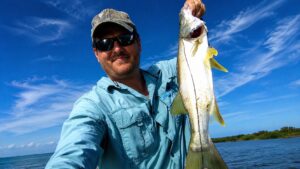](http://www.floridashorefishing.com/wp-content/uploads/2015/08/FSF-16x9-Snook-dan.jpg) ## Understanding Snook Behavior Snook are ambush predators that rely heavily on structure and current to feed efficiently. Unlike fish that actively chase prey over long distances, snook typically position themselves near: - Mangrove shorelines - Docks - Bridges - Seawalls - Inlets - Passes - Beach troughs - Oyster bars They use these structures as cover while waiting for baitfish, shrimp, crabs, and other prey to drift within striking range. One of the reasons snook are so popular among Florida anglers is their predictable behavior. Once you understand how current, tides, and structure influence snook positioning, locating fish becomes significantly easier. ### What Do Snook Eat? Snook are opportunistic feeders and will consume a wide variety of prey. Common forage includes: - Pilchards - Threadfin herring - Finger mullet - Pinfish - Shrimp - Crabs - Glass minnows - Menhaden Matching local baitfish is often one of the most effective ways to increase catch rates. ## Seasonal Snook Fishing Patterns Snook behavior changes throughout the year as water temperatures fluctuate. ### Spring Snook Fishing Spring is one of the best times to target snook in Florida. As water temperatures warm, snook become increasingly active after winter. Look for fish around: - Mangrove shorelines - Residential docks - Creek mouths - Backwater channels Spring feeding activity increases dramatically as baitfish populations grow. ### Summer Snook Fishing Summer is considered prime snook season. Large fish move toward: - Beaches - Inlets - Passes - Bridges This period coincides with spawning activity. Many trophy snook are caught along Florida’s beaches during early morning and evening hours. ### Fall Snook Fishing Fall offers excellent opportunities for anglers fishing from shore. As water temperatures gradually cool, snook feed aggressively in preparation for winter. Focus on: - Bridges - Docks - Creek mouths - Residential canals Fall bait migrations often create outstanding fishing conditions. ### Winter Snook Fishing Winter can be challenging but highly rewarding. Snook become sensitive to cold temperatures and often move into: - Deep canals - Residential basins - Power plant outflows - Protected backwaters Fishing slowly during the warmest part of the day often produces the best results. ## Best Tides for Snook Fishing Tides are one of the most important factors in successful snook fishing. Snook position themselves according to water movement because tides concentrate bait and create feeding opportunities. ### Incoming Tide An incoming tide brings fresh water movement and often cleaner water conditions. Snook commonly position: - Along mangrove edges - Around bridge pilings - Near dock corners - Along seawalls Incoming tides often produce aggressive feeding activity. ### Outgoing Tide Many experienced anglers consider outgoing tides the best tide for snook fishing. As water drains from backcountry areas, baitfish become concentrated and are forced through predictable feeding lanes. Target: - Creek mouths - Canal openings - Bridge current seams - Passes and inlets Large snook frequently stage near these bottlenecks. ### Slack Tide Fishing generally slows during slack tide. However, snook often remain near: - Shade lines - Deep holes - Bridge pilings - Dock structure Slowing down your presentation can still produce quality fish. ## Best Moon Phases for Snook Fishing Moon phases significantly influence snook activity. ### New Moon The new moon often creates strong tidal movement and increased feeding activity. Many experienced anglers consider the days surrounding the new moon among the best times to target trophy snook. ### Full Moon Full moon periods can also be productive. However, fish often feed throughout the night, making daytime fishing somewhat less consistent. ### Quarter Moons Quarter moon periods create more moderate tides and can produce steady action, especially in areas with strong current flow. ## Bridge Fishing for Snook Bridge fishing for snook is one of the most effective methods available to Florida anglers. Bridges create ideal feeding zones by combining: - Structure - Shade - Current - Concentrated bait ### Where Snook Hold Around Bridges Snook frequently position: - Behind bridge pilings - Along current seams - Within bridge shadows - Near channel edges As tides change, fish reposition accordingly. Understanding tide movement is critical for bridge fishing success. For a complete breakdown, see our guide: **The Florida Bridge Fishing Playbook: Where Gamefish Hold During Every Tide Stage** ### Best Bridge Baits - Live pilchards - Finger mullet - Threadfin herring - Large shrimp Artificial lures such as paddle-tail swimbaits and twitch baits also perform exceptionally well. ## Dock Fishing for Snook Docks are classic snook habitat. The combination of shade, structure, and baitfish attracts snook throughout the year. ### Productive Dock Features Look for: - Deep-water docks - Lighted docks - Corner pilings - Areas with strong current Skip-casting lures beneath docks can produce outstanding results. ### Best Dock Lures - Soft plastic jerkbaits - Paddle tails - Twitch baits - Topwater plugs Accurate casting often determines success around dock structure. ## Beach Snook Fishing Many anglers overlook beach snook fishing despite it producing some of the largest fish of the year. During summer, snook move along Florida beaches to spawn. ### Where to Find Beach Snook Focus on: - Troughs - Sandbars - Cuts - Nearshore bait schools Early mornings and evenings are often most productive. ### Beach Fishing Baits - Live pilchards - Threadfin herring - Whitebait - Artificial swimbaits Polarized sunglasses can help spot cruising fish in clear water. ## Best Live Bait for Snook Live bait consistently produces excellent results. ### Top Live Baits #### Pilchards Perhaps the most popular snook bait in Florida. #### Finger Mullet Ideal for targeting larger fish. #### Threadfin Herring Excellent around bridges and inlets. #### [Live Shrimp](https://www.floridashorefishing.com/live-or-frozen-shrimp-for-bait) One of the most versatile baits available. #### Pinfish Effective around docks and structure. ## Best Artificial Lures for Snook Artificial lures allow anglers to cover water quickly and target aggressive fish. ### Topwater Plugs Excellent during low-light periods. ### Paddle-Tail Swimbaits One of the most consistent snook producers. ### Twitch Baits Ideal around docks and bridge pilings. ### Soft Plastic Jerkbaits Highly effective in shallow water. ### Bucktail Jigs Excellent for fishing current around bridges and passes. ## Night Snook Fishing Tactics Many of Florida’s largest snook are caught after dark. Nighttime provides: - Reduced fishing pressure - Cooler temperatures - Increased feeding activity ### Target Lighted Areas Bridge lights and dock lights attract baitfish, which attract snook. Focus on: - Light-to-dark transitions - Shadow lines - Current seams ### Slow Down Your Presentation Night fishing often rewards subtle presentations and precise casts. Listen for bait activity and surface strikes to locate feeding fish. ## Snook Regulations in Florida Before targeting snook, always review current Florida Fish and Wildlife Conservation Commission (FWC) regulations. Regulations can change based on: - Region - Season - Conservation needs Pay close attention to: - Open and closed seasons - Slot limits - Possession limits Current regulations can be found on the FWC website. ## Final Thoughts Learning how to catch snook requires understanding how these fish use structure, tides, bait, and seasonal movements. Whether you’re bridge fishing for snook, working a residential dock, or targeting fish along Florida’s beaches, success comes from putting your bait where feeding fish naturally position themselves. Focus on strong tidal movement, match local forage, and fish areas that provide current, shade, and structure. Combine those fundamentals with the right bait and presentation, and you’ll greatly increase your chances of landing one of Florida’s most exciting gamefish. [](https://www.floridashorefishing.com/profile/dan/)##### Author: [Daniel Hagan](https://www.floridashorefishing.com/profile/dan/) Daniel Hagan has been fishing Florida’s shores since 1985 and writing about it for more than 20 years. As Managing Editor of FloridaShoreFishing.com, he shares firsthand experience covering surf and pier fishing, tackle, techniques, and Florida’s coastal species.  [Daniel Hagan](https://www.floridashorefishing.com/profile/dan) Daniel Hagan has been fishing Florida’s shores since 1985 and writing about it for more than 20 years. As Managing Editor of FloridaShoreFishing.com, he shares firsthand experience covering surf and pier fishing, tackle, techniques, and Florida’s coastal species. [](https://www.facebook.com/groups/FloridaShoreFishing "Facebook") **Categories:** Fishing Articles, How To **Tags:** How To, Snook, Snook fishing --- ### [Mastering Top Water Tactics: A Guide to Landing More Fish](https://www.floridashorefishing.com/mastering-top-water-tactics-a-guide-to-landing-more-fish) **Published:** June 5, 2023 **Author:** Daniel Hagan **Content:** [**Top water fishing**](http://www.floridashorefishing.com/topwater-trout) is widely reguarded as the most exciting way to catch a fish. The lures used on the top cause aggressive strikes that are often airborn or large explosions. This is a guide to landing more fish while top water fishing. ## Understanding Top Water Fishing Before diving into the tactics, here is what concept of top water fishing is. In simple terms, top water fishing refers to a technique where anglers target fish species that primarily feed on or near the water’s surface. It involves using lures that imitate insects, baitfish, or other prey items that float or skim across the top of the water. ## Selecting the Right Lures Choosing the right lure is crucial when it comes to top water fishing. Here are a few types of lures that have proven effective: 1. Popper: Designed to create a popping sound and attract fish by simulating a wounded prey item. 2. Walk-the-Dog: These lures create a side-to-side motion when twitched, resembling a struggling baitfish. 3. Buzzbait: A spinnerbait with a propeller blade that creates a surface disturbance, attracting predatory fish. ## Mastering Techniques To maximize your success, it’s essential to master various techniques specifically tailored for top water fishing. Let’s explore some popular techniques: 1. Popping: Gently twitch your rod tip to create popping noises that mimic baitfish or insects. 2. Walking the Dog: Utilize a rhythmic side-to-side rod movement to make the lure move in a zigzag pattern. 3. Stop-and-Go: Cast your lure and let it rest for a few seconds before giving it a twitch or jerk, imitating a wounded prey. ## Time and Location Understanding the best time and location for top water fishing can significantly improve your chances of success. Factors such as weather conditions, water temperature, and the presence of structure play a crucial role. In most locations the best time for top water fishing is the first few hours after dawn and before dusk. Most top water fishing will slow down when the sun is high in the sky. Tides and other types of water movement will also affect top water fishing. Most species of fish prefer flowing water, and in tidal waters the top and bottom of a tide tend to be the best (right before the tide changes) ## Top Water Fishing Tips Here are some additional tips to further optimize your top water fishing experience: 1. Stealth Approach: Approach your fishing spot quietly to avoid spooking fish, especially in shallow waters. 2. Experiment with Retrieval Speed: Vary your retrieval speed to imitate different prey movements and trigger strikes. 3. Keep an Eye on Nature’s Cues: Observe the behavior of birds, such as diving or feeding activity, as they often indicate the presence of baitfish and potential feeding areas. ## Land More Top Water Fish By incorporating these top water tactics into your angling repertoire, you’re well on your way to becoming a skilled fisherman. Remember, practice makes perfect, so head out to the water, experiment with different techniques, and embrace the excitement that comes with top water fishing. With dedication and patience, you’ll undoubtedly increase your catch rate and create memorable fishing experiences. Remember, Florida Shore Fishing is here to support your angling journey, offering valuable insights and resources to help you make the most of your fishing adventures. Happy fishing! [](https://www.floridashorefishing.com/profile/dan/)##### Author: [Daniel Hagan](https://www.floridashorefishing.com/profile/dan/) Daniel Hagan has been fishing Florida’s shores since 1985 and writing about it for more than 20 years. As Managing Editor of FloridaShoreFishing.com, he shares firsthand experience covering surf and pier fishing, tackle, techniques, and Florida’s coastal species.  [Daniel Hagan](https://www.floridashorefishing.com/profile/dan) Daniel Hagan has been fishing Florida’s shores since 1985 and writing about it for more than 20 years. As Managing Editor of FloridaShoreFishing.com, he shares firsthand experience covering surf and pier fishing, tackle, techniques, and Florida’s coastal species. [](https://www.facebook.com/groups/FloridaShoreFishing "Facebook") **Categories:** Bait and Lures, Lures, News --- ### [Topwater Trout](https://www.floridashorefishing.com/topwater-trout) **Published:** September 2, 2015 **Author:** Daniel Hagan **Content:** A fish exploding on a topwater lure early in the morning is one of life’s most exciting moments. Speckled Sea Trout (Trout) are one of the most exciting, and willing, fish that can be caught on a topwater lure. They are aggressive strikers, causing a massive splash and often an aerial display when they try to inhale the lure. Here is how to catch Trout with Topwater lures. **When and Where to Fish for Trout on Top** Trout can be caught around the clock, but when using topwater lures the best time is just after sunrise and just before sun set. The lower sun allows the fish to feel hidden when it is approaching a topwater lure. While there are days that Trout can be caught on top even at noon, they are far more likely to hit a topwater when the sun is low. The weather can also play a role. A slight breeze is ideal. The small amount of chop that a slight breeze creates will also help in making the trout feel secure. Flat calm will work, but the odds of fish being active at the surface are a little lower, and a heavy wind makes working a topwater very difficult and will lead to lower number of hook ups. **Best Equipment for Topwater Trout Fishing** The most important thing to consider for Topwater Trout fishing gear is casting distance. The further a rod and reel can cast, the better the chances of catching a fish are. The most successful set up is a saltwater rated spinning reel on a 7 foot long medium action rod. The reel should be spooled with 10lb braided line (the same casting distance as 2lb monofiliment) and tipped with about 14 inches of 15lb fluorocarbon leader. **Best Topwater Lures for Trout** There are 3 main types of topwater lures to use for trout; Walk-The-Dog style, Poppers and Buzzers. Walk-the-dog style lures are shaped like a finger mullet and by using a specific rod action the lure zigs and zags across the surface of the water resembling a wounded fish. The poppers are long slender lures with a cupped face. These lures are gently jerked along the surface to cause a chugging action that attracts fish from long distances. Buzzers look similar to walk-the-dog style lures but they have propellers added to the back and sometimes the front of the lure. An erratic retrive causes the lure to resemble an injured bait fish and the propellers create a buzzing sound that mimics the sound of a fish flaying at the surface. *POPULAR LURES* - Zara Spook - Rapala Skitter Walk - Rebel Pop-R - Sugoi Splash Popper - Rapala Skitter Prop - X-Rap Prop **Topwater Techniques for Trout** When an area that holds trout is located (they are often found near bridges, docks, piers, and in open grass flats near sand potholes) cast as far beyond the target area as possible. Work the lure back through the strike zone, pausing for a few seconds periodically. Using a fan casting technique cover the area 2 or 3 times (fish can be reluctant to hit a topwater on its first pass but will often strike on its second or third pass). After the 3rd fan casting pass, move to a new area and start over. When a trout hits a topwater lure it is very important that all slack line is reeled in quickly and the hook is set ONLY AFTER pressure from the fish is felt. Many fish short strike topwaters and aggressively pulling the lure away (the result of setting the hook with out a fish on it) will spook the fish as well as remove the lure from the strike zone. If a trout misses on its first attempt, allow the lure to sit still for a 2 or 3 seconds, then begin to work it again. A second strike will often come right as the lure starts to move again. Many times trout will continue to short strike a lure over and over again, if this is the case continue to work the lure with multiple pauses. The pauses may cause the fish to finally strike the lure and get hooked. **Tips and Tricks** - Ensure the hooks stay clear of grass and debris (it will affect the action of the lure and also cause fish to lose interest) - The longer the cast the better. - If fish are visible, cast to where the lure will cross their path about 2-4 feet in front of them. - In winter, slow the retrieve down. Trout are less aggressive in cool water [](https://www.floridashorefishing.com/profile/dan/)##### Author: [Daniel Hagan](https://www.floridashorefishing.com/profile/dan/) Daniel Hagan has been fishing Florida’s shores since 1985 and writing about it for more than 20 years. As Managing Editor of FloridaShoreFishing.com, he shares firsthand experience covering surf and pier fishing, tackle, techniques, and Florida’s coastal species.  [Daniel Hagan](https://www.floridashorefishing.com/profile/dan) Daniel Hagan has been fishing Florida’s shores since 1985 and writing about it for more than 20 years. As Managing Editor of FloridaShoreFishing.com, he shares firsthand experience covering surf and pier fishing, tackle, techniques, and Florida’s coastal species. [](https://www.facebook.com/groups/FloridaShoreFishing "Facebook") **Categories:** Bait and Lures, Featured, Fishing Articles, Lures **Tags:** Techniques, top water, trout --- ### [How to Keep Bait Fish Alive - A Quick Guide](https://www.floridashorefishing.com/how-to-keep-bait-fish-alive) **Published:** August 27, 2023 **Author:** Daniel Hagan **Content:** When fishing from Florida’s shores some of the most popular and most effective baits are bait fish. Ranging from Pinfish to Finger Mullet to Scaled Sardines these bait fish have been responsible for some of the best fishing trips. The main downside to using live bait fish is that they can be difficult to keep alive in captivity. Some of the fish are very sensitive to overcrowding, some are very sensitive to the loss of their protective slime, some are sensitive to lower levels of oxygen and some are very sensitive to temperature variations. There are a few things you can do to help ensure that your bait will be lively for your entire fishing trip, and here are a few of them. **Container Size** The container that the bait fish are kept in should be large enough to keep the amount of fish that you plan on using in a day alive. Most bait fish require about ½ gallon of water per fish to keep them alive long term. A 5-gallon bucket can keep about 10-15 finger mullet or 10-12 pinfish alive for a full day (if all other conditions are met) Overcrowding in a container can lead to the rapid death of baitfish. While in the container the fish will continue to produce waste. This waste will cause the water to foul (usually ammonia from fish urine) and become toxic to the bait fish. Another adverse condition created by over crowding is lack of oxygen. Too many fish in a small container will cause the water to quickly become depleted of oxygen, which can be fatal to the bait fish. Having fewer fish per gallon of water will help reduce this risk. **Oxygenation** A major killer of bait fish is the lack of dissolved oxygen in the water that they are being kept in. In a closed system, like a bait bucket, bait fish can use all of the dissolved oxygen rather rapidly if it is not replaced. A bubbler or a spray bar will kelp to counter this problem. No matter what solution is chosen, make sure that the surface of the water that the bait fish are kept in is always kept disturbed. The disturbed surface of the water will absorb much more oxygen than any other method. Bubblers tend to do a VERY good job at disturbing the surface at an economical price. **Water Temperature** Fish are cold blooded, so their metabolism is highly affected by water temperature as are many other biological functions. The higher the water temperature, typically, the faster the fish kept in it will die. Keeping the water temperature a few degrees bellow ambient temperature on warm/hot days will help ensure a longer life for the baitfish. A good aerator (bubble or spray bar) will not only help with oxygen, but it will also help keep the temperature down a little bit by encouraging evaporation. Another tip to help keep the water temperatures down is to keep the container out of direct sun. If this is not possible, cover it with a white towel, this will help prevent the sun from raising the temperature. A small bottle of frozen water can be added to large containers to help keep temperatures down if not other techniques are working. Just ensure that the amount of frozen water added does not DRASTICALLY change the temperature as this ma be shocking and deadly to the bait fish. **Water Changes** On long trips it will sometimes become necessary to do water changes in your bait container. The water changes will help eliminate any toxicity that has built up in the container. Change 25-50% water volume with water from the body of water you are fishing every 4 hours. Use a small bucket to collect the water and after emptying an equal amount from your container, slowly poor the new water in. Note: Do not change more than 50% of the water volume at a time as this can be shocking to the bait fish. The rapid change in water quality can be to much for the bait fish to handle. If you have any other tips for keeping baitfish alive, please join our [Facebook Group](https://www.facebook.com/groups/FloridaShoreFishing/) and let us know! [](https://www.floridashorefishing.com/profile/dan/)##### Author: [Daniel Hagan](https://www.floridashorefishing.com/profile/dan/) Daniel Hagan has been fishing Florida’s shores since 1985 and writing about it for more than 20 years. As Managing Editor of FloridaShoreFishing.com, he shares firsthand experience covering surf and pier fishing, tackle, techniques, and Florida’s coastal species.  [Daniel Hagan](https://www.floridashorefishing.com/profile/dan) Daniel Hagan has been fishing Florida’s shores since 1985 and writing about it for more than 20 years. As Managing Editor of FloridaShoreFishing.com, he shares firsthand experience covering surf and pier fishing, tackle, techniques, and Florida’s coastal species. [](https://www.facebook.com/groups/FloridaShoreFishing "Facebook") **Categories:** Bait, Bait and Lures, Fishing Articles, How To **Tags:** How To, Live Bait, minnows --- ### [How to Read a Florida Beach Like a Fish: Finding Troughs, Cuts, and Sandbars](https://www.floridashorefishing.com/how-to-read-a-florida-beach-like-a-fish-finding-troughs-cuts-and-sandbars) **Published:** June 15, 2026 **Author:** Daniel Hagan **Content:** One of the biggest secrets to successful Florida surf fishing isn’t your bait, rod, or tackle—it’s understanding beach structure. Fish don’t roam randomly along miles of shoreline. Instead, they concentrate around underwater features that provide food, current flow, and protection. Learning how to identify troughs, cuts, and sandbars can dramatically increase your catch rates from the beach. ## What Beach Structure Actually Attracts Fish? Beach structure creates natural feeding zones. Waves, tides, and currents constantly reshape the shoreline, forming underwater highways where baitfish, shrimp, crabs, and other prey gather. Predatory fish follow these food sources, making certain sections of the beach far more productive than others. The three most important structures for Florida shore anglers are troughs, cuts, and sandbars. ## Identifying Troughs from Shore A trough is a deeper channel of water that runs parallel to the beach between the shoreline and an offshore sandbar. Troughs often appear as darker water because of their increased depth. Look for: - Darker bands of water close to shore - Areas where waves lose energy before breaking - Consistent water movement parallel to the beach Troughs are prime feeding lanes for Pompano, Whiting, Redfish, and Snook. During high tide, many fish move into these deeper channels to feed just yards from the sand. ## Finding Cuts in Sandbars A cut is a break or opening in a sandbar where water flows between deeper areas. These openings act like funnels that concentrate bait and create ambush points for predators. From the beach, cuts often appear as: - Gaps where waves don’t break consistently - Darker water extending through a sandbar - Areas with stronger current movement Fish frequently position themselves on either side of a cut, waiting for baitfish and crustaceans to be swept through by tidal currents. ## Why Bait Concentrates in These Areas Troughs and cuts naturally collect food. Wave action dislodges sand fleas, shrimp, small crabs, and baitfish, while tidal currents transport them through channels and openings. This concentration of food creates predictable feeding zones. Instead of searching vast stretches of beach, fish can simply hold near structure and let the current bring meals to them. ## Best Tides for Each Structure **Troughs:** Often fish best during incoming and high tides when predators move close to shore. **Cuts:** Typically shine during moving water, especially the outgoing tide when bait is flushed through openings in the sandbar. **Sandbar Edges:** Productive during both incoming and outgoing tides as fish patrol the drop-offs looking for easy prey. ## Species Examples ### Pompano Pompano love feeding along troughs and the edges of cuts where sand fleas and small crustaceans collect. ### Whiting [Whiting](https://www.floridashorefishing.com/how-to-catch-whiting) often cruise shallow troughs close to shore, especially during rising tides. ### Snook Snook frequently stage near cuts and deeper troughs, using current flow to ambush baitfish ([Snook are highly regulated](https://myfwc.com/fishing/saltwater/recreational/snook/), keep up to date with their regulations). ### Redfish Redfish patrol troughs and sandbar edges searching for crabs, shrimp, and other bottom-dwelling prey. ## Common Mistakes Beginners Make Many new surf anglers make the mistake of casting as far as possible. In reality, fish are often feeding in the first trough only 20 to 50 feet from shore. Other common mistakes include: - Ignoring water color changes - Fishing featureless stretches of beach - Overlooking moving water around cuts - Staying in one spot too long when structure isn’t present The next time you hit a Florida beach, spend a few minutes studying the water before making your first cast. By learning to identify troughs, cuts, and sandbars, you’ll begin seeing the beach the same way fish do—and you’ll consistently find more productive fishing opportunities. [](https://www.floridashorefishing.com/profile/dan/)##### Author: [Daniel Hagan](https://www.floridashorefishing.com/profile/dan/) Daniel Hagan has been fishing Florida’s shores since 1985 and writing about it for more than 20 years. As Managing Editor of FloridaShoreFishing.com, he shares firsthand experience covering surf and pier fishing, tackle, techniques, and Florida’s coastal species.  [Daniel Hagan](https://www.floridashorefishing.com/profile/dan) Daniel Hagan has been fishing Florida’s shores since 1985 and writing about it for more than 20 years. As Managing Editor of FloridaShoreFishing.com, he shares firsthand experience covering surf and pier fishing, tackle, techniques, and Florida’s coastal species. [](https://www.facebook.com/groups/FloridaShoreFishing "Facebook") **Categories:** Featured, Fishing Articles, How To --- ### [5 Tips for Fishing During the Heat of Summer](https://www.floridashorefishing.com/5-tips-for-fishing-during-the-heat-of-summer) **Published:** June 13, 2026 **Author:** Daniel Hagan **Content:** Summer is one of the most exciting times of the year to get out on the water. School is out, vacation season is in full swing, and long daylight hours give anglers more opportunities than ever to fish. While many people assume that hot weather automatically means great fishing, experienced anglers know that summer can be one of the most challenging seasons to consistently catch fish. Whether you’re fishing the Florida surf, a coastal lagoon, an inland lake, or a river system, the intense summer heat changes fish behavior in significant ways. Rising water temperatures affect feeding patterns, oxygen levels, and fish movement. Add in bright sunshine and increased boating activity, and you’ll quickly discover that the tactics that worked in spring may not produce the same results during the hottest months of the year. The good news is that fish still need to eat, and with a few adjustments to your strategy, summer can provide some of the most productive fishing of the year. Understanding where fish move, when they feed, and how to stay comfortable in the heat can dramatically improve your success. Here are five proven tips to help you catch more fish and stay safe while fishing during the heat of summer. ## 1. Fish Early, Fish Late, and Consider Fishing at Night One of the biggest mistakes anglers make during the summer is fishing during the hottest part of the day and expecting the same level of activity they see during cooler months. Fish are cold-blooded creatures, meaning their body temperature is influenced by the surrounding water. As water temperatures rise, many species become less active during the middle of the day. At the same time, bright sunlight can make fish more cautious and push them toward deeper or shaded areas. For this reason, the most productive fishing often occurs during the “low-light” periods around sunrise and sunset. ### Why Early Morning Works The hours immediately before and after sunrise are often considered the best fishing times of the day. Overnight cooling helps reduce water temperatures, making fish more comfortable and more willing to feed aggressively. Baitfish are also highly active during this period, creating feeding opportunities for predators. Many popular Florida species such as snook, redfish, tarpon, trout, and pompano are known to feed heavily during the first few hours of daylight. ### The Evening Advantage As the sun begins to set, temperatures start to drop again, and fish become more active. The evening bite can often be just as productive as the morning bite, especially on hot days when fish have spent most of the afternoon conserving energy. ### Don’t Overlook Night Fishing Some of the best summer fishing happens after dark. Nighttime temperatures are significantly cooler, and many species become much more comfortable moving into shallow water to hunt. Surf anglers frequently find success targeting snook and tarpon at night, while freshwater anglers often see increased activity from bass and catfish after sunset. Fishing under dock lights, bridge lights, and other illuminated structures can be particularly productive because these areas attract baitfish, which in turn attract predators. If your schedule allows, shifting your fishing trips to early morning, late evening, or nighttime can dramatically improve both your comfort and your catch rate. --- ## 2. Find Shade and Structure Just like people seek shade on a hot summer day, fish often do the same. Shade provides several important benefits for fish. It helps reduce exposure to direct sunlight, can create slightly cooler water temperatures, and offers excellent ambush opportunities for predatory species. When temperatures soar, shaded areas often become prime feeding locations. ### Where to Look for Shade Natural and man-made structures can both create productive shaded zones. Some of the best places to target include: - Overhanging trees - Mangrove shorelines - Docks and piers - Bridges and bridge pilings - Boat lifts - Jetties - Rock formations - Seawalls - Floating vegetation These areas often serve as natural gathering points for baitfish, making them attractive to larger predators. ### Focus on the Edges One common mistake is casting directly into the darkest portion of the shade. While fish may hold there, many predators actually position themselves along the edges of the shadow line. The transition between sunlight and shade creates a natural ambush zone where fish can remain concealed while waiting for prey to pass by. When approaching a shaded area, make casts that run parallel to the edge of the shade or allow your bait to move naturally from sunlight into shadow. ### Structure Plus Shade Equals Opportunity The most productive summer spots often combine shade with some type of structure. For example, a dock that provides shade while also holding barnacles, baitfish, and current breaks can become a feeding station for numerous gamefish species. Similarly, a mangrove shoreline with deeper water nearby may hold fish throughout the hottest hours of the day. When searching for fish during summer, prioritize areas that offer both cover and comfort. --- ## 3. Look for Temperature Breaks One of the most overlooked summer fishing strategies is identifying temperature breaks. A temperature break occurs when two bodies of water with different temperatures meet. These subtle changes can have a major impact on fish behavior. Fish are constantly searching for conditions that provide the best balance of comfort, oxygen, and food availability. Temperature transitions often create exactly those conditions. ### Why Temperature Breaks Matter Temperature differences can concentrate baitfish, plankton, and other food sources. Wherever bait gathers, gamefish are usually not far behind. In many cases, even a temperature difference of just a few degrees can attract large numbers of fish. ### Common Locations for Temperature Breaks Some of the best places to find temperature breaks include: - River mouths - Creek inlets - Freshwater runoff areas - Tidal channels - Springs - Deep-water channels - Areas influenced by ocean currents Along Florida’s coastlines, tidal movement often creates visible boundaries where different water masses meet. These areas can become feeding hotspots throughout the summer. ### How to Identify Them Sometimes temperature breaks are easy to spot. You may notice: - Changes in water color - Differences in water clarity - Distinct current lines - Floating debris gathering in one area - Concentrations of baitfish Other times, the differences may be less obvious. Modern fish finders and temperature gauges make locating temperature breaks much easier, but even simple observation can reveal productive areas. Paying attention to changes in water appearance and fish activity can often lead you directly to these hidden hotspots. Whenever you find a location where cooler water intersects warmer water, it’s worth spending extra time fishing there. --- ## 4. Target Deeper Water During Peak Heat For much of the year, shallow water is one of the most productive places to fish. However, during the peak of summer, fish frequently move deeper in search of cooler and more stable conditions. This shift can be especially noticeable during midday when the sun is at its highest point. ### Why Fish Move Deep Shallow water heats up quickly. In some areas, water temperatures can rise several degrees over the course of a single afternoon. As temperatures increase, oxygen levels can decrease, making these areas less comfortable for fish. Deeper water generally offers: - Cooler temperatures - More stable conditions - Higher oxygen levels - Reduced light penetration - Greater protection from predators These factors make deeper water attractive during the hottest parts of the day. ### Productive Deep-Water Areas Look for: - Channels - Drop-offs - Deep pockets - Troughs in the surf - Boat basins - Navigation cuts - Deep holes near structure For surf anglers, locating a deeper trough between sandbars can make a significant difference. Fish often use these deeper corridors as travel routes and feeding areas when shallow water becomes too warm. ### Adjust Your Presentation When targeting deeper fish, it’s important to adjust your tackle and presentation accordingly. You may need: - Heavier weights - Larger jig heads - Sinking lures - Slower retrieves - Longer pauses Fish in deeper water may not be as aggressive as they are during cooler periods, so giving them a slower, more natural presentation often produces better results. Remember, if the shallow bite disappears during the middle of the day, don’t assume the fish have stopped feeding entirely. They may simply have moved deeper. --- ## 5. Protect Yourself from the Summer Heat While most anglers focus on finding fish, protecting yourself should always be a top priority. Summer fishing can expose you to extreme heat, intense UV radiation, and high humidity for extended periods. Heat-related illnesses can develop quickly, especially when you’re concentrating on fishing and not paying attention to your body’s warning signs. ### Hydration Is Critical Dehydration is one of the most common problems anglers face during summer. By the time you feel thirsty, your body may already be experiencing the early effects of dehydration. Make hydration part of your fishing routine: - Drink water before you feel thirsty. - Bring more water than you think you’ll need. - Consider electrolyte drinks for long trips. - Limit excessive caffeine and alcohol consumption. Frequent hydration helps maintain energy levels, concentration, and overall safety. ### Dress for the Conditions Modern fishing apparel makes it easier than ever to stay cool while protecting your skin. Consider wearing: - Lightweight long-sleeve fishing shirts - Moisture-wicking fabrics - UV-protective clothing - Wide-brim hats - Neck gaiters - Polarized sunglasses Contrary to popular belief, covering your skin often keeps you cooler than exposing it directly to the sun. ### Use Quality Sunscreen Even on cloudy days, UV exposure can be significant. Apply a broad-spectrum sunscreen with SPF 30 or higher and reapply throughout the day, especially if you’re sweating heavily or spending time in the water. ### Know the Signs of Heat Stress Watch for symptoms such as: - Dizziness - Headaches - Nausea - Excessive fatigue - Muscle cramps - Confusion If you experience any of these symptoms, seek shade immediately, hydrate, and cool down before continuing. No fish is worth risking your health. ## Final Thoughts Summer fishing presents unique challenges, but it also offers incredible opportunities for anglers willing to adapt. Understanding how heat affects fish behavior can help you make smarter decisions and stay productive even on the hottest days of the year. Focus your efforts during low-light periods, seek out shaded structure, pay attention to temperature breaks, target deeper water when necessary, and always prioritize your safety in the heat. Florida’s shores, rivers, lakes, and coastal waters continue to produce outstanding fishing throughout the summer months. With the right approach, you’ll not only catch more fish but also enjoy a safer and more comfortable experience on the water. So pack plenty of water, plan around the cooler parts of the day, and get out there. The fish are still biting—you just need to know where to find them. Good luck, tight lines, and enjoy your summer on the water! [](https://www.floridashorefishing.com/profile/dan/)##### Author: [Daniel Hagan](https://www.floridashorefishing.com/profile/dan/) Daniel Hagan has been fishing Florida’s shores since 1985 and writing about it for more than 20 years. As Managing Editor of FloridaShoreFishing.com, he shares firsthand experience covering surf and pier fishing, tackle, techniques, and Florida’s coastal species.  [Daniel Hagan](https://www.floridashorefishing.com/profile/dan) Daniel Hagan has been fishing Florida’s shores since 1985 and writing about it for more than 20 years. As Managing Editor of FloridaShoreFishing.com, he shares firsthand experience covering surf and pier fishing, tackle, techniques, and Florida’s coastal species. [](https://www.facebook.com/groups/FloridaShoreFishing "Facebook") **Categories:** Featured, Fishing Articles **Tags:** lists, Seasonal, Tips --- ### [How to Catch Speckled Sea Trout](https://www.floridashorefishing.com/how-to-catch-speckled-sea-trout) **Published:** April 10, 2021 **Author:** Daniel Hagan **Content:** Speckled Sea Trout (Cynoscion nebulosus), also known as Spotted Sea Trout, and Sea Trout are an incredibly popular sport fish. Averaging around 1-2lbs but with “Gators” over 15 pounds, Trout can be one of the most fun, and most aggressive fish that can be caught from Florida’s shores. **Where to Find Sea Trout** A voracious predator, Speckled Sea Trout can be found almost anywhere that will hold bait fish or live shrimp. The two most successful places to find them is on the flats near grass beds and at lit docks, bridges and piers at night. While those are the best places to find them, they can also be found in the following areas: - Inlets - Creek Mouths - Oyster Bars - Drop Offs and Sand Bars - Bays - Mangrove Canals - Almost anywhere that holds bait **Gear** With the average Sea Trout weighing only about 1-2 pounds, in most cases there is no reason to use heavy tackle. Even the largest trout, while they are a fun fight, are not a big challange for any gear that is rated for saltwater. Most Trout anglers will use a spinning reel that is rated for 10lb test line with a medium light action rod. 10lb braid with a 12lb flourocarbon leader will work for even the largest fish (as long as they are not in HEAVY cover). Here are a few gear recomendations: > ***Reels*** > > The most popular reels to use are spinning reels that are rated for saltwater. While size ratings change from manufacture to manufacture, in general 2000-3000 size spinning reels work the best for Trout. Some recommended reels include: > > - Penn Battle Spinning Reel > - Shimano Stradic FJ Spinning Reel > > ***Rods*** > > Trout are exciting, but not very strong fighters, so medium light actions rods work the best for them. They will give the angler the sensitivity needed to detect even the most subtle strikes and enough strength to fight the larger fish. A length of 7 foot or longer will help increase casting distance to help cover more water. When choosing a rod make sure that it is saltwater rated. > > ***Line*** > > Long casts are often required to reach Trout hiding spots so braid is the best line to use, but there are also a few other good reasons to use it. Braid is far more sensitive than any other style of line allowing subtle hits from trout (or other fish) to be detected. Its small diameter allows the bait or lure to reach the strike zone faster and stay there with little resistance. Braid also has higher abrasion resistance which will often come in handy when fishing around structure such as pylons of lit docks and piers. 8-10lb test braid will do fine for most fishing conditions. > > For a leader, 10-12lb fluorocarbon line works the best. It is nearly invisible in the water and and has much higher abrasion resistance than monofilament. **Live Bait** Trout are voracious predators and will devour most popular live bait, however there are a few the perform better than others. Here are a few: - Finger Mullet - Small Pinfish - Live Shrimp - Scaled Sardines When using live bait the most successful technique is to free-line the bait in areas that trout are known to hold. Using a 1-2/0 circle hook cast just up current of the target and allow the current to drift the bait through the strike zone. Make sure to keep most of the slack out of the line to aid in hook set as well as strike detection. If there is no current simply cast beyond the target and gently reel the bait back trough the strike zone. If the cast and retrieve method is not working, try soaking live bait in with just enough weight (an egg sinker above a swivel works best) to hold the bottom in the area of interest. Trout will often be aggressive strikers and the strikes are easy to detect. But on cooler nights or very hot days they have been known to have subtle strikes. Keep an eye on your line and if the movement of the line changes or stops completely reel in all slack and feel for pressure. If there is pressure, set the hook (when using a circle hook, reel in rapidly while gently raising your rod tip, do not jerk as it will pull the hook). **Lures** Trout are one of the most exciting fish to catch on artificial baits. They are willing strikers on almost all popular saltwater lures and they are legendary for their aggressive early morning attacks on top water lures. Some of the more popular lures for Sea Trout are: - Zara Spook (top water) - Berkeley Alive Gulp Swimming Mullet - Soft Jerk Baits - Soft Paddle Tails - Hard Plastic Plugs Early morning offers exciting top-water action, while night time often has great results with diving plugs and soft plastics around well lit docks. When using artificial, in any location, make sure to use a steady but erratic retrieve. Causing a lure to resemble and injured bait fish will trigger the trouts natural predatory instinct and lead to more strikes than a steady strait retrieve. **Tips and Tricks** - Trout are often visible. Look for their flashy silver sides to reflect the sun or lights when they are swimming near the surface. - Trout have different regulations for different parts of the state, be sure to check your local regulations before harvesting trout. - Larger Sea Trout have been known to have worms, and they are the breeders, a healthy release is suggested. - Trout have a sensitive slime coating, if a release is planned handle their skin as little as possible and when touching it, make sure your had is wet first. - Trout shake their heads pretty violently when hooked, make sure to not allow slack in the line as that will often lead to a pulled hook. Helpful Links - [Topwater Trout](http://www.floridashorefishing.com/topwater-trout) - [Trout Run](http://www.floridashorefishing.com/spring-speckled-trout-run) - [Regulations](https://myfwc.com/fishing/saltwater/recreational/) [](https://www.floridashorefishing.com/profile/dan/)##### Author: [Daniel Hagan](https://www.floridashorefishing.com/profile/dan/) Daniel Hagan has been fishing Florida’s shores since 1985 and writing about it for more than 20 years. As Managing Editor of FloridaShoreFishing.com, he shares firsthand experience covering surf and pier fishing, tackle, techniques, and Florida’s coastal species.  [Daniel Hagan](https://www.floridashorefishing.com/profile/dan) Daniel Hagan has been fishing Florida’s shores since 1985 and writing about it for more than 20 years. As Managing Editor of FloridaShoreFishing.com, he shares firsthand experience covering surf and pier fishing, tackle, techniques, and Florida’s coastal species. [](https://www.facebook.com/groups/FloridaShoreFishing "Facebook") **Categories:** Fishing Articles, How To **Tags:** How To, sea trout, specks, trout --- ### [How to Catch Permit](https://www.floridashorefishing.com/how-to-catch-permit) **Published:** April 17, 2021 **Author:** Daniel Hagan **Content:** How to Catch Permit – A Quick Guide. Permit are one of the most popular fish amongst anglers in South Florida and are popular areas as far north as Tampa Bay. These fish are fast, strong and can get quite large (over 50lbs). ### About Permit Permit are long lived fish that can live around 20-30 years. They primarily reside in the warmer waters of South Florida but there are reports of them being caught in all costal counties in Florida. During the warmer months, Permit will head offshore for breeding, but it is thought that in the Florida Keys they will breed year-round. Young Permit are often confused with Pompano as they have VERY similar appearance, however pompano do not reach near the size of an adult Permit. ### Where to find Permit Permit can be found in just about every type of habitat. They are found both offshore and inshore. They are frequently caught offshore around structure, but the most popular place to find them in on inshore flats. Here is where they can be found: - Inshore Grass Flats - Inshore Sand Flats - Deep Channels - Deep Inshore Holes - Offshore Reefs - Offshore Wrecks ### Gear for Catching Permit The size and strength of permit require gear that is capable of bringing them in. While some angler prefer the challenge of fighting permit with light gear, that is suggested only for highly experienced Permit anglers. ***Rods*** A medium action rod with a minimum of 7’ length is recommended. In many cases longer is better to allow for long distance casts to get close to a permit that is off in the distance. ***Reels*** 3500-5000 sized spinning reels are the most popular. These reels allow for long casts and still have the power and drag abilities to fight a larger fish, ***Line*** 20-30lb braid is recommended with a 20lb fluorocarbon leader that is at least 4’ long, preferably longer. Because of the crystal-clear water permit are frequently found in, fluorocarbon is HIGHLY recommended because it is the most difficult to see in the water. ### Bait for Permit While permit can be caught on lures and flies, they are most often caught using live bait. They primary forage on invertebrates so the most popular baits are: - Small Blue Crab - Pass Crabs - Live Shrimp - Clams ### Catching Permit Inshore Permit are most often caught by sight casting them. They can be found in schools or swimming solo on the flats. Permit can also be caught by blind casting to areas that they frequent in passes and flats. Here are a few tips: - Use crabs that are around a quarter to a half dollar in size. Permit do not have very large mouths, so do not expect them to eat a fully grown blue crab. - Make sure to always cast ahead of the fish (far enough ahead to not scare them). - When using shrimp, cast ahead of them and skip the bait across the top of the water to simulate a shrimp fleeing. When close to the Permit, allow it to sink to the bottom. - Permit have a great sense of smell, so make sure to keep your hands free of all chemicals and other things that could add a bad scent to a bait. - When blind casting for permit, place your bait in an area likely to be frequented by permit. Study the area and watch for areas that crabs and shrimp gather, this will also be where permit cruise looking for food. ### Helpful Links - [Identification](https://myfwc.com/research/saltwater/fish/permit/identification) - [Regulations](https://myfwc.com/fishing/saltwater/recreational/permit/) - [How to Catch Pompano](http://www.floridashorefishing.com/how-to-catch-pompano) [](https://www.floridashorefishing.com/profile/dan/)##### Author: [Daniel Hagan](https://www.floridashorefishing.com/profile/dan/) Daniel Hagan has been fishing Florida’s shores since 1985 and writing about it for more than 20 years. As Managing Editor of FloridaShoreFishing.com, he shares firsthand experience covering surf and pier fishing, tackle, techniques, and Florida’s coastal species.  [Daniel Hagan](https://www.floridashorefishing.com/profile/dan) Daniel Hagan has been fishing Florida’s shores since 1985 and writing about it for more than 20 years. As Managing Editor of FloridaShoreFishing.com, he shares firsthand experience covering surf and pier fishing, tackle, techniques, and Florida’s coastal species. [](https://www.facebook.com/groups/FloridaShoreFishing "Facebook") **Categories:** Fishing Articles, How To **Tags:** Flats Fishing, How to Catch, Permit --- ### [How to Catch Peacock Bass in Florida](https://www.floridashorefishing.com/how-to-catch-peacock-bass-in-florida) **Published:** December 25, 2022 **Author:** Daniel Hagan **Content:** Peacock bass, native to South America, are a highly prized gamefish found in many of the lakes and rivers of Florida. Although not native to the Sunshine State, these beautiful bass have taken up residence in many of the state’s waterways and have become a popular target for anglers. Peacock bass fishing in Florida offers some of the best bass fishing in the world. The peacock bass is a member of the cichlid family, which also includes several other species of bass. Peacocks are known for their fighting spirit and the large size they can reach. They are also recognized for their vibrant coloration and the beautiful markings they display when viewed up close. ## Peacock Bass History The peacock bass, native to South America, was first introduced to Florida in the late 1980s. The Florida Fish and Wildlife Conservation Commission (FWC) first stocked peacock bass in several waters around the state. Since then, the species has spread to many other places and has become well established throughout much of the state. The peacock bass is one of the most popular gamefish in Florida and is sought after by anglers of all skill levels. The species has become so popular that some anglers now specialize in targeting peacock bass. The fish has become so abundant in some areas that tournament-style fishing has become popular. ## Where to find Peacock Bass in Florida Peacock Bass are typically found in freshwater canals and lakes in South and South West Florida. Miami, West Palm Beach, Ft. Lauderdale and Naples are some of the more popular cities for this fishery. Peacock bass are typically found in shallow, weedy areas of lakes, ponds, and rivers and prefer warm, nutrient-rich water. These fish feed on a variety of prey, including insects, small fish, and crustaceans. ## How to Catch Peacock Bass in Florida When fishing for peacock bass, anglers have a variety of techniques and lures they can use to target these hard-fighting fish. Peacock bass can be caught with both live and artificial baits, as well as with a variety of lures such as spinners, crankbaits, jigs, and topwater baits. Live baits such as shiners, minnows, and worms can be very effective when fishing for peacock bass. These baits should be presented slowly and with little movement. Anglers should also be sure to use a hook size that is appropriate for the size of the bait being used. Most lures that are used to target Largemouth Bass, such as spinners, crankbaits, jigs and topwater plugs work well for Peacock Bass. The presentation should be determined by the water temperature and time of year. When the water is warm, peacock bass can be quite agressive and a fast presention that covers a lot of water can work well. When water temperature get either cold or very hot, slow the presentation down to attract the less active fish. When fishing for peacock bass, anglers should also be aware of their surroundings. The fish often hold in shady areas or near cover, such as logs, stumps, and weedbeds. Paying close attention to the environment can help anglers locate and target these fish more effectively. ## Conclusion Peacock bass fishing in Florida can be a very rewarding experience. These beautiful fish are highly sought after by anglers looking for a hard-fighting and colorful gamefish. With a variety of techniques and lures available, anglers of all skill levels can enjoy targeting these fish. With the right knowledge and the right gear, anglers can have a productive day on the water targeting peacock bass. [](https://www.floridashorefishing.com/profile/dan/)##### Author: [Daniel Hagan](https://www.floridashorefishing.com/profile/dan/) Daniel Hagan has been fishing Florida’s shores since 1985 and writing about it for more than 20 years. As Managing Editor of FloridaShoreFishing.com, he shares firsthand experience covering surf and pier fishing, tackle, techniques, and Florida’s coastal species.  [Daniel Hagan](https://www.floridashorefishing.com/profile/dan) Daniel Hagan has been fishing Florida’s shores since 1985 and writing about it for more than 20 years. As Managing Editor of FloridaShoreFishing.com, he shares firsthand experience covering surf and pier fishing, tackle, techniques, and Florida’s coastal species. [](https://www.facebook.com/groups/FloridaShoreFishing "Facebook") **Categories:** News **Tags:** Peacock Bass --- ### [Cold Water Fishing - Slow Your Presentation](https://www.floridashorefishing.com/cold-water-fishing-slow-presentation) **Published:** December 10, 2019 **Author:** Daniel Hagan **Content:** Cold water fishing can be succesful if a few tips are followed. When winter sets in the cooler air causes the water temperatures to drop. This change in water temperature brings along a needed change in bait/lure presentation. Fish are cold blooded, and because of this, their energy levels are highly affected by the temperature of the water they live in. Fish that are accustomed to water in the upper 70’s slow down quite a bit when the water reaches the 60’s. Because they slow down so much, it is important to change the presentation to suit the target’s energy level. Here are a few techniques that will help increase the number of fish caught when cold water fishing. **Larger Baits** When water temperatures fall, one thing that can entice a reluctant fish to bite is a larger bait/lure. Because of their reduced energy level, fish tend to conserve what energy they do have and only attack prey that is deemed easy and valuable. Larger prey is high up on the value list and will often get hit much more readily than smaller prey. Use a lure/bait that is bigger than normal, but still small enough to fit into the targeted fish’s mouth. When using live bait, try to select the larger versions of your favorite bait, and when using lures up the size by at least one size. **Cold Water Fishing – Slower Retrieve** When determining if a prey item is worth the effort needed to catch it, the speed of the prey is considered by the fish. A slower prey item is more attractive to a fish because it takes less effort to run it down and capture it. Slowing the retrieve of a lure/bait will increase the amount of hits by cold water fish. A rule of thumb is “if you think you are retrieving slow enough, slow it down just a little bit more” Many times fish will strike a bait while it is moving so slow that the angler did not think they would get a hit. **Subtle Movements** Cold water affects prey items just as much as it does the game fish. Bait fish slow down and move with more subtle movements when cold than they do in the warmer months. A rapid, sudden jerking motion that would work in the spring/summer may not work as well in the winter (fish tend to notice if something is acting highly unnatural), while a slow gentle upward swing of the rod may entice a bite from a reluctant fish. One technique that works in both warm water and cold is to allow pauses in your retrieve. If the lure is a sinking lure, allow it to fall. If the lure suspends, just let it rest. Often, more strikes will occur during this period than during active retrieve. ***Exceptions to the Rule*** There are, of course, exceptions to the rule. Fish like Bluefish and Spanish Mackerel almost always prefer fast moving flashy baits, no matter the water temperature. When targeting these fish, be sure to vary your presentation, including fast, rapid movements! **Quick Cold Water Tips:** - Use a slow presentation - Fish deeper water than normal - Areas with dark bottom warm faster than lighter and warmer water will attract fish - Deep holes near structure tend to preform well [](https://www.floridashorefishing.com/profile/dan/)##### Author: [Daniel Hagan](https://www.floridashorefishing.com/profile/dan/) Daniel Hagan has been fishing Florida’s shores since 1985 and writing about it for more than 20 years. As Managing Editor of FloridaShoreFishing.com, he shares firsthand experience covering surf and pier fishing, tackle, techniques, and Florida’s coastal species.  [Daniel Hagan](https://www.floridashorefishing.com/profile/dan) Daniel Hagan has been fishing Florida’s shores since 1985 and writing about it for more than 20 years. As Managing Editor of FloridaShoreFishing.com, he shares firsthand experience covering surf and pier fishing, tackle, techniques, and Florida’s coastal species. [](https://www.facebook.com/groups/FloridaShoreFishing "Facebook") **Categories:** Fishing Articles **Tags:** cold water, Seasonal, Winter --- ### [Florida Fishing in April](https://www.floridashorefishing.com/florida-fishing-in-april) **Published:** March 27, 2021 **Author:** Daniel Hagan **Content:** Fishing Florida in April, one of the best times of the year to be on the water! The water temperatures are up, the air temperatures are warm and the fish are active. So what should you be targeting now? Key Species **Black Drum and Red Drum (Redfish)** Both Black Drum and Redfish are abundant this time of year. They can be found on flats, bays, along shorelines and up in coastal creeks. The warmer water will cause these fish to become very active early in the day and slow down as the heat of the day settles in. Once the water warms, these fish can be found in deeper water. **Flounder** The offshore breeding season for Flounder has pretty much finished by now so the adult flounder will start to migrate back inshore. While this migration is much more sporadic than the winter migration offshore, Flounder can be found on incoming tides in inlets all around Florida. **Mangrove Snapper** The number of inshore Mangrove Snapper starts to increase this month. They can be found in mangrove shorelines, by reefs and other rocky cover. Using mud minnows will almost guarantee a strike from a mangrove snapper if they are in the area. **Pompano** The northbound migration of Pompano continues this month. For the southern part of the state the Pompano season is pretty much over, but mid-north Florida can still find decent numbers of Pompano. **Sheepshead** Sheepshead are currently abundant around bridge, docks, and piers. Anywhere barnacles and other shellfish grow, Sheepshead can be found. As with all other times of the year, small crabs are the best bait. Be prepared to miss a lot of fish, as their hard mouths with a ton of teeth can be difficult to stick a hook in. **Snook** The warmer waters are bringing the snook out throughout its full range in Florida. Look for them in passes and mangrove shorelines. They can be VERY active this time of year, so using a large and faster moving lure may be helpful. **Trout** Trout will be found easily in the mornings on the flats searching for an early meal. Look for sand potholes in the flats and run your lure through them. Trout tend to ambush bait right on the edges of these holes. **Whiting** Whiting are always abundant in the Florida Surf. They are not quite as popular this time of year because of the multitude of other options. If you are targeting them, use peeled shrimp or sand fleas in between breaking waves! [](https://www.floridashorefishing.com/profile/dan/)##### Author: [Daniel Hagan](https://www.floridashorefishing.com/profile/dan/) Daniel Hagan has been fishing Florida’s shores since 1985 and writing about it for more than 20 years. As Managing Editor of FloridaShoreFishing.com, he shares firsthand experience covering surf and pier fishing, tackle, techniques, and Florida’s coastal species.  [Daniel Hagan](https://www.floridashorefishing.com/profile/dan) Daniel Hagan has been fishing Florida’s shores since 1985 and writing about it for more than 20 years. As Managing Editor of FloridaShoreFishing.com, he shares firsthand experience covering surf and pier fishing, tackle, techniques, and Florida’s coastal species. [](https://www.facebook.com/groups/FloridaShoreFishing "Facebook") **Categories:** News --- ### [Florida Winter Fishing Tips](https://www.floridashorefishing.com/florida-winter-fishing-tips) **Published:** December 1, 2021 **Author:** Daniel Hagan **Content:** While Florida is known for its mild winters, the fishing is still a bit different here in the winter than it is during the warmer months. Here are 5 useful tips to help catch more when the water temperatures drop. 1. ***Slow down your presentation*** 2. ***Patients is key*** 3. ***Find areas of warmer water*** 4. ***Find deeper water*** 5. ***Starting later in the day is often more productive*** **Slow Down Your Presentation** When fishing in cooler water it is important to move your lure or bait slower than you normally would. Fish are cold blooded and the cooler water causes the metabolism of fish to slow. The slowed metabolism causes them to move slower and only attack prey that they are certain they can catch with minimal effort. Slowing your presentation down will lead to catching more fish. A slowly worked bait/lure will stay in their strike zone longer and lead to a more productive day on the water. **Patients is Key** Because of their slowed metabolism there are times when winter fish will just not strike. This is when patients pays off. Many times fish will ignore baits for a while, and then, out of nowhere start to feed. When fishing an area known to hold fish, if nothing is happening, move on but come back a few times. Small changes in barometric pressure or water temperature can be all that is needed to get a fish to become active. **Find Warmer Water** Pockets of warmer water will almost always hold more fish than the surrounding cooler waters. Look for areas that have a dark colored bottom. The dark sand/mud/weeds absorb the sun and radiate heat back to the water. A temperature change of even a few degrees makes a big difference. For example, trout will often be in deep water early in the morning, but as the sun rises, they will move on to dark bottom flats to absorb the heat. Also, look for area where creeks or rivers feed a larger body of water. Often times these creeks/rivers have warmer water and fish will congregate in the outflow. The congregation is very common in areas near power plant outflows and other creeks that have been artificially warmed. **Find Deeper Water** Deeper water is much more resistant to temperature swings. Look for deep holes or channels. These areas will hold many fish near the bottom looking to excape the cooler shallows in the early mornings or on very cold days. In the deep water make sure your presentation is slow and touching or close to the bottom for the best chance of success. **Start Later in the Day** During the warmer months here in Florida it is always best to get a start fishing as early as possible. As the water cools, that is no longer needed. Fish will become more active as the sun warms the water. Starting mid-day is often the best bet for an active fishing trip. [](https://www.floridashorefishing.com/profile/dan/)##### Author: [Daniel Hagan](https://www.floridashorefishing.com/profile/dan/) Daniel Hagan has been fishing Florida’s shores since 1985 and writing about it for more than 20 years. As Managing Editor of FloridaShoreFishing.com, he shares firsthand experience covering surf and pier fishing, tackle, techniques, and Florida’s coastal species.  [Daniel Hagan](https://www.floridashorefishing.com/profile/dan) Daniel Hagan has been fishing Florida’s shores since 1985 and writing about it for more than 20 years. As Managing Editor of FloridaShoreFishing.com, he shares firsthand experience covering surf and pier fishing, tackle, techniques, and Florida’s coastal species. [](https://www.facebook.com/groups/FloridaShoreFishing "Facebook") **Categories:** Fishing Articles **Tags:** Seasonal, Tips, Winter --- ### [Fishing Florida in March](https://www.floridashorefishing.com/fishing-florida-in-march) **Published:** February 27, 2021 **Author:** Daniel Hagan **Content:** ### Fishing Florida in March The winds of winter have started to die down, The cooler waters have begun to warm. Fish activity for most Florida inshore species has started to increase. These are all signs that it is March in Florida, and that means it is time to get out on the water. The warming waters in Florida though out March leads to many fish coming back inshore from their winters in deep water and increased activity from those that overwintered in shore. **Key Species** **Black Drum and Red Drum (Redfish)** Both Black Drum and Redfish are abundant this time of year. They can be found on flats, bays, along shorelines and up in coastal creeks. The larger fish will often be found near large flats close to channel edges this time of year. Soaking half of a blue crab, a clam or jumbo live shrimp should work well. **Bluefish** Bluefish tend to be found around most of the state in March. The larger fish in Florida are now starting to make their way back up north and can be found just off the beaches on the east coast. ‘While some do not like to eat bluefish (when smaller, they are popular among many anglers), they are still a fun sporting fish. They have strong, flat bodies and an oversized forked tail that make them very strong and fast for their size. Early spring bluefish are most frequently caught on fast moving, brightly colored or reflective lures. Because of their teeth, a light wire leader will help prevent bite offs. **Flounder** By March most of the offshore breeding activities have completed for Flounder. Sandy and Muddy bottoms that are near structure such as pilons and sea walls will frequently hold fish. Look for schools of bait fish in these areas and cast beyond them. Slowly bring your bait back under the school, bouncing the bottom. Flounder can be “polite” strikers and it will only feel like a small bump. Allow the fish a few moments to actually get the bait in their mouth and set the hook! **Mangrove Snapper** Mangrove Snapper get their common name from the fact that while inshore they can be most frequently found around mangrove shorelines. In March, they can be quite plentiful around the state. Areas like Charlote Harbor, they are one of the stars! Live Shrimp and Mud Minnows are some of the more effective baits. **Pompano** Pompano are migratory and they chase waters around 68-73 degrees. As the waters start to warm in march, pompano will start to move north. They can frequently be caught from the surf, found between the breakers. Clams and Fishbites will work well, but live sand fleas often perform the best. **Sheepshead** The sheepshead bite is still strong around Florida this time of year. As always, fiddler crabs are the best bait for them. Look for Sheepshead around pilons, oyster beds, bridges and piers. Some of the larger inshore fish will be caught this month. **Snook** Snook in the northern sections of their range are becoming more active as the waters start to warm. Farther south, their activity is still strong and they can be found in passes, near mangrove shore lines and near potholes in flats and bays. Snook regulations may vary by region, and some regions may be closed, so be sure to check the FWC website for updates. **Trout** Grass flats in 2-3 foot of water will harbor quite a bit of Speckled Trout in March. The fish will still hang out in deeper water early in the day, but as the water warms they will move up into the flats. Swimbait, curl tails and jerk baits work VERY well for trout, however, the hands down best bait would be a live shrimp under a popping cork. **Whiting** Whiting continue to be a common catch along the beaches of Florida. This fish is quite abundant year round, but march is a very good month for Whiting. Sand fleas, clams or cut/live shrimp fished between breaking waves will produce good numbers of this unregulated species (you can keep up to 100lbs at a time) **Conclusion** March is a great month to get out on the water in Florida. The near perfect weather, warming waters and diminishing winds can lead to some great fishing! [](https://www.floridashorefishing.com/profile/dan/)##### Author: [Daniel Hagan](https://www.floridashorefishing.com/profile/dan/) Daniel Hagan has been fishing Florida’s shores since 1985 and writing about it for more than 20 years. As Managing Editor of FloridaShoreFishing.com, he shares firsthand experience covering surf and pier fishing, tackle, techniques, and Florida’s coastal species.  [Daniel Hagan](https://www.floridashorefishing.com/profile/dan) Daniel Hagan has been fishing Florida’s shores since 1985 and writing about it for more than 20 years. As Managing Editor of FloridaShoreFishing.com, he shares firsthand experience covering surf and pier fishing, tackle, techniques, and Florida’s coastal species. [](https://www.facebook.com/groups/FloridaShoreFishing "Facebook") **Categories:** News --- ### [New Flounder Rules in Florida](https://www.floridashorefishing.com/new-flounder-rules) **Published:** February 24, 2021 **Author:** Daniel Hagan **Content:** The FWC has instituted new rules for the statewide Flounder Fishery. The new flounder rules are a result of the FWC finding the population to be overfished. The new regualations are set to take effect on Mach 1, 2021. ### New Flounder Rules and Regulations - Minimum size limit will be increased from 12 inches to 14 incheds - Flounder are measured from tip of mouth the tip of pinched tail - The bag limit will now be 5 fish. This is a reduction from 10 per person. - October 15 – November 30 will be a recreational closed season - All FWC flounder state regulations will be extended into federal waters. - New comercial rules have also been posted. Let us know what you think about the new rules by joining us over at our [Facebook Group: https://www.facebook.com/groups/FloridaShoreFishing](https://www.facebook.com/groups/FloridaShoreFishing) [](https://www.floridashorefishing.com/profile/dan/)##### Author: [Daniel Hagan](https://www.floridashorefishing.com/profile/dan/) Daniel Hagan has been fishing Florida’s shores since 1985 and writing about it for more than 20 years. As Managing Editor of FloridaShoreFishing.com, he shares firsthand experience covering surf and pier fishing, tackle, techniques, and Florida’s coastal species.  [Daniel Hagan](https://www.floridashorefishing.com/profile/dan) Daniel Hagan has been fishing Florida’s shores since 1985 and writing about it for more than 20 years. As Managing Editor of FloridaShoreFishing.com, he shares firsthand experience covering surf and pier fishing, tackle, techniques, and Florida’s coastal species. [](https://www.facebook.com/groups/FloridaShoreFishing "Facebook") **Categories:** News --- ### [How to Catch Black Drum](https://www.floridashorefishing.com/how-to-catch-black-drum) **Published:** February 20, 2021 **Author:** Daniel Hagan **Content:** The [Black Drum](http://www.floridashorefishing.com/fish-profiles/blackdrum) is a member of the Croaker family and is VERY closely related to the Redfish (aka Red Drum). They can be quite large with the world record being over 100 pounds, but the normal range for fish caught is around 2-15 pounds. When they are young they have black vertical bars that dissipate with age (they start to fade around 24″ long) and are easily distinguishable from Redfish by their barbels (whiskers under their chin used to feel and smell). ### Equipment – How to Catch Black Drum The equipment used when fishing for black drum can vary just as much as the size of the fish being targeted. Because Black Drum range in size from 1 pound to well over 50 pounds the range of gear that can be used is quite wide. ***Reels*** When targeting fish between 14-24 inches the best options are saltwater rated spinning or baitcasting reels that are able to handle 10-20lb line. The reels for these smaller, but better tasting fish, should have a good drag and a fair amount of torque to move fish away from cover that they are often found near. If targeting the larger fish a spinning reel or conventional reel that is rated for 20-40lb line is recommended. The bigger fish put on a “bulldog” type fight and use their massive size and weight to great advantage. These reels have to have a very strong drag system as well as robust gearing to handle the largest of black drum. ***Rods*** The most important factor when choosing a rod to use when fishing for black drum is balance. Whether you are fishing for the more common 2-15lb fish or the giants, if a rod and reel combo is not balance it will lead to fatigue and also not function quite as well as a balanced option. If fishing from the surf for black drum, casting distance is the most important attribute. A long rod of over 8 feet will help increase casting distance greatly which is often required when fishing for black drum in the surf. Black drum do not require a very sensitive rod. When they take a bait they normally start to swim away and their size and weight make them easy to detect, so a rod with a strong backbone and medium action is best. ***Line*** Braid is always a good choice when fishing for black drum. It has a small diameter and is quite abrasion resistant and resists breaking when fishing near cover. Match the weight of the line to the size of the fish you are targeting. 10-15lb line for the smaller fish and 20-40lb line for the bigger fish. Fluorocarbon leaders of about 12-24″ should be used. 12-14lb for the smaller fish and 20-30lb for the larger fish. Fluorocarbon is more expensive then monofiliment but it is also more abrasion resistant and less visible making it worth the investment. ### Terminal Tackle – How to Catch Black Drum Since black drum are almost always caught on live bait (but it is possible to catch them on lures) a circle hook is the best bet. Circle hooks are great at stopping fish from getting gut hooked, and will set themselves when a fish starts to run with a bait. These hooks will most frequently hook the fish in the corner of the mouth which increases the catch ratio and allows for an easier releases if desired. The best rig for catching black drum is a Carolina Rig. Start with a circle hook of appropriate size for the bait being used, attach it to the leader. Tie the leader to a barrel swivel, on the main line add enough weight to hold bottom and a bead between the weight and the swivel, This rig will allow the bait to be on the bottom, where black drum feed, and allow the bait to move fairly naturally. ### Where to Find Black Drum Black Drum are found in the surf, estuaries, passes and channels. They are most frequently found around bridges and piers but are also frequently found roaming the surf, around shell bars, shore lines and shallow flats. Black drum are most frequent found in areas near deeper water that has a current flowing through it and plenty of structure in the area. A channel running under a bridge, a sand bar near a pier or a oyster bed in shallow water near deeper water are some of the favorite holding places for these fish. ### Bait Black Drum primarily live on a crustacean based diet. They eat mostly shrimp, crabs and bi-valves (oysters/clams). The best baits for catching Black Drum are live or fresh frozen shrimp (with its tail cut off to release scent), cut blue crab, live smaller crabs or fresh cut clams. When targeting the smaller fish use large shrimp, a small blue crab cut into 1/4 sizes, or half dollar size pieces of clam. If the large fish are the target use jumbo shrimp, half a blue crab, and half a large clam or a full small clam. It is not uncommon for these fish to be caught on baits not listed bellow, and even on lures from time to time. Berkley Gulp shrimp and peeler crabs are the most sucessful lures for Black Drum, how ever, lures are not as effective. ### Techniques – How to Catch Black Drum The most effective technique for catching black drum is the famed “set it and forget it” technique. Cast the bait into an area that should hold fish and allow the bait to sit in that area for a while. Only pull the bait up if there has been activity (small fish hitting the bait, or a large fish moving it and missing it) or it has been in the water long enough to have lost its sent. When fishing near around piers and bridges look for areas of deeper water near structure. Fish will often hold down current from a piling or a rock pile. Place the bait just up-current of the structure and allow it to slowly move into position by gently lifting the weight off the bottom every few seconds. Once it reaches the target zone allow it to stay there for a while. The best place to find Black Drum in the surf is between 2 sandbars or just behind the breaking waves if only 1 sand bar exists. Cast the bait to the preferred area and allow it to soak. Black Drum rely heavily on their sense of small and touch when feeding. They are active feeders and will follow a scent trail to a rigged bait. When they take the bait they will most frequently continue swimming on a hunt for more food. This action will embed the circle hook in the corner of their mouth and the fight will begin. When using a circle hook, never set the hook with a rapid motion as that will only pull the hook out of the fishes mouth. Simply allow the fish to pull and put pressure on it. Black Drum are clever fish and will often attempt to swim around pilling or rock piles in an attempt to free themselves. Once the fish is hooked it is important to get them away from cover as fast as possible to avoid having the line cut. Once free from cover, a typical fight will include the fish pulling hard and steady. Having the drag set properly will help ensure that a strong fish does not snap the line too easily. ### Quick Tips - Circle Hooks are best for Black Drum - DO NOT SET THE HOOK in a traditional manner. Allow the pressure of the fish swimming away to set the hook on its own. - Black Drum rely heavily on scent when feeding, make sure the bait is putting ample amounts of sent in the water. - Smaller fish taste better and have firm meat. - Fish over 24″ begin to lose their flavor, the meat gets mushy and very large fish tend to have many worms. - It is best to release large fish to allow them to continue breeding. ### Related Articles - [Black Drum Fish Profile](http://www.floridashorefishing.com/fish-profiles/blackdrum) - [Live of Frozen Shrimp for Bait](http://www.floridashorefishing.com/live-or-frozen-shrimp-for-bait) - [Keep Shrimp Alive](http://www.floridashorefishing.com/keeping-shrimp-alive) [](http://www.floridashorefishing.com/wp-content/uploads/2015/07/pin-blackdrum.png) [](https://www.floridashorefishing.com/profile/dan/)##### Author: [Daniel Hagan](https://www.floridashorefishing.com/profile/dan/) Daniel Hagan has been fishing Florida’s shores since 1985 and writing about it for more than 20 years. As Managing Editor of FloridaShoreFishing.com, he shares firsthand experience covering surf and pier fishing, tackle, techniques, and Florida’s coastal species.  [Daniel Hagan](https://www.floridashorefishing.com/profile/dan) Daniel Hagan has been fishing Florida’s shores since 1985 and writing about it for more than 20 years. As Managing Editor of FloridaShoreFishing.com, he shares firsthand experience covering surf and pier fishing, tackle, techniques, and Florida’s coastal species. [](https://www.facebook.com/groups/FloridaShoreFishing "Facebook") **Categories:** Fishing Articles, How To **Tags:** black drum, drum, How To --- ### [Sheepshead Fishing - How to Attract Sheepshead](https://www.floridashorefishing.com/how-to-attract-sheepshead) **Published:** January 28, 2021 **Author:** Daniel Hagan **Content:** Sheapshead fishing can be one of the most frustrating yet rewarding types of fishing possible. The ever popular [Sheepshead](http://www.floridashorefishing.com/fishing-for-sheepshead#:~:text=The%20undisputed%20best%20bait%20for%20Sheepshead%20is%20fiddler%20crabs.&text=Other%20baits%20that%20work%20well,of%20the%20hook%20is%20exposed.) can be a difficult fish to catch because of its massive amounts of strong teeth and bony mouth. However, there is a way to help ensure you catch more sheepshead. Using attractants! + There are two main types of attractants used and both can be very successful. Some anglers even choose to use both. ### Chumming for Sheepshead There are many ways that work very well when chumming for sheepshead, but by far, the most popular is to scrape barnacles off of pylons and walls. Barnacles are one of the favorite foods of sheepshead and scraping them off with a shovel or something similar releases a good amount of scent into the water. Because the process of scrapping the barnacles off is quite noisey and causes quite a bit of vibrations, patients is required. The noises will chase the fish off for a bit, but the smell released by the recently scraped barnacles will call them back in quickly! The fish will be found where the branicles have fallen, so be sure to fish down current just a little from where the barnicles where scraped. ### Using an Attractant for Sheepshead Another effect method of attracting Sheepshead is to use an attractant. There are many on the market but some of the best performing ones are simple fish and crustacean based oils. You can buy an attractor from a store or make your own. Here is how to build one and use it: - Drill a small hole (1/4″ – 3/8″) in the top of a plastic peanut butter jar (or similar) - Remove labels - Place a large sinker in the bottom of the jar - Add a sponge that takes up about 25% of the internal volume - Poor enough attractant into jar to saturate the sponge - Menhaden, Krill and Crayfish oils work GREAT - Using a stick (or similar) ensure that the sponge soaks up all the oil - Tie fishing line around the neck of the jar - Lower the jar to the bottom Using this type of attractor can last up to 3 days with out the need for a refill. As an added benifit, it will also attract other fish, such as Mangrove Snapper, Bluefish and many other predatory fish. There are many “chum buckets” that can be found for sale online and in sporting goods stores. The thing to remember with [sheepshead](http://www.floridashorefishing.com/fishing-for-sheepshead#:~:text=The%20undisputed%20best%20bait%20for%20Sheepshead%20is%20fiddler%20crabs.&text=Other%20baits%20that%20work%20well,of%20the%20hook%20is%20exposed.) is that they are attracted almost exclusivly to shellfish, so the type of attractant should be shellfish based. [](https://www.floridashorefishing.com/profile/dan/)##### Author: [Daniel Hagan](https://www.floridashorefishing.com/profile/dan/) Daniel Hagan has been fishing Florida’s shores since 1985 and writing about it for more than 20 years. As Managing Editor of FloridaShoreFishing.com, he shares firsthand experience covering surf and pier fishing, tackle, techniques, and Florida’s coastal species.  [Daniel Hagan](https://www.floridashorefishing.com/profile/dan) Daniel Hagan has been fishing Florida’s shores since 1985 and writing about it for more than 20 years. As Managing Editor of FloridaShoreFishing.com, he shares firsthand experience covering surf and pier fishing, tackle, techniques, and Florida’s coastal species. [](https://www.facebook.com/groups/FloridaShoreFishing "Facebook") **Categories:** Fishing Articles, How To **Tags:** How To, Sheepshead, Sheepshead Fishing --- ### [South Florida Canal Fishing](https://www.floridashorefishing.com/south-florida-canal-fishing) **Published:** June 10, 2020 **Author:** Daniel Hagan **Content:**  Anybody who has ever driven through South Florida knows that many of the roads are lined with canals. Most of the canals are connected to the ocean on one end and the everglades on the other. Because of these connections, these canals, while often not wider than 20 feet, can hold massive amounts of fish, both fresh and saltwater. These canals can be found in most parts of South Florida but the most productive ones are found in certain areas. The canals that line Highway 41 across the everglades are very long and also very productive. Closer to the coast, running along many public roads are many salt water canals that host quite a variety of marine species.  The farther inland the canals are the less likely they are to hold saltwater species. The Highway 41 canals are packed with Sunfish, Largemouth Bass and some Peacock Bass. Closer to the ocean you will find a mixed bag of freshwater and saltwater species. The full saltwater canals will hold Snook, Tarpon, Redfish, Mangrove Snapper and many other popular species. **Canal Fishing Basics** ***Gear:*** A typical canal outfit is a spinning reel on a 7' rod with 10-15lb braided line with a 3-5 foot long 15lb fluorocarbon leader. A comparable bait casting set up is also frequently used. While some of the snook and Peacock Bass can get quite large in the canals, it is important to keep the line viability to a minimum as these canals can often have high viability and are not very large. ***Lures:*** Most lures that are successful for large mouth bass and snook will work wonders in these canals. Most species that are targeted in the canals will readily accept these lures. Durring the early hours of the day and the last hour or 2 before sunset, top waters work very well, while the rest of the day soft plastics and jigs of all sorts work great. Here are a few suggestions: - [Zara Spook Top water](https://amzn.to/374Ti42) - [Z-Mann Paddle Tail](https://amzn.to/3dGHh7k) - [Gulp Swimming Mullet](https://amzn.to/2ALFijD) ***Techniques:*** The tactics used for fishing South Florida canals vary by time of year and water temperature, but the basic idea is to cover as much ground as possible. When using artificial lures cast at about a 30 degree angle towards the far bank and work the lure the entire distance (in a canal, the entire canal is a potential strike zone). The speed of the presentation will vary based on water temperatures. If the water temperature is very low or very hot, a slow methodical approach is best. When the temperatures are more moderate a more rapid approach can produce great numbers. Live bait will work very well in the canals. Using a popping cork with a live shrimp bellow it in areas that hold saltwater fish is a very effective presentation. In freshwater areas a medium shiner under a float will attract both type of Bass. When fishing brackish waters, the great news is that both types of bass, snook, tarpon and sea trout are frequently caught using the same lures and same techniques. In general, all theses types of fish are predators that will attack the same types of lures / baits and one species can often be caught on a cast directly after catching another. **A note about Fishing Licences:** In The State of Florida it does not matter what type of water you are fishing in, it matters what type of fish you are catching. If you catch a redfish in freshwater, to keep it you must have a saltwater licence. The most simple way to remain legal is to buy a licence that covers both Fresh and Saltwater! **Tips and Tricks** - Cast as far as you can parallel to the bank you are on and lean your rod over the canal, this will keep the lure a few feet off the bank and can lead to a lot of strikes. - Most lures that will catch Bass will also catch Redfish, Trout, Snook and Small Tarpon - Make sure the area you are fishing is public property or that you have permission to fish private land - A single rod with a pack around your waist is a lightweight set up to help cover the most ground, and catch the most fish! [](https://www.floridashorefishing.com/profile/dan/)##### Author: [Daniel Hagan](https://www.floridashorefishing.com/profile/dan/) Daniel Hagan has been fishing Florida’s shores since 1985 and writing about it for more than 20 years. As Managing Editor of FloridaShoreFishing.com, he shares firsthand experience covering surf and pier fishing, tackle, techniques, and Florida’s coastal species.  [Daniel Hagan](https://www.floridashorefishing.com/profile/dan) Daniel Hagan has been fishing Florida’s shores since 1985 and writing about it for more than 20 years. As Managing Editor of FloridaShoreFishing.com, he shares firsthand experience covering surf and pier fishing, tackle, techniques, and Florida’s coastal species. [](https://www.facebook.com/groups/FloridaShoreFishing "Facebook") **Categories:** Fishing Articles **Tags:** Freshwater, Peacock Bass, South Florida --- ### [Editors Blog: Welcome to 2016](https://www.floridashorefishing.com/editors-blog-welcome-to-2016) **Published:** January 5, 2016 **Author:** Daniel Hagan **Content:** FloridaShoreFishing.com would like to welcome our readers to 2016. In this, our second edition of the Editors Blog, I will be giving a look back at the year that was 2015 here and FloridaShoreFishing.com and what is upcoming in 2016. **The Year That Was** Here are some of our highlights from 2015. **Most Popular Content of 2015** This is our top 5 read content of 2015. If you haven’t read them yet, check them out, they are may provide you with a tip or two to help you catch a fish or two more. - ***[Fishing for Mangrove Snapper](http://www.floridashorefishing.com/fishing/mangrove-snapper)*** - The most popular snapper that can be caught inshore is the Mangrove Snapper. This post dives into how to catch this tasty inshore fish. - ***[How to Catch Whiting](http://www.floridashorefishing.com/how-to-catch-whiting)*** - When fishing from the surf in Florida, one of the most commonly caught fish is the withing. Learn how to catch them here. - ***[How to Keep Shrimp Alive](http://www.floridashorefishing.com/keeping-shrimp-alive)*** - Shrimp are one of the most popular, and universally successful live baits but they can be difficult to keep alive. This post focuses on how to keep them alive for longer periods. - ***[How to Catch Sheepshead](http://www.floridashorefishing.com/fishing-for-sheepshead)*** - With strong teeth and a bony mouth Sheepshead can be one of the most challenging fish to catch from Florida sores. Learn how to find and catch more Sheepshead with this post. - ***[Live or Frozen Shrimp for Bait](http://www.floridashorefishing.com/live-or-frozen-shrimp-for-bait)*** - There are pros and cons to using both live shrimp and frozen shrimp for bait, this post dives into both. **Top Content Posted in 2015** These are the top 5 posts that where published in 2015. One of them has already made its way up to our top 5 of the year! - [How to Catch Sheepshead](http://www.floridashorefishing.com/fishing-for-sheepshead) - [How to Catch Black Drum](http://www.floridashorefishing.com/how-to-catch-black-drum) - Florida Surf Fishing - [How to Catch Snook](http://www.floridashorefishing.com/snook-fishing-how-to-catch-snook) - [Mud Minnow](http://www.floridashorefishing.com/mud-minnows) **Whats to come in 2016** - ***Florida Surf Fishing Section expansion*** - In 2015 we started to build our Online Magazine Sections of FloridaShoreFishing.com our first one was Florida Surf Fishing. So far we have added one article to the section and there are more in the works. - Techniques, Locations and Target Species are currently in the works. - We have a few other sections in the works as well that include Shrimping, Catching Bait, Gear and more… - ***Florida Shore Fishing Forum*** - In the new year we will start a push to build our forum community. We have found there is a clear lack of a quality boatless fishing community and we want to be the go to! - Reviews - We will be testing and reviewing gear of all types and offering unbiased opinions. - If you have a product that you would like to have us review, please use our [contact form](http://www.floridashorefishing.com/contacts) to let us know! Thats all for now. I look forward to a productive 2015 and very much look forward to growing the FloridaShoreFishing.com community! [](https://www.floridashorefishing.com/profile/dan/)##### Author: [Daniel Hagan](https://www.floridashorefishing.com/profile/dan/) Daniel Hagan has been fishing Florida’s shores since 1985 and writing about it for more than 20 years. As Managing Editor of FloridaShoreFishing.com, he shares firsthand experience covering surf and pier fishing, tackle, techniques, and Florida’s coastal species.  [Daniel Hagan](https://www.floridashorefishing.com/profile/dan) Daniel Hagan has been fishing Florida’s shores since 1985 and writing about it for more than 20 years. As Managing Editor of FloridaShoreFishing.com, he shares firsthand experience covering surf and pier fishing, tackle, techniques, and Florida’s coastal species. [](https://www.facebook.com/groups/FloridaShoreFishing "Facebook") **Categories:** Blog --- ### [Pompano Run](https://www.floridashorefishing.com/pompano-run) **Published:** September 9, 2019 **Author:** Daniel Hagan **Content:** Pompano are one of the most popular fish on the dinner table in Florida and they are also a very popular fish among boatless anglers. Pompano are a highly migratory fish. They move up and down the Florida coastlines looking for ideal water temperatures. Pompano prefer temperatures that are between 68-75 degrees. **About Pompano:** - Pompano are part of the Jack family (they fight just as hard as other jacks) - Pompano average from 1-2 pounds - Pompano typically feed in shallow water - Their primary food source is small shrimp, crabs and sand fleas - The best places to find pompano are in the surf and in inlets. They are also found on grass flats - Pompano prefer silty water with lots of movement, watch for days that have decent current and moderate wave action - Because the fish are always on the hunt for the perfect water temperatures there are 2 pompano runs in Florida a year, one in spring one in fall. **Spring Pompano Run** In the spring or summer, pompano will be running from the south to the north chasing the ideal water temperature. Here are a few tips that will help you catch more: - Keep a close eye on reports from areas south of you, they will be a good indicator of the north bound migration. - Watch surf temperature, when the water rises above 68 degrees Pompano will start to move in - Once the surf reaches over 75 degrees the fish will move out to find cooler waters **Fall Pompano Run** The fall pompano run has been starting later in the season than normal (due to higher water temperatures) but it will still start as soon as the water temperatures drop below 75 degrees. To locate fishing during the Fall Pompano run follow the spring suggestions in reverse: - Watch reports from areas north of you, they will give you a good idea of where the fish are in their migration pattern - Watch for the surf temperatures to start to drop below 75 degrees - Once the average temperatures drop below 68 degrees the Pompano will be on the move south Now that you know when and how to find pompano here is a great resource to learn how to catch them: [How to catch pompano](http://www.floridashorefishing.com/how-to-catch-pompano) [](https://www.floridashorefishing.com/profile/dan/)##### Author: [Daniel Hagan](https://www.floridashorefishing.com/profile/dan/) Daniel Hagan has been fishing Florida’s shores since 1985 and writing about it for more than 20 years. As Managing Editor of FloridaShoreFishing.com, he shares firsthand experience covering surf and pier fishing, tackle, techniques, and Florida’s coastal species.  [Daniel Hagan](https://www.floridashorefishing.com/profile/dan) Daniel Hagan has been fishing Florida’s shores since 1985 and writing about it for more than 20 years. As Managing Editor of FloridaShoreFishing.com, he shares firsthand experience covering surf and pier fishing, tackle, techniques, and Florida’s coastal species. [](https://www.facebook.com/groups/FloridaShoreFishing "Facebook") **Categories:** Fishing Articles **Tags:** Pompano, run, Seasonal --- ### [5 Tips - Catch Bigger Game Fish from the Piers](https://www.floridashorefishing.com/5-quick-tips-catch-bigger-game-fish-from-the-piers) **Published:** September 2, 2019 **Author:** Daniel Hagan **Content:** One of the most popular, and most productive places for shore-bound anglers to fish is from the many piers that line the coast. These piers not only attract anglers, but they attract many game fish that the anglers are seeking. Here are 5 quick tips to help catch bigger game fish from the piers and a quick explanation of each bellow: 1. Look for Promising Structure 2. Use the Best Baits Available 3. Upgrade Gear Size (to Handle Larger Fish Around Cover) 4. Avoid the Crowds 5. Be patient **1. Look for Promising Structure** Most game fish will relate to some type of structure. They will often be found hiding behind pylons, in holes under the pier or between sandbars prowling the waters between breaking waves. Look for areas that look like good ambush positions for the predators and concentrate your efforts there. One way to find structure that may not be visible is to look for odd curent patterns. When the water moves past a deep hole, it will slow down a little bit, causing a currnet pattern, the same is true for rocks, and almost any other subsurface structure. Also, remember, the deepest water is not always the best place to fish. Many fish will move into shallow water in search of food and at many piers the shallow to mid depth sections will often out perform the deepest portion of the pier. **2. Use the Best Baits Available** Depending on what fish you are targeting there is almost always one bait that will work better than others. For Redfish it is often Mud Minnows, for Snook it is croakers, for Flounder finger mullet will often work the best. While live shrimp will catch every one of the above, it is not the best bait for them. To target the larger game fish, choose the best bait that is available in the largest practical size. Doing so will not only increase your chances for success, it will help prevent unwanted, or “trash” fish, from stealing your bait. Another great option is to “match the hatch”. When there is a large number of a certain type of bait in an area, predators will often key in on that type of food and focus heavily on them. Using that type of bait will help increase your chances of catching. A great example of this is the [Florida Fall Mullet Run](http://www.floridashorefishing.com/mullet-run-%e2%80%93-what-is-it), when millions of mullet move to South Florida in a mass migration. Using mullet as bait at that time will almost ensure a good day of fishing. **3. Upgrade Gear Size** (to Handle Larger Fish Around Cover) Far to many times I have been on a pier and watch an angler hook into a good sized game fish to only watch that fish circle around a pylon and cut the line, leaving the angler saddened and confused. When fishing areas of heavy cover, like piers, it is important to use gear that can handle larger game fish in a quick amount of time. I prefer to use a large Penn 965 on a Medium Action Trolling Rod. I spool this pole with 60lb braided line and a 30lb fluorocarbon leader. This set up can handle almost any red or snook that will be found near piers with ease! When the water is very clear a longer lighter leader may be needed for some fish. [Mangrove Snapper](http://www.floridashorefishing.com/fishing/mangrove-snapper), for example, have very good eyesite and will often times shy away from baits that are attached to large hooks and heavy leaders. 15lb test flourocarbon is about as light as you will want to go on a pier. **4. Avoid the Crowds** No matter how prepared you are to fight the big game fish, if you are fishing in an area that is over crowded with other anglers, there is a good chance your lines will get tangled when you hook into that bigger fish. Many times the large groups of anglers will be concentrated at the end of the pier (they seem to think deeper is ALWAYS better, and we know this not to always be true) so they are easy to avoid. Other times they will gather anywhere they have seen an angler have success. Try to find promising areas that are not crowded, and if the only promising areas are crowded, make sure that you are geared up for the larger fish and try hard to keep it from getting into your neighbors lines. Also, make nice with the other anglers, help them when they need it! This will make them much more likely to pull in their lines and get our of your way when you hook into the big one! Here are some helpful things you can do to make nice with fellow anglers on a pier: - Help lower hoop nets to land large fish - Reel in your lines if an angler near you is hooked up to a large fish and step back from the rail - If somebody forgot tackle that you have brought plenty of and you can afford to spare it, do so, good karma never hurts **5. Be Patient** One thing is for certain, if you are targeting the large game fish you will not be the person catching the most fish on the pier. It takes patients to find and land the larger fish. If you are one that gets bored easily, a tip I would offer is to carry a smaller rig that you can set up for whiting / pompano / black drum. Use a double dropper rig with cut fresh shrimp on each hook and cast it between the breakers. This set up should lead to frequent catches (most will not be very large) but it will help pass time while you wait for the larger fish to show up and take your bait on your main line. PRO TIP: If you are paying attention to your smaller rig while waiting for a larger fish on your other rig it is VITAL to have your bait runner set or your drag set light enough to allow line to get pulled out. There are many fish that can be hooked on a pier that are large and fast and I have seen MANY fishing poles get pulled over the rail by large fish (one being mine). Now get out on those piers and get to fishing! [](https://www.floridashorefishing.com/profile/dan/)##### Author: [Daniel Hagan](https://www.floridashorefishing.com/profile/dan/) Daniel Hagan has been fishing Florida’s shores since 1985 and writing about it for more than 20 years. As Managing Editor of FloridaShoreFishing.com, he shares firsthand experience covering surf and pier fishing, tackle, techniques, and Florida’s coastal species.  [Daniel Hagan](https://www.floridashorefishing.com/profile/dan) Daniel Hagan has been fishing Florida’s shores since 1985 and writing about it for more than 20 years. As Managing Editor of FloridaShoreFishing.com, he shares firsthand experience covering surf and pier fishing, tackle, techniques, and Florida’s coastal species. [](https://www.facebook.com/groups/FloridaShoreFishing "Facebook") **Categories:** Fishing Articles **Tags:** lists, Pier, piers, Tips --- ### [Pompano On The Move](https://www.floridashorefishing.com/pompano-on-the-move) **Published:** December 21, 2014 **Author:** Daniel Hagan **Content:** Pompano, one of the most highly regarded table fare fish, are moving all around the Florida shorelines right now. They are highly migratory fish that travel north in the summer and south in the winter. Here are a few quick tips to help catch them. **Quick Pompano Tips** - Live Sandfleas are the undisputed best bait for Pompano - Cut clams and pealed shrimp are both good baits if sandfleas are not available - Pompano hunt in the though just behind wave breaks, cast into this area for the most success - Use a 2 or 3 hook rig to increase your chances of finding the fish **Useful Links** - [How to catch Pompano](http://www.floridashorefishing.com/how-to-catch-pompano) - [Pompano Run (Quick Tips)](http://www.floridashorefishing.com/pompano-run) - [Pompano Species Profile](http://www.floridashorefishing.com/fish-profiles/pompano) [](https://www.floridashorefishing.com/profile/dan/)##### Author: [Daniel Hagan](https://www.floridashorefishing.com/profile/dan/) Daniel Hagan has been fishing Florida’s shores since 1985 and writing about it for more than 20 years. As Managing Editor of FloridaShoreFishing.com, he shares firsthand experience covering surf and pier fishing, tackle, techniques, and Florida’s coastal species.  [Daniel Hagan](https://www.floridashorefishing.com/profile/dan) Daniel Hagan has been fishing Florida’s shores since 1985 and writing about it for more than 20 years. As Managing Editor of FloridaShoreFishing.com, he shares firsthand experience covering surf and pier fishing, tackle, techniques, and Florida’s coastal species. [](https://www.facebook.com/groups/FloridaShoreFishing "Facebook") **Categories:** Fishing Articles --- ### [Mangrove’s and Mud Minnows](https://www.floridashorefishing.com/mangroves-and-mud-minnows) **Published:** April 19, 2013 **Author:** Daniel Hagan **Content:** As the summer approaches one of the more popular, and tasty fish to catch inshore is the [Mangrove Snapper](http://www.floridashorefishing.com/fishing/mangrove-snapper) , and one of the best baits for inshore Mangrove Snapper is the Mud Minnow ([Learn how to catch mud minnows](http://www.floridashorefishing.com/how-to-catch-mud-minnows))). **Mud Minnows** Mud Minnows can be easily cast netted in most areas in Florida and bought in many quality bait shops. They range in size for very small up to 5-6”. When fishing for Mangrove Snapper medium sized Mud Minnows work best. **Equipment** Inshore Mangrove Snapper do not get very large, usually no more than 18” so most inshore salt-water equipment will work well. The one concern is they live near structure so a stiff rod can be quite helpful. **Suggested Rigs** A great rig for catching Mangrove Snapper is a Carolina rig. Use a 1/0-2/0 circle hook on the end of a 12-20” 12lb test fluorocarbon leader. Attach the leader to a barrel swivel with a glass bead on the main line between the swivel and a sinker just heavy enough to hold the bottom. **Mangrove Snapper Habitats** Florida Inshore Mangrove Snapper can be found around most types of structure. They are often found around mangrove, piers and bridges. Like most snapper they prefer to be low in the water column, but can be found schooling mid-water. **Catching Mangrove Snapper** Live Mud Minnows are very hardy and will last a long time on a hook. Thread the hook through its lips and soak it on the bottom near structure. Mangrove Snapper will hit the bait rather aggressively so their strikes are easy to detect. With a circle hook, do not set the hook, just lift the tip of the rod up and begin to reel! ***ENJOY CATCHING MANGROVE SNAPPER!*** [](https://www.floridashorefishing.com/profile/dan/)##### Author: [Daniel Hagan](https://www.floridashorefishing.com/profile/dan/) Daniel Hagan has been fishing Florida’s shores since 1985 and writing about it for more than 20 years. As Managing Editor of FloridaShoreFishing.com, he shares firsthand experience covering surf and pier fishing, tackle, techniques, and Florida’s coastal species.  [Daniel Hagan](https://www.floridashorefishing.com/profile/dan) Daniel Hagan has been fishing Florida’s shores since 1985 and writing about it for more than 20 years. As Managing Editor of FloridaShoreFishing.com, he shares firsthand experience covering surf and pier fishing, tackle, techniques, and Florida’s coastal species. [](https://www.facebook.com/groups/FloridaShoreFishing "Facebook") **Categories:** Fishing Articles **Tags:** How To, Live Bait, Mangrove Snapper, Mud Minnows, Techniques --- ### [Florida Winter Shrimp Run](https://www.floridashorefishing.com/florida-winter-shrimp-run) **Published:** April 19, 2016 **Author:** Daniel Hagan **Content:** ## **How to Catch Florida Winter Shrimp** Florida has 2 distinct shrimp runs. One run happens during the summer, and one that happens over the cooler months. Both shrimp runs are caused by shrimp moving from inshore waters to offshore to breed. For this article we interviewed Capt. Lee Noga (Full interview will be posted soon) and much of this information was provided by her. You can also find more information about her and her Academy of Shrimping by visiting the facebook page at: [www.facebook.com/groups/howtoshrimp/](http://www.facebook.com/groups/howtoshrimp/) **When to Catch Winter Shrimp** The winter shrimp run happens around Florida at different times for different regions but in general the runs start at the beginning of winter and run into spring. The further north in the state you are the sooner the run tends to begin and the further south the later. Keep an eye on water temperatures. Capt. Lee Noga says: > “winter shrimp like waters 62 to 68 degrees, when the water drops into low 50's, they bury in the mud”. All winter shrimp runs happen after the sun has set and the migrating shrimp like to be propelled by current. It is rare that the shrimp will be found running during daylight hours or when the currents are slow during the winter runs. For tidal driven waters (areas that the tides control the currents), Capt. Lee Noga noted that the week before a full or new moon and the following 3 days provide the strongest currents and these are the best nights to look for shrimp in tidal waters. > “The half moon is the weakest tides if you're in tidal waters, stay home” - Capt Lee Noga. In wind driven waters (areas not affected by tides that have a current based on wind direction and speed) winds that are out of the North or the South are the prefered winds. The stronger the wind the more current there will be, but it can be quite difficult to find and catch shrimp if the winds are overpoweringly strong. **Where to Catch Winter Shrimp from Land** Throughout the state there are many places that produce great numbers of shrimp. Here are a few locations suggested by Captain Lee are: - Mathers Bridge - Brevard County - Eau Gallie Bridge - Indian River County - Bennett Causeway - Merritt Island - Pineda Causeway - Melbourne - New Smyrna South Causeway - Volusia County - Titusville Piers (Veteran’s Memorial Park) - N. Brevard - Shands Bridge - Jacksonville There are many, many other locations that are productive. The best way to find new areas not listed above is to search for local knowledge. Local bait and tackle stores will often know of great places to catch shrimp, and if they don't, they will often know the right people to get you in touch with. **Equipment Used** There are only two basic types of equipment needed to catch shrimp around florida. A hoop net and a light. ***Hoop Nets*** In Florida, at the time of writing this article, the maximum hoop rim cannot exceed 30 inches, but there are some people who decided to use nets that are only 24 inches. For those shrimping from the shore, the best nets are adjustable lenght bridge nets (available at [Marker69.com](http://www.marker69.com)). These nets allow for the shrimpers to catch shrimp from both lower piers and seawalls as well as taller docks and bridges. The longer the sock on the dip net the better. According to Captain Lee, a 6-7 foot sock is best. The longer socks prevent shrimp that have already been captured from escaping while attempting to capture another. ***Lights*** The most successful type of light is a submersible LED style light. These lights are lowered to near the bottom of the water to cause the light adverse shrimp to swim closer to the surface and in doing so be seen easier by the shrimper. A 3-4 pound weight attached to the light with a rope will allow the depth of the light to be controlled for use in deep or shallow water. Above water lights CAN work, and are popular at some piers. But because most shrimp attempt to avoid light as much as possible, over the water lights will often force the shrimp to swim deeper in the water column where they are very difficult, if not impossible, to see. **Techniques** When a shrimp is spotted, the best technique is to gently dip the net in the shrimps path and allow it to swim close. Once close scoop the shrimp up. If the net is placed in the water with to much force the shrimps antenna can sense the danger and they shrimp will flee and become difficult to catch. When using a longer pole connected to a net, it is best to keep the net in the water and scoop the shrimp using a figure 8 motion. This allows for less stress on the shrimpers shoulders as well as less stress on the equipment. **Tips and Tricks** - When many shrimp are caught in a dip net, it is best to pull the net up perfectly vertical. This will if the net is raised in any other fashion it will cause great stress on the equipment and be much heavier for the shrimper to lift. - If the area you are shrimping is crowded, try to keep to your area. This will help keep the area peaceful! - Green lights are less stressing to the eyes after dark. - Keep a close eye on moons, tides and winds. Log how many shrimp are caught under those conditions. This log will help educate you on when is a good time to shrimp in your area. - Carry a set of kitchen tongs to separate mantis shrimp if they are caught. They can be quite dangerous. [](https://www.floridashorefishing.com/profile/dan/)##### Author: [Daniel Hagan](https://www.floridashorefishing.com/profile/dan/) Daniel Hagan has been fishing Florida’s shores since 1985 and writing about it for more than 20 years. As Managing Editor of FloridaShoreFishing.com, he shares firsthand experience covering surf and pier fishing, tackle, techniques, and Florida’s coastal species.  [Daniel Hagan](https://www.floridashorefishing.com/profile/dan) Daniel Hagan has been fishing Florida’s shores since 1985 and writing about it for more than 20 years. As Managing Editor of FloridaShoreFishing.com, he shares firsthand experience covering surf and pier fishing, tackle, techniques, and Florida’s coastal species. [](https://www.facebook.com/groups/FloridaShoreFishing "Facebook") **Categories:** Fishing Articles **Tags:** Central Florida, Seasonal, Shrimp, Shrimp run --- ### [Flounder Jigging](https://www.floridashorefishing.com/flounder-jigging) **Published:** August 17, 2012 **Author:** Daniel Hagan **Content:** This year has been one of the most active in memory for catching flounder from the shore. There are numerous daily reports of multiple flounder catches coming in from around the state, many of which are caught by jigging a Gulp Alive Shrimp. The basic technique for catching flounder on a Gulp Alive Shrimp is the same as any jig. Cast, bounce off bottom and reel in. But to be successful with flounder jigging there are a few changes to be made to the technique. Flounder are very lazy fish. They do not chase food for much distance at all. They will sit in areas near current, but just out of it and wait for food to come to them and ambush it. Once ambushed the flounder will often lay flat to adjust the food in its mouth to swallow it, taking a few seconds up to 30 seconds to do this. Taking that info into account here are a few trick that will help land more flounder while jigging. **1. Use a SLOW retrieve while jigging** Flounder are lazy; they want their food near them. A slow retrieve will help keep the lure in the flounder’s strike zone longer and encourage them to strike. If you think you are retrieving slowly enough, slow it down just a little bit more. **2. Allow the flounder to chew** Once a strike is detected, stop the retrieve and allow the flounder some time to arrange the lure in its mouth and get the hook in. After 5-10 seconds, reel in the slack and when pressure is felt set the hook. **3. Be careful at the surface** Flounder are well known to shake their heads violently at the surface and spit hooks there. When a flounder is about to be landed, use a net or if a net is not available pull it out of the water quickly. ***4. HAVE FUN!*** **Related Links:** - [How to Catch Flounder](http://www.floridashorefishing.com/how-to-catch-flounder) - [Flounder Species Profile](http://www.floridashorefishing.com/fish-profiles/flounder) [](https://www.floridashorefishing.com/profile/dan/)##### Author: [Daniel Hagan](https://www.floridashorefishing.com/profile/dan/) Daniel Hagan has been fishing Florida’s shores since 1985 and writing about it for more than 20 years. As Managing Editor of FloridaShoreFishing.com, he shares firsthand experience covering surf and pier fishing, tackle, techniques, and Florida’s coastal species.  [Daniel Hagan](https://www.floridashorefishing.com/profile/dan) Daniel Hagan has been fishing Florida’s shores since 1985 and writing about it for more than 20 years. As Managing Editor of FloridaShoreFishing.com, he shares firsthand experience covering surf and pier fishing, tackle, techniques, and Florida’s coastal species. [](https://www.facebook.com/groups/FloridaShoreFishing "Facebook") **Categories:** Fishing Articles **Tags:** Flounder, How To, jigging, Techniques --- ### [Review – Gulp Alive Ripple Mullet](https://www.floridashorefishing.com/review-gulp-alive-ripple-mullet) **Published:** August 16, 2012 **Author:** Daniel Hagan **Content:** I have recently started to use a lot more artifical baits than I used to. While hanging out soaking a live bait I now like to have one bait casting rod/reel combo that I toss artificial lures with. On a recent trip to Bass Pro Shops I came across one of Berkleys newer lures. ***[Gulp Alive Ripple Mullet](ttp://www.amazon.com/gp/product/B003VUT0CK/ref=as_li_ss_tl?ie=UTF8&camp=1789&creative=390957&creativeASIN=B003VUT0CK&linkCode=as2&tag=zone9gacom-20)*** I bought a pack of the white ripple mullets and took them to the intercostal waterway near ponce inlet. Throwing the bait for about 2 hours I landed 1 20” redfish and 4 flounder ranging from 11” to 15”. I have since taken the lure out about 4 times and have never failed to catch a fish on it. I have caught Redfish, Flounder, Mangrove Snapper and a NICE Snook on it. **Pros** - Attracted MANY strikes - Smell, feel and taste caused fish to hang on - Chaotic movement appears to be wounded baitfish **Cons** - Somewhat expensive for a soft plastic - Small fish (like pinfish) can grab the tail and rip it off **Conclusion** A very high quality lure. It is highly castable, attracts many hits and catches a wide verity of sport fish while avoiding many of the trash fish. [](https://www.floridashorefishing.com/profile/dan/)##### Author: [Daniel Hagan](https://www.floridashorefishing.com/profile/dan/) Daniel Hagan has been fishing Florida’s shores since 1985 and writing about it for more than 20 years. As Managing Editor of FloridaShoreFishing.com, he shares firsthand experience covering surf and pier fishing, tackle, techniques, and Florida’s coastal species.  [Daniel Hagan](https://www.floridashorefishing.com/profile/dan) Daniel Hagan has been fishing Florida’s shores since 1985 and writing about it for more than 20 years. As Managing Editor of FloridaShoreFishing.com, he shares firsthand experience covering surf and pier fishing, tackle, techniques, and Florida’s coastal species. [](https://www.facebook.com/groups/FloridaShoreFishing "Facebook") **Categories:** Fishing Articles **Tags:** gulp, lures, review --- ### [Berkley Gulp Shrimp for Flounder](https://www.floridashorefishing.com/berkley-gulp-shrimp-for-flounder) **Published:** May 21, 2012 **Author:** Daniel Hagan **Content:** Flounder are one of the best tasting fish that can be caught from the Florida shores. Their white and flaky meat make them a VERY popular fish among anglers and one technique that has emerged as a successful one is using Berkley Gulp Shrimp on a 1/8th-1/4 jig head. **Technique** Thread the plastic shrimp on the jig, head first with the hook point coming out of the back. Cast the jig past an area that potentially holds flounder. Slowly jig the shrimp back through the strike zone. If any resistance is felt, allow the flounder a few seconds to get the lure into its mouth and then set the hook. **Tips:** - If the hook is set with out giving the flounder time, the hook up ratio will be much lower - Many flounder are lost right at the waters edge. A landing net is suggested. **Related Links:** - [How to Catch Flounder](http://www.floridashorefishing.com/how-to-catch-flounder) - [Flounder Species Profile](http://www.floridashorefishing.com/fish-profiles/flounder) [](https://www.floridashorefishing.com/profile/dan/)##### Author: [Daniel Hagan](https://www.floridashorefishing.com/profile/dan/) Daniel Hagan has been fishing Florida’s shores since 1985 and writing about it for more than 20 years. As Managing Editor of FloridaShoreFishing.com, he shares firsthand experience covering surf and pier fishing, tackle, techniques, and Florida’s coastal species.  [Daniel Hagan](https://www.floridashorefishing.com/profile/dan) Daniel Hagan has been fishing Florida’s shores since 1985 and writing about it for more than 20 years. As Managing Editor of FloridaShoreFishing.com, he shares firsthand experience covering surf and pier fishing, tackle, techniques, and Florida’s coastal species. [](https://www.facebook.com/groups/FloridaShoreFishing "Facebook") **Categories:** Fishing Articles **Tags:** Flounder, lures, Techniques, Tips --- ### [Top Water Tactics to Land More Fish](https://www.floridashorefishing.com/top-water-tactics-to-land-more-fish) **Published:** June 23, 2015 **Author:** Daniel Hagan **Content:** The single most exciting way to catch a game fish is with a top water lure. Top water lures will often cause fish to go air born or simply SMASH the lure from bellow. When a fish attacks a top water lure it is one of the most exciting moments in fishing. Simply because of the nature of top water fishing, there are often many missed and lost fish. Often times a fish will either short strike a lure, never touching it or only hit a small part of it, not getting the hooks in its mouth. But there are a few techniques that can be used to increase the numbers of fish landed, and here are a few of them: **Use Ultra-Sharp Hooks** The single most important factor in hooking more fish is using ultra-sharp high quality hooks. Many times when a fish hits a top water it is on instinct alone and the hit is not very accurate. Having ultra-sharp hooks ensure that even a grazing blow to the hook will guarantee a hook penetration. **Proper Hook Setting Techniques** Top water lures require a very disciplined approach to setting the hook. Many anglers will attempt to set the hook with a giant swing the moment they see a fish attack the lure. This action will, more often than not, pull the lure out of the strike zone if the fish misses the lure and not allow a second hit. The proper method is to wait until pressure is felt before setting the hook. This ensure the fish has the lure and that they did not miss on their first attempt. **Presentation to Attract a Second Hit** Many fish caught on a top water lure are caught on their second or third strike. After a fish misses the first attempt, allow the lure to sit still for a few short seconds. If a second hit does not come right away, begin to work the lure again. Most second strikes will come while the lure is resting or right after the action is re-started. It is not unusual for a fish to miss a lure 3 or 4 times before finally being hooked up. Patients is key here! **Bonus Tips** - Top water lures are most effective just after sun rise and just before sun set - When replacing hooks, replacing the o-rings can also help extend the life of the lure [](https://www.floridashorefishing.com/profile/dan/)##### Author: [Daniel Hagan](https://www.floridashorefishing.com/profile/dan/) Daniel Hagan has been fishing Florida’s shores since 1985 and writing about it for more than 20 years. As Managing Editor of FloridaShoreFishing.com, he shares firsthand experience covering surf and pier fishing, tackle, techniques, and Florida’s coastal species.  [Daniel Hagan](https://www.floridashorefishing.com/profile/dan) Daniel Hagan has been fishing Florida’s shores since 1985 and writing about it for more than 20 years. As Managing Editor of FloridaShoreFishing.com, he shares firsthand experience covering surf and pier fishing, tackle, techniques, and Florida’s coastal species. [](https://www.facebook.com/groups/FloridaShoreFishing "Facebook") **Categories:** Fishing Articles **Tags:** Techniques, Tips --- ### [Sheepshead Moving Inshore for The Fall](https://www.floridashorefishing.com/sheepshead-moving-inshore-for-the-fall) **Published:** November 6, 2014 **Author:** Daniel Hagan **Content:** A fish migration that can lead to a busy day fishing and a full cooler of tasty fish, is that still possible with all the restrictions found around Florida? It most certainly is, and fall is the time to take advantage of the Sheepsheads that are moving through Florida’s inshore waters. The fall Sheepshead run starts in late September / early November and lasts until the spring offshore breeding seasons. While the world record Sheepshead is 21 pounds, 4 ounces, the average inshore is around 2-3 pounds. The larger fish, of around 6-10 pounds can be found from time to time around bridges and piers. Sheepshead feed almost exclusively on crustaceans (part of the reason they are so highly prized as table fare), and this diet dictates where to fish for them. Areas that attract small small crabs, oysters and barnacles will frequently attract these toothy fish as well. They are quite easy to spot in clear water, and in darker or stained water can easily be chummed to an area using oysters and scraped barnacles. Sheepshead have relativity small teeth for their size, as such smaller hooks must be used. A hook size of #1 seems to work best. It is small enough to fit in most Sleepyhead’s mouths and strong enough to not get bitten in half by their strong jaws. Use only the amount of weight needed to get the bait into the strike zone, as Sheepsheads can be quite finicky when terminal tackle is visible. For bait, nothing beats a live fiddler crab. Hooked bellow their legs up through their shell, no self respecting Sheepshead can turn down this offering. A close second is freshly cut shrimp. A chunk the size of an adult males thumb tip is perfect size and will lead to many strikes. Because of their bony mouths and ability to pick bait off a hook with out touching the hook, Sheepshead can be quite difficult to catch. The require patients and a sensitive rod/line combo. A very sharp hook should be set the moment a bite is detected. Do not get discouraged if bait is stolen frequently, it happens to the best Sheepshead fishermen frequently. [](https://www.floridashorefishing.com/profile/dan/)##### Author: [Daniel Hagan](https://www.floridashorefishing.com/profile/dan/) Daniel Hagan has been fishing Florida’s shores since 1985 and writing about it for more than 20 years. As Managing Editor of FloridaShoreFishing.com, he shares firsthand experience covering surf and pier fishing, tackle, techniques, and Florida’s coastal species.  [Daniel Hagan](https://www.floridashorefishing.com/profile/dan) Daniel Hagan has been fishing Florida’s shores since 1985 and writing about it for more than 20 years. As Managing Editor of FloridaShoreFishing.com, he shares firsthand experience covering surf and pier fishing, tackle, techniques, and Florida’s coastal species. [](https://www.facebook.com/groups/FloridaShoreFishing "Facebook") **Categories:** Fishing Articles **Tags:** report --- ### [Cow Nose Ray Invasion Continues](https://www.floridashorefishing.com/cow-nose-ray-invasion-continues) **Published:** May 29, 2009 **Author:** Daniel Hagan **Content:** I spent today fishing off the south jetties of Ponce Inlet. Over all the water was very calm and so where most fish, that is, except for the Cow Nose Rays. The Cow Face Ray is a pelagic (meaning they migrate and do not stay on the bottom) cousin of the common stingray. They are currently migrated threw East Central Florida and they are in LARGE groups, many hundred strong, and after being here a few weeks and not hitting anything, they became hungry today. On my second cast with a large live shrimp there was a hard hit followed by a very strong run strait out to sea. After regaining most of the line that was stripped the fish turned around and ran again. Not seeing the fish yet, I had no clue what I had, it didn’t fight like the common stingray, it was much stronger and faster. After the second run, I pulled the fish in close enough to get a look. A Cow Nose Ray that weighed about 25 lbs. I am not a fan of Ray meat (many say it tastes like scallops) so I let it go and re-rigged because it did fray my leader a bit! Next cast, the same hit and same run. I knew what I had this time. As it was about done with its first run, this fish jumped out of the water about 2-3 feet in the air! A poor mans Tarpon? Hard fight, long runs and even some jumps, sounds like one! Okay, maybe not, but they are fun! This trend continued until my arms grew tired of pulling against these extremely strong fish. All in all I caught 8 of them, the smallest being around 20lbs and the largest being around 30lbs. [](https://www.floridashorefishing.com/profile/dan/)##### Author: [Daniel Hagan](https://www.floridashorefishing.com/profile/dan/) Daniel Hagan has been fishing Florida’s shores since 1985 and writing about it for more than 20 years. As Managing Editor of FloridaShoreFishing.com, he shares firsthand experience covering surf and pier fishing, tackle, techniques, and Florida’s coastal species.  [Daniel Hagan](https://www.floridashorefishing.com/profile/dan) Daniel Hagan has been fishing Florida’s shores since 1985 and writing about it for more than 20 years. As Managing Editor of FloridaShoreFishing.com, he shares firsthand experience covering surf and pier fishing, tackle, techniques, and Florida’s coastal species. [](https://www.facebook.com/groups/FloridaShoreFishing "Facebook") **Categories:** Fishing Articles **Tags:** cow nose ray, report --- ### [Location Suggestion – Wading Mosquito Lagoon](https://www.floridashorefishing.com/location-suggestion-wading-mosquito-lagoon) **Published:** December 27, 2012 **Author:** Daniel Hagan **Content:** One of the top locations in the world to catch redfish is the Mosquito Lagoon. Located in East Central Florida, this expansive lagoon is home to some of Florida’s most productive grass flats, and wading is a great method of getting into the actions. **Equipment** Mosquito Lagoon’s most popular fish are Redfish and Trout. They range in size from under a pound to over sixty pounds. While wading the lagoon, a sturdy, yet sensitive rod and reel combo with 12 pound test monofilament is a great set-up. There is not much structure in the lagoon to foul the line, so 12lb test will work for even the largest fish if fought properly. **Techniques** Many techniques are very popular in the Mosquito Lagoon for catching Redfish and Trout. The two most popular are sight fishing and blind casting to holes. *Sight fishing* Almost year-round redfish can be found foraging for food with their tails sticking up in the air. When a school is found, or even a single fish, approach the fish quietly, cast beyond the fish and work the bait/lure slowly to the front of the fish. *Blind casting holes* Grass flats cover much of Mosquito Lagoon and through out the grass flats are sand holes. These holes offer ambush points for predators like Redfish and Trout. Cast beyond the hole and work your bait/lure through the hole. A strike will normally come from the edges of the hole. Tips - Be aware of surroundings – There CAN be gators in the area - Find areas with firm bottom – Some parts of the lagoon are muck [](https://www.floridashorefishing.com/profile/dan/)##### Author: [Daniel Hagan](https://www.floridashorefishing.com/profile/dan/) Daniel Hagan has been fishing Florida’s shores since 1985 and writing about it for more than 20 years. As Managing Editor of FloridaShoreFishing.com, he shares firsthand experience covering surf and pier fishing, tackle, techniques, and Florida’s coastal species.  [Daniel Hagan](https://www.floridashorefishing.com/profile/dan) Daniel Hagan has been fishing Florida’s shores since 1985 and writing about it for more than 20 years. As Managing Editor of FloridaShoreFishing.com, he shares firsthand experience covering surf and pier fishing, tackle, techniques, and Florida’s coastal species. [](https://www.facebook.com/groups/FloridaShoreFishing "Facebook") **Categories:** Fishing Articles **Tags:** Locations, mosquito lagoon --- ### [Using a Barometer to Catch More Fish](https://www.floridashorefishing.com/using-a-barometer-to-catch-more-fish) **Published:** November 1, 2010 **Author:** Daniel Hagan **Content:** One aspect of fishing that is often over looked by the casual fisherman is Barometric Pressure. Barometric Pressure is the pressure of the atmosphere. Over the course of a day it can rise, fall or stay stagnant, and all of these affect fishing. **Low Pressure** Low Pressure will cause fish to stop feeding. Barometric Pressure lower than 29.6 millibars will shut fishing off almost completely. **High Pressure** Fish will continue to feed under high atmospheric pressure, all the way up to 31 millibars. Once pressure goes above 31 millibars fish will stop feeding! Falling Pressure Feeding is triggered by a fall in pressure. For the first hour of a falling barometer fish will be feeding heavily and will then start to slow. **Steady Pressure** An unchanging barometer is the worst case scenario for fishermen. **Rising Pressure** Fish will feed heavily during raising pressure. A raising barometer between 29.8 and 30.4 millibars is ideal! [](https://www.floridashorefishing.com/profile/dan/)##### Author: [Daniel Hagan](https://www.floridashorefishing.com/profile/dan/) Daniel Hagan has been fishing Florida’s shores since 1985 and writing about it for more than 20 years. As Managing Editor of FloridaShoreFishing.com, he shares firsthand experience covering surf and pier fishing, tackle, techniques, and Florida’s coastal species.  [Daniel Hagan](https://www.floridashorefishing.com/profile/dan) Daniel Hagan has been fishing Florida’s shores since 1985 and writing about it for more than 20 years. As Managing Editor of FloridaShoreFishing.com, he shares firsthand experience covering surf and pier fishing, tackle, techniques, and Florida’s coastal species. [](https://www.facebook.com/groups/FloridaShoreFishing "Facebook") **Categories:** Fishing Articles **Tags:** Techniques, Tips, tools --- ### [Report - Dunlawton Causeway](https://www.floridashorefishing.com/report-dunlawton-causeway) **Published:** December 3, 2012 **Author:** Daniel Hagan **Content:** I arrived at the cause way about an hour before sunrise. The mullet that where everywhere just a few weeks ago, seem to have disappeared, but there was still action all around. The dock under the bridge has quite a few bright lights that attack bait fish, and those bait fish attract game fish. Fishing only about 2 hours (I had a lot of stuff to do at home) I was able to land 5 trout 2 blue fish and 1 ladyfish. All the trout where just under keeper size! [](https://www.floridashorefishing.com/profile/dan/)##### Author: [Daniel Hagan](https://www.floridashorefishing.com/profile/dan/) Daniel Hagan has been fishing Florida’s shores since 1985 and writing about it for more than 20 years. As Managing Editor of FloridaShoreFishing.com, he shares firsthand experience covering surf and pier fishing, tackle, techniques, and Florida’s coastal species.  [Daniel Hagan](https://www.floridashorefishing.com/profile/dan) Daniel Hagan has been fishing Florida’s shores since 1985 and writing about it for more than 20 years. As Managing Editor of FloridaShoreFishing.com, he shares firsthand experience covering surf and pier fishing, tackle, techniques, and Florida’s coastal species. [](https://www.facebook.com/groups/FloridaShoreFishing "Facebook") **Categories:** Fishing Articles **Tags:** bridge fishing, report --- ### [A Great Day - Main Street Pier](https://www.floridashorefishing.com/a-great-day-main-street-pier) **Published:** May 26, 2009 **Author:** Daniel Hagan **Excerpt:**
I spent the day fishing on Daytona Beach’s Main Street Pier. This is a location that I fish from quite often, some would call me a regular. Well, today I brought along 2 poles with me. One to fish the bottom with live shrimp and one to float some live shrimp under a cork.
**Content:** I spent the day fishing on Daytona Beach’s Main Street Pier. This is a location that I fish from quite often, some would call me a regular. Well, today I brought along 2 poles with me. One to fish the bottom with live shrimp and one to float some live shrimp under a cork. I spent about 10 minutes getting the rigs set up. I first cast the bottom rig out and let it soak. Then I dropped the cork in the water to only have it blasted quickly by a Blue Fish. On my second cast with the cork another blue nailed it. This Blue Fish was about 18 inches, not bad for a Daytona Beach Blue Fish. This pattern continued on for about two hours. Constantly pulling in Blue Fish after Blue Fish. While I am not a fan of Blue Fish meat, I do very much enjoy catching them because they are great fighters, so for me, this is a good time. Meanwhile, the pole that was set to soak on the bottom has done nothing more than soak. I reeled it in to check my bait, it was still there but the shrimp was dead. I re-baited and cast it out again. This time I was hoping for a little more action on that pole! The floating rig started to slow down when I had a very hard and very fast hit. I only saw a glimpse of the fish and I thought it was a ladyfish; it was long, slender and fast. I put a new shrimp on, as soon as it hit the water, the same type hit. I fought the fish briefly and pulled in a nice keeper Spanish mackerel. The very next cast I ended up fighting what I thought was a large fish, but it turned out to be a 15-inch pompano! SCORE! I love pompano meat, and love the fight they put up! I wanted to get my line back in the water as soon as I could in hopes of snagging another one! And I did just that! As soon as the new shrimp splashed a fish nailed it and the fight was on! This fish fought a little harder than the previous one and really had me going! After about 3-4 minutes I got my first look at the fish and it was a nice pompano. About a 17 inch fish! Well, things started to slow down for a while and I finally caught a fish on the bottom rig. A 23-inch bonnet head shark. Nothing to brag about at all, but at least that rig brought in something! As I was releasing the shark, my float disappeared! I grabbed the pole and a fast fish took off running! It was another Spanish Mackerel. By now it is about noon, I have 4 keepers in my cooler and it is getting a bit hot so I decided to call it a day! Total Tally: 10 Blue Fish 2 Keeper Pompano 2 Keeper Mackerel [](https://www.floridashorefishing.com/profile/dan/)##### Author: [Daniel Hagan](https://www.floridashorefishing.com/profile/dan/) Daniel Hagan has been fishing Florida’s shores since 1985 and writing about it for more than 20 years. As Managing Editor of FloridaShoreFishing.com, he shares firsthand experience covering surf and pier fishing, tackle, techniques, and Florida’s coastal species.  [Daniel Hagan](https://www.floridashorefishing.com/profile/dan) Daniel Hagan has been fishing Florida’s shores since 1985 and writing about it for more than 20 years. As Managing Editor of FloridaShoreFishing.com, he shares firsthand experience covering surf and pier fishing, tackle, techniques, and Florida’s coastal species. [](https://www.facebook.com/groups/FloridaShoreFishing "Facebook") **Categories:** Fishing Articles **Tags:** main street pier, pier fishing, report --- ### [Pier Fishing – Fish Under the Pier](https://www.floridashorefishing.com/pier-fishing-fish-under-the-pier) **Published:** April 9, 2013 **Author:** Daniel Hagan **Content:** The Florida Coast and its Inter Coastal Waterway are littered with great quality fishing piers. From private piers, to free public piers, there are all types and sizes. For many fishermen with out a boat, a Florida Pier is the best option for catching quality fish. No matter what pier you fish, it always seems that the majority of the fishermen want to get out to the end of the pier and cast as far off shore as possible. Their theory is the deeper the cast, the better the chance is for catching a large fish. But, when it comes to pier fishing, this is not always the case. **Fish UNDER the Pier** Fish, by nature, are attracted to cover. Small fish and crustaceans use the cover to hide from predators. Big fish use the cover as an ambush spot to catch and eat the small fish and crustaceans, and piers offer the type of cover that both are looking for. By fishing under the pier, the chance of catching one of the larger fish that is hanging out looking to ambush its prey increases. Most Black Drum, Mangrove Snapper, Redfish and Flounder that are caught from a pier are caught either under the pier or near its pylons. **Fishing under a pier tips:** - Use a stout pole with strong line; there are many places for a fish to cut your line when fishing under a pier. - Most piers allow 2 poles per person; start out with one pole under the pier and one cast away from the pier. When you find the fish, adjust the other pole accordingly. - Large live shrimp, Mud Minnows and Finger Mullet are great baits to soak under a pier. [](https://www.floridashorefishing.com/profile/dan/)##### Author: [Daniel Hagan](https://www.floridashorefishing.com/profile/dan/) Daniel Hagan has been fishing Florida’s shores since 1985 and writing about it for more than 20 years. As Managing Editor of FloridaShoreFishing.com, he shares firsthand experience covering surf and pier fishing, tackle, techniques, and Florida’s coastal species.  [Daniel Hagan](https://www.floridashorefishing.com/profile/dan) Daniel Hagan has been fishing Florida’s shores since 1985 and writing about it for more than 20 years. As Managing Editor of FloridaShoreFishing.com, he shares firsthand experience covering surf and pier fishing, tackle, techniques, and Florida’s coastal species. [](https://www.facebook.com/groups/FloridaShoreFishing "Facebook") **Categories:** Fishing Articles **Tags:** Pier, Techniques, Tips --- ### [Cool Water Pier Fishing](https://www.floridashorefishing.com/cool-water-pier-fishing) **Published:** February 18, 2015 **Author:** Daniel Hagan **Content:** When the water starts to cool off here in Florida one of the most popular spots to fish is from piers. They offer protection from the cold water and the structure attracts fish. Here are a few tips to help you catch more fish from piers in the winter. **Use Larger Baits** The cold water causes fish to be less energetic and they start to ignore smaller prey items. They prioritize their energy expenditure for larger meals. If you use small shrimp normally, upgrade to large or even jumbo. If cut clams are your bait of choice, cut the pieces about 25-50% bigger than normal. These larger baits may cost more, but the investment is worth it, they will attract many more fish than the smaller baits. **Find the Warmer Waters** Most large piers will help warm the water up around the pier. Their pylons absorb the suns heat and pass it to the water. Even small differences can attract fish. Find the areas that have depressions in the bottom and multiple pylons in the area. These areas will be slightly warmer than the surrounding area and will attract fish. Drop a large bait in the depression and wait! **Start Later in the Day** Most times when fishing Florida’s shores the early bird gets worm, but in the winter that is not always the case. The water temperatures are at their lowest right before dawn. As the sun rises it starts to slowly warm the water. Starting before 10am is unnecessary. The fish will be much more active as the water warms up, and will remain active through out the warmest parts of the day, unlike summer when the stop moving in the heat of the day. **Target Cool Water Species** There are some fish that feed consistently in the cool water and you should be targeting those species. Fish like Snook and Tarpon tend to either move south or become highly inactive in cold water, so targeting them would lead to a long day of potentially unsuccessful fishing. Fish like Sheapshead, Black Drum, Whiting and Bluefish are active feeders in the cooler waters! [](https://www.floridashorefishing.com/profile/dan/)##### Author: [Daniel Hagan](https://www.floridashorefishing.com/profile/dan/) Daniel Hagan has been fishing Florida’s shores since 1985 and writing about it for more than 20 years. As Managing Editor of FloridaShoreFishing.com, he shares firsthand experience covering surf and pier fishing, tackle, techniques, and Florida’s coastal species.  [Daniel Hagan](https://www.floridashorefishing.com/profile/dan) Daniel Hagan has been fishing Florida’s shores since 1985 and writing about it for more than 20 years. As Managing Editor of FloridaShoreFishing.com, he shares firsthand experience covering surf and pier fishing, tackle, techniques, and Florida’s coastal species. [](https://www.facebook.com/groups/FloridaShoreFishing "Facebook") **Categories:** Fishing Articles **Tags:** piers, Seasonal, Techniques --- ### [Sheepshead - My love hate relationship!](https://www.floridashorefishing.com/sheepshead-my-love-hate-relationship) **Published:** March 10, 2014 **Author:** Daniel Hagan **Content:** I have been fishing Florida’s Shores for over 25 years now. I have learned many things, and have many things yet to learn. I have developed techniques and found fish that I love to catch. But there is one fish that I have grown to “Love to Hate” The [Sheepshead](http://www.floridashorefishing.com/fish-profiles/sheepshead)! The Sheepshead is one of my favorite fish to eat, and I have been known to call it “the poor mans lobster”. Its diet consists almost exclusively of shellfish, and just like us, fish are what they eat. They are also quite a good fight for their size. They have a broad flat shape that gives them quite a bit of tugging power. But the Sheepshead can be one of the most frustrating fish to catch. There is a saying I hear all the time from old timers > “With Sheepshead, you have to set the hook before you feel the bite” They are master bait thieves, they can clean a hook with out the anger even knowing the fish was ever there. They also have quite strong teeth and a hard mouth that makes for a VERY difficult hook set. There will also be many days where you can see literally hundreds of Sheepsheads around a pier, and not a single one of them will eat any bait you offer them. On a recent trip I was able to catch the keeper size fish in the above picture. That day I used 3 dozen fiddler crabs and only caught about 6 Sheepsheads, most of the bellow keeper size. The one keeper I was able to bring home was dinners main course for my wife and me. It was one of the best dinners I have had this year! So if you are looking for a challenging fish to catch, and have the patients to deal with the difficulties that Sheepshead present, I HIGHLY recommend this fishery! *Blog Post by: Dan Hagan – Chief Editor* [](https://www.floridashorefishing.com/profile/dan/)##### Author: [Daniel Hagan](https://www.floridashorefishing.com/profile/dan/) Daniel Hagan has been fishing Florida’s shores since 1985 and writing about it for more than 20 years. As Managing Editor of FloridaShoreFishing.com, he shares firsthand experience covering surf and pier fishing, tackle, techniques, and Florida’s coastal species.  [Daniel Hagan](https://www.floridashorefishing.com/profile/dan) Daniel Hagan has been fishing Florida’s shores since 1985 and writing about it for more than 20 years. As Managing Editor of FloridaShoreFishing.com, he shares firsthand experience covering surf and pier fishing, tackle, techniques, and Florida’s coastal species. [](https://www.facebook.com/groups/FloridaShoreFishing "Facebook") **Categories:** Blog **Tags:** blog, Sheepshead --- ### [Limit of Mangrove Snapper](https://www.floridashorefishing.com/limit-of-mangrove-snapper) **Published:** July 23, 2010 **Author:** Daniel Hagan **Content:** Today I spent the day fishing from a private dock on the Inter-Costal Waterway. This is an area I frequent and have always had very good luck here! I started the day throwing my cast net in shallow waters near a few public boat ramps looking for mud minnows and finger mullet. After only a few minutes of throwing the net I had a bucket full of both. Upon arrival at the dock I dropped a mud minnow directly bellow the pier close to the pylon. This quickly resulted in the first Mangrove Snapper. An 11” fish that was more than fat enough to justify throwing him in the cooler. This pattern repeated itself until I ran out of mud minnows. I landed about 10 keeper size snapper ranging in size from 11”-15”. I kept 5 fish and plan on having a nice dinner with my wife tonight! 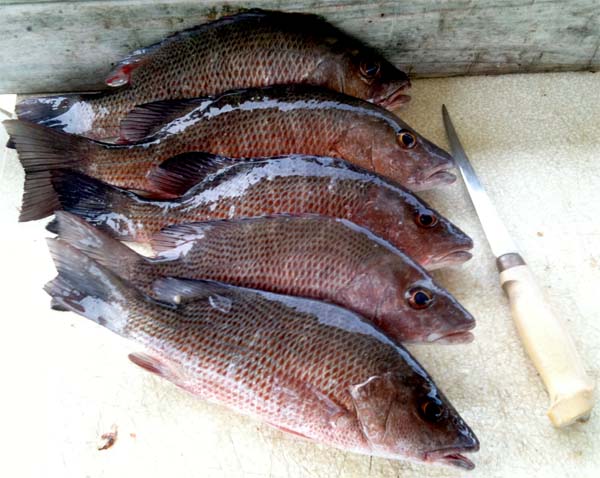 [](https://www.floridashorefishing.com/profile/dan/)##### Author: [Daniel Hagan](https://www.floridashorefishing.com/profile/dan/) Daniel Hagan has been fishing Florida’s shores since 1985 and writing about it for more than 20 years. As Managing Editor of FloridaShoreFishing.com, he shares firsthand experience covering surf and pier fishing, tackle, techniques, and Florida’s coastal species.  [Daniel Hagan](https://www.floridashorefishing.com/profile/dan) Daniel Hagan has been fishing Florida’s shores since 1985 and writing about it for more than 20 years. As Managing Editor of FloridaShoreFishing.com, he shares firsthand experience covering surf and pier fishing, tackle, techniques, and Florida’s coastal species. [](https://www.facebook.com/groups/FloridaShoreFishing "Facebook") **Categories:** Fishing Articles **Tags:** Mangrove Snapper, report --- ### [Sheepshead on the ICW](https://www.floridashorefishing.com/sheepshead-on-the-icw) **Published:** May 24, 2010 **Author:** Daniel Hagan **Content:** I spent the better part of the evening fishing from a few docks on the Intercoastal Waterway (ICW) in search of the elusive Sheepshead. For the first hour or two I had no problem finding them using fiddler crabs that I caught near by, but just could not get the hook set in any of them. After burning through 3 dozen crabs and only having caught 2 undersize Sheepshead for my efforts I decided to switch to live shrimp. The live shrimp continued the constant picking with out catching until I cut a shrimp into 3 pieces and used only a small amount at a time. Using the cut fresh shrimp I was able to land about 10 keeper sized Sheepshead and put one 15” sheepy into the cooler. The 15-inch fish was the largest of the day. I think the reason I was loosing so much bait is because the majority of them were quite small and didn’t eat the entire crab, just took parts of it! [](https://www.floridashorefishing.com/profile/dan/)##### Author: [Daniel Hagan](https://www.floridashorefishing.com/profile/dan/) Daniel Hagan has been fishing Florida’s shores since 1985 and writing about it for more than 20 years. As Managing Editor of FloridaShoreFishing.com, he shares firsthand experience covering surf and pier fishing, tackle, techniques, and Florida’s coastal species.  [Daniel Hagan](https://www.floridashorefishing.com/profile/dan) Daniel Hagan has been fishing Florida’s shores since 1985 and writing about it for more than 20 years. As Managing Editor of FloridaShoreFishing.com, he shares firsthand experience covering surf and pier fishing, tackle, techniques, and Florida’s coastal species. [](https://www.facebook.com/groups/FloridaShoreFishing "Facebook") **Categories:** Fishing Articles **Tags:** report, Sheepshead --- ### [Sebastian Inlet Flounder](https://www.floridashorefishing.com/sebastian-inlet-flounder) **Published:** January 3, 2013 **Author:** Daniel Hagan **Content:** The winter Flounder Migration is in full effect and one of the best places to take advantage of this migration is Sebastian Inlet. This inlet is nationally known as one of the best fishing locations in the world. There are massive schools or Redfish, multiple Snook but this time of year the main attraction is flounder. **Techniques** Flounder are fairly lazy fish. They live on the bottom and are ambush predators. They wait for their food to come to them. So when fishing for flounder the best technique is to cast out from the bridge, dock or jetty and SLOWLY drag the bait along the bottom. Fan cast and repeat this method. If you think you are going slow enough, slow it down a little bit. **Baits** For the large flounder in the inlet nothing beats a finger mullet. Large shrimp, small pinfish and any other small bait fish will work, but finger mullet are the best. **Tackle** Stout tackle is required because of all the structure in the area. A spinning or casting rig with 20-30 pound test line will work well with a leader of 20lb flourocarbon. **Tips** - The inlet is VERY popular this time of year, fishing on week days helps avoid the crowds - While tossing the a finger mullet soak a pig fish for a possible snook or red [](https://www.floridashorefishing.com/profile/dan/)##### Author: [Daniel Hagan](https://www.floridashorefishing.com/profile/dan/) Daniel Hagan has been fishing Florida’s shores since 1985 and writing about it for more than 20 years. As Managing Editor of FloridaShoreFishing.com, he shares firsthand experience covering surf and pier fishing, tackle, techniques, and Florida’s coastal species.  [Daniel Hagan](https://www.floridashorefishing.com/profile/dan) Daniel Hagan has been fishing Florida’s shores since 1985 and writing about it for more than 20 years. As Managing Editor of FloridaShoreFishing.com, he shares firsthand experience covering surf and pier fishing, tackle, techniques, and Florida’s coastal species. [](https://www.facebook.com/groups/FloridaShoreFishing "Facebook") **Categories:** Fishing Articles **Tags:** Flounder, Locations, Techniques --- ### [Catch Sheepshead from the Jetty](https://www.floridashorefishing.com/catch-sheepshead-from-the-jetty) **Published:** April 3, 2014 **Author:** Daniel Hagan **Content:** [Sheepshead](http://www.floridashorefishing.com/fish-profiles/sheepshead) are one of the best tasting fish that can be caught from Florida’s Shores. Their meat is a light flavored flaky white meat, and it has a similar flavor to shellfish. Sheepshead are also quite a challenge to catch making them a fun target from any of Florida’s Jetties. **The Jetty** In Florida most inlets are lined on both sides by large piles rocks known as Jetties. These Jetties were put into place as navigational aids for the inlets, allowing easier moment from inshore to offshore. They also provide quite a bit of cover from small bait fish and crustaceans, and these fish and crustaceans attract predators, including Sheepshead. **Fishing from a Jetty** Jetties can be quite dangerous so the first thing to consider when fishing for Sheepshead from a jetty is safety. Some jetties have built in piers, making it very safe, while some jetties anglers just climb on the rocks and fish from there. Rocks that are either in the tidal or surf range can be VERY slippery and have sharp barnacles. Wearing non-slip shoes is essential as well as avoiding surf/tidal areas. It is also important to note that some jetties may be off limits to anglers, so check with local authorities if you are unsure. **Equipment for Jetty Fishing for Sheepshead** While Jetties have been known to attract very large numbers of Sheepshead they also offer quite a few ways for the fish to either break the line or foul the hook. Because of all the structure inherent in fishing jetties, stout equipment is needed. A 7-8′ medium-heavy rod rated for 20lb test and a matching reel will work well in this environment. 20-40lb test braid main line should be terminated with a 20-30lb fluorocarbon leader. This stout equipment will allow the angler to muscle any average fish away from a potential hang up. **Techniques for fish from a Jetty** A tried and true technique for catching Sheepshead from a jetty is to hold the bait a few inches above a submerged rock. With a #2-1/0 ultra sharp J hook pierce a fiddler crab length wise just inside its walking legs. The leader should be about 10-15″, longer if the water is very clear, with an egg sinker just above the leader heavy enough to hold it in place in the current. Drop the bait down SLOWLY until it touches a rock that is submerged about 2-6′ deep and retrieve enough line to hold the crab about 6″ off the rocks. Sheepshead are master bait thieves (one of the reasons they are call convicts), and their bites can be subtle. Often times all the angler will feel is a slight “bump bump”, if that is felt, a rapid upward hook set is the best technique. Patients is required as many baits will be lost to Sheepshead, but they are fairly aggressive eaters and will come back for another bait in a short time span, giving the angler a better chance at filling his cooler. **More Sheepshead Info** --- - [Sheepshead – Fish Profile](http://www.floridashorefishing.com/fish-profiles/sheepshead) - [How To Catch Sheepshead](/how-to-catch-sheepshead) - [Circle Hook for Sheepshead](http://www.floridashorefishing.com/circle-hook-sheepshead) - [Sheepshead Blog Posts](http://www.floridashorefishing.com/?s=sheepshead+blog) [](https://www.floridashorefishing.com/profile/dan/)##### Author: [Daniel Hagan](https://www.floridashorefishing.com/profile/dan/) Daniel Hagan has been fishing Florida’s shores since 1985 and writing about it for more than 20 years. As Managing Editor of FloridaShoreFishing.com, he shares firsthand experience covering surf and pier fishing, tackle, techniques, and Florida’s coastal species.  [Daniel Hagan](https://www.floridashorefishing.com/profile/dan) Daniel Hagan has been fishing Florida’s shores since 1985 and writing about it for more than 20 years. As Managing Editor of FloridaShoreFishing.com, he shares firsthand experience covering surf and pier fishing, tackle, techniques, and Florida’s coastal species. [](https://www.facebook.com/groups/FloridaShoreFishing "Facebook") **Categories:** Fishing Articles **Tags:** jetty, Sheepshead --- ### [Florida Shrimp Run – How to Clean Your Catch](https://www.floridashorefishing.com/florida-shrimp-run-how-to-clean-your-catch) **Published:** January 18, 2012 **Author:** Daniel Hagan **Excerpt:**Now that the 5-gallon bucket has been filled full of fresh shrimp caught in the Florida Shrimp Run
**Content:** *This is the 3rd post in the series “Florida Shrimp Run”* Now that the 5-gallon bucket has been filled full of fresh shrimp caught in the Florida Shrimp Run, it is time to clean and preserve your catch! Step 1 – Remove the Heads In one hand hold the shrimp firmly. With the index finger and thumb of the other hand grab the head using a pinching motion. Twist quickly and the head will pop off! Another technique is to put the shrimp on a cutting board, and using a drinking glass press the glass firmly at the joint of the head and the tail. This will separate the two parts! Step 2 – Freeze the Shrimp The best way to preserve fresh shrimp is to vacuum seal the shrimp and then freeze it. If a vacuum sealer is not available the next best option is to fill a zip-loc style ¾ full of shrimp and the fill it with water. The will turn to ice and keep air off the shrimp! Step 3 – Thaw and Enjoy! [](https://www.floridashorefishing.com/profile/dan/)##### Author: [Daniel Hagan](https://www.floridashorefishing.com/profile/dan/) Daniel Hagan has been fishing Florida’s shores since 1985 and writing about it for more than 20 years. As Managing Editor of FloridaShoreFishing.com, he shares firsthand experience covering surf and pier fishing, tackle, techniques, and Florida’s coastal species.  [Daniel Hagan](https://www.floridashorefishing.com/profile/dan) Daniel Hagan has been fishing Florida’s shores since 1985 and writing about it for more than 20 years. As Managing Editor of FloridaShoreFishing.com, he shares firsthand experience covering surf and pier fishing, tackle, techniques, and Florida’s coastal species. [](https://www.facebook.com/groups/FloridaShoreFishing "Facebook") **Categories:** Fishing Articles **Tags:** Shrimp --- ### [Report: Bethune Park (ICW)](https://www.floridashorefishing.com/report-bethune-park-icw) **Published:** December 13, 2011 **Author:** Daniel Hagan **Content:** I intended to spend my day [fishing for whiting](http://www.floridashorefishing.com/how-to-catch-whiting) from the surf, but the winds were 15 mph sustained with 25 mph gusts and seas of 8-10 feet. So I decided to try Bethune Park on the ICW in New Smyrna. I have heard good things about this park and friends have said they have caught a fair amount of trout from this area…. Well, today was not my day! I was skunked, that is if you don’t count trash fish, and I don’t. The water was EXTREMELY high and drity1 Good news is I did see a few free swimming shrimp, that is a good sign for the Winter Shrimp Run! [](https://www.floridashorefishing.com/profile/dan/)##### Author: [Daniel Hagan](https://www.floridashorefishing.com/profile/dan/) Daniel Hagan has been fishing Florida’s shores since 1985 and writing about it for more than 20 years. As Managing Editor of FloridaShoreFishing.com, he shares firsthand experience covering surf and pier fishing, tackle, techniques, and Florida’s coastal species.  [Daniel Hagan](https://www.floridashorefishing.com/profile/dan) Daniel Hagan has been fishing Florida’s shores since 1985 and writing about it for more than 20 years. As Managing Editor of FloridaShoreFishing.com, he shares firsthand experience covering surf and pier fishing, tackle, techniques, and Florida’s coastal species. [](https://www.facebook.com/groups/FloridaShoreFishing "Facebook") **Categories:** Fishing Articles **Tags:** Pier, report --- ### [Report: Florida Sheepshead](https://www.floridashorefishing.com/florida-sheepshead) **Published:** August 29, 2010 **Author:** Daniel Hagan **Content:** Todays fishing trip was to some docks that I frequent around the Halifax River. Armed with live shrimp and fiddler crabs I planed on targeting [Sheepshead](http://www.floridashorefishing.com/fish-profiles/sheepshead) and did so successfully! The first cast of a fiddler crab ended up being the best. I landed an 18” Sheepshead! The fish put up a good fight, but when fighting my Ambassador 6500 with 30lb braid and a 20lb fluorocarbon leader it was no match! I ended up landing 3 keeper sized Sheepshead and 2 undersize and 1 mangrove snapper. All on only 2 dozen fiddler crabs! The shrimp only caught a few cats and an 18” whiting, my largest to date! 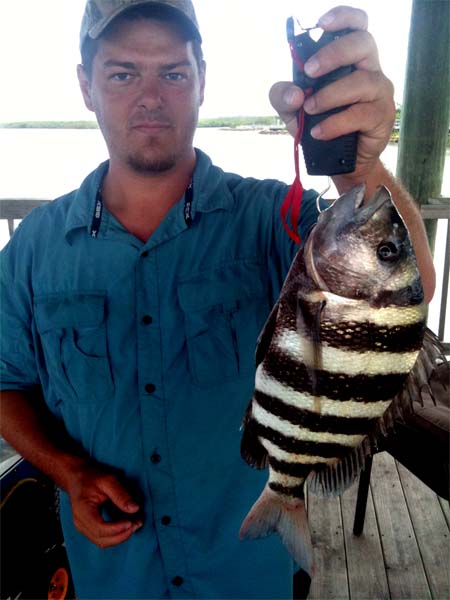 [](https://www.floridashorefishing.com/profile/dan/)##### Author: [Daniel Hagan](https://www.floridashorefishing.com/profile/dan/) Daniel Hagan has been fishing Florida’s shores since 1985 and writing about it for more than 20 years. As Managing Editor of FloridaShoreFishing.com, he shares firsthand experience covering surf and pier fishing, tackle, techniques, and Florida’s coastal species.  [Daniel Hagan](https://www.floridashorefishing.com/profile/dan) Daniel Hagan has been fishing Florida’s shores since 1985 and writing about it for more than 20 years. As Managing Editor of FloridaShoreFishing.com, he shares firsthand experience covering surf and pier fishing, tackle, techniques, and Florida’s coastal species. [](https://www.facebook.com/groups/FloridaShoreFishing "Facebook") **Categories:** Fishing Articles **Tags:** report, Sheepshead --- ### [Snook on The Beach](https://www.floridashorefishing.com/snook-on-the-beach) **Published:** March 22, 2013 **Author:** Daniel Hagan **Content:** Florida offers some of the best beaches in the world, and one added bonus to the beauty of many of these beaches is the presence of Snook in the waters. Snook are one of the most highly prized fish not only because of their delicious meat, but also because of their very sporty fight. **When to Catch Snook from The Beach** Snook can be found around many Florida Beaches in Spring through Summer. As soon as the water starts to warm up after winter, the snook move to the beaches looking to feed before spawning. Beaches from Central Florida south can hold Snook. **Baits and Lures for Snook from The Beach** Snook have been known to eat many types of baits, ranging from finger mullet to shrimp, but here are some tried and true baits: - Croakers - Pig Fish - Pinfish - Jumbo Shrimp - Finger Mullet When using artificial lures to catch snook, one of the best techniques is to use a lure that matches what they would normally forage on. Casting the lure almost parallel, with a little off shore angle, to the beach and retrieving it between waves is an effective presentation. Most lures from the Gulp Alive series work well for snook as well as many plugs. **Tackle for Snook from The Beach** Snook can range in size from around 12” to over 40 lbs on the beach and they also have very sharp gill plates. Because of their potential size and sharp gill plates a good leader of 20 pound fluorocarbon is necessary, but the main line can be much smaller (there are not many obstacles to get tangled up on at the beach) Any saltwater rated baitcaster or spinning real will do just fine with snook, but for the larger fish, larger equipment works better. [](https://www.floridashorefishing.com/profile/dan/)##### Author: [Daniel Hagan](https://www.floridashorefishing.com/profile/dan/) Daniel Hagan has been fishing Florida’s shores since 1985 and writing about it for more than 20 years. As Managing Editor of FloridaShoreFishing.com, he shares firsthand experience covering surf and pier fishing, tackle, techniques, and Florida’s coastal species.  [Daniel Hagan](https://www.floridashorefishing.com/profile/dan) Daniel Hagan has been fishing Florida’s shores since 1985 and writing about it for more than 20 years. As Managing Editor of FloridaShoreFishing.com, he shares firsthand experience covering surf and pier fishing, tackle, techniques, and Florida’s coastal species. [](https://www.facebook.com/groups/FloridaShoreFishing "Facebook") **Categories:** Fishing Articles **Tags:** Beach, Snook, Surf Fishing, Techniques --- ### [Report: Ladies Night (day) at Sunglow Pier](https://www.floridashorefishing.com/report-ladies-night-day-at-sunglow-pier) **Published:** October 11, 2010 **Author:** Daniel Hagan **Content:** I have been reading reports about Redfish after Redfish coming over the rail at Sunglow Pier so I figured I had to go see for myself. I woke up long before sunrise, drove to an area where I can net finger mullet pretty reliably and made my way to the pier. At the pier I set up one pole with a live finger mullet and one with a live shrimp. The current was running to the north pretty strong, but I could see fish in the surf on the south side, so I had to put a 1oz lead on the shrimp and 2oz on the mullet. Right after sunrise I caught a redfish that messured 13”. Not too impressive, and it was the only one I saw come over the rail for the day. There was, however, many fish coming over the rail! Lady Fish after Lady Fish. Almost every cast I made with live shrimp for about 2 hours ended up with a lady fish either coming over the rail or jumping free of the hook. While lady fish are fun to catch when they are big, these were not large at all. Only about 12” on average. When the lady fish stopped hitting the Sheepshead started. They were all undersized as well. I caught about 8 between 9-11”. [](https://www.floridashorefishing.com/profile/dan/)##### Author: [Daniel Hagan](https://www.floridashorefishing.com/profile/dan/) Daniel Hagan has been fishing Florida’s shores since 1985 and writing about it for more than 20 years. As Managing Editor of FloridaShoreFishing.com, he shares firsthand experience covering surf and pier fishing, tackle, techniques, and Florida’s coastal species.  [Daniel Hagan](https://www.floridashorefishing.com/profile/dan) Daniel Hagan has been fishing Florida’s shores since 1985 and writing about it for more than 20 years. As Managing Editor of FloridaShoreFishing.com, he shares firsthand experience covering surf and pier fishing, tackle, techniques, and Florida’s coastal species. [](https://www.facebook.com/groups/FloridaShoreFishing "Facebook") **Categories:** Fishing Articles **Tags:** Pier, report, sunglow --- ### [Snapper and Drums from Ponce Jetties](https://www.floridashorefishing.com/snapper-and-drums-from-ponce-jetties) **Published:** June 26, 2010 **Author:** Daniel Hagan **Content:** I spent the day fishing from the Ponce Inlet Jetties and it ended up being a good day! I got to the New Smyrna Beach Jetties just after sun rise and started the day by tossing a live shrimp out into the inlet. After loosing a few shrimp a nice drum finally took the circle hook. After a short fight I had my fist drum on ice! This pattern continued for about 2 hours. A few lost shrimp followed by a nice keeper black drum. I put three black drum on ice and released the rest. My wife and I really enjoy [Black Drum](/fish-profiles/blackdrum) and have a few really good recipes for them. Even though it is one of our favorite I will only keep the amount of fish the wife and I can eat with in the a week. After catching a few nice drum I switched over to mud minnows and started to catch mangrove snappers. For the most part they were all around 8-11”. I kept one that was 12”, my wife’s favorite fish to eat, which allows me to continue fishing with out hearing a complaint! Here is the catch: 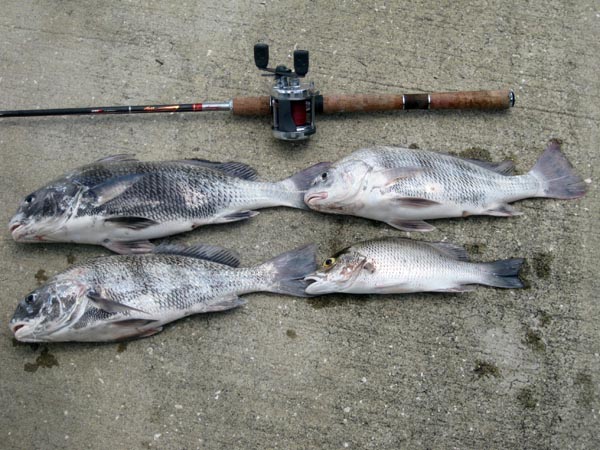 [](https://www.floridashorefishing.com/profile/dan/)##### Author: [Daniel Hagan](https://www.floridashorefishing.com/profile/dan/) Daniel Hagan has been fishing Florida’s shores since 1985 and writing about it for more than 20 years. As Managing Editor of FloridaShoreFishing.com, he shares firsthand experience covering surf and pier fishing, tackle, techniques, and Florida’s coastal species.  [Daniel Hagan](https://www.floridashorefishing.com/profile/dan) Daniel Hagan has been fishing Florida’s shores since 1985 and writing about it for more than 20 years. As Managing Editor of FloridaShoreFishing.com, he shares firsthand experience covering surf and pier fishing, tackle, techniques, and Florida’s coastal species. [](https://www.facebook.com/groups/FloridaShoreFishing "Facebook") **Categories:** Fishing Articles **Tags:** black drum, Mangrove Snapper, report --- ### [EARLY Morning Trout Under The Lights](https://www.floridashorefishing.com/early-morning-trout-under-the-lights) **Published:** November 26, 2012 **Author:** Daniel Hagan **Content:** Speckled Trout are one of the most popular gamefish in Florida. They are fun to fight, are quite tasty and can be caught on many different types of lures. One of the best times to catch them is the hours leading up to dawn. Many bridges, dock and piers are well lit at night. These lights attrack bait fish, which in turn attracts trout. About 2 hours before the sun rises trout can be found busting bait around most structure that is well lit. **Equipment** Most trout found at this time of the morning are well under 5 pounds. Any saltwater gear will do just fine, but for a good fight, gear rated at or bellow 10 pounds works great. Lures that mimic bait fish work the best but shrimp lures and other lures work as well. **Techniques** Cast beyond the light field and retrieve the lure. Most times a steady medium pace will work the best, with a few jerks thrown in to add action. When the lure hits the outside of the light field, be ready for a strike. When using a top water, make sure to pop it around to make noise to attract the trout! **Tips** - Start looking for trout around 2 hours before sunrise - Anywhere baitfish hang out, trout are sure to be close - Be sure to handle trout properly if they are to be released, their slime coat is very sensitive - Beware of sharp teeth, it is easier to get bitten in the dark [](https://www.floridashorefishing.com/profile/dan/)##### Author: [Daniel Hagan](https://www.floridashorefishing.com/profile/dan/) Daniel Hagan has been fishing Florida’s shores since 1985 and writing about it for more than 20 years. As Managing Editor of FloridaShoreFishing.com, he shares firsthand experience covering surf and pier fishing, tackle, techniques, and Florida’s coastal species.  [Daniel Hagan](https://www.floridashorefishing.com/profile/dan) Daniel Hagan has been fishing Florida’s shores since 1985 and writing about it for more than 20 years. As Managing Editor of FloridaShoreFishing.com, he shares firsthand experience covering surf and pier fishing, tackle, techniques, and Florida’s coastal species. [](https://www.facebook.com/groups/FloridaShoreFishing "Facebook") **Categories:** Fishing Articles **Tags:** night fishing, trout --- ### [Report – SunGlow Pier](https://www.floridashorefishing.com/report-–-sunglow-pier) **Published:** December 11, 2010 **Author:** Daniel Hagan **Excerpt:**
Carl, Mike and I decided to take the morning and head out to sunglow pier in Daytona Beach Shores. We arrived just before sunrise to a VERY foggy and cool morning. On my first cast I land a 12” whiting and on his first cast Carl lands a small shark.
**Content:** Carl, Mike and I decided to take the morning and head out to sunglow pier in Daytona Beach Shores. We arrived just before sunrise to a VERY foggy and cool morning. On my first cast I land a 12” whiting and on his first cast Carl lands a small shark. The action then slowed down for Carl, but I had a steady day. Mike on the other hand did not catch a single fish! He did however, loose a decent Sheepshead while reeling it in and had a large fish break him off. The total tally for me was: 1 Black Drum – 17” 4 Sheepshead – up to 18” 4 whiting – up to 13” Carl’s Totals: 1 Shark 3 Whiting I have always found it odd that two people fishing from the same spot using the same bait and same techniques can have such different results. I caught 9 fish while Mike caught 0. Odd! 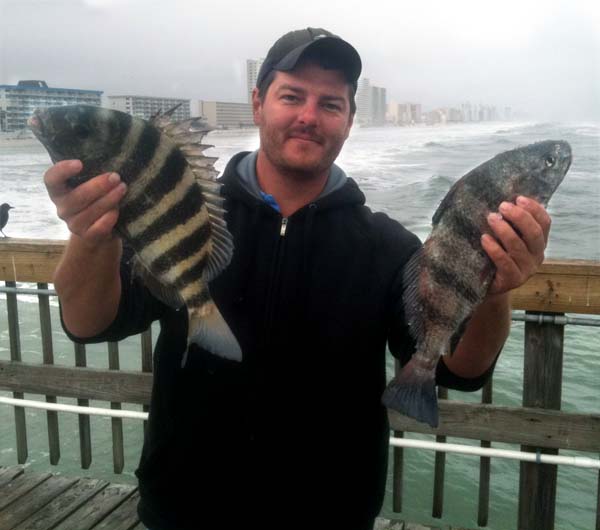 [](https://www.floridashorefishing.com/profile/dan/)##### Author: [Daniel Hagan](https://www.floridashorefishing.com/profile/dan/) Daniel Hagan has been fishing Florida’s shores since 1985 and writing about it for more than 20 years. As Managing Editor of FloridaShoreFishing.com, he shares firsthand experience covering surf and pier fishing, tackle, techniques, and Florida’s coastal species.  [Daniel Hagan](https://www.floridashorefishing.com/profile/dan) Daniel Hagan has been fishing Florida’s shores since 1985 and writing about it for more than 20 years. As Managing Editor of FloridaShoreFishing.com, he shares firsthand experience covering surf and pier fishing, tackle, techniques, and Florida’s coastal species. [](https://www.facebook.com/groups/FloridaShoreFishing "Facebook") **Categories:** Fishing Articles **Tags:** Reports, sunglow --- ### [Fishing for Whiting – Tis the Season](https://www.floridashorefishing.com/fishing-for-whiting-–-tis-the-season) **Published:** December 12, 2011 **Author:** Daniel Hagan **Content:** As winter starts to roll in so do the whiting! Whiting are not one of the most exciting fights, they are not the biggest fish, they are not even the most exotic looking, but what they are is abundant and delicious. [Fishing for Whiting](http://www.floridashorefishing.com/how-to-catch-whiting) start to heat up as the surf temperatures start to cool. In Florida this generally happens around Thanksgiving, but sometimes can start a little bit earlier or later. The whiting will stay very active in the surf until around March or April. Helpful Whiting Links [How to Catch Whiting](http://www.floridashorefishing.com/how-to-catch-whiting) [Beer Battered Fried Whiting](http://www.floridashorefishing.com/beer-battered-fried-whiting) [](https://www.floridashorefishing.com/profile/dan/)##### Author: [Daniel Hagan](https://www.floridashorefishing.com/profile/dan/) Daniel Hagan has been fishing Florida’s shores since 1985 and writing about it for more than 20 years. As Managing Editor of FloridaShoreFishing.com, he shares firsthand experience covering surf and pier fishing, tackle, techniques, and Florida’s coastal species.  [Daniel Hagan](https://www.floridashorefishing.com/profile/dan) Daniel Hagan has been fishing Florida’s shores since 1985 and writing about it for more than 20 years. As Managing Editor of FloridaShoreFishing.com, he shares firsthand experience covering surf and pier fishing, tackle, techniques, and Florida’s coastal species. [](https://www.facebook.com/groups/FloridaShoreFishing "Facebook") **Categories:** Fishing Articles **Tags:** Seasonal, Whiting --- ### [Report - Sun Glow Pier](https://www.floridashorefishing.com/report-sun-glow-pier) **Published:** December 12, 2012 **Author:** Daniel Hagan **Content:** I went out to the sunglow pier today to try my luck. I arrived just before sunrise to find the small blue fish in a very agressive mood. I put a Rattle Trap on as a lure and the Bluefish where so aggressive that I would sometimes land 2 at a time: [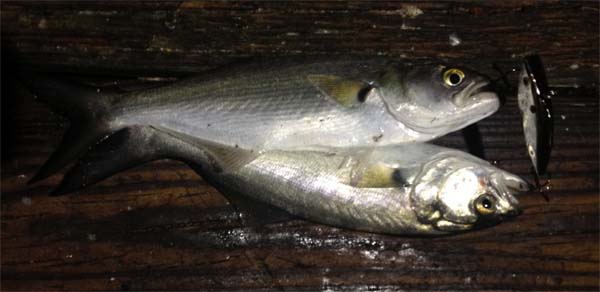](http://www.floridashorefishing.com/wp-content/uploads/2012/12/blue-double.jpg) After the sun came up things settled down. I was able to pull a few nice sized whiting out of the surf and one black drum. All-in-All, not a bad way to spend a day! [](https://www.floridashorefishing.com/profile/dan/)##### Author: [Daniel Hagan](https://www.floridashorefishing.com/profile/dan/) Daniel Hagan has been fishing Florida’s shores since 1985 and writing about it for more than 20 years. As Managing Editor of FloridaShoreFishing.com, he shares firsthand experience covering surf and pier fishing, tackle, techniques, and Florida’s coastal species.  [Daniel Hagan](https://www.floridashorefishing.com/profile/dan) Daniel Hagan has been fishing Florida’s shores since 1985 and writing about it for more than 20 years. As Managing Editor of FloridaShoreFishing.com, he shares firsthand experience covering surf and pier fishing, tackle, techniques, and Florida’s coastal species. [](https://www.facebook.com/groups/FloridaShoreFishing "Facebook") **Categories:** Fishing Articles **Tags:** Pier, report, sunglow --- ### [Best wind to surf fish](https://www.floridashorefishing.com/best-wind-to-surf-fish) **Published:** March 17, 2014 **Author:** Daniel Hagan **Content:** Here in Florida one of the main considerations a surf fishermen has to keep in mind when planning a trip is wind direction and speed. The speed and direction of the wind can either make a trip rather sucessful or quite difficult. Here is the ideal wind for surf fishing! When fishing the east coast: - Wind out of the west (knocks down the size of the surf) - Wind less than 15 knots (any higher will lead to bows in the line) - Any wind out of the South will work as well, but can not have high speeds! When fishing the west coast: - Wind out of the east (knocks down the size of the surf) - Wind less than 15 knots (any higher will lead to bows in the line) - Any wind out of the South will work as well, but can not have high speeds! [](https://www.floridashorefishing.com/profile/dan/)##### Author: [Daniel Hagan](https://www.floridashorefishing.com/profile/dan/) Daniel Hagan has been fishing Florida’s shores since 1985 and writing about it for more than 20 years. As Managing Editor of FloridaShoreFishing.com, he shares firsthand experience covering surf and pier fishing, tackle, techniques, and Florida’s coastal species.  [Daniel Hagan](https://www.floridashorefishing.com/profile/dan) Daniel Hagan has been fishing Florida’s shores since 1985 and writing about it for more than 20 years. As Managing Editor of FloridaShoreFishing.com, he shares firsthand experience covering surf and pier fishing, tackle, techniques, and Florida’s coastal species. [](https://www.facebook.com/groups/FloridaShoreFishing "Facebook") **Categories:** Fishing Articles **Tags:** Beach, How To, surf, Surf Fishing --- ### [When to use a Circle Hook](https://www.floridashorefishing.com/when-to-use-a-circle-hook) **Published:** June 26, 2010 **Author:** Daniel Hagan **Excerpt:**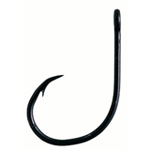
Circle hooks have become very popular for fishing the Florida Shores. They have a much lower percentage of gut hooking fish and they also have a higher hook up ratio when using live bait. In some parts of the state they have even become the only hooks allowed for specific types of fishing
**Content:** Circle hooks have become very popular for fishing the Florida Shores. They have a much lower percentage of gut hooking fish and they also have a higher hook up ratio when using live bait. In some parts of the state they have even become the only hooks allowed for specific types of fishing. So when should a circle hook be used? Anytime live bait is used! When using live bait a circle hook should be used. The aggressive manner some fish ingest live bait often leads to a fish being gut hooked or hooked in the gills. Many live bait fishermen fish multiple poles at the same time. Often a fish will have quite a bit of time before the angler reacts to a hit. This extra time often leads to gut hooked fish. Circle hooks not only help eliminate this problem they will also often hook the fish before the angler even touches the fishing pole! [](https://www.floridashorefishing.com/profile/dan/)##### Author: [Daniel Hagan](https://www.floridashorefishing.com/profile/dan/) Daniel Hagan has been fishing Florida’s shores since 1985 and writing about it for more than 20 years. As Managing Editor of FloridaShoreFishing.com, he shares firsthand experience covering surf and pier fishing, tackle, techniques, and Florida’s coastal species.  [Daniel Hagan](https://www.floridashorefishing.com/profile/dan) Daniel Hagan has been fishing Florida’s shores since 1985 and writing about it for more than 20 years. As Managing Editor of FloridaShoreFishing.com, he shares firsthand experience covering surf and pier fishing, tackle, techniques, and Florida’s coastal species. [](https://www.facebook.com/groups/FloridaShoreFishing "Facebook") **Categories:** Fishing Articles **Tags:** Circle Hook, tackle, tecniques --- ### [Spring Speckled Trout Run](https://www.floridashorefishing.com/spring-speckled-trout-run) **Published:** April 6, 2015 **Author:** Daniel Hagan **Content:** Speckled Trout (also known as simply Trout) are one of the most abundant game fish found around Florida’s shores. They are a decent fight and are a table favorite among some anglers. One of the best things about trout is that they are fairly easy to find and catch during the spring here in Florida. **Where to Find Trout** Trout are found through out most of Florida’s waters. They are found in the surf, estuaries, bays, inlets, passes, lagoons and just about anywhere there is saltwater. For the shore based angler the best places to look for trout are bridges, inlets and docks. All three locations can be productive both during the day and at night, but docks with lights under them can be far more productive at night than any other location. **Trout Gear** Trout range anywhere between a few ounces and over 10 pounds (though they are rare that large) so almost any saltwater rated gear will work for trout. A popular set up is a spinning reel on a light to medium action rod. 10lb braid with a 12lb fluorocarbon leader will be enough strength to pull almost any trout away from cover and land them with out too much worry of them breaking off. **Trout Lures/Bait** *Lures* Trout are active predators and willing strikers of most artificial lures. The most popular for trout are top-water plugs, soft jerk baits, soft curl tail grubs and shrimp imitations. Scented lures, such as Gulp Alive! are very successful with trout with curl tail grubs, paddle tails and plastic shrimp working very well. *Live Bait* Trout are not picky when it comes to live bait. Shrimp, finger mullet, small pinfish, scaled sardines and mud minnows are all great choices. Finger mullet and live shrimp have been proven time and time again to be highly effective with trout! **How to Catch Trout** Trout are ambush predators, so the best way to catch them is to have a lure/bait cross in front of their ambush position. *Inlet Fishing* Inlets often have quite a bit of current which can work to the advantage of the trout angler. Look for any area that may hold fish, like a spoil, a deeper hole or anywhere that the current may be broken up by a rock or any other structure. Cast up current of the potential fish holding location and allow the bait to be brought passed the location. Try different depths, adding weight if necessary. Repeat this process a few times per location. While using the current to drift your bait it is also a good idea to soak a live bait on the bottom with a 2′ leader. Any trout that is passing by on the current may stop for a snack! Dock Fishing Many docks will be ambush locations for trout. They will hide under the pier behind a pylon and wait for the current to bring prey past them and ambush it. A great technique while pier fishing is to cast up-current of the pier and allow the bait to drift past the pylons. Be ready for a strike once the bait nears the first pylon. At night, if the dock has a light, that light will attract bait fish and in turn attract trout. The trout will stage just outside of the lights spread. Cast a bait up-current of the light and allow it to drift on the outskirts of the light spread. Trout will often hit the bait right as it enters the light or as it is exiting. If the bite dies after catching a few trout, allow about 30-45 minutes and try again! *Pier Fishing* Fishing from a pier it can be difficult to move baits around due to many other fishermen sharing the same area. The best bet to catch trout is to find potential locations that they will either be at or will be soon. Find ares under the pier that have pot holes or deep impressions behind a pylon, these areas will often hold trout (and many other game fish). Soak a live bait in one of these areas. While that bait is soaking, keep an eye on the surf line, from time to time trout will venture out to the trough (area between sand bars causing wave breaks). Casting a live finger mullet in there may catch you a fairly large trout! **Tips and Tricks** - Trout are aggressive strikers but have soft mouths, beware not to set the hook to aggressively to avoid ripping their mouth. - Trout tend to run in schools of similar size, if a small fish is caught, that may be all that is in that area, move on and find the larger fish - Trout have large mouth to body ratio and will eat baits larger than expected [](https://www.floridashorefishing.com/profile/dan/)##### Author: [Daniel Hagan](https://www.floridashorefishing.com/profile/dan/) Daniel Hagan has been fishing Florida’s shores since 1985 and writing about it for more than 20 years. As Managing Editor of FloridaShoreFishing.com, he shares firsthand experience covering surf and pier fishing, tackle, techniques, and Florida’s coastal species.  [Daniel Hagan](https://www.floridashorefishing.com/profile/dan) Daniel Hagan has been fishing Florida’s shores since 1985 and writing about it for more than 20 years. As Managing Editor of FloridaShoreFishing.com, he shares firsthand experience covering surf and pier fishing, tackle, techniques, and Florida’s coastal species. [](https://www.facebook.com/groups/FloridaShoreFishing "Facebook") **Categories:** Fishing Articles **Tags:** Seasonal, speckled trout, trout --- ### [Preparing for Inshore Mangrove Snapper Season](https://www.floridashorefishing.com/preparing-for-inshore-mangrove-snapper-season) **Published:** May 4, 2015 **Author:** Daniel Hagan **Content:** Mangrove Snapper are found through out Florida’s Shores year-round, but they are only truly abundant inshore during the warmer months. Now that the mercury has started to rise, its time to get ready to catch limits of Mangrove Snapper. **Gear Prep** Most Mangrove Snapper that are caught inshore are no larger than 2lbs, but they are almost caught around heavy cover. Because they are caught around structure the gear requirements to consistently catch inshore Mangrove Snapper are a little heavier than many other inshore fish of similar size. A good set up for inshore would be: - Spinning Reel on a Medium Action rod - 30 pound test braid main line - 24-36″ 20 pound test fluorocarbon leader (Mangrove Snapper have good vision, fluorocarbon helps keep the tackle less visible) **Finding Bait** The 3 most successful baits for inshore Mangrove Snapper are live shrimp, mud minnows and small finger mullet. All 3 of these baits can be found at high quality bait shops, or captured with a cast net / traps. Lively baits work best! **Scouting Locations** The best locations to find Mangrove Snapper are areas with a lot of structre that is near deeper water. They frequently inhabit areas around bridges, docks, rock piles and mangrove shorelines that are near deeper channels. Small Mangrove Snapper will be found in these areas almost year-round. If the small ones are caught before the summer months arrive, that same area will most likely hold the larger fish later in the year as well. **Catching Mangrove Snapper** Here are a few articles that will help with catching inshore Mangrove Snapper: - [Fishing For Mangrove Snapper](http://www.floridashorefishing.com/fishing/mangrove-snapper) - [Fishing for Inshore Mangrove Snapper](http://www.floridashorefishing.com/fishing-for-inshore-mangrove-snapper) - [Mangrove Snapper Rigs](http://www.floridashorefishing.com/mangrove-snapper-rig) - [Fish Profile – Mangrove Snapper](http://www.floridashorefishing.com/fish-profiles/mangrove-snapper) [](https://www.floridashorefishing.com/profile/dan/)##### Author: [Daniel Hagan](https://www.floridashorefishing.com/profile/dan/) Daniel Hagan has been fishing Florida’s shores since 1985 and writing about it for more than 20 years. As Managing Editor of FloridaShoreFishing.com, he shares firsthand experience covering surf and pier fishing, tackle, techniques, and Florida’s coastal species.  [Daniel Hagan](https://www.floridashorefishing.com/profile/dan) Daniel Hagan has been fishing Florida’s shores since 1985 and writing about it for more than 20 years. As Managing Editor of FloridaShoreFishing.com, he shares firsthand experience covering surf and pier fishing, tackle, techniques, and Florida’s coastal species. [](https://www.facebook.com/groups/FloridaShoreFishing "Facebook") **Categories:** Featured **Tags:** Mangrove, Mangrove Snapper, Seasonal --- ### [Haulover Canal - Free Line For Sucess](https://www.floridashorefishing.com/haulover-free-line) **Published:** May 9, 2014 **Author:** Daniel Hagan **Content:** One of the most popular and most successful places to fish in the East Central Florida region is Haulover Canal. Haulover Canal connects the Mosquito Lagoon with the Indian River and is part of the Intercoastal Waterway. The canal is heavily trafficked by boats moving from one body of water to the other, fishing the canal and by sight seers. This is also a great location to catch fish moving back and forth from the river and lagoon. Because the canal is littered with large rocks and debris through most of its length, one of the more successful methods of fishing this area is to free line live bait. Free Lining is a fishing technique that uses no terminal tackle (wights, swivels, beads etc…) other than a hook. The bait is put on the hook and allowed to swim, or crawl, freely. This technique allows for a very natural bait presentation as well as it helps keep the bait from getting snagged in rocks other obstructions along the bottom. **Haulover Canal Current** The current at Haulover Canal can range from stagnate to very strong. Flow fluctuates in direction based on prevailing winds and moon conditions. This current will dictate how a free lined bait is fish, or if it is even possible. **– No Current** When no current is present, free lining is fairly easy and quite effective. Simply cast your bait in the area you think fish will be located and let it swim around until it is eaten! **– Low Current** When a small amount of current is present, cast your bait about 20-40 feet up-current of your target. All the current to naturally drift your bait through the strike zone. If the bait is not taken, allow it to drift about 20-40 feet past your target and start again. **– Medium Current** When there is a fair amount of current present the technique is similar to low current with a few small tweaks. Cast the bait AS FAR up-current of your target as possible. This will allow your bait to be in the water longer and drift further. The rest is the same as low current. **– High Current** If you are fishing in high current, free lining can be difficult if not impossible. The best method is to be directly up-current of your target and allow the bait to drift, and hold in your target area, IF POSSIBLE. If this is not possible, you may have try different techniques. **Bait** Some baits perform better free lined than others, but here is a list of great free lined baits for Haulover Canal - Live Finger Mullet - Live Pinfish - Live Pigfish - Live Shrimp - Live Crabs [](https://www.floridashorefishing.com/profile/dan/)##### Author: [Daniel Hagan](https://www.floridashorefishing.com/profile/dan/) Daniel Hagan has been fishing Florida’s shores since 1985 and writing about it for more than 20 years. As Managing Editor of FloridaShoreFishing.com, he shares firsthand experience covering surf and pier fishing, tackle, techniques, and Florida’s coastal species.  [Daniel Hagan](https://www.floridashorefishing.com/profile/dan) Daniel Hagan has been fishing Florida’s shores since 1985 and writing about it for more than 20 years. As Managing Editor of FloridaShoreFishing.com, he shares firsthand experience covering surf and pier fishing, tackle, techniques, and Florida’s coastal species. [](https://www.facebook.com/groups/FloridaShoreFishing "Facebook") **Categories:** Fishing Articles **Tags:** Locations, Techniques, Tips --- ### [10 Land Based Fishing Tips](https://www.floridashorefishing.com/10-land-based-fishing-tips) **Published:** June 1, 2016 **Author:** Daniel Hagan **Content:** FloridaShoreFishing.com is an online magazine that is dedicated to Florida’s boatless anglers. Here is a list of 10 Lands Based Fishing Tips provided by Daniel Hagan, our editor in cheif: **10. Do not ALWAYS fish the deepest area** **9. Use appropriate sized gear** **8. The tide and moon phase matter** **7. Experiment with different baits and lures** **6. Small rivers and creeks can be productive** **5. Pay attention to the current and use it to your advantage** **4. Local knowledge is key** **3. Find structure that attracts fish** **2. Learn to read the water** **1. Have Fun** ***10. Do not ALWAYS fish the deepest area.*** One of the most common things that I have witnessed while fishing from piers, docks and most other structure is that there is always a rush to get to the deepest waters. These anglers seem to think that the deeper water will hold more and larger fish. While at times this may be true, it is certainly not a rule. Many times the shallow waters will hold many more fish than the deep waters. The key is observe and find areas that are likely to hold fish. Sometimes, the deeper water is this area, but frequently it is not. A good example of this is a pier that is on a beach. Most beaches will have 1 or 2 areas that the waves break and the pier will extend well beyond the breakers. For most beaches the area right behind the breaking waves (or between them, if there are multiple breaks) will hold the most fish. The second best place to look on these piers is directly under the pier near the pylons, this area gives bait fish hiding places, which attracts the sport fish. ***9. Use appropriate sized gear*** Having gear that is appropriately sized for the area you are fishing and the fish you are targeting can be the difference between a productive day and a day of only catching the suns rays. If fishing from a dock for [whiting](http://www.floridashorefishing.com/how-to-catch-whiting) using large ocean gear will not only be overkill, it will significantly reduce the chances of any fish being caught. Many fish have good eyesight and are quite sensitive resistance. The size of the hook, line and sinker also play a big role. If any of the 3 are over sized fish may notice the over sized gear and never take the bait. Undersized gear can also be a problem. If fishing in an area with heavy structure or many other anglers near by it is important to have gear that is strong enough to pull your targeted fish in quickly to avoid tangles or the fish breaking off in the structure. ***8. The tide and moon phase matter*** Many species of fish found around Florida’s shores are highly affected by the tides and the moon phases. Many species have a tide and a moon phase that they prefer to feed heavily during. In general the best times to fish are on days that are NOT full moons, the 2 hours before and after a tide shift. Track what tides you fish and you will quickly find a pattern of what tides and moon phases the species you are targeting prefer. ***7. Experiment with different baits and lures*** While many anglers have a go-to lure or bait, some days it just doesn’t work. I have had days where using live shrimp caught one flounder after another, and then days where they would not touch the shrimp but ate every [Mud Minnow](http://www.floridashorefishing.com/mud-minnows) I could throw at them. Carrying multiple lures and a variety of live bait is a strategy that will lead to productive days more times than not. When using live bait in the surf, a great technique is to use a double dropper rig with a different type of live bait on either hook. This rig has 2 hooks slightly suspended off the bottom. Start with a live shrimp on the bottom and a live bait fish above it. Experiment with different baits until you find which one is the successful one for the day! ***6. Small rivers and creeks can be productive*** Many anglers overlook the small rivers and creeks that are found all around Florida and this is a big mistake. Some of the most exciting and most productive fishing I have ever had has come from walking the banks of small creeks and rivers. When walking the banks, if abundant bait fish can be seen, it is almost certain that game fish will be near by. Some of the largest Snook and most amazing fighting Tarpon have been caught from these often overlooked hot spots. ***5. Pay attention to the current and use it to your advantage*** Most fish prefer areas that have moderate current. The fish will find a piece of structure that breaks the current, hide behind it, and let the current bring meals to them. The fish will expend the least amount of effort necessary to get a meal. Knowing this, you can take advantage of the current. When using live bait, weigh the bait down only enough to get it to the bottom and let the current take the bait away from you. If you notice the bait has either stopped moving or has started moving an unexpected direction, pull in the slack line and check for a fish on the other end. This technique also works well for allowing the current to take your bait under a bridge, pier or dock. ***4. Local knowledge is key*** Every area has its own hot spots, dead spots and well known areas. Getting to know the locals at the bait shops, the piers and the docks is one of the best ways to discover land based fishing hot spots that you have not heard of before. After befriending the locals, they will often be willing to share some of their “honey holes” that can be worth trying. These tips will also lead to you getting to know your area better and even considering places that where not recommended based on the geography of the places that have! ***3. Find structure that attracts fish*** Almost every fish that you will find inshore in Florida will relate to cover. Finding cover that attracts fish will help increase the amount of fish you catch greatly. Piers, docks, bridges, sandbars, oyster bars, mangrove shorelines, rock piles, sea walls and large floating objects are just a few of the examples of structure that will attract fish. When a promising piece of structure is found, read the waters and find where the fish relate to the structure and hold on! ***2. Learn to read the water*** With experience, you will be able to look at certain types of water and know what type of structure is bellow the surface even if you cant see it. The current will move a certain way over the top of rock piles and it will move a little different over large deep holes. Water will often have a darker color over deeper water and waves will break over shallower water. Once you learn how to read the water, you will find fish where you never expected them to be before. A good example of this is when I was fishing a well known bridge that has a reputation for producing Flounder. I was watching the water closely and I noticed ripples in an area I didnt expect them. There was clearly some sort of rubble pile bellow the surface. A well placed cast put a Mud Minnow just up current of the rubble pile and that put a nice sized Mangrove Snapper in my cooler. That has become one of my secret spots to fish on a WELL known bridge! ***1. Have Fun*** While all the information provided above only scratches the surface of what can be learned about fishing Florida from land, and that can be overwhelming, the most important thing to remember is to have fun while fishing. There will be days where the fishing is AMAZING, and its hard not to have fun on those days, and there will be days where you cant even catch a cold the fishing is so bad. I have just as much fun on the BAD days as I do the good, cause even when the fishing is not great, I AM STILL FISHING! [](https://www.floridashorefishing.com/profile/dan/)##### Author: [Daniel Hagan](https://www.floridashorefishing.com/profile/dan/) Daniel Hagan has been fishing Florida’s shores since 1985 and writing about it for more than 20 years. As Managing Editor of FloridaShoreFishing.com, he shares firsthand experience covering surf and pier fishing, tackle, techniques, and Florida’s coastal species.  [Daniel Hagan](https://www.floridashorefishing.com/profile/dan) Daniel Hagan has been fishing Florida’s shores since 1985 and writing about it for more than 20 years. As Managing Editor of FloridaShoreFishing.com, he shares firsthand experience covering surf and pier fishing, tackle, techniques, and Florida’s coastal species. [](https://www.facebook.com/groups/FloridaShoreFishing "Facebook") **Categories:** Fishing Articles **Tags:** lists, Tips, Top 10 --- ### [To Free Line or Not to Free Line…](https://www.floridashorefishing.com/to-free-line-or-not-to-free-line) **Published:** September 2, 2012 **Author:** Daniel Hagan **Content:** That is the question! Fishing from docks, piers, bridges and shoreline of all types the question of how much weight, if any, should be added to a live bait rig often comes up. The answer is not as simple as it would seem, many factors play into the decision. What is the target species, what type of bait, current and amount of light all play a role in the decision making process. **Target Species** The single most important factor in determining weather to free line a bait (no weight at all) or add a sinker is the target species. Species like Flounder or Black drum are almost exclusively bottom feeders and there should always be weight to get the bait to them. But some of the sportier fish like Snook, Redfish and Trout will often times attack bait that is higher in the water column. **Type of Bait** So types of bait require weight for the presentation to work. A piece of cut mullet or a chunk of lady fish almost always do better soaked on the bottom, but live bait will often times call for a free line presentation. Live mullet spend most of their time near the surface, and free lining them with a light wire hook will allow a much more natural presentation resulting in more hook ups. **Current** In areas with massive current it can be very difficult to get a natural presentation. If the current is so strong that a free lined bait just sits on top of the water fighting the current a small amount of weight should be added. If the current is lighter and the bait can fight the current well, free lining will often be the best option. **Amount of Light** When the sun is high and the temperatures are up fish tend to head form deeper water. Durring times of very high light a little weight is called for. Early in the morning and when the sun starts to cast longer shadows it is time to return to a free lined bait! [](https://www.floridashorefishing.com/profile/dan/)##### Author: [Daniel Hagan](https://www.floridashorefishing.com/profile/dan/) Daniel Hagan has been fishing Florida’s shores since 1985 and writing about it for more than 20 years. As Managing Editor of FloridaShoreFishing.com, he shares firsthand experience covering surf and pier fishing, tackle, techniques, and Florida’s coastal species.  [Daniel Hagan](https://www.floridashorefishing.com/profile/dan) Daniel Hagan has been fishing Florida’s shores since 1985 and writing about it for more than 20 years. As Managing Editor of FloridaShoreFishing.com, he shares firsthand experience covering surf and pier fishing, tackle, techniques, and Florida’s coastal species. [](https://www.facebook.com/groups/FloridaShoreFishing "Facebook") **Categories:** Fishing Articles **Tags:** Gear, Techniques, Tips --- ### [Surf Fishing Gear](https://www.floridashorefishing.com/surf-fishing-gear) **Published:** November 24, 2015 **Author:** Daniel Hagan **Content:** Florida offers some of the most scenic and productive beaches to surf fish from in the world. From beaches as far south as Key West to the far west side of the panhandle, almost all of Florida's beaches are productive for the surf angler. When surf fishing many anglers have been successful using multiple different types of equipment, but time and experience has shown that gear intended for surf fishing will most frequently out perform gear that is not. Here are some of the special requirements when fishing from Florida's beaches: **Rods** Fish of all sizes and shapes can be caught while surf fishing from Florida's shores. The most common fish range around 2-3 pounds while some of the larger fish can be well over 100 pounds, even a great white shark was once caught from a Florida beach. Because of the wide variety of fish that can be caught, and the need to often cast long distances, a strong, long rod works best for surf casting. The most common surf rods range from 10-16 feet long and are all medium-heavy to heave action. This length not only gives them the back bone to fight large fish but it also allows for long casts of heavy sinkers when they are called for. ***Suggested Rod:*** Lamiglas XS10 MHC - Aprox: $250.00 **Reels** The reels that are most commonly used for surf fishing are spinning reels and open face bait casting reels. The reel should be able to hold an ample supply of 20lb or heavier line and have a strong enough drag to handle most fish that could be caught. When selecting a reel make sure that the reel is rated for saltwater use as it is sure to get wet when surf fishing and reels not rated for the saltwater will experience corrosion rather quickly after exposure. ***Suggested Reel***: Shimano Saragosa 6000 SW - Aprox. $250.00 **Accessories** When surf fishing there are a few accessories that will make the experience more enjoyable and sometimes even more productive. Some of those accessories include - Sand Spike - Knife - Pliers - Fishing Cart (made for the beach) - Cast Net (for catching bait) - Sand Sifting Rake (to catch sand fleas / mole crabs for bait) **Other Suggested Items** There are a few items that are suggested to always have when surf fishing that are not directly related to fishing, but make the experience more comfortable and enjoyable. These items include: - Sunglasses - Sunscreen - Waterproof, breathable jacket - Waders (optional, but useful in winter) - Cooler (with ample amounts of water, it gets HOT in Florida) Stay tuned as this page will be updated with more gear suggestions and more detailed information! [](https://www.floridashorefishing.com/profile/dan/)##### Author: [Daniel Hagan](https://www.floridashorefishing.com/profile/dan/) Daniel Hagan has been fishing Florida’s shores since 1985 and writing about it for more than 20 years. As Managing Editor of FloridaShoreFishing.com, he shares firsthand experience covering surf and pier fishing, tackle, techniques, and Florida’s coastal species.  [Daniel Hagan](https://www.floridashorefishing.com/profile/dan) Daniel Hagan has been fishing Florida’s shores since 1985 and writing about it for more than 20 years. As Managing Editor of FloridaShoreFishing.com, he shares firsthand experience covering surf and pier fishing, tackle, techniques, and Florida’s coastal species. [](https://www.facebook.com/groups/FloridaShoreFishing "Facebook") **Categories:** Fishing Articles **Tags:** Gear, Surf Fishing --- ### [East Central Florida - April](https://www.floridashorefishing.com/april-outlook-capt-michael-savedow) **Published:** April 12, 2014 **Author:** Daniel Hagan **Content:** Shore based anglers fishing the waters of coastal Volusia County from Ormond/Daytona Beach south to New Smyrna and Mosquito Lagoon will benefit from the spring time migration of inshore game fish which is in full swing during April. With northward traveling fun fish such as jack crevalle and ladyfish, which are wide spread through the whole area, eager to eat most any bait, live or dead. Shrimp and finger mullet are good bait choices of bait for these fun to catch species. Seatrout, black drum, sheepshead, mangrove snapper, and more will be caught from ocean piers, inter-coastal docks, or by shoreline wading this month. The jetty rocks from either the Ponce Inlet side or New Smyrna Beach side of Ponce DeLeon Inlet are some of the fishiest waters in the area for the shore based fisherman! When jetty fishing bring extra weights and leaders as snaging the rocks is common but if you are not getting a snag every now and then, you are not fishing close enough to the fish attracting rocks. Surf fishermen will have a good chance at great eating whiting and pompano in April. The water is still chilly which can be good for these species, bait with peeled shrimp, sand fleas, or cut clam with a small hook. I use a #1 size, as these 2 surf targets have a small mouth. **Captain Mike Savedow Report** My guided inshore saltwater fishing charters have been really good in recent weeks on Mosquito Lagoon and the Indian River here in the Edgewater Backcountry and New Smyrna Beach. Water temps still chilly but on the rise, the spring shrimp run means game fish are focused on them along the channels and Intracoastal Waterway. The arriving schools of Blues, Jack Crevalle, and Ladyfish from their wintering area of south Florida has great fun fast action on my mixed bag backcountry and Intracoastal trips this time of year. Our local Seatrout, Redfish, Sheepshead, and Black Drum are also hungry for shrimp as the water warms after a chilly winter this 2014. As always I am also taking clients on the grass flats of Mosquito Lagoon after Redfish and Seatrout, in the spring the schooling pattern continues but with smaller schools and some single fish as higher water levels and warming water temperatures will have the Redfish beginning to scatter out some. On a recent solo flats fishing charter, Robert a repeat client from Daytona had a great time sight fishing a 26” Red as well as several good Seatrout on a beautiful pretty Mosquito Lagoon morning on a live finger mullet from a early morning school of fish pushing a big wake in the calm conditions. Also catching a few good Trout blind casting tail hooked select shrimp near sand holes in the grass. 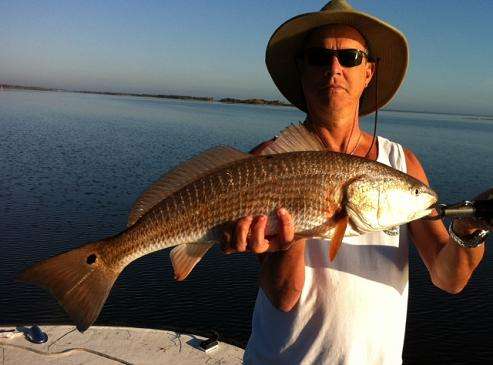 On another recent Mosquito Lagoon flats charter, returning clients Richard and Pat from Virginia had less than perfect weather on a drizzly morning, still having a blast catching 4 Redfish with a couple over the slot size at 28” and also a few nice Trout casting tail hooked shrimp, top water retrieving over the grass. 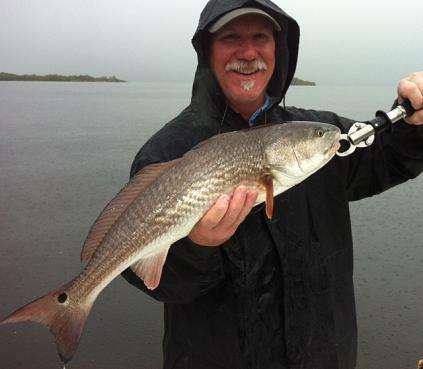 Recently repeat clients from Canada, grandpa Conrad brought his son and 2 grandsons on a mixed bag backcountry trip, we had non stop action from Bluefish and Jacks on free lined live shrimp, Seatrout were also biting with young Cale catching the largest. 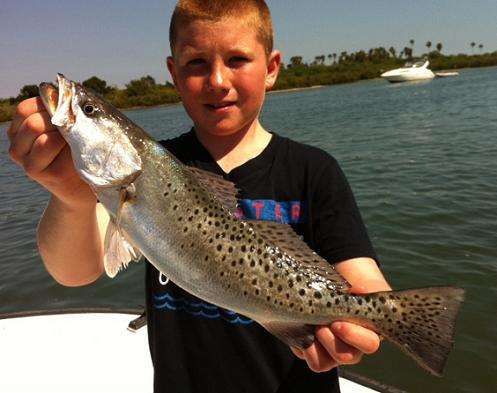 Having a couple fun fly fishing charters recently, here is Vic from Pennsylvania with a hard fighting Bluefish, spring time can have fast fly action along the Intracoastal with eager and fun to catch Blues, Jacks, and Ladyfish. Vic was using a weighted red and white “Savedow Bluefish Fly” 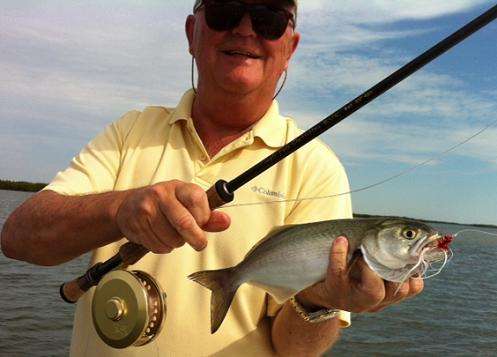 **Book an inshore charter with Capt. Michael Savedow** *My boat comfortably accommodates 1 to 4 angers for calm water inshore fishing.* *– No sea sickness* *– Call anytime: 386-689-3781* *– Children always welcome* *– Fair prices* *Capt. Michael Savedow* *Edgewater River Guide, Inc.* *Since 2003* *Phone: 386-689-3781* *Email: EdgewaterRiverGuide@cfl.rr.com* *[http://EdgewaterRiverGuide.com](http://edgewaterriverguide.com/)* [](https://www.floridashorefishing.com/profile/dan/)##### Author: [Daniel Hagan](https://www.floridashorefishing.com/profile/dan/) Daniel Hagan has been fishing Florida’s shores since 1985 and writing about it for more than 20 years. As Managing Editor of FloridaShoreFishing.com, he shares firsthand experience covering surf and pier fishing, tackle, techniques, and Florida’s coastal species.  [Daniel Hagan](https://www.floridashorefishing.com/profile/dan) Daniel Hagan has been fishing Florida’s shores since 1985 and writing about it for more than 20 years. As Managing Editor of FloridaShoreFishing.com, he shares firsthand experience covering surf and pier fishing, tackle, techniques, and Florida’s coastal species. [](https://www.facebook.com/groups/FloridaShoreFishing "Facebook") **Categories:** News **Tags:** Reports --- ### [Circle Hook Sheepshead](https://www.floridashorefishing.com/circle-hook-sheepshead) **Published:** March 20, 2012 **Author:** Daniel Hagan **Excerpt:** Sheepshead are running strong in Florida Shore waters right now. They are one of the more tricky fish to catch because of their extremely tough mouths and large teeth **Content:** [Sheepshead](/fish-profiles/sheepshead) are running strong in Florida Shore waters right now. They are one of the more tricky fish to catch because of their extremely tough mouths and large teeth. Many Sheepshead fishermen use live bait hooks but miss many fish by setting the hook at the first sign of a hit. There is another way! **Circle Hooks** Circle hooks are becoming more and more popular inshore in Florida. They nearly eliminate “gut hooking” a fish and almost always hooks the fish in the corner of the mouth (one of the Sheepsheads few week spots). With these attributes, circle hooks are becoming the favorite hook for some Sheepshead anglers. **How to Fish for Sheepshead using Circle Hooks** - Using a 12-16” 20lb leader place a 1/0 circle hook at the bottom. - Above the leader place a egg sinker just large enough to hold bottom against the current - For bait use fiddler crabs of small live shrimp - When the first hit is detected allow the Sheepshead some slack to allow it to eat the bait - After about 5-7 seconds put pressure on the fish and it will hook its slef. Using a Circle Hook while fishing for Sheepshead can increase the amount of hook ups if done correctly. It is important to be patient and most of all, to have fun! [](https://www.floridashorefishing.com/profile/dan/)##### Author: [Daniel Hagan](https://www.floridashorefishing.com/profile/dan/) Daniel Hagan has been fishing Florida’s shores since 1985 and writing about it for more than 20 years. As Managing Editor of FloridaShoreFishing.com, he shares firsthand experience covering surf and pier fishing, tackle, techniques, and Florida’s coastal species.  [Daniel Hagan](https://www.floridashorefishing.com/profile/dan) Daniel Hagan has been fishing Florida’s shores since 1985 and writing about it for more than 20 years. As Managing Editor of FloridaShoreFishing.com, he shares firsthand experience covering surf and pier fishing, tackle, techniques, and Florida’s coastal species. [](https://www.facebook.com/groups/FloridaShoreFishing "Facebook") **Categories:** Fishing Articles **Tags:** Gear, Sheepshead, tackle --- ### [Spanish Mackerel Run About to Begin](https://www.floridashorefishing.com/spanish-mackerel-run-about-to-begin) **Published:** March 22, 2013 **Author:** Daniel Hagan **Content:** As the water begins to warm up, so will the Spanish Mackerel fishing. Spring is here and what should be the last cold front has passed through, so the Mackerel should not be far behind. **How to Catch Spanish Mackerel** Spanish Mackerel are very fast fish, and they tend to react better to fast moving food. A sturdy plug, like a Gotcha Lure, works great when presented with a fairly rapid retrieve. Spanish Mackerel are known for their very sharp teeth, so many anglers us a think wire leader to prevent the line from being cut. **Catching Spanish Mackerel from a Pier** Most piers in Florida will hold Spanish Mackerel. The end of the pier tends to be the hot spot, so get there early and claim a spot. Throw a plug into the waves and retrieve it rapidly. Be prepared for a fast moving fish that will try to wrap your line up with those that are fishing around you! **Catching Spanish Mackerel from the Beach** A good sign that Spanish Mackerel are in the area is nervous baitfish and birds above. If you observe this, and it is in casting distance cast a Gotcha Plug in the area and use a rapid retrieve. If they are beyond casting distance, use a live minnow or finger mullet and hope to bring them in closer! Good luck! [](https://www.floridashorefishing.com/profile/dan/)##### Author: [Daniel Hagan](https://www.floridashorefishing.com/profile/dan/) Daniel Hagan has been fishing Florida’s shores since 1985 and writing about it for more than 20 years. As Managing Editor of FloridaShoreFishing.com, he shares firsthand experience covering surf and pier fishing, tackle, techniques, and Florida’s coastal species.  [Daniel Hagan](https://www.floridashorefishing.com/profile/dan) Daniel Hagan has been fishing Florida’s shores since 1985 and writing about it for more than 20 years. As Managing Editor of FloridaShoreFishing.com, he shares firsthand experience covering surf and pier fishing, tackle, techniques, and Florida’s coastal species. [](https://www.facebook.com/groups/FloridaShoreFishing "Facebook") **Categories:** Fishing Articles **Tags:** Mackerel, Seasonal, Spanish Mackerel --- ### [How to Catch Pompano Infographic](https://www.floridashorefishing.com/how-to-catch-pompano-infographic) **Published:** July 14, 2015 **Author:** Daniel Hagan **Content:** [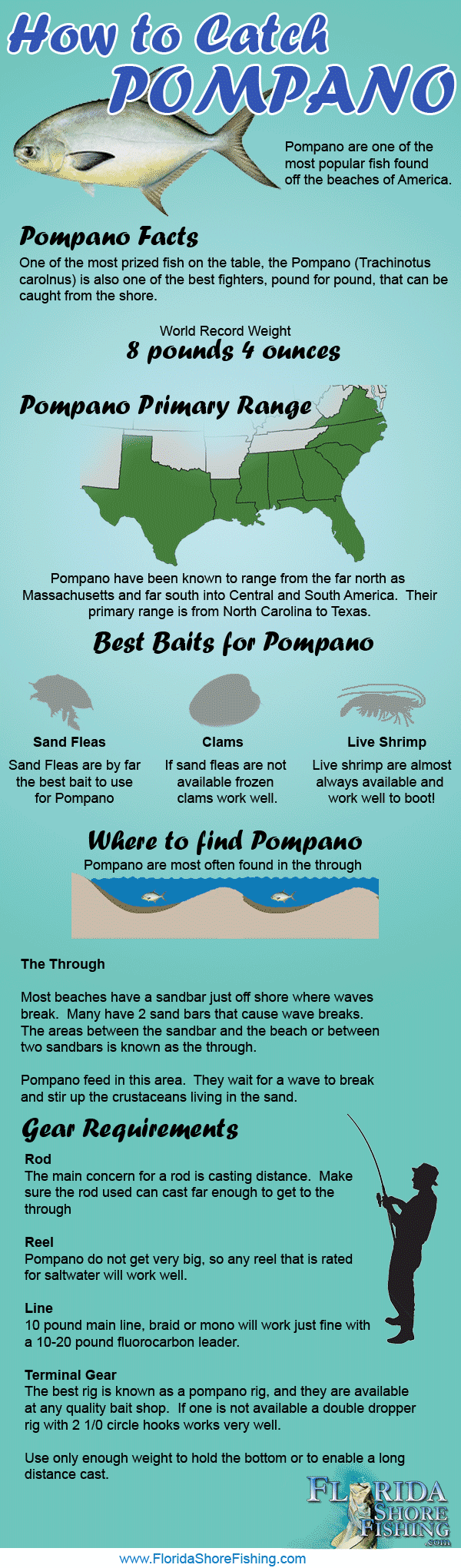](http://www.floridashorefishing.com/wp-content/uploads/2015/07/infograph-pompano.png) Want to learn more about catching Pompano? - [How to Catch Pompano](http://www.floridashorefishing.com/how-to-catch-pompano) - [Pompano Species Profile](http://www.floridashorefishing.com/fish-profiles/pompano) [](https://www.floridashorefishing.com/profile/dan/)##### Author: [Daniel Hagan](https://www.floridashorefishing.com/profile/dan/) Daniel Hagan has been fishing Florida’s shores since 1985 and writing about it for more than 20 years. As Managing Editor of FloridaShoreFishing.com, he shares firsthand experience covering surf and pier fishing, tackle, techniques, and Florida’s coastal species.  [Daniel Hagan](https://www.floridashorefishing.com/profile/dan) Daniel Hagan has been fishing Florida’s shores since 1985 and writing about it for more than 20 years. As Managing Editor of FloridaShoreFishing.com, he shares firsthand experience covering surf and pier fishing, tackle, techniques, and Florida’s coastal species. [](https://www.facebook.com/groups/FloridaShoreFishing "Facebook") **Categories:** How To **Tags:** How To, Infographic, Pompano --- ### [How to Catch Mud Minnows](https://www.floridashorefishing.com/how-to-catch-mud-minnows) **Published:** December 10, 2011 **Author:** Daniel Hagan **Content:** Mud Minnows are one of the most popular and most effective baits for Redfish, Flounder and Mangrove Snapper. They are often easy to catch and are very easy to keep alive, here is how to catch them. **Location** Mud Minnows get their name because of where they like to live. They prefer muddy bottoms, but are also found over sandy bottoms. Mud Minnows are frequently found around oyster beds, mangrove line and even boat ramps. **Equipment** Mud Minnows are most often caught using a cast net, however trapping them can be even more effective. Any cast net that has a small enough mesh size (under ½” ) will do. Size can range from 4’ up. Of course, the larger the cast net the better the chance of catching mud minnows. For traps, any minnow trap that can be bought at bait shops would work well. **Techniques** *Cast Netting* Mud Minnows spend most of their time in quite shallow water, so sight casting works well. Walk the water line near any of the areas they are known to frequent. When a Mud Minnow is spotted throw the net over them. They will most often be found in school so if one is spotted, there are most likely more around. *Trapping* In an area that has very little tidal movement place the trap in shallow water, with about 1/4th of the trap exposed. This will put the trap in the depth that the Mud Minnows spend most of their time. In areas that are tidal place the trap at low tide using the above technique. Mud Minnows are most active at low tide so placing the trap in the preferred depth at low tide will help insure a larger catch. **Tips and Tricks** - When trapping experiment with different baits. - Cut fish and shrimp heads work well. - Low tide is the best time to cast net mud minnows [](https://www.floridashorefishing.com/profile/dan/)##### Author: [Daniel Hagan](https://www.floridashorefishing.com/profile/dan/) Daniel Hagan has been fishing Florida’s shores since 1985 and writing about it for more than 20 years. As Managing Editor of FloridaShoreFishing.com, he shares firsthand experience covering surf and pier fishing, tackle, techniques, and Florida’s coastal species.  [Daniel Hagan](https://www.floridashorefishing.com/profile/dan) Daniel Hagan has been fishing Florida’s shores since 1985 and writing about it for more than 20 years. As Managing Editor of FloridaShoreFishing.com, he shares firsthand experience covering surf and pier fishing, tackle, techniques, and Florida’s coastal species. [](https://www.facebook.com/groups/FloridaShoreFishing "Facebook") **Categories:** How To **Tags:** catching live bait, How To, Live Bait, Mud Minnows --- ### [Pompano in The Surf](https://www.floridashorefishing.com/pompano-in-the-surf) **Published:** May 25, 2016 **Author:** Daniel Hagan **Content:** When the water temperatures begin to cool along Florida’s shores, the Pompano southbound migration begins. Pompano are a favorite fish among many surf fishermen for their sporty fight and great flavor, and in the early parts of Florida winters they are caught often along the beaches. **Pompano Surf Fishing Gear** Pompano are in the jack family so they put up one of the best fights of any fish their size, but they only average about 1-2 pounds off of Florida shores. The gear used will depend greatly on the distance needed to cast. *For long casting needs*: - 8-12’ rod - Spinning or Casting Reel (10-20lb class) - 10-20 pound test line - 1/0 Circle Hooks - Enough weight to reach desired location and hold bottom *For short casting needs*: - 6-7’ rod - Spinning or Casting Reel - 10-12 pound test line - 1/0 circle hooks - Just enough weight to hold bottom. **Pompano Surf Fishing Bait** Pompano live almost exclusively off of shell fish. They can be caught from time to time on minnows, but it is rare. They are frequently caught on small tube jigs, and small lures that resemble shrimp or crabs. *Best baits*: - Sand Fleas - Clams - Fresh Shrimp **Pompano Surf Fishing Techniques** Pompano hang out just behind the breaking waves along the beaches. They wait for a wave to break and stir up the bottom revealing the food. Cast just beyond the breakers with a double hook dropper rig. If the beach has 2 sand bars causing 2 breaks cast one rod beyond the first and one beyond the second to find where the fish are holding for the day. **Tips and Tricks** - Often times, one bait will work better than another. Using 2 hooks put one of one type and one of another to find what the pompano are foraging for. - Pompano will most often be caught in the deeper water behind breaking waves Long casts are [](https://www.floridashorefishing.com/profile/dan/)##### Author: [Daniel Hagan](https://www.floridashorefishing.com/profile/dan/) Daniel Hagan has been fishing Florida’s shores since 1985 and writing about it for more than 20 years. As Managing Editor of FloridaShoreFishing.com, he shares firsthand experience covering surf and pier fishing, tackle, techniques, and Florida’s coastal species.  [Daniel Hagan](https://www.floridashorefishing.com/profile/dan) Daniel Hagan has been fishing Florida’s shores since 1985 and writing about it for more than 20 years. As Managing Editor of FloridaShoreFishing.com, he shares firsthand experience covering surf and pier fishing, tackle, techniques, and Florida’s coastal species. [](https://www.facebook.com/groups/FloridaShoreFishing "Facebook") **Categories:** Fishing Articles **Tags:** Beach, Pompano, surf, Surf Fishing --- ### [Top 5 Inshore Live Baits](https://www.floridashorefishing.com/top-5-inshore-live-baits) **Published:** May 15, 2016 **Author:** Daniel Hagan **Content:** Some of the best fishing that can be found in Florida are from its miles of gorgeous shorelines, bridges, piers and docks. Many anglers that fish these areas choose, for many reasons, to use live bait. The top 5 live baits that can be used inshore in Florida are: **1. Live Shrimp** Live shrimp are the "jack of all trades" baits for inshore saltwater fishing. There are very few fish in the water that will not eat live shrimp, this includes everything from the prized Redfish to the loathed puffer-fish. When an anglers goal is to simply catch any fish that may be around, live shrimp is hard to beat. Pros: - Accepted by almost every fish in the ocean - Easy to find in most bait and tackle stores - Also work well frozen on a later trip Cons: - Attracts many "trash fish" - Can be easily taken off a hook - Some anglers are allergic to them **2. Finger Mullet** Finger mullet are small mullet that range in size from 2-6". This bait fish is highly sought after by game fish anglers because of its well deserved reputation for catching many game fish, ranging from Redfish to Trout and many more. Pros: - Very attractive to most game fish - Easily netted by anglers using a cast net - Found at many high quality bait shops Cons: - Can be hard to find at times for shore bound anglers - Can be expensive to purchase at a bait shop - Difficult to keep alive with out a large bait bucket and rapid aeration **3. Pinfish** Pinfish are one of the most common fish found inshore. They can be easily caught using a small hook and a small piece of cut shrimp. They are not the most active bait fish on a hook, but they do attract the attention of most inshore game fish with their erratic motion and grunting sound. Pros: - Erratic motion and grunting attracts most game fish - Easily caught by most anglers at almost any time of the year - Found at most high quality bait shops Cons - May not live long on a hook if weighted down - Can be expensive to buy from a bait shop - Larger Pinfish are often ignored by many inshore game fish, they will only accept smaller to medium sized pinfish. 4\. Mud Minnows Mud minnows are known to be one of the most durable live baits. They range in size from 2-4" and are a favorite bait for many Redfish and inshore Mangrove Snapper anglers. During low tide they can be easily netted by anglers that find them on shallow mudflats. Pros: - One of the most durable baits that there is - Easy to net or trap in shallow waters - Readily accepted by many game fish Cons: - Can be difficult to find during certain parts of the year - Many bait shops do not carry them, and if they do, they can be quite expensive - Sometimes the smaller mud minnows can be the targets of small trash fish that will eat their fins while they are on a hook. **5. Small Crabs** There are many types of crabs that can be used as bait in Florida. The 3 most popular are SMALL blue crabs, fiddler crabs and mud crabs. Most of these crabs can be either trapped, netted, or picked up by hand. Pros: - Attracts fish that most other baits will not (Sheepshead are a prime example) - Can attract very large fish (Black Drum and Redfish of trophy size have been caught on blue crabs) - Can live a long time in captivity if well cared for Cons: - Can be difficult to rig - May not live long on a hook - Relatively easy for a fish to steal While these are our Top 5 Inshore Baits, they are by no means the only baits that will work inshore. Other baits such as scaled sardines, grunts, pig fish, clams, sand fleas and many more all work very well. [](https://www.floridashorefishing.com/profile/dan/)##### Author: [Daniel Hagan](https://www.floridashorefishing.com/profile/dan/) Daniel Hagan has been fishing Florida’s shores since 1985 and writing about it for more than 20 years. As Managing Editor of FloridaShoreFishing.com, he shares firsthand experience covering surf and pier fishing, tackle, techniques, and Florida’s coastal species.  [Daniel Hagan](https://www.floridashorefishing.com/profile/dan) Daniel Hagan has been fishing Florida’s shores since 1985 and writing about it for more than 20 years. As Managing Editor of FloridaShoreFishing.com, he shares firsthand experience covering surf and pier fishing, tackle, techniques, and Florida’s coastal species. [](https://www.facebook.com/groups/FloridaShoreFishing "Facebook") **Categories:** Fishing Articles **Tags:** crabs, Live Bait, Mud Minnows, mullet, Shrimp --- ### [Mangrove Snapper Rig](https://www.floridashorefishing.com/mangrove-snapper-rig) **Published:** August 19, 2010 **Author:** Daniel Hagan **Content:** A frequent question that I am asked is what rig do I use to catch Mangrove Snapper from Piers or Docks, and it is pretty simple. Mangrove Snapper have fairly good eyesight and are very skilled bait stealers. Because of these two traits a Mangrove Snapper Rig has to be modified slightly from other bottom rigs used on Florida Shores. Here are the items needed: - \#1-1/0 Circle Hook - ½-1 oz. Egg sinker - 1 small bead - 1 barrel swivel - 20lb test mono or fluorocarbon How to build a Mangrove Snapper Rig - Thread egg sinker onto main line (use only as much weight as needed to get to the bottom) - Thread bead onto main line - Tie barrel swivel onto main line - Tie 2-4’ leader of 20lb test to the swivel - Tie the circle hook to the end of the leader. [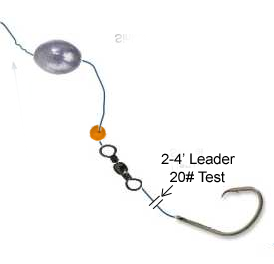](http://www.floridashorefishing.com/wp-content/uploads/2010/08/snapperrig.png) This rig has been used to catch many Mangrove Snapper from Florida Shores! [](https://www.floridashorefishing.com/profile/dan/)##### Author: [Daniel Hagan](https://www.floridashorefishing.com/profile/dan/) Daniel Hagan has been fishing Florida’s shores since 1985 and writing about it for more than 20 years. As Managing Editor of FloridaShoreFishing.com, he shares firsthand experience covering surf and pier fishing, tackle, techniques, and Florida’s coastal species.  [Daniel Hagan](https://www.floridashorefishing.com/profile/dan) Daniel Hagan has been fishing Florida’s shores since 1985 and writing about it for more than 20 years. As Managing Editor of FloridaShoreFishing.com, he shares firsthand experience covering surf and pier fishing, tackle, techniques, and Florida’s coastal species. [](https://www.facebook.com/groups/FloridaShoreFishing "Facebook") **Categories:** Fishing Articles **Tags:** Gear, Mangrove Snapper, Rig, rigs, tackle --- ### [How to Catch Inshore Bluefish](https://www.floridashorefishing.com/how-to-catch-inshore-bluefish) **Published:** January 27, 2018 **Author:** Daniel Hagan **Content:** Bluefish (*Pomatomus saltatrix)* are a pelagic fish that can be found around the world. They are found through out Florida in the winter and by June they can be found as far north as Massachusetts. They are found throughout tropical / subtropical waters and along most of the Continental Shelf. The name Bluefish comes from the blue hue found on the top of their bodies. They are a sleek, flat sided fish with a forked tail that average 1-2 pounds in shore with a world record size of 31 lbs 12oz. **Where to Find Inshore Bluefish** Inshore bluefish are most commonly found along the surf zone. Because they are pelagic fish they move along the coast following their preferred water temperatures of 66-72 degrees. Bluefish are often found by looking for large schools of bait being thrashed or birds circling and feeding on the bait chased up by the toothy predators. The best places to find inshore bluefish include: - Coastal Waters - Frequently found near structure - Areas with current that attract bait will also attract bluefish - Inlets - Passes - Inshore Creeks and Flats (though less common) **Gear** While the forked tail and flat shape of a Bluefish give them great strength for their size the average inshore fish is only around 1-2 lbs, so most gear that is saltwater rated will work well. Inshore, these fish have been caught on everything from a "Barbie" spin caster to full size conventional gear, but for the best action, picking gear that is appropriate to the targeted fish works best. ***Reels*** The most popular types of reals are spinning reels as bait casting. Any reel that can hold 8 to 12 pound test line will work great for bluefish. ***Rods*** The main consideration when picking a rod when targeting bluefish is casting distance. In general a longer rod equals longer casting distance. When fishing from piers, docks, bridges or other such structure a medium powered rod with a fast action tip of about 7 foot in length is recommended. If fishing from the surf, a much longer rod may be needed to get the distance needed to reach the fish. ***Line*** ***Main Line*** Bluefish have a mouth full of razor sharp teeth that can slice through most conventional fishing line so a leader is always recommended. For the main line, 8-12lb test line will have enough strength to land almost any inshore bluefish and will be thin enough to allow for longer casts. Since a leader is always recommended, braided line is recommended for spinning reels and monofiliment is recommended for baitcasting reels (although braid can be used on baticasting as well if you are proficient in its use) ***Leader*** The type of leader depends on the type of fishing you plan on doing. If you are going to be using live bait, a very light metal leader is recommended. The bluefish eat very aggressively and will often get the bait all the way in their mouth allowing their teeth to cut any conventional line. If fishing with artificial baits, a 20 lb test fluorocarbon leader is recommended if using a fast moving lure and a very light metal lure if using a slower lure. **Live Bait** Because of their voracious appetite, bluefish have been caught on all types of live bait, but there are a few that will out preform most others. Any type of live bait fish that has a flashy color and actively moves through the water works well. Some great examples are: - Finger Mullet - Scaled Sardines - Very Small Pinfish Other popular live baits such as Live Shrimp will work as well when the fish are feeding heavily. Frozen and cut bait will also work, just not as well as live bait that is actively swimming. **Lures** Bluefish are one of the easier fish to catch on lures inshore. The are really only two requirements, a fast moving lure and a lure that is flashy in color. When throwing a lure, make sure the retrieve is rapid and erratic. The speed and erratic movement will catch the eye of the fish and cause it to instinctively strike. They are such voracious predators that it is not uncommon to catch more than one fish on a lure that has multiple hooks. Some recommended lures are: - Gotcha Jerk Plug - Silver or Gold Spoon - Kastmaster spoon - Johnson's Gold Spoon When selecting a lure for bluefish keep their mouthful of razor sharp teeth in mind. You do not want to be using a very expensive plug or soft plastics as the bluefish will quickly destroy them. **Techniques** When bluefish are actively feeding the only technique that matters is to get the bait or lure near them and there is a good chance you will hook into one. When they are less aggressive here are a few techniques that work well: - Locate a school of bait fish and work the edges. Bluefish, even when not activly feeding will have a hard time turning down a wounded fish from a school of bait. - Chum the waters with live or cut bait. The smell will get the fish excited to feed.' - The more erratic a retrieval can be the better. The erratic movements will trigger the bluefishes natural predatory instinct. **Tips and Tricks** - The lighter the wire leader the better, almost any wire leader will be strong enough to catch a bluefish, so keep the size down to minimize its visibility. - If you are going to harvest the bluefish be sure to bleed it immediately to improve flavor. (Check your local regulations before harvesting). - Large bluefish are rare in the south, but from time to time there is a large fish run. If you catch one, there are probably more nearby! [](https://www.floridashorefishing.com/profile/dan/)##### Author: [Daniel Hagan](https://www.floridashorefishing.com/profile/dan/) Daniel Hagan has been fishing Florida’s shores since 1985 and writing about it for more than 20 years. As Managing Editor of FloridaShoreFishing.com, he shares firsthand experience covering surf and pier fishing, tackle, techniques, and Florida’s coastal species.  [Daniel Hagan](https://www.floridashorefishing.com/profile/dan) Daniel Hagan has been fishing Florida’s shores since 1985 and writing about it for more than 20 years. As Managing Editor of FloridaShoreFishing.com, he shares firsthand experience covering surf and pier fishing, tackle, techniques, and Florida’s coastal species. [](https://www.facebook.com/groups/FloridaShoreFishing "Facebook") **Categories:** Fishing Articles, How To **Tags:** Bluefish, inshore --- ### [Warm Weather Fishing Tips](https://www.floridashorefishing.com/warm-weather-fishing-tips) **Published:** June 23, 2017 **Author:** Daniel Hagan **Content:** When fishing from the shores of Florida during the warmer months the tactics and techniques can vary greatly from cooler weather fishing. **Start Early** Here in Florida the water can get quite warm during the heat of the day. This warm water makes many species lethargic and difficult to catch. Starting a fishing trip early will help increase the odds of catching more fish. Getting to your preferred fishing hole by sunrise will almost always provide more action than showing up around noon! Fishing late in the day works almost as well. As the sun is getting lower and the temperatures begin to drop, fish become active again. Many fish are still active after sunset, trout are famous for being very active at night around dock lights. **Use Larger Baits** Because many species of fish are far less active in the heat of the day, one way to increase the chances of catching is to increase the size of your bait. If you are using lures, step up one size, if you are using live bait, use the largest available. When in a lethargic mood, fish will often pass up a meal that is small, preferring not to use their energy to catch the small meal. However, they will often times, even when they are not aggressively feeding attack larger meals. The opportunity to eat an easy, large meal is often to much to pass up! **Protect Yourself from the Elements** The single most important thing to remember when fishing in Florida during the summer is to protect yourself from the elements. Here are a few recommended items to have with you on any trip: - Sunscreen - Plenty of Drinking Water - Hat - Long Sleeve Shirt (better to sweat than burn) - Umbrella (if fishing in an area that it can be mounted) - Cooling Towel These are just some of the items that can be brought to help protect yourself from the elements, but sunscreen and water are the two most important. Water is the most immediate need, especially if the fishing is active. Anglers often forget to hydrate if they are catching a lot of fish, and this is when they need it most. Sunscreen is the most needed long term! Florida’s sun can be quite damaging to unprotected skin leading to many health issues, including cancer! Take these warm weather fishing tips into account next time you go fishing here in Florida during the summer and you will catch more fish and feel better doing it! [](https://www.floridashorefishing.com/profile/dan/)##### Author: [Daniel Hagan](https://www.floridashorefishing.com/profile/dan/) Daniel Hagan has been fishing Florida’s shores since 1985 and writing about it for more than 20 years. As Managing Editor of FloridaShoreFishing.com, he shares firsthand experience covering surf and pier fishing, tackle, techniques, and Florida’s coastal species.  [Daniel Hagan](https://www.floridashorefishing.com/profile/dan) Daniel Hagan has been fishing Florida’s shores since 1985 and writing about it for more than 20 years. As Managing Editor of FloridaShoreFishing.com, he shares firsthand experience covering surf and pier fishing, tackle, techniques, and Florida’s coastal species. [](https://www.facebook.com/groups/FloridaShoreFishing "Facebook") **Categories:** Fishing Articles --- ### [Editors Blog: July 2016](https://www.floridashorefishing.com/editors-blog-july-2016) **Published:** July 19, 2016 **Author:** Daniel Hagan **Content:** Welcome to the July 2016 edition of Florida Shore Fishing Editors Blog. In this blog entry I am going to write about whats new here at FloridaShoreFishing.com and a brief preview of whats coming in the near future, but first, a quick story about one of my recent fishing trips. **Sunglow Pier – July 10th** July 10th is my birthday (que the music) and what better way to start a birthday than a trip to one of my favorite fishing piers. Sunglow is located in South Daytona Beach and extends a few hundred yards beyond the beach into the Atlantic. It has a restaurant and gift shop on the pier, and I ALWAYS order biscuits and gravy to eat while fishing. In the past I have caught many, many fish here. I have caught trophy sized Red Fish, doormat sized Flounder, Sheepshead galore, copious amounts of Black Drum and enough whiting to feed an army, so I had high hopes of catching a few fish while enjoying the start of my day. I started out by stopping at Donald’s Bait and Tackle to buy a dozen Mud Minnows and 2 dozen live shrimp. The Mud Minnows stay alive for a long time in the surf and are a great bait for Redfish and Flounder, while the live shrimp are a killer for Black Drum and Whiting. With the bait in my modified cooler, I was on my way to Sunglow before sunrise! After placing my breakfast order I made my way to one of my favorite spots on the pier durring the summer. Just beyond the gift shop is a small, covered seating area. At high tide the water strait down is about 5-6′ deep and is near the trough between two sandbars. I set up in this area casting a double dropper rig with 2 live shrimp into the trough and dropping a mud minnow strait down. I continued to use this same set up until the heat got the better of me and I left the pier around 11:15am. On the double dropper rig with shrimp I caught the following: - 6 Whiting – 6-11″ - 2 Black Drum – both around 12″ On the Mud Minnow I caught the following: - 1 Redfish – Slot Sized (released to fight another day) - 2 Flounder – both around 12″ While I did not set any size our quantity records it was a good steady day. I had a great time fishing, stayed in the shade most of the day and got a few tugs on my line! **Whats New at FloridaShoreFishing.com** - I have made is a priority to add at least 2 new bait shops to our list every week, and we are considering adding a featured bait shop for each region. I am currently testing it out with one of my local shops that I frequent to see if my readers like the idea. - There have been a few behind the scenes changes that help the site run better and make it more mobile friendly. If you have any suggestions to make it even more friendly, please let us know! - We are becoming more social! While we have always had social media accounts, we are starting to be more active on them. Got a question about anything, hit us up on Twitter or Facebook, we are there much more often now! **Whats Coming to FloridaShoreFishing.com** - More social media integration. - Much of the world has turned to social media, and we cant ignore that, so we are looking at ways to integrate social media with our web magazine better. - Provide valuable content on social media. - One thing we have noticed that we are not big fans of is that MOST posts on Twitter and Facebook about fishing in Florida are trying to sell something and offer very little value, we are going to try to change that. Our philosophy is to provide informative, entertaining and useful posts on social media in hopes that it will draw in new readers and help grow this website. Our measure of success is the number of readers, not the dollars we generate (which is not enough to cover our costs, but this is a passion project, not a business) - More first person articles - We are running out of topics to write how-to articles about, so we are going to start writing more first person articles that will focus on our experiences fishing and what we learned on those trips. We will be taking trips with well known, and some not so well known but highly experienced anglers that will be highlighted in our first person articles. For the fans of our how-to series, fear not, we will continue to write them, they will just be a little less frequent. - If you have a suggestion for a how to article, PLEASE find us on Facebook or Twitter. As Bugs Bunny says, “Thats all Folks”. I look forward to interacting with you all on social media! [](https://www.floridashorefishing.com/profile/dan/)##### Author: [Daniel Hagan](https://www.floridashorefishing.com/profile/dan/) Daniel Hagan has been fishing Florida’s shores since 1985 and writing about it for more than 20 years. As Managing Editor of FloridaShoreFishing.com, he shares firsthand experience covering surf and pier fishing, tackle, techniques, and Florida’s coastal species.  [Daniel Hagan](https://www.floridashorefishing.com/profile/dan) Daniel Hagan has been fishing Florida’s shores since 1985 and writing about it for more than 20 years. As Managing Editor of FloridaShoreFishing.com, he shares firsthand experience covering surf and pier fishing, tackle, techniques, and Florida’s coastal species. [](https://www.facebook.com/groups/FloridaShoreFishing "Facebook") **Categories:** Blog --- ### [Florida Winter Shrimp Run – How To Catch Shrimp](https://www.floridashorefishing.com/florida-winter-shrimp-run-how-to-catch-shrimp) **Published:** December 12, 2011 **Author:** Daniel Hagan **Content:** *This is the second post in the series “Florida Winter Shrimp Run”* The winter shrimp run here in Florida is heavily concentrated on the East Central coast. As the shrimp are heading out to deep waters, they pass by many areas that they can be caught from the shore, here is how! **Lighting Setup** The most effective lighting set up is to submerge a light deep enough that there is only a faint glow visible. The shrimp that are running are not attracted to light; they are in fact deterred by it. Having just a slight glow will not chase the shrimp off and will be enough to see the shrimp as they swim past. **Dip Net Techniques** The shrimp that are running usually do so in the upper levels of the water. They swim with the out going tide on their way out to see. The best way to catch them is to have the dip net in the water up current of the light field, when a shrimp is spotted gently move the net into the shrimps path to avoid spooking the shrimp. Every few minutes pull the net out of the water and collect the shrimp in a bucket or cooler. **Tips and Tricks** - Green LED lights are easy on the eyes and don’t spook the shrimp - Show up an hour before the tide turns to get set up and ready before the run begins - Be courteous to other shirmpers, and try not to crowd others Previous: [Florida Winter Shrimp Run](http://www.floridashorefishing.com/florida-winter-shrimp-run) Next: Where to Catch Shrimp (coming soon) [](https://www.floridashorefishing.com/profile/dan/)##### Author: [Daniel Hagan](https://www.floridashorefishing.com/profile/dan/) Daniel Hagan has been fishing Florida’s shores since 1985 and writing about it for more than 20 years. As Managing Editor of FloridaShoreFishing.com, he shares firsthand experience covering surf and pier fishing, tackle, techniques, and Florida’s coastal species.  [Daniel Hagan](https://www.floridashorefishing.com/profile/dan) Daniel Hagan has been fishing Florida’s shores since 1985 and writing about it for more than 20 years. As Managing Editor of FloridaShoreFishing.com, he shares firsthand experience covering surf and pier fishing, tackle, techniques, and Florida’s coastal species. [](https://www.facebook.com/groups/FloridaShoreFishing "Facebook") **Categories:** News --- ### [Editors Blog: 10/26/2015](https://www.floridashorefishing.com/editors-blog-10262015) **Published:** June 26, 2015 **Author:** Daniel Hagan **Content:** Welcome to the first edition of FloridaShoreFishing.com’s Editors Blog. This blog will is intended to be a monthly update from the editor on what is new, what is coming soon and any thing else related to FloridaShoreFishing.com. **Whats New** - **Online Magazine Format** - Our loyal readers may have noticed over the past few months we have started a transition here are FloridaShoreFishing.com. We have moved away from posting many small low quality articles to a few high quality articles a month. Our goal is to be the best online fishing magazine for boatless anglers. - Starting in November our goal will be to publish 2 high quality articles that are focused on fishing from the shores here in Florida. - **[Email Subscription](http://www.floridashorefishing.com/subscribe)** - We have added a new email subscription that allows you to get notified of any new content that we post via email. - We will NEVER spam your email nor will we ever give out your information to any 3rd party. **Whats Coming** - **Online Magazine Sections** - We will be introducing magazine sections that will focus solely on one topic at a time. These sections will have a landing page (much like the main page of our website) that will direct our readers to the newest content, most popular articles as well as make searching for articles in that section easier. - Our first section will be Florida Surf Fishing and will be published tomorrow! - **Forum** - Our discussion forum has been built and tested. We will be rolling it out as a fully functional part of the site soon. - The forum will be a great place for our readers to share their fishing tales and show off their catches. Keep an eye out for future Editors Blogs! We are planning on publishing the editors blog on the first of the month every month (this one is coming a bit early because we are excited to get started). PLEASE feel free to [CONTACT US](http://www.floridashorefishing.com/contacts) if you have any questions or comments! [](https://www.floridashorefishing.com/profile/dan/)##### Author: [Daniel Hagan](https://www.floridashorefishing.com/profile/dan/) Daniel Hagan has been fishing Florida’s shores since 1985 and writing about it for more than 20 years. As Managing Editor of FloridaShoreFishing.com, he shares firsthand experience covering surf and pier fishing, tackle, techniques, and Florida’s coastal species.  [Daniel Hagan](https://www.floridashorefishing.com/profile/dan) Daniel Hagan has been fishing Florida’s shores since 1985 and writing about it for more than 20 years. As Managing Editor of FloridaShoreFishing.com, he shares firsthand experience covering surf and pier fishing, tackle, techniques, and Florida’s coastal species. [](https://www.facebook.com/groups/FloridaShoreFishing "Facebook") **Categories:** Blog --- ### [Change in weather gives crews more time to fight oil spill](https://www.floridashorefishing.com/change-in-weather-gives-crews-more-time-to-fight-oil-spill) **Published:** May 4, 2010 **Author:** Daniel Hagan **Excerpt:**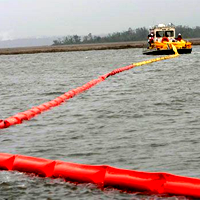
It was reported today that the weather in the Gulf is working in favor of clean up crews. The winds have shifted and will keep the oil off shore for at least another day. How ever the winds and a front moving in will likely push the spill twords the loop current.
**Content:** *By CURTIS MORGAN, ANITA LEE AND STEVE ROTHAUS* *McClatchy Newspapers* GULFPORT, Miss. — Shifting and easing winds on Monday bought time for weather-beaten crews to bottle up and burn off a massive slick of rust-colored crude oil before it fouls fragile marshes and sugary beaches across four Gulf Coast states. That reprieve, however, could also have a nasty ripple effect – pushing outlying plumes of polluted surface water and patches of tar balls into the Gulf of Mexico’s powerful loop current. That would propel the mess across the mangrove islands, seagrass beds and coral reefs of the Florida Keys, then up toward Miami Beach, Fort Lauderdale and beyond. Trajectories from the National Oceanic and Atmospheric Administration suggest the oil will remain offshore at least through Tuesday, and a University of Miami oceanographer said a weather front expected in 24 to 48 hours will likely begin pushing the spill away from the Gulf Coast and toward the loop current. Chemical dispersants pumped into the Gulf near where the oil is spewing from the seafloor seemed to be helping to keep oil from floating to the surface, officials reported in a mid-afternoon briefing, but efforts to activate a shutoff valve underwater continued to be unsuccessful. Meanwhile, BP officials said they’d try Tuesday to place the first of three 98-ton steel and concrete containment domes over one of the leaks in hopes of capturing the escaping oil and pumping it to an oil tanker. Officials said they hope that two other containment domes would be in place within the week. The containment domes, however, aren’t certain to work, and preparations continued throughout the Gulf coast for environmental disaster. “The magnitude of this spill is daunting,” said Michael Sole, Florida’s secretary of the Department of Environmental Protection, “We still have an ongoing release of some 5,000 barrels of oil occurring just 50 miles off Louisiana. It’s not like, ‘We had a spill. We’re cleaning it up, and it’ll be over.’ ” Florida Gov. Charlie Crist on Monday added 13 more counties to his declaration of a state of emergency, bringing the total number of countries now threatened to 19. “It is an enormous mess,” Crist said. “It is unbelievable, the magnitude of this thing. Clearly every effort needs to be put on plugging the hole up and stopping the bleeding.” Attorneys general from the five Gulf Coast states also asked President Barack Obama to take legal steps necessary to lay blame for the massive Gulf oil leak. Chris Bence, a spokesman for Alabama Attorney General Troy King, said a letter was prepared asking the president to clear the way for possible court action. Attorneys general from Florida, Mississippi, Louisiana and Texas also joined the request. How serious the damage would eventually be from the spill was still anyone’s guess, however. A flight over the spill found that the slick remains 35 to 55 miles off the Mississippi coast, but that it was clearly affecting the barrier islands off shore. Patches of oil were clearly visible within the Chandeleur islands. Small patches of what appeared to be rust-colored oil were spotted in the channel between Cat Island and Ship Island, 11 miles south of Gulfport. An island in the Chandeleurs surrounded with a pink anti-oil boom was covered with nesting birds. Mississippi state officials said Monday that the oil had advanced 20 miles closer to the coast since Sunday. However, they said Coast Guard officials assured them that they’d get at least 72 hours’ notice before the oil threatens the coastline. [](https://www.floridashorefishing.com/profile/dan/)##### Author: [Daniel Hagan](https://www.floridashorefishing.com/profile/dan/) Daniel Hagan has been fishing Florida’s shores since 1985 and writing about it for more than 20 years. As Managing Editor of FloridaShoreFishing.com, he shares firsthand experience covering surf and pier fishing, tackle, techniques, and Florida’s coastal species.  [Daniel Hagan](https://www.floridashorefishing.com/profile/dan) Daniel Hagan has been fishing Florida’s shores since 1985 and writing about it for more than 20 years. As Managing Editor of FloridaShoreFishing.com, he shares firsthand experience covering surf and pier fishing, tackle, techniques, and Florida’s coastal species. [](https://www.facebook.com/groups/FloridaShoreFishing "Facebook") **Categories:** News --- ### [Light Wire Circle Hooks for Sheepshead](https://www.floridashorefishing.com/light-wire-circle-hooks-for-sheepshead) **Published:** December 3, 2014 **Author:** Daniel Hagan **Content:** [**Sheepshead**](http://www.floridashorefishing.com/fish-profiles/sheepshead) migrate inshore during the winter in Florida. These fish are often found around pylons of bridges/piers, rock piles, oyster beds and anywhere that has barnacle growth. Feeding primarily on crustaceans, the single most effective bait for sheepshead is the fiddler crab. Most sheepshead anglers use a ultra sharp J-hook that is threaded through the fiddler crab just inside of its legs. Theses anglers wait for the first sign of a big and set the hook with a rapid upward jerk. This has been a successful technique for many years, but there is a new trend in sheepshead fishing, the light wire circle hook. **How to Fish for Sheepshead with a Light Wire Circle Hook** A light wire, ultra sharp circle hook should be placed at the bottom of a 12-16″ 20lb fluorocarbon leader. Above the leader place a swivel and just enough weight to hold its place in the current that is being fished. This rig should be on a light action, medium strength rod with a spinning or baitcasting reel spooled with 10-15lb test mono or braid. Hook the fiddler crab just on the inside of its legs, allow just the very tip of the hook to be exposed on the top of its shell. Lower the bait down to where a sheepshead is suspected to be. Be patient! When a bite is detected (with a light action tip, a small tap tap will be noticed) DO NOT set the hook. Wait for the rod tip to start to slowly bend as the sheepshead starts to swim away with he bait in its mouth. Once this happens start to real in and lift the rod tip up (not a hook set, just a lift up). Circle hooks tend to hook a fish in the corner of the mouth. Because sheepsheads have very bony mouths and many teeth, hooking in the corner of the mouth, a mostly fleshy area, is easier then the top or the bottom of the mouth. Beware that a medium-large sized fish can bend the hook quite a bit, so make sure not to use horsepower to bring in the big fish, finesse them. After fighting a large fish check the shape of your hook, if the shape has been compromised be sure to tie a new hook on the leader! [](https://www.floridashorefishing.com/profile/dan/)##### Author: [Daniel Hagan](https://www.floridashorefishing.com/profile/dan/) Daniel Hagan has been fishing Florida’s shores since 1985 and writing about it for more than 20 years. As Managing Editor of FloridaShoreFishing.com, he shares firsthand experience covering surf and pier fishing, tackle, techniques, and Florida’s coastal species.  [Daniel Hagan](https://www.floridashorefishing.com/profile/dan) Daniel Hagan has been fishing Florida’s shores since 1985 and writing about it for more than 20 years. As Managing Editor of FloridaShoreFishing.com, he shares firsthand experience covering surf and pier fishing, tackle, techniques, and Florida’s coastal species. [](https://www.facebook.com/groups/FloridaShoreFishing "Facebook") **Categories:** Fishing Articles --- ### [Flounder Profile Added](https://www.floridashorefishing.com/flounder-profile-added) **Published:** July 17, 2015 **Author:** Daniel Hagan **Content:** [](http://www.floridashorefishing.com/fish-profiles/flounder)In our ongoing efforts to keep FloridaShoreFishing.com as the premier boatless fishing webstie for Florida we plan to continuously add new content and update current content! **[Flounder Profile](http://www.floridashorefishing.com/fish-profiles/flounder)** Today, we added the new [Flounder Profile](http://www.floridashorefishing.com/fish-profiles/flounder). If there is any content or articles that you would like to see added to FloridaShoreFishing.com please do not hesitate to contact us! [](https://www.floridashorefishing.com/profile/dan/)##### Author: [Daniel Hagan](https://www.floridashorefishing.com/profile/dan/) Daniel Hagan has been fishing Florida’s shores since 1985 and writing about it for more than 20 years. As Managing Editor of FloridaShoreFishing.com, he shares firsthand experience covering surf and pier fishing, tackle, techniques, and Florida’s coastal species.  [Daniel Hagan](https://www.floridashorefishing.com/profile/dan) Daniel Hagan has been fishing Florida’s shores since 1985 and writing about it for more than 20 years. As Managing Editor of FloridaShoreFishing.com, he shares firsthand experience covering surf and pier fishing, tackle, techniques, and Florida’s coastal species. [](https://www.facebook.com/groups/FloridaShoreFishing "Facebook") **Categories:** News --- ### [Wanted: Bait and Tackle Listings](https://www.floridashorefishing.com/wanted-bait-and-tackle-listings) **Published:** May 20, 2015 **Author:** Daniel Hagan **Content:** FloridaShoreFishing.com is looking to expand its [Bait and Tackle List](http://www.floridashorefishing.com/bait-and-tackle). If you are an owner/employee of a bait and tackle shop, or simply know of one that you think should be on our list, please [Contact Us (click here)](http://www.floridashorefishing.com/contacts) Please include the following: 1. Name of shop 2. Location (address) 3. Phone Number 4. Any other information you would like to provide. It is completely free to be listed on our bait and tackle list, so please submit yours or your favorite! [](https://www.floridashorefishing.com/profile/dan/)##### Author: [Daniel Hagan](https://www.floridashorefishing.com/profile/dan/) Daniel Hagan has been fishing Florida’s shores since 1985 and writing about it for more than 20 years. As Managing Editor of FloridaShoreFishing.com, he shares firsthand experience covering surf and pier fishing, tackle, techniques, and Florida’s coastal species.  [Daniel Hagan](https://www.floridashorefishing.com/profile/dan) Daniel Hagan has been fishing Florida’s shores since 1985 and writing about it for more than 20 years. As Managing Editor of FloridaShoreFishing.com, he shares firsthand experience covering surf and pier fishing, tackle, techniques, and Florida’s coastal species. [](https://www.facebook.com/groups/FloridaShoreFishing "Facebook") **Categories:** Blog --- ### [Live Bait vs. Lure Fishing](https://www.floridashorefishing.com/live-bait-vs-lure-fishing) **Published:** March 29, 2015 **Author:** Daniel Hagan **Content:** *This is an editorial blog post by our editor Dan Hagan.* One of the longest running debates among anglers is whether to use live bait or lures. The debate focuses on two points, the effectiveness and the enjoyability of both techniques. After many years of fishing from Florida’s Shores, I can say with great conviction that using live bait will out fish lures in most situations. **When to use lures** Over the years I have found that there are a few times when using lures will be a better choice than using live bait. Here are a few: 1. Fishing for Bedding Bass 2. During a Blue Fish run 3. During a Spanish Mackerel Run ***1. Fishing for Bedding Bass*** Bedding bass are highly territorial and will attack almost anything that enters their bed. They are often times not attacking the lure to eat it, but are doing so to protect their territory. A large lure can often out fish live bait in this situation because you have more control over the lure. Bouncing it around inside the bed will almost always elicit a strike! ***2. During a Blue Fish Run*** Blue Fish are voracious predators. They will attack just about any type of live bait, and any fast moving or shinny lure. The problem with blue fish is they have extremely sharp teeth that will cut through most live bait, often times not taking the hook. When a blue fish run is present a good quality plug in silver or gold paint will work very well. A quick, but erratic retrieve will often entice an aggressive strike, sometimes even getting more than one fish on the hook (if the lure has 2 treble hooks) at the same time. Blue fish WILL make a mess out of any lure they attack, so I recommend against using expensive lures when fishing for them. ***3. During a Spanish Mackerel Run*** Spanish Mackerel are one of the fastest fish that can be caught from Florida’s shores. They have a long slender build that is propelled by a large forked tail. This incredible speed they posess is intended to help them catch the fast moving bait fish that they prey on. A lure, such as a gotcha jig or a gold spoon, retrieved in a fast jerky motion will almost always get a Spanish Mackerels attention. Live bait, often times lethargic on the hook, will not be as appetizing to a mack! **When to use LIVE Bait** EVERY OTHER TIME When salt water fishing in Florida, most places that you can fish from the shore you will either be stationary or moving very slowly. This attribute makes live bait fishing much more effective than lures. The live bait will not only attract fish because of its movement in the water, but it will also send out a sent that attracts fish. I have seen it time and time again where a fish will cover great distances to pick up a live bait, while completely ignoring a lure in front of its face! Now, I am not saying that when walking the shores of a pond a lure is not a good idea, I am just suggesting that live bait, in MOST situations, when shore bound, will out fish lures by a great margin! [](https://www.floridashorefishing.com/profile/dan/)##### Author: [Daniel Hagan](https://www.floridashorefishing.com/profile/dan/) Daniel Hagan has been fishing Florida’s shores since 1985 and writing about it for more than 20 years. As Managing Editor of FloridaShoreFishing.com, he shares firsthand experience covering surf and pier fishing, tackle, techniques, and Florida’s coastal species.  [Daniel Hagan](https://www.floridashorefishing.com/profile/dan) Daniel Hagan has been fishing Florida’s shores since 1985 and writing about it for more than 20 years. As Managing Editor of FloridaShoreFishing.com, he shares firsthand experience covering surf and pier fishing, tackle, techniques, and Florida’s coastal species. [](https://www.facebook.com/groups/FloridaShoreFishing "Facebook") **Categories:** Blog --- ### [Fishing for Bedding Bass](https://www.floridashorefishing.com/fishing-for-bedding-bass) **Published:** March 16, 2015 **Author:** Daniel Hagan **Content:** Here in Florida one of the best times for shore bound anglers to fish for Largemouth Bass is near the end of winter. The bass start to make their move shallow and build nests for breeding. First to show up are the males followed by the smaller females. During spawning Bass do not feed much, but they become very territorial and will attack anything that enters their beds, knowing this will aid in catching more fish. Here are a few techniques for catching bedding bass for Florida’s shore anglers. **Scout for beds before fishing** One technique that will help increase the number of bass caught of beds is to spend a few hours scouting the lakes shores for beds before fishing the lake. Walk the shores wearing a good pair of polarized sunglasses looking for any sign of a bed. Once a bed is spotted take some time and watch the bed to see if it is holding only the male, both fish or only the female. Make mental notes of where the beds are and what fish and what size fish are on the beds. Knowing where to look for the beds when actively fishing will make your fishing trips much more productive and efficient. **Use gear that can easily handle large fish** Many of the females that are caught from beds are quite large. They can be the biggest fish caught of the year for any given lake. When fishing for these fish, it is important to have gear that can handle the largest of fish in areas that have a fair amount of cover. A baitcasting combo that has 20-30lb test is perfect for this kind of fishing. Fighting a large fish for an extended amount of time is advised against because it will stress the fish out and may cause them to leave their beds upon release (you are going to release all bedding fish aren’t you?). **Heavy soft plastic baits work best** One of the keys to getting a strike from a bedding bass is to trigger its territorial protection instinct. Bedding bass protect their beds from all invaders, including small fish trying to eat thier eggs or other bass trying to move in on their mate. A large, heavy soft plastic bait, bounced through the bed will almost always elicit a strike. Do not allow the fish to hold the bait very long before setting the hook, they are not in a feeding mood and may spit the bait out quickly and retreat from their bed knowing that something is not right. [](https://www.floridashorefishing.com/profile/dan/)##### Author: [Daniel Hagan](https://www.floridashorefishing.com/profile/dan/) Daniel Hagan has been fishing Florida’s shores since 1985 and writing about it for more than 20 years. As Managing Editor of FloridaShoreFishing.com, he shares firsthand experience covering surf and pier fishing, tackle, techniques, and Florida’s coastal species.  [Daniel Hagan](https://www.floridashorefishing.com/profile/dan) Daniel Hagan has been fishing Florida’s shores since 1985 and writing about it for more than 20 years. As Managing Editor of FloridaShoreFishing.com, he shares firsthand experience covering surf and pier fishing, tackle, techniques, and Florida’s coastal species. [](https://www.facebook.com/groups/FloridaShoreFishing "Facebook") **Categories:** Fishing Articles --- ### [Whiting Fishing is Strong on Florida Beaches](https://www.floridashorefishing.com/whiting-fishing-is-strong-on-florida-beaches) **Published:** February 11, 2015 **Author:** Daniel Hagan **Content:** A year round staple for Florida Surf Fishing is the ever popular and delicious whiting. During the winter they are one of the few species that can be caught on a consistent basis from the beach, Bluefish being another. When the Bluefish are running strong, most other fish go into hiding, but it is the time of year when the Bluefish run is slowing a little bit and the whiting are getting brave again. Reports are coming in from all over the state of multiple keeper whiting per trip. Quick Winter Whiting Tips: - Use a dropper rig that has multiple hooks on it - Start with different types of bait (fresh peeled shrimp, clam, sand fleas) - After figuring out what bait is getting hit the most, put that on all hooks - If bluefish show up, avoid meaty baits, sand fleas will catch more whiting than bluefish [](https://www.floridashorefishing.com/profile/dan/)##### Author: [Daniel Hagan](https://www.floridashorefishing.com/profile/dan/) Daniel Hagan has been fishing Florida’s shores since 1985 and writing about it for more than 20 years. As Managing Editor of FloridaShoreFishing.com, he shares firsthand experience covering surf and pier fishing, tackle, techniques, and Florida’s coastal species.  [Daniel Hagan](https://www.floridashorefishing.com/profile/dan) Daniel Hagan has been fishing Florida’s shores since 1985 and writing about it for more than 20 years. As Managing Editor of FloridaShoreFishing.com, he shares firsthand experience covering surf and pier fishing, tackle, techniques, and Florida’s coastal species. [](https://www.facebook.com/groups/FloridaShoreFishing "Facebook") **Categories:** News --- ### [Bluefish - Friend or Foe](https://www.floridashorefishing.com/bluefish-friend-or-foe) **Published:** December 10, 2014 **Author:** Daniel Hagan **Content:** During the winter Florida Shores are invaded by a northern fish migrating south for the warmer waters, the Bluefish. These fish can reach over 30 pounds, but here in Florida they average around 14″, but they can be found in schools of hundreds. They have a mouth full of sharp teeth and fight rather hard for their size. But are they a welcome visitor or a trash fish that can not be avoided? The answer all depends on the individual angler, here is some information about them to help decide: **[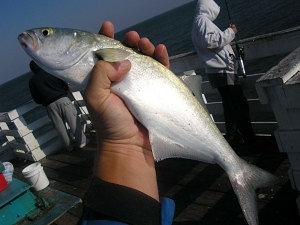](http://www.floridashorefishing.com/wp-content/uploads/2014/12/112608-bluefish-6.jpg)Availability: Abundant and easy to find** Bluefish are found in great numbers in North Florida spring-fall and fall-spring in South Florida. They are found in the surf, bays, estuaries and the Inter-coastal Water Way in good numbers. **Size: Small – Medium** Bluefish CAN grow to over 30lbs, but it is rare to catch one over 3lbs in Florida. Every now and then a school of large fish will make its way down to Florida, but the run in unpredictable at best. The average size here is about 14″, with many smaller fish around. **Food Value: Subjective** Some anglers find the flavor of a bluefish to be quite objectionable while others enjoy the flavor. All that eat them agree that they must be bled when caught, well iced and eaten fresh. Most bluefish are either fried or broiled the same day they are caught. **Game Value: Good** A strong fighter that is quite fast, uses its forked tail to its advantage, and will readily accept artificial or natural baits. At times, anything flashy that moves fast will be taken by bluefish. They are so aggressive, that they can be considered a nuisance to fishermen targeting other fish. **Editorial Opinion: Fun when nothing else is around.** The author of this piece enjoys catching bluefish on days where other sport fish are not cooperating. They are almost always willing to put on a fight, even when conditions are poor. Their poor reputation on the table is justified, but their strong fight and willing strikes make them a welcome visitor to Florida’s Shores. *What do you think about the Bluefish? Let us know on Twitter [@FLShoreFishing](https://twitter.com/FLShoreFishing) or on Facebook at * [](https://www.floridashorefishing.com/profile/dan/)##### Author: [Daniel Hagan](https://www.floridashorefishing.com/profile/dan/) Daniel Hagan has been fishing Florida’s shores since 1985 and writing about it for more than 20 years. As Managing Editor of FloridaShoreFishing.com, he shares firsthand experience covering surf and pier fishing, tackle, techniques, and Florida’s coastal species.  [Daniel Hagan](https://www.floridashorefishing.com/profile/dan) Daniel Hagan has been fishing Florida’s shores since 1985 and writing about it for more than 20 years. As Managing Editor of FloridaShoreFishing.com, he shares firsthand experience covering surf and pier fishing, tackle, techniques, and Florida’s coastal species. [](https://www.facebook.com/groups/FloridaShoreFishing "Facebook") **Categories:** Fishing Articles --- ### [Black Drum in the Surf](https://www.floridashorefishing.com/black-drum-in-the-surf) **Published:** May 5, 2010 **Author:** Daniel Hagan **Content:** I had the day off today and I figured I would take advantage by relaxing on New Smyrna Beach. Being the avid angler that I am I had to bring a fishing pole with me! The day was slow for fishing. Not much going on most of the morning until I hear my click start to talk to me. It was just a slow “tick tick tick”. I look at the rod and see it moving in that distinct way when a fish is on. I pick up my Ambassador rig and I feel a slight tug on the line. Because I was using circle hooks, no need to set the hook, I just start to real it in. I am greeted with a spunky fight. No runs or drag pulled, but a fun fight none-the-less. To my delight, I pulled in a nice Black Drum. One of my favorite fish as table fare! The rest of the day was fairly slow. A few small whiting and a few small bonnet head sharks. Overall, a good day on the beach with a few fish to boot! [](https://www.floridashorefishing.com/profile/dan/)##### Author: [Daniel Hagan](https://www.floridashorefishing.com/profile/dan/) Daniel Hagan has been fishing Florida’s shores since 1985 and writing about it for more than 20 years. As Managing Editor of FloridaShoreFishing.com, he shares firsthand experience covering surf and pier fishing, tackle, techniques, and Florida’s coastal species.  [Daniel Hagan](https://www.floridashorefishing.com/profile/dan) Daniel Hagan has been fishing Florida’s shores since 1985 and writing about it for more than 20 years. As Managing Editor of FloridaShoreFishing.com, he shares firsthand experience covering surf and pier fishing, tackle, techniques, and Florida’s coastal species. [](https://www.facebook.com/groups/FloridaShoreFishing "Facebook") **Categories:** News --- ### [Cool Weather Fish are Arriving](https://www.floridashorefishing.com/cool-weather-fish-are-arriving) **Published:** October 29, 2012 **Author:** Daniel Hagan **Content:** In the surf, the cool weather fish are starting to show up. Reports of Blue Fish, Spanish Mackerel, Sheepshead and Pompano are starting to come in. These fish are most often caught in the cooler months here in Florida and they are starting to show up! **Blue Fish** - Very aggressive feeders, will hit anything moving - Sharp teeth can cut normal fishing line easily - 12″ to fork minimum limit **Spanish Mackerel** - Responds well to fast moving minnow type lures - Very sharp teeth - 14″ to fork minimum size limit **Sheepshead** - Hangs out around pilons and other structure - Very hard mouth, sharp hooks are needed - 12″ minimum size limit **Pompano** - Found behind the breaking waves in the surf - Sand fleas are the best, but shrimp and clam work well - 11″ minimum size limit [](https://www.floridashorefishing.com/profile/dan/)##### Author: [Daniel Hagan](https://www.floridashorefishing.com/profile/dan/) Daniel Hagan has been fishing Florida’s shores since 1985 and writing about it for more than 20 years. As Managing Editor of FloridaShoreFishing.com, he shares firsthand experience covering surf and pier fishing, tackle, techniques, and Florida’s coastal species.  [Daniel Hagan](https://www.floridashorefishing.com/profile/dan) Daniel Hagan has been fishing Florida’s shores since 1985 and writing about it for more than 20 years. As Managing Editor of FloridaShoreFishing.com, he shares firsthand experience covering surf and pier fishing, tackle, techniques, and Florida’s coastal species. [](https://www.facebook.com/groups/FloridaShoreFishing "Facebook") **Categories:** News --- ### [Fall Mullet Run Begins](https://www.floridashorefishing.com/fall-mullet-run-begins) **Published:** September 6, 2012 **Author:** Daniel Hagan **Content:** Anybody who has been looking to cast net finger mullet so far this month has not had to look far or throw the net much to get a full bait bucket. The fall mullet run normally beings this time of year and 2012 is starting out as a good one. As the fall finger mullet start to show up everywhere inshore the predators that eat them are always close behind. One great technique for catching fish this time of year is to throw a mullet hooked through the nose into a large bait school. Using only a small amount of split shot weight, the mullet will fall bellow the main school and will often times be picked off by predators! Now that the run has started, get out there and catch! [](https://www.floridashorefishing.com/profile/dan/)##### Author: [Daniel Hagan](https://www.floridashorefishing.com/profile/dan/) Daniel Hagan has been fishing Florida’s shores since 1985 and writing about it for more than 20 years. As Managing Editor of FloridaShoreFishing.com, he shares firsthand experience covering surf and pier fishing, tackle, techniques, and Florida’s coastal species.  [Daniel Hagan](https://www.floridashorefishing.com/profile/dan) Daniel Hagan has been fishing Florida’s shores since 1985 and writing about it for more than 20 years. As Managing Editor of FloridaShoreFishing.com, he shares firsthand experience covering surf and pier fishing, tackle, techniques, and Florida’s coastal species. [](https://www.facebook.com/groups/FloridaShoreFishing "Facebook") **Categories:** News --- ### [October - Sheepshead Move Inshore](https://www.floridashorefishing.com/october-sheepshead-move-inshore) **Published:** September 27, 2012 **Author:** Daniel Hagan **Content:** In the early parts of winter one of the most popular fish to catch from Florida Shores is the Sheepshead. In late September/Early October the Sheepshead start to migrate inshore and are readily caught in many areas around Florida. **Where to Find Sheepshead** Sheepshead primarily eat cru stations such as barnacles, small crabs and shrimp. Because of this diet they are most frequently found hanging out around structure like pylons, bridges, piers and docks. If this type of structure is available, there is a good chance that Sheepshead will be found in the area. **How to Catch Sheepshead** Sheepshead have very hard mouths that are full of dull teeth. A very sharp, sturdy hook is needed to penetrate the mouth of this fish. Fiddler crabs are the best bait, but any small crab or live shrimp will work. Hang the bait, under a sinker heavy enough to hold the bait in place, near structure and when you feel the tap of a hit, set the hook immediately. **Tips and Tricks** - Do not allow the fish time to eat the bait, they are master thieves - Use a swift upward hook setting motion - Don’t be disheartened by many missed hits, this happens to all Sheepshead anglers - In Florida, the minimum size is 12”, but they are often not worth keeping until around 14-15” [](https://www.floridashorefishing.com/profile/dan/)##### Author: [Daniel Hagan](https://www.floridashorefishing.com/profile/dan/) Daniel Hagan has been fishing Florida’s shores since 1985 and writing about it for more than 20 years. As Managing Editor of FloridaShoreFishing.com, he shares firsthand experience covering surf and pier fishing, tackle, techniques, and Florida’s coastal species.  [Daniel Hagan](https://www.floridashorefishing.com/profile/dan) Daniel Hagan has been fishing Florida’s shores since 1985 and writing about it for more than 20 years. As Managing Editor of FloridaShoreFishing.com, he shares firsthand experience covering surf and pier fishing, tackle, techniques, and Florida’s coastal species. [](https://www.facebook.com/groups/FloridaShoreFishing "Facebook") **Categories:** News --- ### [October – Match the Hatch](https://www.floridashorefishing.com/october-match-the-hatch) **Published:** October 2, 2012 **Author:** Daniel Hagan **Content:** This is one of the best months to “match the hatch” while fishing Florida’s shores. The fall mullet run is in full swing and fish of all types are feasting on them. Using live finger mullet, cut mullet, or lures that mimic mullet can be deadly this time of year. **Live Finger Mullet** A free-lined live finger mullet is a deadly bait this time of year for trout, jacks and snook. Add a little weight to keep the finger mullet down and they are in the domain of over-slot redfish. Casting a weighted finger mullet and slowly retreating it is a great technique for fall flounder. **Cut Mullet** Some of the waters around Florida are still a little brown from the algae growth in the summer, so a cut mullet can work even better than live. Using a medium sized mullet head will often lead to large redfish. Chunks of mullet catch redfish also, but add many other species to the list. **Mullet Type Lures** If lures are the preferred method of catching fish, lures that mimic mullet work very well in the early fall. A Zara Spook top water early in the morning is hard to beat for trout, redfish and snook. Later in the day a soft plastic mullet, like the ones made by Berkeley Gulp, are deadly on most game fish! *MATCH THE HATCH!* [](https://www.floridashorefishing.com/profile/dan/)##### Author: [Daniel Hagan](https://www.floridashorefishing.com/profile/dan/) Daniel Hagan has been fishing Florida’s shores since 1985 and writing about it for more than 20 years. As Managing Editor of FloridaShoreFishing.com, he shares firsthand experience covering surf and pier fishing, tackle, techniques, and Florida’s coastal species.  [Daniel Hagan](https://www.floridashorefishing.com/profile/dan) Daniel Hagan has been fishing Florida’s shores since 1985 and writing about it for more than 20 years. As Managing Editor of FloridaShoreFishing.com, he shares firsthand experience covering surf and pier fishing, tackle, techniques, and Florida’s coastal species. [](https://www.facebook.com/groups/FloridaShoreFishing "Facebook") **Categories:** News --- ### [Spring Break - Take Your Kid Fishing](https://www.floridashorefishing.com/spring-break-take-your-kid-fishing) **Published:** March 19, 2014 **Author:** Daniel Hagan **Content:** Spring is the perfect time of year to be fishing from Florida’s Shores. The water is starting to warm back up causing fish to move into shallower waters feed more aggressively. Perfectly timed with this, is Spring Break for the kids. Here are a few tips for taking your kids fishing for the first time: - BE PATIENT - Target easy to catch fish (like panfish and what sports anglers call trash fish) - Be prepared to leave early, you don’t want to force them to stay long after they are bored. This will quickly turn the hobby into a task. - BE PATIENT - Make sure to provide gear that is appropriate for the child - If the fishing is slow, find ways to occupy them and make the trip fun - BE PATIENT - A good place to start is surf fishing. Kids generally love the beach, so they can have fun there, even if the fishing is slow - If you are unsure, contact us, we will help you get set up! [](https://www.floridashorefishing.com/profile/dan/)##### Author: [Daniel Hagan](https://www.floridashorefishing.com/profile/dan/) Daniel Hagan has been fishing Florida’s shores since 1985 and writing about it for more than 20 years. As Managing Editor of FloridaShoreFishing.com, he shares firsthand experience covering surf and pier fishing, tackle, techniques, and Florida’s coastal species.  [Daniel Hagan](https://www.floridashorefishing.com/profile/dan) Daniel Hagan has been fishing Florida’s shores since 1985 and writing about it for more than 20 years. As Managing Editor of FloridaShoreFishing.com, he shares firsthand experience covering surf and pier fishing, tackle, techniques, and Florida’s coastal species. [](https://www.facebook.com/groups/FloridaShoreFishing "Facebook") **Categories:** News --- ### [Report: Sun Glow Pier – Flounder and Reds](https://www.floridashorefishing.com/report-sun-glow-pier-–-flounder-and-reds) **Published:** December 6, 2011 **Author:** Daniel Hagan **Content:** So after having a very successful day fishing yesterday I decided to call up my buddy Mike and give it a try again today. We decided to try to hit the same time frame and tides today as I did yesterday. Well, it started out the exact same way that it did yesterday. One tiny pinfish after another was coming over the rail. Then all of a sudden the Flounder bonanza happened. Myself, Mike and just about everybody else on the pier got into a few large flounder. They ranged from 17” up to about 25”. I caught 2 in the 20” range and Mike caught one in the 24” range. After the flounder stopped biting I caught a 19” redfish and Mike followed that up with a just under slot red. What a fun day! 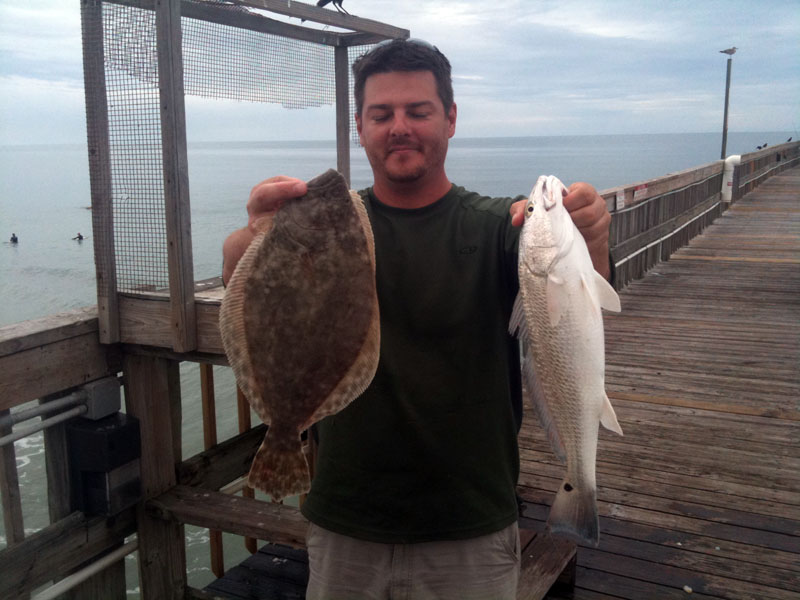 [](https://www.floridashorefishing.com/profile/dan/)##### Author: [Daniel Hagan](https://www.floridashorefishing.com/profile/dan/) Daniel Hagan has been fishing Florida’s shores since 1985 and writing about it for more than 20 years. As Managing Editor of FloridaShoreFishing.com, he shares firsthand experience covering surf and pier fishing, tackle, techniques, and Florida’s coastal species.  [Daniel Hagan](https://www.floridashorefishing.com/profile/dan) Daniel Hagan has been fishing Florida’s shores since 1985 and writing about it for more than 20 years. As Managing Editor of FloridaShoreFishing.com, he shares firsthand experience covering surf and pier fishing, tackle, techniques, and Florida’s coastal species. [](https://www.facebook.com/groups/FloridaShoreFishing "Facebook") **Categories:** News --- ### [Report: Sunglow Pier – Whiting](https://www.floridashorefishing.com/report-sunglow-pier-whiting) **Published:** December 20, 2011 **Author:** Daniel Hagan **Excerpt:**
Showed up to the Sunglow Pier right before sunrise. I was armed with some live shrimp and...
**Content:** Showed up to the Sunglow Pier right before sunrise. I was armed with some live shrimp and a few finger mullet, hoping for some whiting on the shrimp and maybe some reds and flounder on the mullet (if they were still around). I ended up doing well on the whiting, 8 total. The reds and flounder where not to be found. 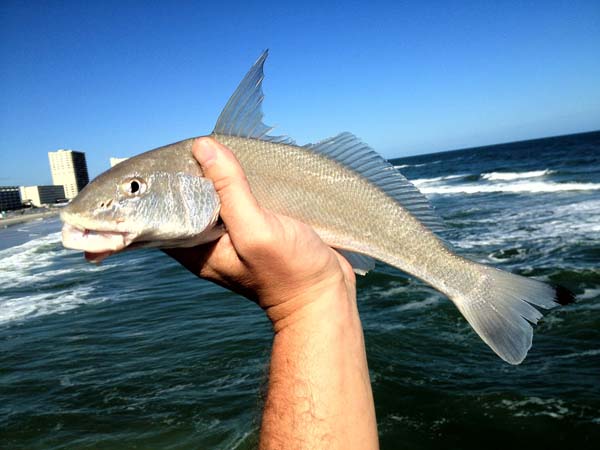 Blue fish did show up and destroyed all of my bait at around noon I called it a day! I did, how ever, experiment with live updating on the soon to be launched forum! It will be available soon! [](https://www.floridashorefishing.com/profile/dan/)##### Author: [Daniel Hagan](https://www.floridashorefishing.com/profile/dan/) Daniel Hagan has been fishing Florida’s shores since 1985 and writing about it for more than 20 years. As Managing Editor of FloridaShoreFishing.com, he shares firsthand experience covering surf and pier fishing, tackle, techniques, and Florida’s coastal species.  [Daniel Hagan](https://www.floridashorefishing.com/profile/dan) Daniel Hagan has been fishing Florida’s shores since 1985 and writing about it for more than 20 years. As Managing Editor of FloridaShoreFishing.com, he shares firsthand experience covering surf and pier fishing, tackle, techniques, and Florida’s coastal species. [](https://www.facebook.com/groups/FloridaShoreFishing "Facebook") **Categories:** News --- ### [Report: ICW 3 Miles from Ponce Inlet](https://www.floridashorefishing.com/report-icw-3-miles-from-ponce-inlet) **Published:** July 12, 2012 **Author:** Daniel Hagan **Content:** I spent about 4 hours fishing from a small dock on the Inter Costal Waterway in the city of Ponce Inlet. Using mudminnows and finger mullet the action was busy most of the day, but with mostly under sized mangrove snapper. I did hook into one VERY large over slot redfish, but it broke me off under the dock. Total take home for the day was 1 11” mangrove a 13” flounder. 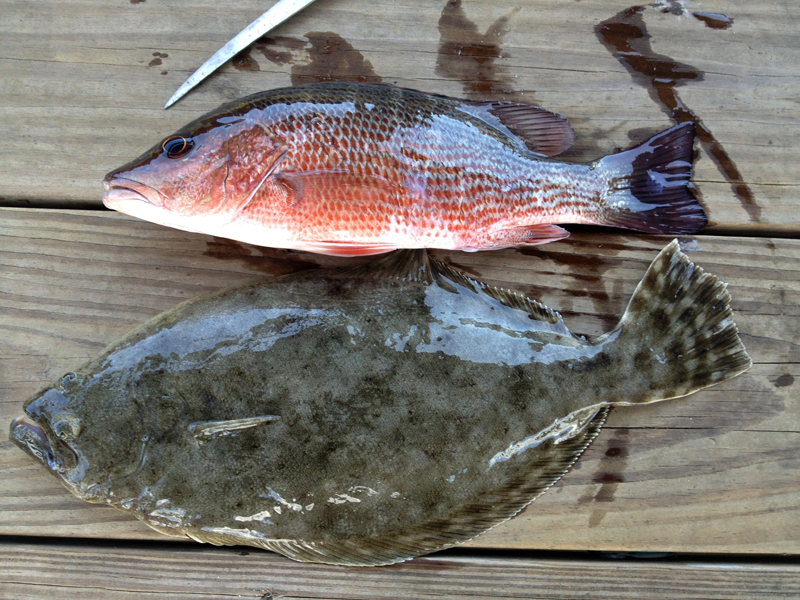 [](https://www.floridashorefishing.com/profile/dan/)##### Author: [Daniel Hagan](https://www.floridashorefishing.com/profile/dan/) Daniel Hagan has been fishing Florida’s shores since 1985 and writing about it for more than 20 years. As Managing Editor of FloridaShoreFishing.com, he shares firsthand experience covering surf and pier fishing, tackle, techniques, and Florida’s coastal species.  [Daniel Hagan](https://www.floridashorefishing.com/profile/dan) Daniel Hagan has been fishing Florida’s shores since 1985 and writing about it for more than 20 years. As Managing Editor of FloridaShoreFishing.com, he shares firsthand experience covering surf and pier fishing, tackle, techniques, and Florida’s coastal species. [](https://www.facebook.com/groups/FloridaShoreFishing "Facebook") **Categories:** News --- ### [Report – Inlet Harbor](https://www.floridashorefishing.com/report-inlet-harbor) **Published:** September 24, 2012 **Author:** Daniel Hagan **Content:** I spent the day fishing from the pier at Inlet Harbor in Ponce Inlet. I have been to this pier about 10 times in the past and have done well with mangrove snapper and flounder. Today, I found something a bit different! 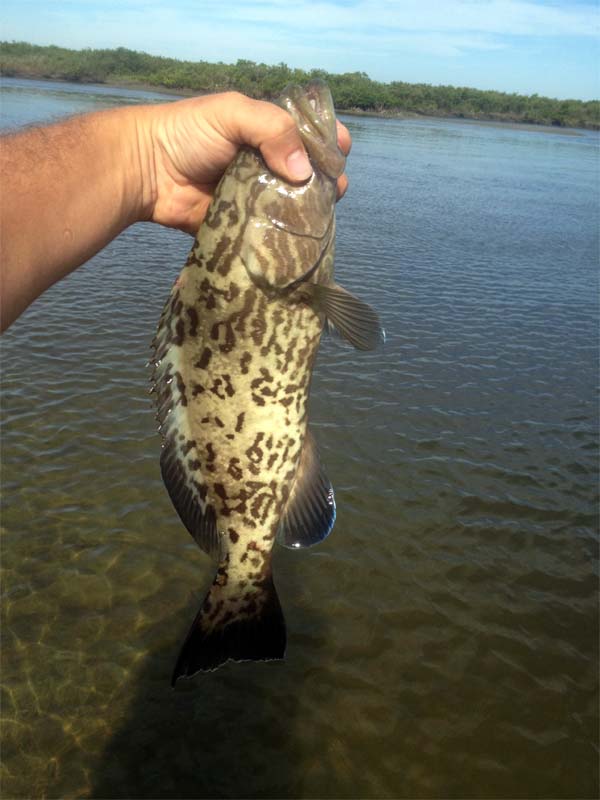 On my second drop down, using a live finger mullet, I pulled up this 16” gag grouper! The rest of the day was fairly slow. A few fish here and there, including blue fish, a few small Sheepshead and a very small redfish. Over all, a good, relaxing day! [](https://www.floridashorefishing.com/profile/dan/)##### Author: [Daniel Hagan](https://www.floridashorefishing.com/profile/dan/) Daniel Hagan has been fishing Florida’s shores since 1985 and writing about it for more than 20 years. As Managing Editor of FloridaShoreFishing.com, he shares firsthand experience covering surf and pier fishing, tackle, techniques, and Florida’s coastal species.  [Daniel Hagan](https://www.floridashorefishing.com/profile/dan) Daniel Hagan has been fishing Florida’s shores since 1985 and writing about it for more than 20 years. As Managing Editor of FloridaShoreFishing.com, he shares firsthand experience covering surf and pier fishing, tackle, techniques, and Florida’s coastal species. [](https://www.facebook.com/groups/FloridaShoreFishing "Facebook") **Categories:** News --- ### [Report - Mosquito Lagoon Wading](https://www.floridashorefishing.com/report-mosquito-lagoon-wading) **Published:** December 27, 2012 **Author:** Daniel Hagan **Content:** I decided to try my luck wading in Mosquito Lagoon today. I used to frequent the area around haulover canal with my father many years ago and pick that location as my go-to today. The day started out slow and cold. Not much was hitting or moving. About an hour after the sun cleared the trees and clouds things picked up a bit. I landed 10 trout, all around 14-17″. Nothing to great in size, bu they were fun to catch! [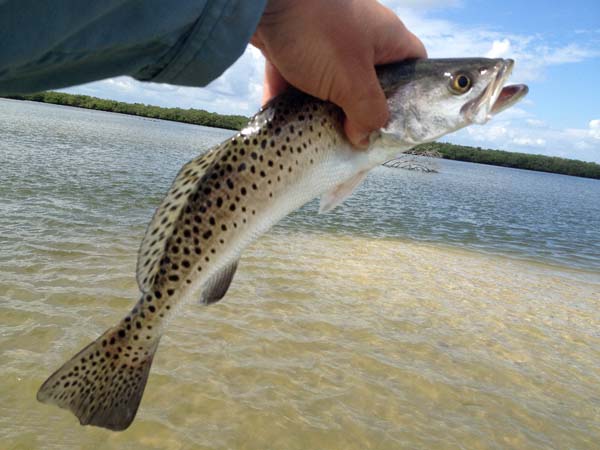](http://www.floridashorefishing.com/wp-content/uploads/2012/12/lagoontrout.jpg) [](https://www.floridashorefishing.com/profile/dan/)##### Author: [Daniel Hagan](https://www.floridashorefishing.com/profile/dan/) Daniel Hagan has been fishing Florida’s shores since 1985 and writing about it for more than 20 years. As Managing Editor of FloridaShoreFishing.com, he shares firsthand experience covering surf and pier fishing, tackle, techniques, and Florida’s coastal species.  [Daniel Hagan](https://www.floridashorefishing.com/profile/dan) Daniel Hagan has been fishing Florida’s shores since 1985 and writing about it for more than 20 years. As Managing Editor of FloridaShoreFishing.com, he shares firsthand experience covering surf and pier fishing, tackle, techniques, and Florida’s coastal species. [](https://www.facebook.com/groups/FloridaShoreFishing "Facebook") **Categories:** News --- ### [Weekend Report - Surf Full of Whiting](https://www.floridashorefishing.com/weekend-report-surf-full-of-whiting) **Published:** April 13, 2014 **Author:** Daniel Hagan **Content:** 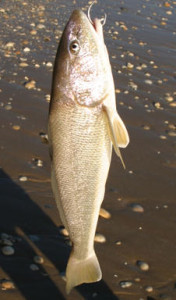 One of the most popular, and most abundant fish to be found along Florida’s Surf is the Whiting, and they are easy to find right now! The spring has started to warm the waters around the coast, but they are still cool enough to find plenty of whiting action. Reports are coming in from Jacksonville all the way down to Miami and all through out the Gulf coast of multiple catches of whiting. One angler near Sebastian inlet reported catching 16 whiting within 2 hours! The average catch seems to be around 12″ and ranges from smaller than that up to about 16″. There are no limits on size or numbers of whiting you are allowed to keep. Being an unregulated fish in Florida, the only rule you must follow is to keep less than 100lbs. The most successful baits have been fresh pealed shrimp and sand fleas. More Info: - [How to Catch Whiting](http://www.floridashorefishing.com/how-to-catch-whiting) - [Whiting – Fish Profile](http://www.floridashorefishing.com/fish-profiles/whiting) [](https://www.floridashorefishing.com/profile/dan/)##### Author: [Daniel Hagan](https://www.floridashorefishing.com/profile/dan/) Daniel Hagan has been fishing Florida’s shores since 1985 and writing about it for more than 20 years. As Managing Editor of FloridaShoreFishing.com, he shares firsthand experience covering surf and pier fishing, tackle, techniques, and Florida’s coastal species.  [Daniel Hagan](https://www.floridashorefishing.com/profile/dan) Daniel Hagan has been fishing Florida’s shores since 1985 and writing about it for more than 20 years. As Managing Editor of FloridaShoreFishing.com, he shares firsthand experience covering surf and pier fishing, tackle, techniques, and Florida’s coastal species. [](https://www.facebook.com/groups/FloridaShoreFishing "Facebook") **Categories:** News --- ### [Report: Sunglow Fishing Pier](https://www.floridashorefishing.com/report-sunglow-fishing-pier) **Published:** April 17, 2014 **Author:** Daniel Hagan **Content:** With the recent reports of Flounder moving through the Central Florida area I decided today would be a good day to give the Sunglow Fishing Pier a shot. Driving through Port Orange, I stopped at Donald’s Bait and Tackle. I bought 2 dozen mud minnows and 2 dozen live shrimp. I was stacking the deck in my favor! I arrived at the pier just before sunrise. Set up 2 rods, one with shrimp, one with mud minnows. I placed them in my favorite spots and the wait was on! And the wait continued! It was a very slow morning, nothing was hitting for the first 2 hours. The only thing that came over the rail on the entire pier was a small catfish caught a little deeper then I was fishing. After the first 2 slow hours, the fish started to hit. Unfortunately, they were almost exclusively catfish. I caught about 10 of them, and I watch many others come over the rail. The only decent fish caught was a nice sized whiting that I caught about 30 minutes before calling it a day! 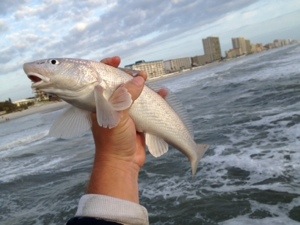 As they say, a bad day fishing is better than a good day working! [](https://www.floridashorefishing.com/profile/dan/)##### Author: [Daniel Hagan](https://www.floridashorefishing.com/profile/dan/) Daniel Hagan has been fishing Florida’s shores since 1985 and writing about it for more than 20 years. As Managing Editor of FloridaShoreFishing.com, he shares firsthand experience covering surf and pier fishing, tackle, techniques, and Florida’s coastal species.  [Daniel Hagan](https://www.floridashorefishing.com/profile/dan) Daniel Hagan has been fishing Florida’s shores since 1985 and writing about it for more than 20 years. As Managing Editor of FloridaShoreFishing.com, he shares firsthand experience covering surf and pier fishing, tackle, techniques, and Florida’s coastal species. [](https://www.facebook.com/groups/FloridaShoreFishing "Facebook") **Categories:** News --- ### [Weekend Report 5/24-5/26](https://www.floridashorefishing.com/weekend-report-524-526) **Published:** May 27, 2014 **Author:** Daniel Hagan **Content:** Fishing across the state was solid on this long Memorial Day Weekend. Reports have been coming in from anglers in Jacksonville all the way around the state to Pensicola. Here is a general overview of the fishing over the weekend. **East Coast** *Surf* The Whiting Bite continues to be strong with reports of anglers catching about a dozen good sized keepers. Flounder have begun to move out of the inlets and into the surf on their way out to deeper water and have been caught with finger mullet and mud minnows around structure. Around that same structure a few Redfish and quite a few Black Drum were caught over the weekend. *Inshore* The migration of Flounder continues and they are being caught frequently near bridges and passes. Use a scented soft plastic lure slowly dragged across the bottom! Redfish are being caught on the flats by wade fishermen early in the morning and late in the day. When the sun is high, the Redfish go to deeper cooler waters. Snook and Trout are starting to show up around dock/bridge lights and are being caught on lures that mimic bait fish. **West (Gulf) Coast** *Surf* Just like the East Coast the Whting bite continues to be strong. Use fresh pealed shrimp right behind the surf zone for success. A few anglers reported Cobia and Tarpon catches from the surf and piers on the beach. Large live baits under a float or free lined are the best bet for these large predators. Spanish Mackerel still continue to prowl the surf line of the Gulf, but not in the numbers they did last month. *Inshore* Snook and Redfish dominated the inshore reports this weekend. From South West Florida all the way up the Gulf Coast Redfish where found all over the inshore waters and Snook where very active as well. For Redfish, look for flats that you can wade early in the morning, and for Snook look for shore lines with mangrove over hangs! [](https://www.floridashorefishing.com/profile/dan/)##### Author: [Daniel Hagan](https://www.floridashorefishing.com/profile/dan/) Daniel Hagan has been fishing Florida’s shores since 1985 and writing about it for more than 20 years. As Managing Editor of FloridaShoreFishing.com, he shares firsthand experience covering surf and pier fishing, tackle, techniques, and Florida’s coastal species.  [Daniel Hagan](https://www.floridashorefishing.com/profile/dan) Daniel Hagan has been fishing Florida’s shores since 1985 and writing about it for more than 20 years. As Managing Editor of FloridaShoreFishing.com, he shares firsthand experience covering surf and pier fishing, tackle, techniques, and Florida’s coastal species. [](https://www.facebook.com/groups/FloridaShoreFishing "Facebook") **Categories:** News --- ### [Weekend Report - Tarpon in the Passes](https://www.floridashorefishing.com/weekend-report-tarpon-in-the-passes) **Published:** June 2, 2014 **Author:** Daniel Hagan **Content:** All across the state this weekend there have been reports of tarpon being caught in the passes and inlets. They have ranged from small 20 pound fish up to monster 200+ pound fish. 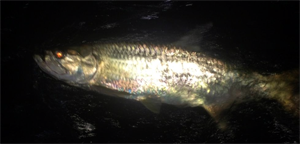 A high percentage of these fish have been caught at night and on live or cut bait. Some have had luck with large scented soft plastic lures and very large noisy top water lures as well. **Quick Shore Fishing for Tarpon Tips:** 1. Use stout gear – Tarpon can weigh well over 200 pounds so your gear has to be able to handle that size fish with out the ability to chase them out to sea. 2. Use high quality bait – Tarpon love to feed on Mullet, Lady Fish and Blue Crabs. Live bait free lined works well as does large fresh cut chunks. 3. When the tarpon jumps bow to it! The only time you do not want your rod tip high is when the fish is jumping, lower it to keep the pressure on the fish and help stop the hook from coming lose. 4. RELEASE THE FISH – Unless you have a Tarpon tag it is illegal to keep a tarpon. They are not edible anyway, so just take some good photos and measurements if you want a trophy! 5. Dont be afraid to fish areas that normally dont hold any other fish. Tarpon can breath air by “rolling” and gulping air, so the are frequently found in areas of lower quality water. [](https://www.floridashorefishing.com/profile/dan/)##### Author: [Daniel Hagan](https://www.floridashorefishing.com/profile/dan/) Daniel Hagan has been fishing Florida’s shores since 1985 and writing about it for more than 20 years. As Managing Editor of FloridaShoreFishing.com, he shares firsthand experience covering surf and pier fishing, tackle, techniques, and Florida’s coastal species.  [Daniel Hagan](https://www.floridashorefishing.com/profile/dan) Daniel Hagan has been fishing Florida’s shores since 1985 and writing about it for more than 20 years. As Managing Editor of FloridaShoreFishing.com, he shares firsthand experience covering surf and pier fishing, tackle, techniques, and Florida’s coastal species. [](https://www.facebook.com/groups/FloridaShoreFishing "Facebook") **Categories:** News --- ### [Inshore Snapper](https://www.floridashorefishing.com/inshore-snapper) **Published:** March 20, 2012 **Author:** Daniel Hagan **Content:** Florida’s inshore Mangrove Snapper season is about to begin, and it is time to start preparing to catch these tasty and feisty fish. **Mangrove Snapper Gear** Inshore Snapper do not frequently get over 14” so most inshore equipment will work. Bait casting, spinning and even light spin casting gear can work, but here is a list of suggest gear: - Baitcaster or Spinning real in the 15-20lb class - Medium action 15-20lb class rod - 20lb braided line - 15lb fluorocarbon leader - \#1-2/0 Circle Hook - ½-2oz egg sinker **Mangrove Snapper Techniques** Mangrove Snapper spend their entire life near heavy cover. From their namesake mangrove shorelines to deep off shore reefs. When looking for inshore snapper look around docks, piers and mangrove shores. Here are a few techniques to help: - Live bait is best – Mud Minnows, Small Finger Mullet, Live Shrimp - Allowing the bait to slowly drift with the current will bring more strikes - Because they prefer heavy cover, reel the fish up fast to avoid cutting leaders on cover **Mangrove Snapper Tips** Snapper are very good at steeling bait. Using the smallest sinker that will hold bottom and a smaller hook will lead to more strikes. [](https://www.floridashorefishing.com/profile/dan/)##### Author: [Daniel Hagan](https://www.floridashorefishing.com/profile/dan/) Daniel Hagan has been fishing Florida’s shores since 1985 and writing about it for more than 20 years. As Managing Editor of FloridaShoreFishing.com, he shares firsthand experience covering surf and pier fishing, tackle, techniques, and Florida’s coastal species.  [Daniel Hagan](https://www.floridashorefishing.com/profile/dan) Daniel Hagan has been fishing Florida’s shores since 1985 and writing about it for more than 20 years. As Managing Editor of FloridaShoreFishing.com, he shares firsthand experience covering surf and pier fishing, tackle, techniques, and Florida’s coastal species. [](https://www.facebook.com/groups/FloridaShoreFishing "Facebook") **Categories:** News --- ### [Spring Time Clear Water Tips](https://www.floridashorefishing.com/spring-time-clear-water-tips) **Published:** April 4, 2012 **Author:** Daniel Hagan **Content:** Spring is upon us and with that comes a few changes in the Florida Shore Fishing scene. Many of our beaches start to see calm and clear water for the fist time in a few months. With the clear and warmer waters there are a few changes to the fishing approach that can help, here are a few: **Spring Time Clear Water Tips** - Use longer fluorocarbon leaders - Reduce terminal tackle size and weight - Make sure all live bait is active - Reduce activity on shore or on the pier/dock - Speed up retrieve with artificial lures **Use longer fluorocarbon leaders** When the water is clear, like it can be this time of year, it is often rather helpful to use a long, fluorocarbon leader. Fish begin to feed using their vision much more in clear water, and fluorocarbon is almost completely invisible to fish. This invisible trait will lead to less spooked fish and more hits. A leader or 2-3’ works best in these situations. **Reduce Terminal Tackle Size and Weight** Because of the increased visibility in clear water, using smaller hooks, swivels and weights will help accomplish the same goal as using a fluorocarbon leader. Fish can see large hooks and other tackle and will sometimes shy away from taking the bait. **Make Sure all Live Bait is Active** Active live bait will draw far more attention than subdued bait. The clear waters will allow a fish that may not otherwise find a bait be caught because they are attracted to the erratic movement of a hooked bait. Once a bait becomes lethargic, change it out for a fresh and lively bait. **Reduce Activity on Shore or on the Pier/Dock** With murky dark waters, the activity that happens above water is often times not visible to the fish bellow water. Now that spring is bringing clear clean water that changes. Any movement or activity can spook a fish that my otherwise have taken the bait. Reduce movement and activity to increase the amount of fish caught! **Speed Up Retrieve with Artificial Lures** A faster retrieve with artificial lures will lead to more strikes in clear water. With a slower retrieve the fish may have time to recognize the lure as artificial and not strike. A faster retrieve will cause the fish to act on instinct and strike. Now get out there and fish! [](https://www.floridashorefishing.com/profile/dan/)##### Author: [Daniel Hagan](https://www.floridashorefishing.com/profile/dan/) Daniel Hagan has been fishing Florida’s shores since 1985 and writing about it for more than 20 years. As Managing Editor of FloridaShoreFishing.com, he shares firsthand experience covering surf and pier fishing, tackle, techniques, and Florida’s coastal species.  [Daniel Hagan](https://www.floridashorefishing.com/profile/dan) Daniel Hagan has been fishing Florida’s shores since 1985 and writing about it for more than 20 years. As Managing Editor of FloridaShoreFishing.com, he shares firsthand experience covering surf and pier fishing, tackle, techniques, and Florida’s coastal species. [](https://www.facebook.com/groups/FloridaShoreFishing "Facebook") **Categories:** News --- ### [Redfish Candy](https://www.floridashorefishing.com/redfish-candy) **Published:** August 8, 2012 **Author:** Daniel Hagan **Content:** Redfish are one of the most popular sport fish in Florida. They put up a good fight, get very large, and when in the slot are a very tasty dish. Mud Minnows (often times called redfish candy) are one of the most effective baits for Redfish. They can be easily obtained and are very hardy when rigged correctly. **Catching Mud Minnows** Mud Minnows get their name from their preferred habitat. They prefer to be in tidal areas that have soft, muddy substrate. They are often found around oyster beds and even in sand flats. Once an area that is likely to hold mud minnows is found just scanning the area visually will normally find them pretty quickly. The travel in schools and are rather visible in the water. Once located, toss a cast net over them and you will have a full bait bucket in no time. **Using Mud Minnows** The most effective rig with Mud Minnows for redfish is the Fish Finder Rig. The fish finder is the same as a “Carolina Rig” for soft plastic baits. A slidding egg sinker on the main line connected to a swivel with a bead between (to protect the knot from the sinker). A 2/0 circle hook attacked to a 3-4’ 20lb test fluorocarbon leader. Soak the mud minnow in a area likely to have redfish pass through. Passes, canals, navigational cuts are all good places to start! Now get out there and feed those redfish some candy! [](https://www.floridashorefishing.com/profile/dan/)##### Author: [Daniel Hagan](https://www.floridashorefishing.com/profile/dan/) Daniel Hagan has been fishing Florida’s shores since 1985 and writing about it for more than 20 years. As Managing Editor of FloridaShoreFishing.com, he shares firsthand experience covering surf and pier fishing, tackle, techniques, and Florida’s coastal species.  [Daniel Hagan](https://www.floridashorefishing.com/profile/dan) Daniel Hagan has been fishing Florida’s shores since 1985 and writing about it for more than 20 years. As Managing Editor of FloridaShoreFishing.com, he shares firsthand experience covering surf and pier fishing, tackle, techniques, and Florida’s coastal species. [](https://www.facebook.com/groups/FloridaShoreFishing "Facebook") **Categories:** News --- ### [Trout off the Beaches](https://www.floridashorefishing.com/trout-off-the-beaches) **Published:** October 3, 2012 **Author:** Daniel Hagan **Content:** This time of year (fall) with the Florida fall mullet run in full effect trout move out of the estuaries in search of the mullet. It is not normal to catch many trout off Florida beaches, but this time of year the bite can be strong. Live Bait Trout are frequently caught on most popular live baits. This time of year finger mullet work best. Either free-lined or weighted with just enough weight to hold bottom. Trout strike the bait violently, so circle hooks work well, the fish seem to hook themselves. Lures Any lure that mimics a mullet or shrimp will have great effect. Zara Spooks early in the morning, diving plugs and shrimp jigs in the afternoon. After the sun goes down, anything that makes a lot of noise or vibration works well. Regulations There are multiple regions in Florida that have different regulations for Trout. The size limit is 15-20” slot, with a bag limit of 4-5 fish. Check the FWC’s website to know what the regulations are in your area. [](https://www.floridashorefishing.com/profile/dan/)##### Author: [Daniel Hagan](https://www.floridashorefishing.com/profile/dan/) Daniel Hagan has been fishing Florida’s shores since 1985 and writing about it for more than 20 years. As Managing Editor of FloridaShoreFishing.com, he shares firsthand experience covering surf and pier fishing, tackle, techniques, and Florida’s coastal species.  [Daniel Hagan](https://www.floridashorefishing.com/profile/dan) Daniel Hagan has been fishing Florida’s shores since 1985 and writing about it for more than 20 years. As Managing Editor of FloridaShoreFishing.com, he shares firsthand experience covering surf and pier fishing, tackle, techniques, and Florida’s coastal species. [](https://www.facebook.com/groups/FloridaShoreFishing "Facebook") **Categories:** News --- ### [Peacock Bass Fishing in Florida](https://www.floridashorefishing.com/peacock-bass-fishing-in-florida) **Published:** September 17, 2010 **Author:** Daniel Hagan **Excerpt:**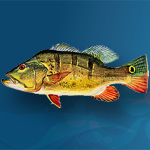
I had some time off from work this week and went south to try my hand at peacock bass fishing.. I spent the day walking canals in South Florida and did pretty well!
**Content:** I had some time off from work this week and went south to try my hand at [peacock bass fishing.](http://www.hawghunterguideservice.com/). I spent the day walking canals in South Florida and did pretty well! I landed 6 bass in the first 4 hours and then the sun was high and the bite died off. After it cooled off a bit I went back out and caught two more! None of them were champion sized, but it was the first time I caught any, so I was happy with the trip! I should be able to post pictures here soon! [](https://www.floridashorefishing.com/profile/dan/)##### Author: [Daniel Hagan](https://www.floridashorefishing.com/profile/dan/) Daniel Hagan has been fishing Florida’s shores since 1985 and writing about it for more than 20 years. As Managing Editor of FloridaShoreFishing.com, he shares firsthand experience covering surf and pier fishing, tackle, techniques, and Florida’s coastal species.  [Daniel Hagan](https://www.floridashorefishing.com/profile/dan) Daniel Hagan has been fishing Florida’s shores since 1985 and writing about it for more than 20 years. As Managing Editor of FloridaShoreFishing.com, he shares firsthand experience covering surf and pier fishing, tackle, techniques, and Florida’s coastal species. [](https://www.facebook.com/groups/FloridaShoreFishing "Facebook") **Categories:** News --- ### [Mixed Bag at Sunglow](https://www.floridashorefishing.com/mixed-bag-at-sunglow) **Published:** May 2, 2010 **Author:** Daniel Hagan **Excerpt:**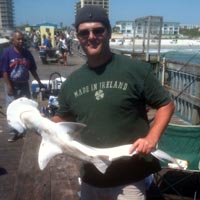
Spent the day with my buddy Carl, aka the shark slayer, on the Sunglow Pier in Daytona Beach. The day started out fast and maintained for most of the day.
**Content:** Spent the day with my buddy Carl, aka the shark slayer, on the Sunglow Pier in Daytona Beach. The day started out fast and maintained for most of the day. We arrived at around 7:00am and on my first cast with my Ambassador rig, before I could relax there was a small tug on the line. I reeled in some line and felt a nice tug. After a quick, but spirited fight, I landed an 11” blue runner. Not much competition for my Ambassador, but fun none-the-less. First cast of my spinning reel resulted in much the same. A quick hit and short and spirited. A 11” whiting comes over the rail! While unhooking the whiting the clicker starts to sing on my Ambassador again! Setting the whiting free I begin another short battle that lacked the spunk of the previous 2. Once I got a look at the fish I realized why, it was a tiny pup bonnet head shark. The larger versions of this shark are quite a fun fight, but the little pups are often lazy and weak, and this one was only around 12”. Carl finally got into the action with his first fish. A Long Nose Shark pup. He then followed that up with a small blue fish and a bonnet head shark. We then took turns landing fish for the next hour or two in about the same order. A few whiting here and there and a lot of pup sharks. Then Carl’s bait runner starts to scream. He sets the hook and the fish starts a nice long run. After about 1-2 minutes of running the fish turns around and heads right back at him. He keeps up with it and gets a good look at what appears to be a 3 ½ foot long bonnet head. The Shark then turns and cuts his 20lb leader that he had set up for catching pompano. Just a few minutes after Carl calms down I notice there is a lot of slack in my Ambassadors line. I reel it in and feel a slight bump and the line starts to run towards me. I keep up with it and as soon as I get ahead of the fish and it feels pressure it takes off on its first of 3 runs. On the second run I get a peak at the fish and it is another nice size bonnet head. After fighting the shark for 15 minutes we get it netted and on to the pier. It measures out at 41” and is estimated to be around 10-15lbs. [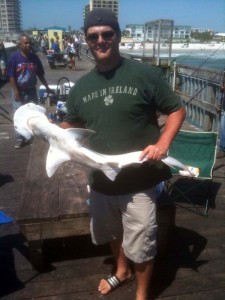](http://www.floridashorefishing.com/wp-content/uploads/2010/05/05022010-bonnethead.jpg) The rest of the day continues with the whiting and sharks. Carl once again gets a good hook up with a large fish only to have it break his line off again, but that was the end of the excitement. The rest of the day was very slow so we decided to call it a day at around 2pm. **Finally Tally:** - Whiting: 12 (up to 14”) - Bonnet Head Sharks: 21 (up to 41”) *Carl had the lions share of sharks* - Sharp Nose Sharks: 3 (up to 26”) - Blue Fish: 1 - Blue Runner: 1 - Large Fish Lost: 2 [](https://www.floridashorefishing.com/profile/dan/)##### Author: [Daniel Hagan](https://www.floridashorefishing.com/profile/dan/) Daniel Hagan has been fishing Florida’s shores since 1985 and writing about it for more than 20 years. As Managing Editor of FloridaShoreFishing.com, he shares firsthand experience covering surf and pier fishing, tackle, techniques, and Florida’s coastal species.  [Daniel Hagan](https://www.floridashorefishing.com/profile/dan) Daniel Hagan has been fishing Florida’s shores since 1985 and writing about it for more than 20 years. As Managing Editor of FloridaShoreFishing.com, he shares firsthand experience covering surf and pier fishing, tackle, techniques, and Florida’s coastal species. [](https://www.facebook.com/groups/FloridaShoreFishing "Facebook") **Categories:** News --- ### [A Fun Night on the ICW](https://www.floridashorefishing.com/a-fun-night-on-the-icw) **Published:** May 13, 2010 **Author:** Daniel Hagan **Excerpt:**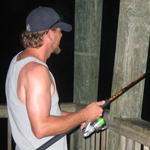
Carl (the shark slayer) and I decided to take advantage of both being done with work early and turn it into a night fishing trip. We gathered our gear, a few lanterns and flash lights and headed to a private dock on the Intercostals Water Way near Ponce Inlet.
**Content:** Carl (the shark slayer) and I decided to take advantage of both being done with work early and turn it into a night fishing trip. We gathered our gear, a few lanterns and flash lights and headed to a private dock on the Intercostals Water Way near Ponce Inlet. We arrived at 5:30 with a few dozen live shrimp, frozen squid and frozen clams. After setting up the lights and lanterns before the sun went down we got our lines wet. I was the first to pull in a fish and it was a nice size whiting, followed quickly by another. Carl got into the action pulling a whiting over the rail. At about 7:45 the clicker in my Ambassador started to sing. I picked it up, engaged the reel and felt a VERY large tug. Then, NOTHING. I knew what ever it was broke me off! We continued to catch fish after fish until about 8pm when the tide was ripping. After the tide slowed down things picked right back up until slack tide. Slack tide produced no fish at all. As the tide started to turn and head back out Carl hooked into something fairly large, but it cut through his leader like it was butter. After that it was fairly late and the only thing we were pulling in was catfish so we decided to call it a night at about midnight. Final Talley Whiting – 18 Blue Fish – 6 Bonnet Head Shark – 6 Cat Fish – 4 Sail Cat – 3 Lady Fish – 1 Hammer Head Shark – 1 Odd Fish – 1 Large Fish Lost – 2 [](https://www.floridashorefishing.com/profile/dan/)##### Author: [Daniel Hagan](https://www.floridashorefishing.com/profile/dan/) Daniel Hagan has been fishing Florida’s shores since 1985 and writing about it for more than 20 years. As Managing Editor of FloridaShoreFishing.com, he shares firsthand experience covering surf and pier fishing, tackle, techniques, and Florida’s coastal species.  [Daniel Hagan](https://www.floridashorefishing.com/profile/dan) Daniel Hagan has been fishing Florida’s shores since 1985 and writing about it for more than 20 years. As Managing Editor of FloridaShoreFishing.com, he shares firsthand experience covering surf and pier fishing, tackle, techniques, and Florida’s coastal species. [](https://www.facebook.com/groups/FloridaShoreFishing "Facebook") **Categories:** News --- ### [Blue Fish Running Thick at Sunglow](https://www.floridashorefishing.com/blue-fish-running-thick-at-sunglow) **Published:** May 25, 2010 **Author:** Daniel Hagan **Excerpt:**
Decided to get an early start to the day and head out to Sunglow Fishing Pier in South Daytona Beach. Turned out to be a fun day full of blue fish
**Content:** Decided to get an early start to the day and head out to Sunglow Fishing Pier in South Daytona Beach. I got to the pier at about 5:30AM and put a line out on the bottom with a medium live shrimp. I then put a GOTCHA lure on my second pole and started to cast in hopes of bringing in a few Spanish Mackerel. After about 5 casts and 5 Blue Fish I knew what the day was going to be about! Short, but spirited, fights on a medium weight baitcasting rig. All of them being about this size (the tackle box is about 10”): 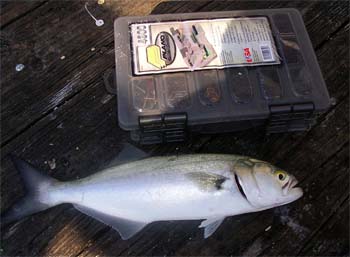 While I am not a big fan of catching blue fish on live bait, they are quite fun to catch on lures. They strike hard and have a quick little run. The live bait did not perform to well today. A few bonnet head sharks and a few small whiting is all that was fooled by the shrimp. [](https://www.floridashorefishing.com/profile/dan/)##### Author: [Daniel Hagan](https://www.floridashorefishing.com/profile/dan/) Daniel Hagan has been fishing Florida’s shores since 1985 and writing about it for more than 20 years. As Managing Editor of FloridaShoreFishing.com, he shares firsthand experience covering surf and pier fishing, tackle, techniques, and Florida’s coastal species.  [Daniel Hagan](https://www.floridashorefishing.com/profile/dan) Daniel Hagan has been fishing Florida’s shores since 1985 and writing about it for more than 20 years. As Managing Editor of FloridaShoreFishing.com, he shares firsthand experience covering surf and pier fishing, tackle, techniques, and Florida’s coastal species. [](https://www.facebook.com/groups/FloridaShoreFishing "Facebook") **Categories:** News --- ### [Slow day at the Dunlawton Pier](https://www.floridashorefishing.com/slow-day-at-the-dunlawton-pier) **Published:** July 26, 2010 **Author:** Daniel Hagan **Excerpt:**
Carl and I spent the day at the Dunlawton Fishing Pier fishing the Inter-Costal Waterway, and while it was a slow day there were a few moments of fun to talk about!
**Content:** Carl and I spent the day at the Dunlawton Fishing Pier fishing the Inter-Costal Waterway, and while it was a slow day there were a few moments of fun to talk about! After spending about a half hour cast-netting bait (should have been a sign, normally takes less than 10 minutes) I had a bucket full of finger mullet and a few small pinfish. We went to the pier and on my first cast with a finger mullet I had a large hit that ran for about 10 seconds before coming unbuttoned. Over the next few hours very little came over the rail. A few large catfish, some puffer fish, a couple blue fish and Carl caught one keeper sized whiting. Then Carl hooked into something large. The fight was not very suspenseful. Carl said it felt “like pulling in a Volkswagen” and it kept running to the bottom and holding there, a sure sign of a stingray. After about 10 minutes of fighting Carl pulled a 30-40 pound Southern Sting Ray. Not a prize catch, but at least a big fish! On my next cast I got a small hit and I pulled in a Flounder! Sadly, it was the smallest one I have ever caught! 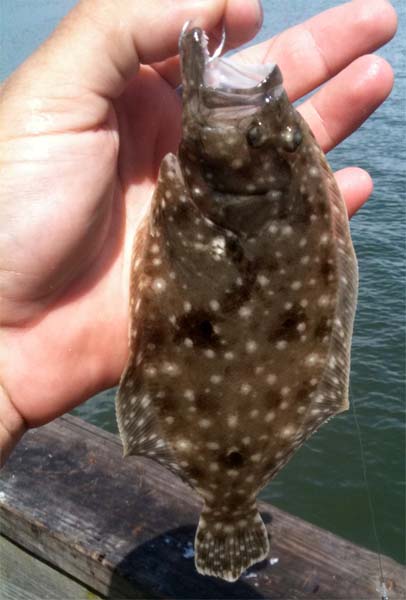 [](https://www.floridashorefishing.com/profile/dan/)##### Author: [Daniel Hagan](https://www.floridashorefishing.com/profile/dan/) Daniel Hagan has been fishing Florida’s shores since 1985 and writing about it for more than 20 years. As Managing Editor of FloridaShoreFishing.com, he shares firsthand experience covering surf and pier fishing, tackle, techniques, and Florida’s coastal species.  [Daniel Hagan](https://www.floridashorefishing.com/profile/dan) Daniel Hagan has been fishing Florida’s shores since 1985 and writing about it for more than 20 years. As Managing Editor of FloridaShoreFishing.com, he shares firsthand experience covering surf and pier fishing, tackle, techniques, and Florida’s coastal species. [](https://www.facebook.com/groups/FloridaShoreFishing "Facebook") **Categories:** News --- ### [Blue Crab – A Bakers Dozen on the ICW](https://www.floridashorefishing.com/blue-crab-–-a-bakers-dozen-on-the-icw) **Published:** August 8, 2010 **Author:** Daniel Hagan **Excerpt:**
After spending 3 weeks working on the Gulf Coast of Louisiana and seeing the love that area has for Blue Crab I decided to try my hand at catching a few. Carl and I went to a private dock on the Inter-Coastal Waterway to see what was biting and I brought along a 2-ring crab net.
**Content:** After spending 3 weeks working on the Gulf Coast of Louisiana and seeing the love that area has for Blue Crab I decided to try my hand at catching a few. Carl and I went to a private dock on the Inter-Coastal Waterway to see what was biting and I brought along a 2-ring crab net. Using chicken necks as bait and only checking the net periodically I was able to land 13 keeper Blue Crab. I landed far more than 13 but many were either small or pregnant females. I also threw back many non-pregnant females. I was very easy to catch these crabs and was pretty much a passive effort. It is pretty clear that it is a good year for Blue Crab! They were everywhere! I boiled them in Old Bay and onion seasoned water. They were delicious, but a lot of work. While working my way through the crab I learned a few tricks that helped speed up and ease the process that I will use on my next attempt at blue crab! [](https://www.floridashorefishing.com/profile/dan/)##### Author: [Daniel Hagan](https://www.floridashorefishing.com/profile/dan/) Daniel Hagan has been fishing Florida’s shores since 1985 and writing about it for more than 20 years. As Managing Editor of FloridaShoreFishing.com, he shares firsthand experience covering surf and pier fishing, tackle, techniques, and Florida’s coastal species.  [Daniel Hagan](https://www.floridashorefishing.com/profile/dan) Daniel Hagan has been fishing Florida’s shores since 1985 and writing about it for more than 20 years. As Managing Editor of FloridaShoreFishing.com, he shares firsthand experience covering surf and pier fishing, tackle, techniques, and Florida’s coastal species. [](https://www.facebook.com/groups/FloridaShoreFishing "Facebook") **Categories:** News --- ### [Sunglow Pier – Redfish Bite is on! ](https://www.floridashorefishing.com/sunglow-pier-–-redfish-bite-is-on) **Published:** October 10, 2010 **Author:** Daniel Hagan **Excerpt:**
The redfish bite is on at Sunglow Pier! Reports of catching up to 30 reds in a single trip are becoming quite common. Some anglers are even catching multiple reds in the upper slot size.
**Content:** The redfish bite is on at Sunglow Pier! Reports of catching up to 30 reds in a single trip are becoming quite common. Some anglers are even catching multiple reds in the upper slot size. Are you catching any? [](https://www.floridashorefishing.com/profile/dan/)##### Author: [Daniel Hagan](https://www.floridashorefishing.com/profile/dan/) Daniel Hagan has been fishing Florida’s shores since 1985 and writing about it for more than 20 years. As Managing Editor of FloridaShoreFishing.com, he shares firsthand experience covering surf and pier fishing, tackle, techniques, and Florida’s coastal species.  [Daniel Hagan](https://www.floridashorefishing.com/profile/dan) Daniel Hagan has been fishing Florida’s shores since 1985 and writing about it for more than 20 years. As Managing Editor of FloridaShoreFishing.com, he shares firsthand experience covering surf and pier fishing, tackle, techniques, and Florida’s coastal species. [](https://www.facebook.com/groups/FloridaShoreFishing "Facebook") **Categories:** News --- ### [Report - New Smyrna South Causeway](https://www.floridashorefishing.com/report-new-smyrna-south-causeway) **Published:** July 13, 2011 **Author:** Daniel Hagan **Content:** It has been a long time since I have updated this site. I have been rather busy with real life (not much time for reel life), but I got out on the water today! I spent about 3 hours fishing off the pier at New Smyrna’s South Causeway. The day started out great! First cast I landed my new personal best inshore Mangrove Snapper, 16″! 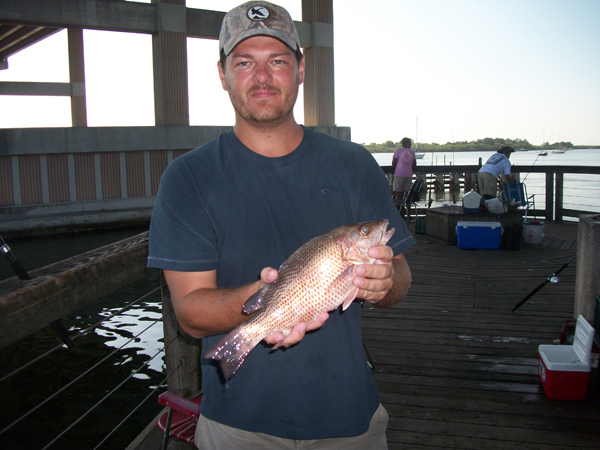 Then about 2 casts latter I landed a 15″ Gag Grouper (not a keeper, but still fun to catch)! 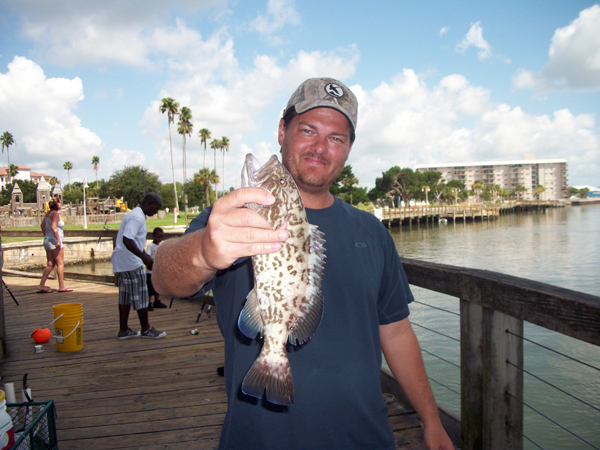 I caught 2 more Gag Groupers about the same size and a half dozen trash fish. All caught on Mud Minnows or Green Backs. [](https://www.floridashorefishing.com/profile/dan/)##### Author: [Daniel Hagan](https://www.floridashorefishing.com/profile/dan/) Daniel Hagan has been fishing Florida’s shores since 1985 and writing about it for more than 20 years. As Managing Editor of FloridaShoreFishing.com, he shares firsthand experience covering surf and pier fishing, tackle, techniques, and Florida’s coastal species.  [Daniel Hagan](https://www.floridashorefishing.com/profile/dan) Daniel Hagan has been fishing Florida’s shores since 1985 and writing about it for more than 20 years. As Managing Editor of FloridaShoreFishing.com, he shares firsthand experience covering surf and pier fishing, tackle, techniques, and Florida’s coastal species. [](https://www.facebook.com/groups/FloridaShoreFishing "Facebook") **Categories:** News --- ### [Report: Sun Glow Pier - Reds and Flounder](https://www.floridashorefishing.com/report-sun-glow-pier-reds-and-flounder) **Published:** December 5, 2011 **Author:** Daniel Hagan **Content:** I had to work an early shift and got done with work around noon. I got home loaded the car and headed to the Sun Glow Pier in Daytona Beach Shores. I got there around 2pm (after a quick stop for lunch) and started to fish as soon as I arrived. For the first 2 hours all I caught were tiny pinfish by the dozen, but then things changed. I dropped a large shrimp down by a pylon. The bait started to slowly move against the current so I set the hook and pulled up a 17″ flounder. The next catch netted me a 22″ red and then I followed that up with a 21″ red. The 22″ was kept and the 21″ was released to fight another day. 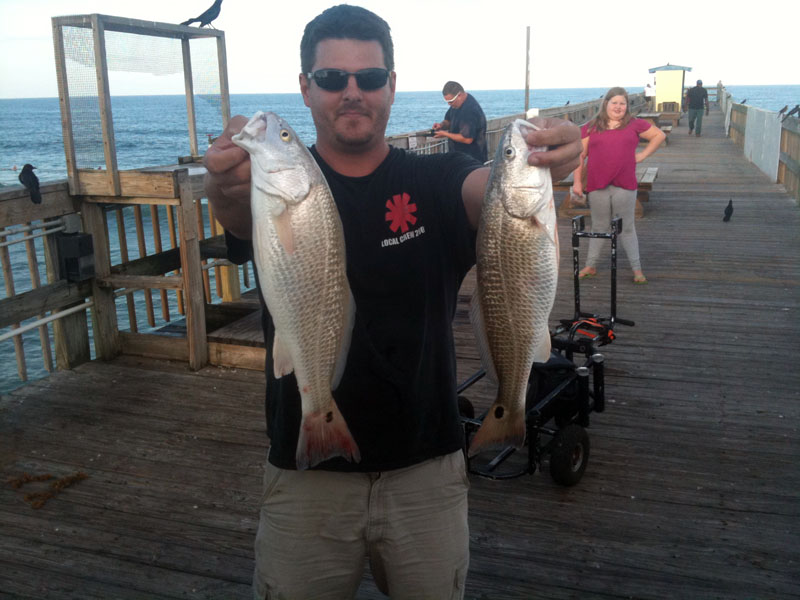 After the two slot Redfish were caught I landed 3 more under slot. The sun went down and the fishing died off. All in all a GREAT day on the water! [](https://www.floridashorefishing.com/profile/dan/)##### Author: [Daniel Hagan](https://www.floridashorefishing.com/profile/dan/) Daniel Hagan has been fishing Florida’s shores since 1985 and writing about it for more than 20 years. As Managing Editor of FloridaShoreFishing.com, he shares firsthand experience covering surf and pier fishing, tackle, techniques, and Florida’s coastal species.  [Daniel Hagan](https://www.floridashorefishing.com/profile/dan) Daniel Hagan has been fishing Florida’s shores since 1985 and writing about it for more than 20 years. As Managing Editor of FloridaShoreFishing.com, he shares firsthand experience covering surf and pier fishing, tackle, techniques, and Florida’s coastal species. [](https://www.facebook.com/groups/FloridaShoreFishing "Facebook") **Categories:** News --- ### [The Redfish are at the Piers](https://www.floridashorefishing.com/the-redfish-are-at-the-piers) **Published:** October 13, 2012 **Author:** Daniel Hagan **Content:** Consistent reports of good redfish catches have been coming in from the East Central Florida piers. Sunglow Pier in Daytona Beach shores has been seeing consistent catches of slot sized redfish near the pylons, as well as good number of keeper sized flounder. The cooler weather has turned this fish on and they are feeding well. At the Flagler Pier similar reports are coming in with the addition of King Fish. One angler is even reported to have caught 2 kingfish in a week over 30 pounds. Get out there and enjoy the great weather and great fishing! [](https://www.floridashorefishing.com/profile/dan/)##### Author: [Daniel Hagan](https://www.floridashorefishing.com/profile/dan/) Daniel Hagan has been fishing Florida’s shores since 1985 and writing about it for more than 20 years. As Managing Editor of FloridaShoreFishing.com, he shares firsthand experience covering surf and pier fishing, tackle, techniques, and Florida’s coastal species.  [Daniel Hagan](https://www.floridashorefishing.com/profile/dan) Daniel Hagan has been fishing Florida’s shores since 1985 and writing about it for more than 20 years. As Managing Editor of FloridaShoreFishing.com, he shares firsthand experience covering surf and pier fishing, tackle, techniques, and Florida’s coastal species. [](https://www.facebook.com/groups/FloridaShoreFishing "Facebook") **Categories:** News --- ### [Whiting Abundant Along Florida's Coast](https://www.floridashorefishing.com/whiting-abundant-along-floridas-coast) **Published:** February 25, 2013 **Author:** Daniel Hagan **Content:** 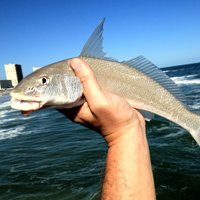 All along Florida’s coast reports of frequent Whiting catches have been coming in. It is not uncommon to see reports of 12-20 Whiting catches in a single day: > “Arrived just after daylight. Found cold NW breeze, 2′ surf, light current to the south and clear water. Whiting were chewin’! Caught 17 whiting and four blues in 1.75 hours on one pole. Released three whiting and the blues.” – FishingFool The above report is not uncommon this time of year, and one popular place to catch whiting is from piers on the beach, here are some tips to help increase the amount of whiting caught. **Tips** - Use a 2 hook dropper rig with 1/0 or smaller circle hooks - Use only the amount of weight needed to hold bottom - Cast down current, when casting up current the current makes it difficult to detect a bite - Fresh pealed shrimp are one of the best baits Now go catch a few of those tasty fish! Good luck and good fishing! [](https://www.floridashorefishing.com/profile/dan/)##### Author: [Daniel Hagan](https://www.floridashorefishing.com/profile/dan/) Daniel Hagan has been fishing Florida’s shores since 1985 and writing about it for more than 20 years. As Managing Editor of FloridaShoreFishing.com, he shares firsthand experience covering surf and pier fishing, tackle, techniques, and Florida’s coastal species.  [Daniel Hagan](https://www.floridashorefishing.com/profile/dan) Daniel Hagan has been fishing Florida’s shores since 1985 and writing about it for more than 20 years. As Managing Editor of FloridaShoreFishing.com, he shares firsthand experience covering surf and pier fishing, tackle, techniques, and Florida’s coastal species. [](https://www.facebook.com/groups/FloridaShoreFishing "Facebook") **Categories:** News --- ### [Spring Cobia from the Piers](https://www.floridashorefishing.com/spring-cobia-from-the-piers) **Published:** March 12, 2014 **Author:** Daniel Hagan **Content:** One of the hardest fighting and most uniquely flavored fish to be found around Florida’s cost is the Cobia. It averages around 20 pounds inshore, but can grow to over 100 pounds. During the spring Cobia can be caught from ocean side piers. Here are a few tips: **Tackle** - Cobia a vicious fighters so a 30-35lb rated rod and reel a required - 30 pound test braided line works great - Use a 40-60lb florocarbon leader to help prevent breaking off near pylon **Baits and Lures** - Pogies and any other similar sized live baits work well (use 5/0 circle hook or bigger) - Large jigs tipped with large grubs are GREAT cobia lures **Techniques** - When actively feeding Cobia are not difficult to get to bite, get a live bait in front of them or run your jig past them quickly, if they are feeding, they will bite. - Cobia move quite a bit, so be ready for them when they show up, they may not be there long - If you see a large ray of any kind, or large turtle, there is a good chance there is a cobia with it. Check local reports to see any cobia are being caught in your area. They are not always around inshore piers, but when they are, they are well worth the effort! [](https://www.floridashorefishing.com/profile/dan/)##### Author: [Daniel Hagan](https://www.floridashorefishing.com/profile/dan/) Daniel Hagan has been fishing Florida’s shores since 1985 and writing about it for more than 20 years. As Managing Editor of FloridaShoreFishing.com, he shares firsthand experience covering surf and pier fishing, tackle, techniques, and Florida’s coastal species.  [Daniel Hagan](https://www.floridashorefishing.com/profile/dan) Daniel Hagan has been fishing Florida’s shores since 1985 and writing about it for more than 20 years. As Managing Editor of FloridaShoreFishing.com, he shares firsthand experience covering surf and pier fishing, tackle, techniques, and Florida’s coastal species. [](https://www.facebook.com/groups/FloridaShoreFishing "Facebook") **Categories:** News --- ### [Report - Sunglow Pier](https://www.floridashorefishing.com/report-sunglow-pier-2) **Published:** April 10, 2013 **Author:** Daniel Hagan **Content:** I spent the day fishing from the Sunglow Pier in South Daytona Beach. I arrived just before sunrise and had my first bait in the water in about 5 mintues. The day started off slow. The only catch before 8am was a very small whiting by a pier regular. At about 9am I caught my first fish of the day. A 15″ flounder: 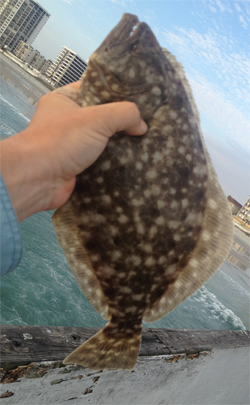 This flounder was caught under the bridge using a live shrimp. A few anglers around me caught a flounder or two as well, before the bite slowed down. For the next few hours all that was caught was a few sheepshead, and a small jack. After catching 2 undersized sheepsheads, I decided to call it a day. [](https://www.floridashorefishing.com/profile/dan/)##### Author: [Daniel Hagan](https://www.floridashorefishing.com/profile/dan/) Daniel Hagan has been fishing Florida’s shores since 1985 and writing about it for more than 20 years. As Managing Editor of FloridaShoreFishing.com, he shares firsthand experience covering surf and pier fishing, tackle, techniques, and Florida’s coastal species.  [Daniel Hagan](https://www.floridashorefishing.com/profile/dan) Daniel Hagan has been fishing Florida’s shores since 1985 and writing about it for more than 20 years. As Managing Editor of FloridaShoreFishing.com, he shares firsthand experience covering surf and pier fishing, tackle, techniques, and Florida’s coastal species. [](https://www.facebook.com/groups/FloridaShoreFishing "Facebook") **Categories:** News --- ### [Springtime Black Drum](https://www.floridashorefishing.com/springtime-black-drum) **Published:** March 22, 2014 **Author:** Daniel Hagan **Content:** One of Florida’s most popular, and flavorful fish to catch in the spring is the less regulated cousin of the Redfish, the Black Drum. Black Drum are very similar to in flavor and appearance, but there are some very different techniques used to catch more Black Drum. Here are a few: Where to find Black Drum: - Black Drum are found through out Florida’s inshore and near shore fishing grounds - Black Drum favor soft bottoms near heavy structure - They are frequently found around piers in the surf, and deep holes near bridges and docks inshore Tackle for Black Drum - Black Drum average around 20-28″ in Florida, but the largest can be over 100 pounds - A medium action rod in the 20 pound class will work well for most fish - 40lb braid main line with a 20-30lb leader works well to get the fish away from structure - Use enough weight to keep the bait on the bottom - a 2-4/0 circle hook works well Bait - Black Drum are not often caught on artificial lures (although possible) so live bait is the preferred method - Live or fresh pealed shrimp, sand fleas, blue crab and clams are all great baits When Black Drum are actively feeding they will often be found in small schools. When cover is found near deep water, there is a good chance a few Black Drum are in the area. Get your bait near the structure and hold on! [](https://www.floridashorefishing.com/profile/dan/)##### Author: [Daniel Hagan](https://www.floridashorefishing.com/profile/dan/) Daniel Hagan has been fishing Florida’s shores since 1985 and writing about it for more than 20 years. As Managing Editor of FloridaShoreFishing.com, he shares firsthand experience covering surf and pier fishing, tackle, techniques, and Florida’s coastal species.  [Daniel Hagan](https://www.floridashorefishing.com/profile/dan) Daniel Hagan has been fishing Florida’s shores since 1985 and writing about it for more than 20 years. As Managing Editor of FloridaShoreFishing.com, he shares firsthand experience covering surf and pier fishing, tackle, techniques, and Florida’s coastal species. [](https://www.facebook.com/groups/FloridaShoreFishing "Facebook") **Categories:** News --- ### [Manatee Island Spotted Sea Trout](https://www.floridashorefishing.com/manatee-island-spotted-sea-trout) **Published:** May 21, 2009 **Author:** Daniel Hagan **Content:** Today I decided to take it easy and just hang out at a park with a pole in the water. My goal was not to catch a bunch of fish, but rather just relax. NOAA called for the surf to be quite high and rough today, so surf fishing was out…. What to do? Enter Manatee Island Park in Daytona Beach. Manatee Island Park is right across the street from The Fishing Hole bait and tackle shop, so it is convenient. It has a floating dock that extends about 75 yards into the Intercoastal Waterway so it has fishing opportunities, and parking is a breeze. So, at about 7:15am I showed up after stopping at The Fishing Hole to pick up 2 dozen live shrimp. I set up two rigs, one for bottom fishing with a 2 oz sinker, and one with a cork to fish the mid water area. I set up my chair, cast the bottom rig out and let it soak. I then cast the cork out, only to find that the current was far to strong for the area I was casting. Simple solution, move to the end of the dock. The current was heading north, and doing so with a vengeance, so under the float I added a bit of weight to keep the shrimp down. After soaking for about 20 minutes my cork disappeared and here is the result  A Spotted Sea Trout. I did not measure it, but the tackle box above it is 11” wide, so it was a keeper, but I didn’t bring a bucket or cooler to keep any fish (intended to just relax) so today was going to be all catch and release. The Sea Trout action continued for about an hour, then the bite up top ended. 2 hours into the excursion the bottom rig started to get some action. A few catfish and a few jacks. A good day for not intending to catch anything! Total Tally: 5 Spotted Seat Trout (all around 15-17”) 3 Jack 2 Catfish (hardheads, no sails) [](https://www.floridashorefishing.com/profile/dan/)##### Author: [Daniel Hagan](https://www.floridashorefishing.com/profile/dan/) Daniel Hagan has been fishing Florida’s shores since 1985 and writing about it for more than 20 years. As Managing Editor of FloridaShoreFishing.com, he shares firsthand experience covering surf and pier fishing, tackle, techniques, and Florida’s coastal species.  [Daniel Hagan](https://www.floridashorefishing.com/profile/dan) Daniel Hagan has been fishing Florida’s shores since 1985 and writing about it for more than 20 years. As Managing Editor of FloridaShoreFishing.com, he shares firsthand experience covering surf and pier fishing, tackle, techniques, and Florida’s coastal species. [](https://www.facebook.com/groups/FloridaShoreFishing "Facebook") **Categories:** News --- ### [Shark Fishing on the ICW](https://www.floridashorefishing.com/shark-fishing-on-the-icw) **Published:** June 8, 2010 **Author:** Daniel Hagan **Content:** Carl and I decided to spend the evening shark fishing on the Intercostal Waterway. We arrived about an hour before sundown and got started right away. The first shark of the day ended up being the largest landed. A 32” bonnet head shark. Not to big, but fun none-the-less. The rest of the day resulted in multiple small bonnet head sharks and sharp nose sharks being landed. Carl hooked into a large shark that put three strong runs on him before snapping his line. We are guessing it was a lemon shark in the 5-7’ range. We saw a lemon about that size crashing on mullet in the shallows about 10 minutes before Carl’s hook up. There is a good chance that was the same shark that he hooked into. Here is a picture of the only shark over 30” caught last night: 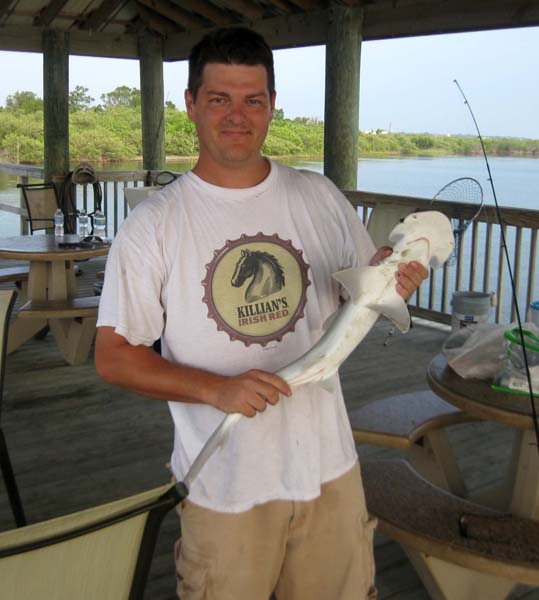 [](https://www.floridashorefishing.com/profile/dan/)##### Author: [Daniel Hagan](https://www.floridashorefishing.com/profile/dan/) Daniel Hagan has been fishing Florida’s shores since 1985 and writing about it for more than 20 years. As Managing Editor of FloridaShoreFishing.com, he shares firsthand experience covering surf and pier fishing, tackle, techniques, and Florida’s coastal species.  [Daniel Hagan](https://www.floridashorefishing.com/profile/dan) Daniel Hagan has been fishing Florida’s shores since 1985 and writing about it for more than 20 years. As Managing Editor of FloridaShoreFishing.com, he shares firsthand experience covering surf and pier fishing, tackle, techniques, and Florida’s coastal species. [](https://www.facebook.com/groups/FloridaShoreFishing "Facebook") **Categories:** News --- ### [Mangrove Snapper Limit – Inlet Harbor](https://www.floridashorefishing.com/mangrove-snapper-limit-–-inlet-harbor) **Published:** August 18, 2010 **Author:** Daniel Hagan **Content:** I spent the night fishing from a dock near Inlet Harbor. I got to the dock around 5pm with a bucket full of live shrimp and mud minnows with a few finger mullet mixed in. First I put a mud minnow under the dock. I then cast a shrimp and a mullet near the channel. The mud minnow did not last long under the dock. I caught a nice [Mangrove Snapper](/fishing/mangrove-snapper), 12” inches. Then the pole with the shrimp started to click away. A catfish. “Oh no” I thought, “its going to be one of those nights” The night continued like that until I limited out on Mangrove Snapper. I then decided to throw my cast net and see if I could get some pinfish, and I did. I put a pinfish under the pier! That led to a few flounder and a redfish. I then tried shrimp under and that caught some Sheepshead and other random fish. Total Catch 8 – Mangrove Snapper – Up to 14” 3 – Sheepshead – All under 12” 2 – Flounder – Under 12” 2 – Whiting – Up to 17” (both released) 1 – Redfish – Slightly under slot A few catfish, and other trash type fish! [](https://www.floridashorefishing.com/profile/dan/)##### Author: [Daniel Hagan](https://www.floridashorefishing.com/profile/dan/) Daniel Hagan has been fishing Florida’s shores since 1985 and writing about it for more than 20 years. As Managing Editor of FloridaShoreFishing.com, he shares firsthand experience covering surf and pier fishing, tackle, techniques, and Florida’s coastal species.  [Daniel Hagan](https://www.floridashorefishing.com/profile/dan) Daniel Hagan has been fishing Florida’s shores since 1985 and writing about it for more than 20 years. As Managing Editor of FloridaShoreFishing.com, he shares firsthand experience covering surf and pier fishing, tackle, techniques, and Florida’s coastal species. [](https://www.facebook.com/groups/FloridaShoreFishing "Facebook") **Categories:** News --- ### [Report: ICW Near Ponce Inlet](https://www.floridashorefishing.com/report-icw-near-ponce-inlet-2) **Published:** November 2, 2010 **Author:** Daniel Hagan **Content:** My wife, Carl and I decided to spend the morning fishing from a private dock on the ICW near Ponce Inlet. We arrived at the dock 30 minutes before the sun started to show its self with a bucket full of live shrimp and my cast net ready to catch Greenbacks. Before the sun came up both Carl and I tossed a live shrimp near the channel and I waited for sunrise to throw the net. While waiting my first cast led to a small catfish and so did Carl’s. Carl then landed a whiting and I followed up with another catfish! By now the sun was starting to peak out and I could see where the green backs where hiding. My wife helped me spot them and in one cast I had a bucket full of small greenies! The plan for the day was to have a greenie under the pier for snapper and a shrimp near the channel for what ever else was hungry, and this plan worked out well! My wife, Caryn, started to land a few whiting and a pair of small lane snappers. Carl landed a few more catfish a few whiting, a blue fish and a small sting ray, and I caught all of the above except a blue. Over all we had a fun time and here is the total tally: Catfish: 5 Sting Ray: 2 Whiting: 12 (up to 14”) Bluefish: 1 Ladyfish: 5 Lane Snapper: 6 Sheepshead: 1 [](https://www.floridashorefishing.com/profile/dan/)##### Author: [Daniel Hagan](https://www.floridashorefishing.com/profile/dan/) Daniel Hagan has been fishing Florida’s shores since 1985 and writing about it for more than 20 years. As Managing Editor of FloridaShoreFishing.com, he shares firsthand experience covering surf and pier fishing, tackle, techniques, and Florida’s coastal species.  [Daniel Hagan](https://www.floridashorefishing.com/profile/dan) Daniel Hagan has been fishing Florida’s shores since 1985 and writing about it for more than 20 years. As Managing Editor of FloridaShoreFishing.com, he shares firsthand experience covering surf and pier fishing, tackle, techniques, and Florida’s coastal species. [](https://www.facebook.com/groups/FloridaShoreFishing "Facebook") **Categories:** News --- ### [Nighttime Trout ](https://www.floridashorefishing.com/nighttime-trout) **Published:** August 22, 2012 **Author:** Daniel Hagan **Content:** Trout are one of the most popular game fish here in Florida. They put up a fun fight, they are delicious and are apt to great hits on artificial lures. Trout are also one of the best fish to target after the sun goes down. Trout are very active hunters after sunset. They will often be heard blasting pods of bait fish off in the dark distance and frequently are found congregating around lighted boat docks/piers. The lighted boat docks and piers are where most action can be found for Florida Shore Fishermen. Almost any dock/pier that has lights on it will attract baitfish. The baitfish will in turn attack the fish that eat them. Trout are one of the more active nighttime feeders and can be caught using live bait under the lights or by tossing artificial in the area as well. **Live Bait** Trout are ambush hunters at night. They like to swim up to the edge of a light field near structure and wait for baitfish to swim into their range. Once a baitfish swims near them they strike, and they strike hard. Any of the common baitfish will work for trout, but finger mullet seem to work the best. A free lined mullet with a 1/0-3/0 light wire circle hooked tossed just up current of the light will often result in a trout being pulled over the rail. **Artificial Lures** Trout will readily take an artificial lure. Anything from a soft plastic jerk bait to a gotcha plug to a buck tail jig works. When fishing under the lights of a dock, one of the most effective baits is a soft plastic mullet. Berkley Gulp Alive 4” soft plastic Ripple Mullet consistently produces trout under the lights. With a ¼ oz. Jig head, toss the mullet down current of the light and swim in trough the light. If no hit that way, fan cast around the lights. This will normally result in a trout strike and a flashy fight. [](https://www.floridashorefishing.com/profile/dan/)##### Author: [Daniel Hagan](https://www.floridashorefishing.com/profile/dan/) Daniel Hagan has been fishing Florida’s shores since 1985 and writing about it for more than 20 years. As Managing Editor of FloridaShoreFishing.com, he shares firsthand experience covering surf and pier fishing, tackle, techniques, and Florida’s coastal species.  [Daniel Hagan](https://www.floridashorefishing.com/profile/dan) Daniel Hagan has been fishing Florida’s shores since 1985 and writing about it for more than 20 years. As Managing Editor of FloridaShoreFishing.com, he shares firsthand experience covering surf and pier fishing, tackle, techniques, and Florida’s coastal species. [](https://www.facebook.com/groups/FloridaShoreFishing "Facebook") **Categories:** News --- ### [Catch Flounder from a Dock](https://www.floridashorefishing.com/catch-flounder-from-a-dock) **Published:** April 6, 2014 **Author:** Daniel Hagan **Content:** Flounder fishing from a dock can be one of the most relaxing and rewarding methods of fishing there is. Flounder are ambush predators, meaning they find a good place to hide and wait for food to come to them, only moving small amounts at a time. Using they ambush nature against them can lead to some highly successful fishing in a very relaxing environment. **Equipment** Flounder fishing from a dock in Florida does not require any high tech or high price equipment. Any saltwater combo that can handle 10lb test line or higher will work for just about any sized flounder. A rod of around 6′ or under is recommended as many docs have roofs overhead and long rods are difficult to deal with under a roof. For terminal tackle, a light wire 2-4/0 circle hook on a 12-20″ 15lb fluorocarbon leader attached to the main line with a swivel works best for flounder. Above the swivel place a glass bead and an egg sinker just heavy enough to hold bottom in the current being fished. If using an artificial lure, one of the most effective is Berkeley Gulp Alive Shrimp. Use a jig head that is heavy enough to get to the bottom in the current but not so heavy the lure feels unnatural to the fish. IF using monofilament or fluorocarbon line there is no need for a leader, but if using braid, a 12-20″ leader of 12lb fluorocarbon works well. **Technique** The first thing to consider is where the founder are. They are ambush predators, so they will tend to set up in an area where a food source will pass by. Look for Flounder just down current from good structure, in almost any depth. Flounder of decent sizes have been known to hold in less than 6″ of water, so don’t only pay attention to the depths. ***Live Bait Soaking for Flounder*** Once a potential location has been identified, if you have to cast to get in the strike zone, cast about 30-40 feet past the area and slowly bump your bait along the bottom until it reaches the intended location. Let it sit! A Flounder will often have a very subtle bite, and sometimes is not even noticed. If you do not notice a bite in 10 minutes, retrieve your bait and try again (often there will be a flounder on your line that ate your bait and just stayed still) ***Live Bait Bumping*** Another highly effective method of catching Flounder is to bump live bait off the bottom in a VERY slow retrieve. Using a fan cast technique (multiple casts in an arch from left to right that cover 180 degrees of area in front of you), cast your bait (finger mullet or mud minnows work best of this, rigged through the lips) as far as reasonable. Using a VERY slow retrieve, lift the tip of your rod slightly before every turn of the handle. This will cause your sinker to bump the bottom, alerting fish to the presence of your bait. Once a bite is detected, DO NOT set the hook. Allow the Flounder about 10 seconds to get the bait in its mouth, and then lift the rod up and start to pull it in! ***Lure Bumping*** Lure Bumping for Flounder is a very similar technique to Live Bait Bumping. The main difference is the amount of time allowed before hook set. Because many lures do not feel or taste like live bait Flounder will often spit them out quick, so those baits the hook must be set much quicker. When using Berkeley Gulp Shrimp (or similar lures) you can allow the fish 5-10 seconds as the bait feels and tastes like a live fish. Now get out there and catch some flounder from one of Florida’s many docks! [](https://www.floridashorefishing.com/profile/dan/)##### Author: [Daniel Hagan](https://www.floridashorefishing.com/profile/dan/) Daniel Hagan has been fishing Florida’s shores since 1985 and writing about it for more than 20 years. As Managing Editor of FloridaShoreFishing.com, he shares firsthand experience covering surf and pier fishing, tackle, techniques, and Florida’s coastal species.  [Daniel Hagan](https://www.floridashorefishing.com/profile/dan) Daniel Hagan has been fishing Florida’s shores since 1985 and writing about it for more than 20 years. As Managing Editor of FloridaShoreFishing.com, he shares firsthand experience covering surf and pier fishing, tackle, techniques, and Florida’s coastal species. [](https://www.facebook.com/groups/FloridaShoreFishing "Facebook") **Categories:** News --- ### [FloridaShoreFishing.com Launches Major Rebrand](https://www.floridashorefishing.com/floridashorefishing-com-launches-major-rebrand) **Published:** June 9, 2014 **Author:** Daniel Hagan **Content:** *6/09/2014* Central Florida based FloridaShoreFishing.com has undergone a total brand review and today unveiled its new logo, website design and most importantly its new direction, a transition from a blog based business to an online magazine. The new brand identity reflects FloridaShoreFishing.com’s commitment to providing the best and most relevant content to all of Florida’s shore based anglers. The new identity will help direct everything that FloridaShoreFishing.com does, from the quality of its posts on its website to the volume and relevance of its social media interactions. The new website design, officially launched today, was designed to reflect the new Online Magazine direction of FloridaShoreFishing.com. It has been built to allow easier access to archived content, give users a quick overview of all the current articles as well as become a reference for any angler for relevant information. Daniel Hagan, Managing Editor at FloridaShoreFishing.com commented; > *“This is an exciting time for us! We worked hard on the new design of our website, and those efforts are already paying off. As the design continues to evolve over this month, it will reflect our goals and add to the user experience. We are also excited to see how the new ‘online magazine’ style will help our readers engage even more now! We have also started to look at all of our archived articles and will be re-editing much of that to reflect the new format, making even our archived content fresh again.”* **For more information:** [Contact Us Here](http://www.floridashorefishing.com/contacts) [](https://www.floridashorefishing.com/profile/dan/)##### Author: [Daniel Hagan](https://www.floridashorefishing.com/profile/dan/) Daniel Hagan has been fishing Florida’s shores since 1985 and writing about it for more than 20 years. As Managing Editor of FloridaShoreFishing.com, he shares firsthand experience covering surf and pier fishing, tackle, techniques, and Florida’s coastal species.  [Daniel Hagan](https://www.floridashorefishing.com/profile/dan) Daniel Hagan has been fishing Florida’s shores since 1985 and writing about it for more than 20 years. As Managing Editor of FloridaShoreFishing.com, he shares firsthand experience covering surf and pier fishing, tackle, techniques, and Florida’s coastal species. [](https://www.facebook.com/groups/FloridaShoreFishing "Facebook") **Categories:** News --- ### [June Outlook - East Central Florida](https://www.floridashorefishing.com/june-outlook-east-central-florida) **Published:** May 30, 2014 **Author:** Daniel Hagan **Content:** **June East Central Florida Outlook** Wade fishers on the shores of the Intracoastal Waterway should get an early start to get in on the morning bite, top water lures can be most effective with low light, after the sun is up just a half hour or so, the surface feeding can slow down, go sub surface with lures, and start to use your live or dead bait. Catch finger mullet and mud minnows early before they can see you and your cast net better after sun up. Live or dead shrimp are always a good choice for the most bites, but you will have to fish through the bites from smaller fish. Live finger mullet can be the best for larger fish but is a risk and reward scenario, you may have to wait for the big strike. Surf fishermen will continue to target whiting, peeled shrimp, sand fleas, cut clam is best natural bait, but many folks swear by Fish Bites scented artificial bait. Fish the deeper sloughs between the sand bars, if we have clean water you can see the bars and troughs, with low light or cloudy water, look for the waves cresting on the bars and smoother water over top of the sloughs to identify where the deeper water of the slough is. Shore bound jetty anglers can be catching redfish, black drum, flounder, whiting, mangrove snappers, sharks, and who knows what sometimes, bottom fishing around the rocks is the usual technique, try different baits to see what’s best for the moment, shrimp, live mullet, mud minnows are most popular. Capt Michael Savedow Guided Mosquito Lagoon Fishing Report Summer is almost here in East Central Florida, water temperatures up to 75’, mullet bait schools returning from the south, Redfish scattering out over the grass flats of Mosquito Lagoon beginning the warm water pattern flats fishing which I will be pursuing for the next several months targeting Reds and Trout. Indian River backcountry fishing has also been very steady catching, Seatrout, Redfish, Mangrove Snapper, Jack Crevalle, and fun jumping Ladyfish to name a few of the many different species we catch on my mixed bag variety trips. Regular client Dr Ed from Ormond Beach called for a last minute afternoon trip recently with his son Matt who caught the largest Trout of the trip on a deep drop off with live shrimp. 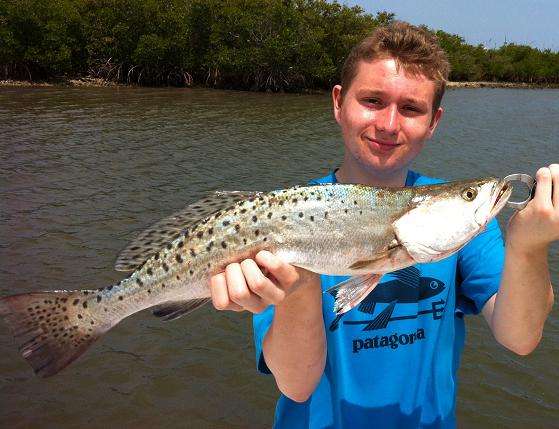 New client Norbert came over from Orlando with his friend Jason a couple weeks ago and also did a backcountry mixed trip catching all the usual different species on live shrimp with light spin tackle. Jason caught the big one of the morning, another great Seatrout close to an oyster bar and mangrove tree drop off. 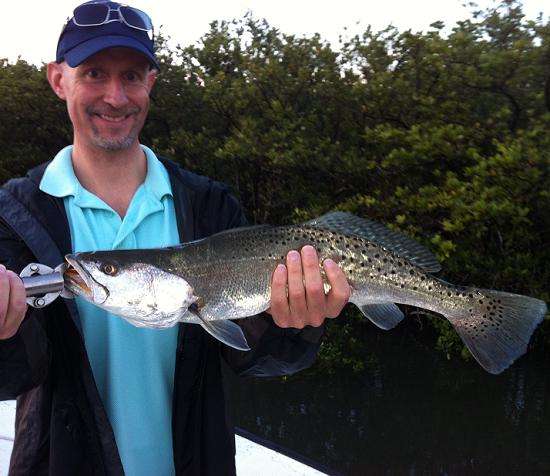 Repeat clients Brian and Calle, students at Stetson University at nearby Deland did another late spring pattern trip with me last week catching Redfish, Seatrout, and most of the other salty species along the way through the Edgewater backcountry. Brian caught his Red holding tight to an oyster bar just inside a creek mouth. 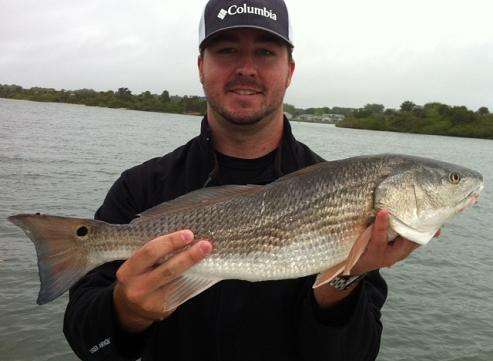 You never know what species may come up while catching a backcountry double hook up. Some good size Jack Crevalle have arrived in to the backcountry in the last couple weeks, some times chasing baitfish to the surface blasting white water blow ups, casting bait or lures right into the action can be an instant bent rod and drag pulling, they also prowl the edges of deeper drop offs making for double headers drifting a few live shrimp along the edges.  **About Capt. Mike Savedow** MY BOAT COMFORTABLY ACCOMMODATES 1 TO 4 ANGLERS CALM WATER INSHORE SALTWATER FISHING – NO SEA SICKNESS CHILDREN ALWAYS WELCOME – FAIR PRICES Near Daytona Beach, New Smyrna, and Orlando, East Central Florida. Saltwater inshore backcountry charters, Mosquito Lagoon flats fishing, fly fishing trips by request. Call or text me anytime at [386-689-3781](tel:386-689-3781) See my website [http://EdgewaterRiverGuide.com](http://edgewaterriverguide.com/) [](https://www.floridashorefishing.com/profile/dan/)##### Author: [Daniel Hagan](https://www.floridashorefishing.com/profile/dan/) Daniel Hagan has been fishing Florida’s shores since 1985 and writing about it for more than 20 years. As Managing Editor of FloridaShoreFishing.com, he shares firsthand experience covering surf and pier fishing, tackle, techniques, and Florida’s coastal species.  [Daniel Hagan](https://www.floridashorefishing.com/profile/dan) Daniel Hagan has been fishing Florida’s shores since 1985 and writing about it for more than 20 years. As Managing Editor of FloridaShoreFishing.com, he shares firsthand experience covering surf and pier fishing, tackle, techniques, and Florida’s coastal species. [](https://www.facebook.com/groups/FloridaShoreFishing "Facebook") **Categories:** News --- ### [Weekend Outlook - 5/16/2014](https://www.floridashorefishing.com/weekend-outlook-5162014) **Published:** May 16, 2014 **Author:** Daniel Hagan **Content:** A mild front pushed through Florida this week causing major wind, rain storms and barometric fluctuations. The front caused a very hot bite at the beginning of the week to cool off a bit mid week. The good news for this weekend is that for most of Florida the weather is looking great to get out on the water. Florida is currently at the end of its spring fishing pattern and the beginning of its summer pattern. With the summer pattern taking over it is important to be aware of the sun and the heat. When fishing be sure to use sunscreen and sunglasses. Staying hydrated is vitally important, so have some water or sports drinks with you. **Weekend Florida Shore Fishing Tip:** The Spanish Mackerel Run is VERY hot right now in many parts of Florida. The Skyway Fishing Pier in Tampa is reporting frequent catches, and similar reports span most of the state. Spanish Mackerel like flashy fast moving lures. A Gotcha Plug is always effective when fishing for Macks. Any live bait fish that is size appropriate and lively will work well. A jumbo live shrimp hung under a popping cork will also work when the fish are running. Be aware Spanish Mackerel have very sharp teeth, so either use a strong Fluorocarbon leader or light wire. Now get out there and catch some fish! Have a great weekend! [](https://www.floridashorefishing.com/profile/dan/)##### Author: [Daniel Hagan](https://www.floridashorefishing.com/profile/dan/) Daniel Hagan has been fishing Florida’s shores since 1985 and writing about it for more than 20 years. As Managing Editor of FloridaShoreFishing.com, he shares firsthand experience covering surf and pier fishing, tackle, techniques, and Florida’s coastal species.  [Daniel Hagan](https://www.floridashorefishing.com/profile/dan) Daniel Hagan has been fishing Florida’s shores since 1985 and writing about it for more than 20 years. As Managing Editor of FloridaShoreFishing.com, he shares firsthand experience covering surf and pier fishing, tackle, techniques, and Florida’s coastal species. [](https://www.facebook.com/groups/FloridaShoreFishing "Facebook") **Categories:** News --- ### [Live blogging: 5/15/2014](https://www.floridashorefishing.com/live-blogging-5152014) **Published:** May 15, 2014 **Author:** Daniel Hagan **Content:** Welcome to the live blog! I arrived at Sunglow Pier at 6:15 am. Seas are 2-4 feet with a heavy north current. Using live shrimp and mud minnows for bait! 6:30am: Bait in the water! [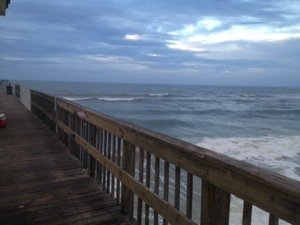](http://www.floridashorefishing.com/wp-content/uploads/2014/05/20140515-063633.jpg) 7:00am: 1/2 hour fight with a 5′ hammerhead shark! Got him to the pier and cut him off! Good fight! 7:56am: Shark must have scared everything off, and it’s starting to look ugly! [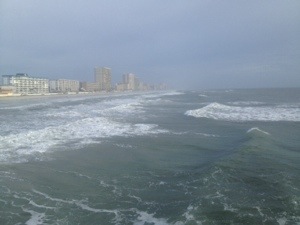](http://www.floridashorefishing.com/wp-content/uploads/2014/05/20140515-075349.jpg) 8:00am: very small whiting [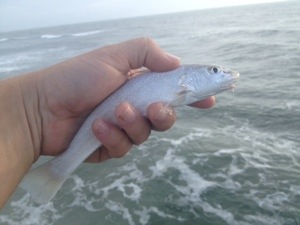](http://www.floridashorefishing.com/wp-content/uploads/2014/05/20140515-075906.jpg) 8:00am: Small spot [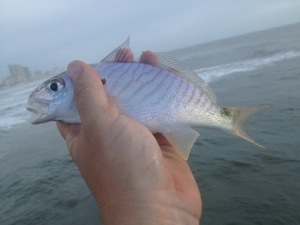](http://www.floridashorefishing.com/wp-content/uploads/2014/05/20140515-080335.jpg) 9:30am: changed locations. Private pier on ICW. 11″ mangrove [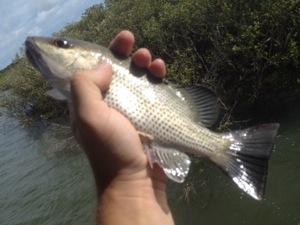](http://www.floridashorefishing.com/wp-content/uploads/2014/05/20140515-094744.jpg) 10:15am: [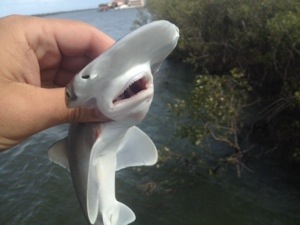](http://www.floridashorefishing.com/wp-content/uploads/2014/05/20140515-101611.jpg) 12:00pm: Time for lunch! I am done fishing! Was a fun day, but nothing caught worth bragging about! [](https://www.floridashorefishing.com/profile/dan/)##### Author: [Daniel Hagan](https://www.floridashorefishing.com/profile/dan/) Daniel Hagan has been fishing Florida’s shores since 1985 and writing about it for more than 20 years. As Managing Editor of FloridaShoreFishing.com, he shares firsthand experience covering surf and pier fishing, tackle, techniques, and Florida’s coastal species.  [Daniel Hagan](https://www.floridashorefishing.com/profile/dan) Daniel Hagan has been fishing Florida’s shores since 1985 and writing about it for more than 20 years. As Managing Editor of FloridaShoreFishing.com, he shares firsthand experience covering surf and pier fishing, tackle, techniques, and Florida’s coastal species. [](https://www.facebook.com/groups/FloridaShoreFishing "Facebook") **Categories:** Blog --- ### [The Summer Heat is Here](https://www.floridashorefishing.com/the-summer-heat-is-here) **Published:** May 10, 2014 **Author:** Daniel Hagan **Content:** I woke up this morning with a plan to spend most of the day fishing Florida’s shores. Here is the plan I laid out for the day: - Arrive at Dunlawton Flat Bridge 2 hours before sunrise to fish for trout/snook/flounder - At sunrise move to Sunglow Pier for breakfast while fishing - 1 hour before slack tide move to a public dock on the ICW and fish for flounder until tide starts moving - Move back to Flat Bridge as tide there would be slowing down I had a great plan! I arrived at the Flat Bridge and started to work my way across the bridge using a Berkley Gulp Swimming Mullet. I was able to land 2 small Snook and 1 lady fish in the 2 hours I was there. I tried for some flounder but the tide was just ripping to strong to keep a bait near the bottom. I moved to Sunglow Pier. Ordered some biscuits and gravy, and started eating while soaking a live shrimp on one rod and a mud minnow on the other. The breakfast was great, the fishing was not so great. Nothing ate the mud minnow and all I caught on the shrimp was a pair of very small whiting. On my way to my car I decided to check the water temp, and it felt quite a bit warmer than I expected. After 3 hours of Sunglow Pier I hit the dock. There is a long walk from parking to fishing, and it was already HOT out. By the time I got where I was going I had a good sweat worked up. I started fishing and not much was biting. I stayed for about 2 hours with very little luck, and I figure it is partially because the summer heat has arrived. So I called it a day, skipped the last planned stop and went home. Summer patterns in Florida often require early starts and early finishes. Most fish will be active right before and after sunrise. The heat of the day causes the water to warm quite a bit. This warm water leads to sluggish fish that are frequently inactive! So its time to get those alarm clocks set for EARLY fishing! [](https://www.floridashorefishing.com/profile/dan/)##### Author: [Daniel Hagan](https://www.floridashorefishing.com/profile/dan/) Daniel Hagan has been fishing Florida’s shores since 1985 and writing about it for more than 20 years. As Managing Editor of FloridaShoreFishing.com, he shares firsthand experience covering surf and pier fishing, tackle, techniques, and Florida’s coastal species.  [Daniel Hagan](https://www.floridashorefishing.com/profile/dan) Daniel Hagan has been fishing Florida’s shores since 1985 and writing about it for more than 20 years. As Managing Editor of FloridaShoreFishing.com, he shares firsthand experience covering surf and pier fishing, tackle, techniques, and Florida’s coastal species. [](https://www.facebook.com/groups/FloridaShoreFishing "Facebook") **Categories:** Blog --- ### [Captain Mike Savedow Report - April](https://www.floridashorefishing.com/captain-mike-savedow-report-april) **Published:** April 30, 2014 **Author:** Daniel Hagan **Content:** **Captain Mike Savedow Report** My guided inshore saltwater fishing charters have been really good in recent weeks on Mosquito Lagoon and the Indian River here in the Edgewater Backcountry and New Smyrna Beach. Water temps still chilly but on the rise, the spring shrimp run means game fish are focused on them along the channels and Intracoastal Waterway. The arriving schools of Blues, Jack Crevalle, and Ladyfish from their wintering area of south Florida has great fun fast action on my mixed bag backcountry and Intracoastal trips this time of year. Our local Seatrout, Redfish, Sheepshead, and Black Drum are also hungry for shrimp as the water warms after a chilly winter this 2014. As always I am also taking clients on the grass flats of Mosquito Lagoon after Redfish and Seatrout, in the spring the schooling pattern continues but with smaller schools and some single fish as higher water levels and warming water temperatures will have the Redfish beginning to scatter out some. On a recent solo flats fishing charter, Robert a repeat client from Daytona had a great time sight fishing a 26” Red as well as several good Seatrout on a beautiful pretty Mosquito Lagoon morning on a live finger mullet from a early morning school of fish pushing a big wake in the calm conditions. Also catching a few good Trout blind casting tail hooked select shrimp near sand holes in the grass.  On another recent Mosquito Lagoon flats charter, returning clients Richard and Pat from Virginia had less than perfect weather on a drizzly morning, still having a blast catching 4 Redfish with a couple over the slot size at 28” and also a few nice Trout casting tail hooked shrimp, top water retrieving over the grass.  Recently repeat clients from Canada, grandpa Conrad brought his son and 2 grandsons on a mixed bag backcountry trip, we had non stop action from Bluefish and Jacks on free lined live shrimp, Seatrout were also biting with young Cale catching the largest.  Having a couple fun fly fishing charters recently, here is Vic from Pennsylvania with a hard fighting Bluefish, spring time can have fast fly action along the Intracoastal with eager and fun to catch Blues, Jacks, and Ladyfish. Vic was using a weighted red and white “Savedow Bluefish Fly”  **Book an inshore charter with Capt. Michael Savedow** *My boat comfortably accommodates 1 to 4 angers for calm water inshore fishing.* *– No sea sickness* *– Call anytime: 386-689-3781* *– Children always welcome* *– Fair prices* *Capt. Michael Savedow* *Edgewater River Guide, Inc.* *Since 2003* *Phone: 386-689-3781* *Email: EdgewaterRiverGuide@cfl.rr.com* ** [](https://www.floridashorefishing.com/profile/dan/)##### Author: [Daniel Hagan](https://www.floridashorefishing.com/profile/dan/) Daniel Hagan has been fishing Florida’s shores since 1985 and writing about it for more than 20 years. As Managing Editor of FloridaShoreFishing.com, he shares firsthand experience covering surf and pier fishing, tackle, techniques, and Florida’s coastal species.  [Daniel Hagan](https://www.floridashorefishing.com/profile/dan) Daniel Hagan has been fishing Florida’s shores since 1985 and writing about it for more than 20 years. As Managing Editor of FloridaShoreFishing.com, he shares firsthand experience covering surf and pier fishing, tackle, techniques, and Florida’s coastal species. [](https://www.facebook.com/groups/FloridaShoreFishing "Facebook") **Categories:** News --- ### [Flattie Fishing](https://www.floridashorefishing.com/flattie-fishing) **Published:** April 18, 2014 **Author:** Daniel Hagan **Content:** One of my favorite fish to eat is the Flounder. They have a light, flaky, subtly flavored meat that works well with any recipe calling for white meat fish. Another bonus is they are abundant during the warmer months around Florida’s Shores. Today I decided I would go on a hunt for some dinner. I had 3 locations picked out for the hunt and arrived at location #1 about an hour before sunrise. I started presenting a Gulp Shrimp and within 5 or 6 casts had my first Flounder in the cooler. For the first hour I hooked into a flounder about every 10 minutes, then it died off. I moved to my second location about an hour after sunrise. This location has produced tons of flounder for me over the years, but today was not-to-be. The tide was at its strongest movement, making it very difficult to present any lure on the bottom. So I moved on after only 10 minutes of fishing this location (I knew the tide would be ripping for another 2 hours). Location 3 is further away from the main channels and has much less tidal flow. This location put 2 more flatties in the bucket for total of 6 for the day (2 good meals for the wife and me). I had “post lunch” plans, so I had to get on the road and head home. Not a bad day on the water! (Sorry for the lack of pictures, I forgot my camera today, and my cell camera is horrible) [](https://www.floridashorefishing.com/profile/dan/)##### Author: [Daniel Hagan](https://www.floridashorefishing.com/profile/dan/) Daniel Hagan has been fishing Florida’s shores since 1985 and writing about it for more than 20 years. As Managing Editor of FloridaShoreFishing.com, he shares firsthand experience covering surf and pier fishing, tackle, techniques, and Florida’s coastal species.  [Daniel Hagan](https://www.floridashorefishing.com/profile/dan) Daniel Hagan has been fishing Florida’s shores since 1985 and writing about it for more than 20 years. As Managing Editor of FloridaShoreFishing.com, he shares firsthand experience covering surf and pier fishing, tackle, techniques, and Florida’s coastal species. [](https://www.facebook.com/groups/FloridaShoreFishing "Facebook") **Categories:** Blog --- ### [Report: Flounder Running Strong](https://www.floridashorefishing.com/report-flounder-running-strong) **Published:** April 11, 2014 **Author:** Daniel Hagan **Content:** Multiple reports are coming in from Port Orange Florida of strong Flounder runs. Many anglers are reporting catching as many as 5-10 an hour, these Flounder are not the largest recorded, but they are legal fish, averaging around 13-18″. 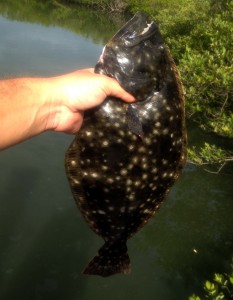 Most reports state the fish were caught on a jig bummed along the bottom. **Helpful Info:** - [How to catch flounder from a dock](http://www.floridashorefishing.com/catch-flounder-from-a-dock) (same techniques used for bridges) - [Flounder Jigging](http://www.floridashorefishing.com/flounder-jigging) - [Gulp Shrimp for Flounder](http://www.floridashorefishing.com/berkley-gulp-shrimp-for-flounder) **Quick Tips:** - Flounder are ambush predators, so get the bait/lure near them (dont expect them to come to you) - Current minimum size is 12″s in Florida (written 4/11/14) - Flounder are good at flipping off a hook while being raised out of the water, if you can net them, do so, if not, make sure the flounder is tiered before attempting to lift over the rail. - Beware of traffic! [](https://www.floridashorefishing.com/profile/dan/)##### Author: [Daniel Hagan](https://www.floridashorefishing.com/profile/dan/) Daniel Hagan has been fishing Florida’s shores since 1985 and writing about it for more than 20 years. As Managing Editor of FloridaShoreFishing.com, he shares firsthand experience covering surf and pier fishing, tackle, techniques, and Florida’s coastal species.  [Daniel Hagan](https://www.floridashorefishing.com/profile/dan) Daniel Hagan has been fishing Florida’s shores since 1985 and writing about it for more than 20 years. As Managing Editor of FloridaShoreFishing.com, he shares firsthand experience covering surf and pier fishing, tackle, techniques, and Florida’s coastal species. [](https://www.facebook.com/groups/FloridaShoreFishing "Facebook") **Categories:** News --- ### [Sheepshead](https://www.floridashorefishing.com/sheepshead) **Published:** June 1, 2010 **Author:** Daniel Hagan **Content:** In my continuing effort to expand the Species Profile section of Florida Shore Fishing I have just posted a profile of the [Sheepshead](/fish-profiles/sheepshead). Here is a quick excerpt: > The Sheepshead gets its name from its mouth full of teeth that resemble those of its namesake. The large protruding teeth are used for cracking and crushing shellfish of all types. [](https://www.floridashorefishing.com/profile/dan/)##### Author: [Daniel Hagan](https://www.floridashorefishing.com/profile/dan/) Daniel Hagan has been fishing Florida’s shores since 1985 and writing about it for more than 20 years. As Managing Editor of FloridaShoreFishing.com, he shares firsthand experience covering surf and pier fishing, tackle, techniques, and Florida’s coastal species.  [Daniel Hagan](https://www.floridashorefishing.com/profile/dan) Daniel Hagan has been fishing Florida’s shores since 1985 and writing about it for more than 20 years. As Managing Editor of FloridaShoreFishing.com, he shares firsthand experience covering surf and pier fishing, tackle, techniques, and Florida’s coastal species. [](https://www.facebook.com/groups/FloridaShoreFishing "Facebook") **Categories:** News --- ### [Fresh Fish Chowder](https://www.floridashorefishing.com/fresh-fish-chowder) **Published:** December 12, 2011 **Author:** Daniel Hagan **Content:** This recipe can be used with just about any fish, but it tends to work better with a very lightly flavored white fish, like whiting. **Ingredients**: - 1 ½ Sticks of Butter - 2 Potatoes - 2 Carrots - 1 Onion - 1 Stalk of Celery - 1-2 lbs of fish (cut into cubes) - 2 quarts milk - ½ quart cream - 1 clove garlic - Salt and Pepper **Directions** - In sauce pan melt ½ stick of butter and bring up to head. - Add chopped potatoes, carrots, onion and celery - Stir constantly for 3-4 minutes - Drain vegetables - In a stock pot (or large pan) add veggies, milk, cream, 1 stick of butter, crushed garlic and salt and pepper (to taste) - Cook at low heat until veggies are soft - Bring up to high heat, stiring constantly - Once boiling add fish that has been cut into bite size cubes - Simmer over low heat for about 20-30 minutes ENJOY! [](https://www.floridashorefishing.com/profile/dan/)##### Author: [Daniel Hagan](https://www.floridashorefishing.com/profile/dan/) Daniel Hagan has been fishing Florida’s shores since 1985 and writing about it for more than 20 years. As Managing Editor of FloridaShoreFishing.com, he shares firsthand experience covering surf and pier fishing, tackle, techniques, and Florida’s coastal species.  [Daniel Hagan](https://www.floridashorefishing.com/profile/dan) Daniel Hagan has been fishing Florida’s shores since 1985 and writing about it for more than 20 years. As Managing Editor of FloridaShoreFishing.com, he shares firsthand experience covering surf and pier fishing, tackle, techniques, and Florida’s coastal species. [](https://www.facebook.com/groups/FloridaShoreFishing "Facebook") **Categories:** News --- ### [Report: ICW Near Ponce Inlet](https://www.floridashorefishing.com/report-icw-near-ponce-inlet) **Published:** September 19, 2010 **Author:** Daniel Hagan **Content:** Today I spent the day fishing from a dock on the Inter Coastal Waterway Just north of Ponce Inlet. I did not have a specific target in mind, this trip was more about hanging out and relaxing! I arrived at the dock just before sunrise with 50 live shrimp and 50 fiddler crabs. The plan was to free line the shrimp and to chase Sheepshead with the crabs. I was able to catch 12 Sheepshead (all but one undersized), 4 Mangrove Snappers, 1 blue fish and a very small redfish (about 13”). The only fish with any size was a Bonnethead shark that put up a pretty good fight on a medium light action rig! 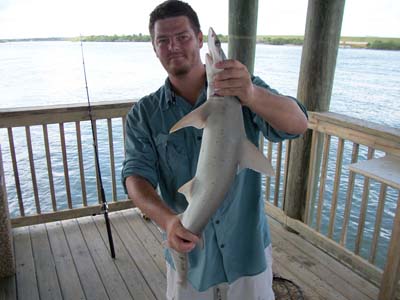 [](https://www.floridashorefishing.com/profile/dan/)##### Author: [Daniel Hagan](https://www.floridashorefishing.com/profile/dan/) Daniel Hagan has been fishing Florida’s shores since 1985 and writing about it for more than 20 years. As Managing Editor of FloridaShoreFishing.com, he shares firsthand experience covering surf and pier fishing, tackle, techniques, and Florida’s coastal species.  [Daniel Hagan](https://www.floridashorefishing.com/profile/dan) Daniel Hagan has been fishing Florida’s shores since 1985 and writing about it for more than 20 years. As Managing Editor of FloridaShoreFishing.com, he shares firsthand experience covering surf and pier fishing, tackle, techniques, and Florida’s coastal species. [](https://www.facebook.com/groups/FloridaShoreFishing "Facebook") **Categories:** News --- ### [Snook Closure Extended](https://www.floridashorefishing.com/snook-closure-extended) **Published:** August 10, 2010 **Author:** Daniel Hagan **Content:** After the extremely cold winter this year that killed many [Snook](http://www.floridashorefishing.com/fish-profiles/snook) the FWC closed harvesting. The closure has been extended to at least September 16th. While the closure is in effect, the Snook fishing in some areas is still pretty strong. A friend of mine hired a guide in Jupiter inlet and was able to catch 270 Snook over 5 days between him and 5 friends! [](https://www.floridashorefishing.com/profile/dan/)##### Author: [Daniel Hagan](https://www.floridashorefishing.com/profile/dan/) Daniel Hagan has been fishing Florida’s shores since 1985 and writing about it for more than 20 years. As Managing Editor of FloridaShoreFishing.com, he shares firsthand experience covering surf and pier fishing, tackle, techniques, and Florida’s coastal species.  [Daniel Hagan](https://www.floridashorefishing.com/profile/dan) Daniel Hagan has been fishing Florida’s shores since 1985 and writing about it for more than 20 years. As Managing Editor of FloridaShoreFishing.com, he shares firsthand experience covering surf and pier fishing, tackle, techniques, and Florida’s coastal species. [](https://www.facebook.com/groups/FloridaShoreFishing "Facebook") **Categories:** News --- ### [Snook Season Set to Reopen](https://www.floridashorefishing.com/snook-season-set-to-reopen) **Published:** September 13, 2010 **Author:** Daniel Hagan **Content:** The Snook Season is set to reopen on September 17th, but only on the east coast. The FWC has continued the closure on the west coast until a later date. Quote from the FWC > The Florida Fish and Wildlife Conservation Commission (FWC) decided Thursday to reopen the recreational harvest season for snook on Sept. 17 in Florida’s Atlantic waters and maintain a catch-and-release snook fishery in Florida’s Gulf waters. Only catch-and-release fishing for snook has been allowed statewide under FWC executive orders, which have been in effect since January, to protect snook populations affected by prolonged cold weather in Florida earlier this year. [](https://www.floridashorefishing.com/profile/dan/)##### Author: [Daniel Hagan](https://www.floridashorefishing.com/profile/dan/) Daniel Hagan has been fishing Florida’s shores since 1985 and writing about it for more than 20 years. As Managing Editor of FloridaShoreFishing.com, he shares firsthand experience covering surf and pier fishing, tackle, techniques, and Florida’s coastal species.  [Daniel Hagan](https://www.floridashorefishing.com/profile/dan) Daniel Hagan has been fishing Florida’s shores since 1985 and writing about it for more than 20 years. As Managing Editor of FloridaShoreFishing.com, he shares firsthand experience covering surf and pier fishing, tackle, techniques, and Florida’s coastal species. [](https://www.facebook.com/groups/FloridaShoreFishing "Facebook") **Categories:** News --- ### [Mangrove Snapper Profile Added](https://www.floridashorefishing.com/mangrove-snapper-profile-added) **Published:** July 28, 2010 **Author:** Daniel Hagan **Content:** I just added the [Mangrove Snapper](http://www.floridashorefishing.com/fish-profiles/mangrove-snapper) to our list of species profiles! The [Mangrove Snapper](http://www.floridashorefishing.com/fish-profiles/mangrove-snapper) is one of the few snappers that can be caught from the shore here and Florida! Check it out here: [Mangrove Snapper](http://www.floridashorefishing.com/fish-profiles/mangrove-snapper) [](https://www.floridashorefishing.com/profile/dan/)##### Author: [Daniel Hagan](https://www.floridashorefishing.com/profile/dan/) Daniel Hagan has been fishing Florida’s shores since 1985 and writing about it for more than 20 years. As Managing Editor of FloridaShoreFishing.com, he shares firsthand experience covering surf and pier fishing, tackle, techniques, and Florida’s coastal species.  [Daniel Hagan](https://www.floridashorefishing.com/profile/dan) Daniel Hagan has been fishing Florida’s shores since 1985 and writing about it for more than 20 years. As Managing Editor of FloridaShoreFishing.com, he shares firsthand experience covering surf and pier fishing, tackle, techniques, and Florida’s coastal species. [](https://www.facebook.com/groups/FloridaShoreFishing "Facebook") **Categories:** News --- ### [Just one of those days!](https://www.floridashorefishing.com/just-one-of-those-days) **Published:** March 31, 2014 **Author:** Daniel Hagan **Content:** I set out this morning with the intentions of catching a few Redfish and Trout in the Thousand Islands area of Coca Beach. I arrived at my “secret” spot around sun rise and started throwing an assortment of Gulp Alive lures in hopes of accomplishing my goal. After a few hours of failing to do so, I finally felt some weight on the end of my line! The weight did not feel like anything I have ever felt before. It was not “running” but it was moving, and doing so in an odd fashion. By its sluggish movements and light weight I thought I may have hooked into a very small flounder. I WAS WRONG: [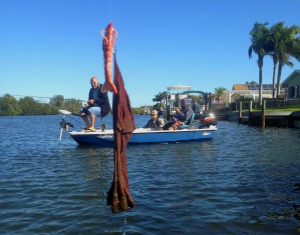](http://www.floridashorefishing.com/wp-content/uploads/2014/03/sock.png) That’s right folks, its an old dirty sock! Not quite the old tire or licence plate you always see in cartoons, but I did catch a SOCK! (You can see the look the guys in the boat are giving me… its a classic “What The???” The sock “battle” took my motivation away, and I got lazy, which somewhat paid off. About 30 minutes later I felt a familiar tap on a Gulp Alive Shrimp. I set the hook and the fight was on. Again, the fight seemed odd, but this time it was clearly a fish. I reached for my landing net, the fish was not coming in easy so I didn’t want to lose a large fish, but once I saw the fish I quickly figured out what happened. It was a 10″ trout that was foul hooked in its belly. As I was reeling the fish in, not only was I fighting the fishes efforts, but it was coming sideways causing a lot of resistance in the water. After that, I decided to call it a day… One of THOSE days! [](https://www.floridashorefishing.com/profile/dan/)##### Author: [Daniel Hagan](https://www.floridashorefishing.com/profile/dan/) Daniel Hagan has been fishing Florida’s shores since 1985 and writing about it for more than 20 years. As Managing Editor of FloridaShoreFishing.com, he shares firsthand experience covering surf and pier fishing, tackle, techniques, and Florida’s coastal species.  [Daniel Hagan](https://www.floridashorefishing.com/profile/dan) Daniel Hagan has been fishing Florida’s shores since 1985 and writing about it for more than 20 years. As Managing Editor of FloridaShoreFishing.com, he shares firsthand experience covering surf and pier fishing, tackle, techniques, and Florida’s coastal species. [](https://www.facebook.com/groups/FloridaShoreFishing "Facebook") **Categories:** Blog --- ### [Mangrove Snapper Abundant Inshore](https://www.floridashorefishing.com/mangrove-snapper-abundant-inshore) **Published:** August 13, 2013 **Author:** Daniel Hagan **Content:** Many reports have been coming in this month of shore bound anglers catching their limit of mangrove snapper. Most Mangrove Snapper are found near structures such as bridges, piers, docks and of course, mangrove shorelines. [](https://www.floridashorefishing.com/profile/dan/)##### Author: [Daniel Hagan](https://www.floridashorefishing.com/profile/dan/) Daniel Hagan has been fishing Florida’s shores since 1985 and writing about it for more than 20 years. As Managing Editor of FloridaShoreFishing.com, he shares firsthand experience covering surf and pier fishing, tackle, techniques, and Florida’s coastal species.  [Daniel Hagan](https://www.floridashorefishing.com/profile/dan) Daniel Hagan has been fishing Florida’s shores since 1985 and writing about it for more than 20 years. As Managing Editor of FloridaShoreFishing.com, he shares firsthand experience covering surf and pier fishing, tackle, techniques, and Florida’s coastal species. [](https://www.facebook.com/groups/FloridaShoreFishing "Facebook") **Categories:** News --- ### [Report - Sunglow Pier](https://www.floridashorefishing.com/report-sunglow-pier) **Published:** March 24, 2013 **Author:** Daniel Hagan **Content:** I spent the early part of the day fishing from Sunglow Pier. The wind was very strong with an approaching storm, but even still I was able to catch 6 whiting, 2 sheapshead and 1 undersized pompano. With the storm coming in early I cut my trip short, but it was productive none-the-less! [](https://www.floridashorefishing.com/profile/dan/)##### Author: [Daniel Hagan](https://www.floridashorefishing.com/profile/dan/) Daniel Hagan has been fishing Florida’s shores since 1985 and writing about it for more than 20 years. As Managing Editor of FloridaShoreFishing.com, he shares firsthand experience covering surf and pier fishing, tackle, techniques, and Florida’s coastal species.  [Daniel Hagan](https://www.floridashorefishing.com/profile/dan) Daniel Hagan has been fishing Florida’s shores since 1985 and writing about it for more than 20 years. As Managing Editor of FloridaShoreFishing.com, he shares firsthand experience covering surf and pier fishing, tackle, techniques, and Florida’s coastal species. [](https://www.facebook.com/groups/FloridaShoreFishing "Facebook") **Categories:** News --- ### [Warm Weather Continues](https://www.floridashorefishing.com/warm-weather-continues) **Published:** February 15, 2013 **Author:** Daniel Hagan **Content:** Florida continues to have a very warm winter. This weather has caused fishing patterns to be much different than they would normally be this time of year. Pompano are moving south much slower, cool water fish are staying offshore and many migrations have been delayed. What are you catching in this strange weather pattern? [](https://www.floridashorefishing.com/profile/dan/)##### Author: [Daniel Hagan](https://www.floridashorefishing.com/profile/dan/) Daniel Hagan has been fishing Florida’s shores since 1985 and writing about it for more than 20 years. As Managing Editor of FloridaShoreFishing.com, he shares firsthand experience covering surf and pier fishing, tackle, techniques, and Florida’s coastal species.  [Daniel Hagan](https://www.floridashorefishing.com/profile/dan) Daniel Hagan has been fishing Florida’s shores since 1985 and writing about it for more than 20 years. As Managing Editor of FloridaShoreFishing.com, he shares firsthand experience covering surf and pier fishing, tackle, techniques, and Florida’s coastal species. [](https://www.facebook.com/groups/FloridaShoreFishing "Facebook") **Categories:** News --- ### [Warm Water Causing Algae Bloom](https://www.floridashorefishing.com/warm-water-causing-algae-bloom) **Published:** January 8, 2013 **Author:** Daniel Hagan **Content:** Reports are coming in from around the state from fishermen and night time shrimpers alike that the waters around Florida are quite dirty. The coloring for many of the areas is being caused by an algae bloom in the tidal waters. The unseasonably warm waters, 8-10 degrees warmer than normal, are cause algae to grow much faster than it normally would this time of year. Most of this algae is a single celled type, causing the water to appear dirty! The waters should clear as soon as temperatures return to normal. [](https://www.floridashorefishing.com/profile/dan/)##### Author: [Daniel Hagan](https://www.floridashorefishing.com/profile/dan/) Daniel Hagan has been fishing Florida’s shores since 1985 and writing about it for more than 20 years. As Managing Editor of FloridaShoreFishing.com, he shares firsthand experience covering surf and pier fishing, tackle, techniques, and Florida’s coastal species.  [Daniel Hagan](https://www.floridashorefishing.com/profile/dan) Daniel Hagan has been fishing Florida’s shores since 1985 and writing about it for more than 20 years. As Managing Editor of FloridaShoreFishing.com, he shares firsthand experience covering surf and pier fishing, tackle, techniques, and Florida’s coastal species. [](https://www.facebook.com/groups/FloridaShoreFishing "Facebook") **Categories:** News --- ### [Updating Now - Sorry for the Mess](https://www.floridashorefishing.com/updating-now-sorry-for-the-mess) **Published:** January 10, 2013 **Author:** Daniel Hagan **Content:** Florida Shore Fishing is currently updating is look and navigation. We apologize for the mess, all should be fixed by the end of the night! Thank you for your patients! [](https://www.floridashorefishing.com/profile/dan/)##### Author: [Daniel Hagan](https://www.floridashorefishing.com/profile/dan/) Daniel Hagan has been fishing Florida’s shores since 1985 and writing about it for more than 20 years. As Managing Editor of FloridaShoreFishing.com, he shares firsthand experience covering surf and pier fishing, tackle, techniques, and Florida’s coastal species.  [Daniel Hagan](https://www.floridashorefishing.com/profile/dan) Daniel Hagan has been fishing Florida’s shores since 1985 and writing about it for more than 20 years. As Managing Editor of FloridaShoreFishing.com, he shares firsthand experience covering surf and pier fishing, tackle, techniques, and Florida’s coastal species. [](https://www.facebook.com/groups/FloridaShoreFishing "Facebook") **Categories:** News --- ### [Warm Winter](https://www.floridashorefishing.com/warm-winter) **Published:** January 10, 2013 **Author:** Daniel Hagan **Content:** The warm winter that we are experiencing here in Florida has thrown the fishing calendar in to a blender and spit it out. In shore waters are 6-10 degrees warmer than they normally are this time of year, causing some fish to remain offshore (such as sheepshead) and some to remain inshore (such as large redfish). I wonder what effect having 2 warm winters in a row like this will have on the breeding patterns of many fish that use weather as a cue to breed? [](https://www.floridashorefishing.com/profile/dan/)##### Author: [Daniel Hagan](https://www.floridashorefishing.com/profile/dan/) Daniel Hagan has been fishing Florida’s shores since 1985 and writing about it for more than 20 years. As Managing Editor of FloridaShoreFishing.com, he shares firsthand experience covering surf and pier fishing, tackle, techniques, and Florida’s coastal species.  [Daniel Hagan](https://www.floridashorefishing.com/profile/dan) Daniel Hagan has been fishing Florida’s shores since 1985 and writing about it for more than 20 years. As Managing Editor of FloridaShoreFishing.com, he shares firsthand experience covering surf and pier fishing, tackle, techniques, and Florida’s coastal species. [](https://www.facebook.com/groups/FloridaShoreFishing "Facebook") **Categories:** News --- ### [Whiting in the Surf](https://www.floridashorefishing.com/whiting-in-the-surf) **Published:** December 26, 2012 **Author:** Daniel Hagan **Content:** The cooler surf waters brought on by winter has increased the whiting bite all around Florida’s Shores. One of the most popular fish caught in the surf is the whiting. They are taste good, put up a decent fight (when matched against light tackle), and can be easily caught. Equipment - Any saltwater rated reel and rod combo - 10-12 pound test line - Double dropper rig with 2 #1 circle hooks - Enough weight to hold bottom **Locations** - Whiting are found just behind the breaking waves - Areas with deeper water close to the breaking waves hold more fish **Bait** - Fresh peeled shrimp - Clams - Sand fleas [](https://www.floridashorefishing.com/profile/dan/)##### Author: [Daniel Hagan](https://www.floridashorefishing.com/profile/dan/) Daniel Hagan has been fishing Florida’s shores since 1985 and writing about it for more than 20 years. As Managing Editor of FloridaShoreFishing.com, he shares firsthand experience covering surf and pier fishing, tackle, techniques, and Florida’s coastal species.  [Daniel Hagan](https://www.floridashorefishing.com/profile/dan) Daniel Hagan has been fishing Florida’s shores since 1985 and writing about it for more than 20 years. As Managing Editor of FloridaShoreFishing.com, he shares firsthand experience covering surf and pier fishing, tackle, techniques, and Florida’s coastal species. [](https://www.facebook.com/groups/FloridaShoreFishing "Facebook") **Categories:** News --- ### [High Waters Bring Big Reds Within Reach](https://www.floridashorefishing.com/high-waters-bring-big-reds-within-reach) **Published:** October 19, 2012 **Author:** Daniel Hagan **Content:** The unusually high waters along Florida’s coast line so far this fall have had one great side effect for shore bound anglers. The big redfish have started to push into the back creaks and closer to shore, where they are accessible During the fall, redfish can often times be observed chasing finger mullet around the inshore waters of Florida. This observation can be taken advantage of by “matching the hatch” Top water lures that mimic mullet work well in the early and late hours of the day. Jerk baits and other soft plastic lures that mimic mullet are great during the heat of the day. Live finger mullet work very well and cut mullet works great in dirty/stained water.. [](https://www.floridashorefishing.com/profile/dan/)##### Author: [Daniel Hagan](https://www.floridashorefishing.com/profile/dan/) Daniel Hagan has been fishing Florida’s shores since 1985 and writing about it for more than 20 years. As Managing Editor of FloridaShoreFishing.com, he shares firsthand experience covering surf and pier fishing, tackle, techniques, and Florida’s coastal species.  [Daniel Hagan](https://www.floridashorefishing.com/profile/dan) Daniel Hagan has been fishing Florida’s shores since 1985 and writing about it for more than 20 years. As Managing Editor of FloridaShoreFishing.com, he shares firsthand experience covering surf and pier fishing, tackle, techniques, and Florida’s coastal species. [](https://www.facebook.com/groups/FloridaShoreFishing "Facebook") **Categories:** News --- ### [Summer Shrimp Run is in Full Swing](https://www.floridashorefishing.com/summer-shrimp-run-is-in-full-swing) **Published:** July 5, 2012 **Author:** Daniel Hagan **Content:** Reports of full 5 gallon limits have been coming in from the summer cast net shrimp run. While these shrimp are not accessible from the shore, many are having luck trapping them from area bridges. Here is how to catch shrimp in a trap: - Acquire a shrimp trap (can be found at local bait shops) - Place the shrimp trap in a high flow area near a sea wall. Bridges work great - Relax. Fishing is a good way to pass the time - Check the traps every 2 hours That’s it. It is pretty easy, and if you are in a good spot, you can fill a 5 gallon bucket in a few hours! [](https://www.floridashorefishing.com/profile/dan/)##### Author: [Daniel Hagan](https://www.floridashorefishing.com/profile/dan/) Daniel Hagan has been fishing Florida’s shores since 1985 and writing about it for more than 20 years. As Managing Editor of FloridaShoreFishing.com, he shares firsthand experience covering surf and pier fishing, tackle, techniques, and Florida’s coastal species.  [Daniel Hagan](https://www.floridashorefishing.com/profile/dan) Daniel Hagan has been fishing Florida’s shores since 1985 and writing about it for more than 20 years. As Managing Editor of FloridaShoreFishing.com, he shares firsthand experience covering surf and pier fishing, tackle, techniques, and Florida’s coastal species. [](https://www.facebook.com/groups/FloridaShoreFishing "Facebook") **Categories:** News --- ### [Daytona Main Street Pier Now Open](https://www.floridashorefishing.com/daytona-main-street-pier-now-open) **Published:** June 9, 2012 **Author:** Daniel Hagan **Content:** The Daytona Beach Main Street Pier has reopened. In 2009 it closed for renovations and after many attempts to find a tenant the city and Joes Crab Shack came to an agreement. Now the pier is open again and fishing is free. Right now good reports of Black Drum, flounder, Sheepshead and Redfish are coming in! [](https://www.floridashorefishing.com/profile/dan/)##### Author: [Daniel Hagan](https://www.floridashorefishing.com/profile/dan/) Daniel Hagan has been fishing Florida’s shores since 1985 and writing about it for more than 20 years. As Managing Editor of FloridaShoreFishing.com, he shares firsthand experience covering surf and pier fishing, tackle, techniques, and Florida’s coastal species.  [Daniel Hagan](https://www.floridashorefishing.com/profile/dan) Daniel Hagan has been fishing Florida’s shores since 1985 and writing about it for more than 20 years. As Managing Editor of FloridaShoreFishing.com, he shares firsthand experience covering surf and pier fishing, tackle, techniques, and Florida’s coastal species. [](https://www.facebook.com/groups/FloridaShoreFishing "Facebook") **Categories:** News --- ### [Inshore Mangrove Snapper](https://www.floridashorefishing.com/inshore-mangrove-snapper) **Published:** April 18, 2012 **Author:** Daniel Hagan **Content:** The season for catching Inshore Mangrove Snapper is upon us! As the water inshore begins to warm up so does fishing for these tasty fish. While the inshore sizes are nowhere near what they can be off-shore, the inshore mangrove snapper can get up to 20”. Now get out there and catch some! [](https://www.floridashorefishing.com/profile/dan/)##### Author: [Daniel Hagan](https://www.floridashorefishing.com/profile/dan/) Daniel Hagan has been fishing Florida’s shores since 1985 and writing about it for more than 20 years. As Managing Editor of FloridaShoreFishing.com, he shares firsthand experience covering surf and pier fishing, tackle, techniques, and Florida’s coastal species.  [Daniel Hagan](https://www.floridashorefishing.com/profile/dan) Daniel Hagan has been fishing Florida’s shores since 1985 and writing about it for more than 20 years. As Managing Editor of FloridaShoreFishing.com, he shares firsthand experience covering surf and pier fishing, tackle, techniques, and Florida’s coastal species. [](https://www.facebook.com/groups/FloridaShoreFishing "Facebook") **Categories:** News --- ### [Winter Shrimp Run Coming to an End](https://www.floridashorefishing.com/winter-shrimp-coming-to-an-end) **Published:** April 1, 2012 **Author:** Daniel Hagan **Content:** The Florida Winter Shrimp Run that the east coast of Florida has become extremely popular for is coming to an end. Reports are coming in of low numbers of shrimp and the shrimp that are being caught are small. This year’s season was not as productive as last years, and some are speculating that the unseasonably warm winter has something to do with that. Now that the Winter Shrimp Run is ending it is time to prepare for the summer run. In the summer, shrimpers do not use dip nets at night, they use cast nets in the channels during the day. [](https://www.floridashorefishing.com/profile/dan/)##### Author: [Daniel Hagan](https://www.floridashorefishing.com/profile/dan/) Daniel Hagan has been fishing Florida’s shores since 1985 and writing about it for more than 20 years. As Managing Editor of FloridaShoreFishing.com, he shares firsthand experience covering surf and pier fishing, tackle, techniques, and Florida’s coastal species.  [Daniel Hagan](https://www.floridashorefishing.com/profile/dan) Daniel Hagan has been fishing Florida’s shores since 1985 and writing about it for more than 20 years. As Managing Editor of FloridaShoreFishing.com, he shares firsthand experience covering surf and pier fishing, tackle, techniques, and Florida’s coastal species. [](https://www.facebook.com/groups/FloridaShoreFishing "Facebook") **Categories:** News --- ### [Spiney Lobster Season Closed](https://www.floridashorefishing.com/spiney-lobster-season-closed) **Published:** April 1, 2012 **Author:** Daniel Hagan **Content:** Spiney Lobster season has closed in Florida as of Today (April 1st). The season will re-open in August. [](https://www.floridashorefishing.com/profile/dan/)##### Author: [Daniel Hagan](https://www.floridashorefishing.com/profile/dan/) Daniel Hagan has been fishing Florida’s shores since 1985 and writing about it for more than 20 years. As Managing Editor of FloridaShoreFishing.com, he shares firsthand experience covering surf and pier fishing, tackle, techniques, and Florida’s coastal species.  [Daniel Hagan](https://www.floridashorefishing.com/profile/dan) Daniel Hagan has been fishing Florida’s shores since 1985 and writing about it for more than 20 years. As Managing Editor of FloridaShoreFishing.com, he shares firsthand experience covering surf and pier fishing, tackle, techniques, and Florida’s coastal species. [](https://www.facebook.com/groups/FloridaShoreFishing "Facebook") **Categories:** News --- ### [New Redfish Bag Limit](https://www.floridashorefishing.com/new-redfish-bag-limit) **Published:** February 2, 2012 **Author:** Daniel Hagan **Content:** The Florida Wildlife Commission has enacted a new [Redfish](/fish-profiles/redfish) bag limit for those who catch redfish in northeast and northwest Florida. Anglers fishing above the Volusia/Flagler county line on the east and the Fred Howard Pack Causeway are now allowed to keep 2 Redfish per angler. A new statewide law allows 8 total redfish per vessel, as long as no single person violates the allowed bag limit! [](https://www.floridashorefishing.com/profile/dan/)##### Author: [Daniel Hagan](https://www.floridashorefishing.com/profile/dan/) Daniel Hagan has been fishing Florida’s shores since 1985 and writing about it for more than 20 years. As Managing Editor of FloridaShoreFishing.com, he shares firsthand experience covering surf and pier fishing, tackle, techniques, and Florida’s coastal species.  [Daniel Hagan](https://www.floridashorefishing.com/profile/dan) Daniel Hagan has been fishing Florida’s shores since 1985 and writing about it for more than 20 years. As Managing Editor of FloridaShoreFishing.com, he shares firsthand experience covering surf and pier fishing, tackle, techniques, and Florida’s coastal species. [](https://www.facebook.com/groups/FloridaShoreFishing "Facebook") **Categories:** News --- ### [Sheepshead are Running Thick](https://www.floridashorefishing.com/sheepshead-are-running-thick) **Published:** January 19, 2012 **Author:** Daniel Hagan **Excerpt:**Every year as the water temperature cool there is a migration inshore. The...
**Content:** Every year as the water temperature cool there is a migration inshore. The Sheepshead that spend most of their time off shore in deeper waters begin to move inshore for breeding and on their way in they are hungry! Start to look for Sheepshead around inlets this time of year. They will congregate around the jetties, eating the invertebrates that can be found there. If the water is too rough around the inlet, try bridges, piers, docks or any rock formations inshore. Now go get a bucket of fiddler crabs and get out there to catch Sheepshead! [](https://www.floridashorefishing.com/profile/dan/)##### Author: [Daniel Hagan](https://www.floridashorefishing.com/profile/dan/) Daniel Hagan has been fishing Florida’s shores since 1985 and writing about it for more than 20 years. As Managing Editor of FloridaShoreFishing.com, he shares firsthand experience covering surf and pier fishing, tackle, techniques, and Florida’s coastal species.  [Daniel Hagan](https://www.floridashorefishing.com/profile/dan) Daniel Hagan has been fishing Florida’s shores since 1985 and writing about it for more than 20 years. As Managing Editor of FloridaShoreFishing.com, he shares firsthand experience covering surf and pier fishing, tackle, techniques, and Florida’s coastal species. [](https://www.facebook.com/groups/FloridaShoreFishing "Facebook") **Categories:** News --- ### [Stone Crab Season is Open](https://www.floridashorefishing.com/stone-crab-season-is-open) **Published:** October 20, 2010 **Author:** Daniel Hagan **Excerpt:**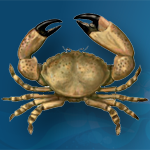
As of October 15th the stone crab season is open in Florida. It will remain open until May 15th!
**Content:** As of October 15th the stone crab season is open in Florida. It will remain open until May 15th! **Recreational Regulations:** Stone crab claws must be at least 2 3/4 inches in length to be harvested legally, and claws may not be taken from egg-bearing female stone crabs. Recreational harvesters are allowed to use up to five stone crab traps, and there is a daily bag limit of one gallon of claws per person or two gallons per vessel, whichever is less. [](https://www.floridashorefishing.com/profile/dan/)##### Author: [Daniel Hagan](https://www.floridashorefishing.com/profile/dan/) Daniel Hagan has been fishing Florida’s shores since 1985 and writing about it for more than 20 years. As Managing Editor of FloridaShoreFishing.com, he shares firsthand experience covering surf and pier fishing, tackle, techniques, and Florida’s coastal species.  [Daniel Hagan](https://www.floridashorefishing.com/profile/dan) Daniel Hagan has been fishing Florida’s shores since 1985 and writing about it for more than 20 years. As Managing Editor of FloridaShoreFishing.com, he shares firsthand experience covering surf and pier fishing, tackle, techniques, and Florida’s coastal species. [](https://www.facebook.com/groups/FloridaShoreFishing "Facebook") **Categories:** News --- ### [Banner year for Tarpon](https://www.floridashorefishing.com/banner-year-for-tarpon) **Published:** October 12, 2010 **Author:** Daniel Hagan **Excerpt:**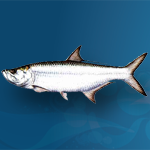
This year has been a banner year for Tarpon in Central Florida. Many anglers were able to catch their first tarpon and experienced anglers caught more than they have in recent memory.
**Content:** This year has been a banner year for [Tarpon](http://www.floridashorefishing.com/fish-profiles/tarpon) in Central Florida. Many anglers were able to catch their first tarpon and experienced anglers caught more than they have in recent memory. The tarpon where found everywhere from a few miles offshore to the inner canals of the ICW. Active tarpon where found just about everywhere that there were baitfish this year. On a recent fishing trip to New Smyrna I was able to hook into 3 tarpon and landed 2 of them. They ranged in size from 20lbs to around 100lbs. Of course the largest one got away! I have fished the New Smyrna area for many years and I can recall many summers when I didn’t even see a Tarpon, much less catch more than 10 in a year. I don’t recall ever seeing this many in the area. I found that using live pinfish was one of the most productive baits for tarpon this year. I was able to catch a few on Berkley Gulp Alive soft plastic lures. They, however, were not able to catch the larger fish. I only caught the big ones on live bait. The [mullet run](http://www.floridashorefishing.com/mullet-run-%E2%80%93-what-is-it) seemed to excite the tarpon making them a little bit easier to catch. While the mullet were running heavily tossing a large finger mullet near a tarpon would often elicit a strike. I used large circle hooks and no weight. Free lining seemed to work out very well as the tarpon tend to feed in the upper column of the water. A good cast, just beyond the fish, and retrieving into the path of the tarpon led to many of the strikes I had during the Mullet Run. I have talked to a few of my fishing buddies and we have all wondered out loud if the heavy freeze of this past winter had anything to do with the banner year for Tarpon. Did you catch any Tarpon this year? Do you think the freeze had anything to do with it? [](https://www.floridashorefishing.com/profile/dan/)##### Author: [Daniel Hagan](https://www.floridashorefishing.com/profile/dan/) Daniel Hagan has been fishing Florida’s shores since 1985 and writing about it for more than 20 years. As Managing Editor of FloridaShoreFishing.com, he shares firsthand experience covering surf and pier fishing, tackle, techniques, and Florida’s coastal species.  [Daniel Hagan](https://www.floridashorefishing.com/profile/dan) Daniel Hagan has been fishing Florida’s shores since 1985 and writing about it for more than 20 years. As Managing Editor of FloridaShoreFishing.com, he shares firsthand experience covering surf and pier fishing, tackle, techniques, and Florida’s coastal species. [](https://www.facebook.com/groups/FloridaShoreFishing "Facebook") **Categories:** News --- ### [New Fishing Holes Added](https://www.floridashorefishing.com/new-fishing-holes-added-2) **Published:** September 14, 2010 **Author:** Daniel Hagan **Excerpt:**
In an ongoing effort to expand our list of Florida Shore Fishing hole I have added two new fishing holes to our list! One in Ponce Inlet and one in Cocoa Beach!
**Content:** In an ongoing effort to expand our list of Florida Shore Fishing hole I have added two new fishing holes to our list! One in Ponce Inlet and one in Cocoa Beach! Check them out in our Fishing Holes section! We are constantly trying to expand this list, if you have any suggestions please feel free to comment bellow! [](https://www.floridashorefishing.com/profile/dan/)##### Author: [Daniel Hagan](https://www.floridashorefishing.com/profile/dan/) Daniel Hagan has been fishing Florida’s shores since 1985 and writing about it for more than 20 years. As Managing Editor of FloridaShoreFishing.com, he shares firsthand experience covering surf and pier fishing, tackle, techniques, and Florida’s coastal species.  [Daniel Hagan](https://www.floridashorefishing.com/profile/dan) Daniel Hagan has been fishing Florida’s shores since 1985 and writing about it for more than 20 years. As Managing Editor of FloridaShoreFishing.com, he shares firsthand experience covering surf and pier fishing, tackle, techniques, and Florida’s coastal species. [](https://www.facebook.com/groups/FloridaShoreFishing "Facebook") **Categories:** News --- ### [Redfish Regulation Changes Coming?](https://www.floridashorefishing.com/redfish-regulation-changes-coming) **Published:** September 13, 2010 **Author:** Daniel Hagan **Excerpt:**The FWC has proposed a change in the bag limit regulations for Redfish, but this change would only affect North Florida.
**Content:** The FWC has proposed a change in the bag limit regulations for [Redfish](http://www.floridashorefishing.com/fish-profiles/redfish), but this change would only affect North Florida. On the Atlantic Coast from Flagler County north and on the Gulf Coast from Pasco County north the bag limit may be changed to 2 fish per day per angler. This change has be proposed based on studies the FWC has done and found that large populations of slot size fish exist in northern Florida and their harvest will not negatively affect the population. What are your thoughts on the possible 2 fish bag limit? [](https://www.floridashorefishing.com/profile/dan/)##### Author: [Daniel Hagan](https://www.floridashorefishing.com/profile/dan/) Daniel Hagan has been fishing Florida’s shores since 1985 and writing about it for more than 20 years. As Managing Editor of FloridaShoreFishing.com, he shares firsthand experience covering surf and pier fishing, tackle, techniques, and Florida’s coastal species.  [Daniel Hagan](https://www.floridashorefishing.com/profile/dan) Daniel Hagan has been fishing Florida’s shores since 1985 and writing about it for more than 20 years. As Managing Editor of FloridaShoreFishing.com, he shares firsthand experience covering surf and pier fishing, tackle, techniques, and Florida’s coastal species. [](https://www.facebook.com/groups/FloridaShoreFishing "Facebook") **Categories:** News --- ### [New Fishing Holes Added](https://www.floridashorefishing.com/new-fishing-holes-added) **Published:** June 28, 2010 **Author:** Daniel Hagan **Excerpt:**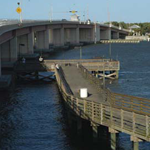
In an effort to continuously expand our database of fishing holes in Florida I have added 2 more locations! New Smyrna North Causeway Pier and Canaveral National Seashore.
**Content:** In an effort to continuously expand our database of fishing holes in Florida I have added 2 more locations! New Smyrna North Causeway Pier and Canaveral National Seashore. Visit our [Florida Shore Fishing Holes](http://www.floridashorefishing.com/fishing-holes) page to read more! I am always looking for new Florida Shore Fishing holes! If you know of some that I have not yet listed (and there are MANY) please leave a comment bellow and let me know what I am missing! [](https://www.floridashorefishing.com/profile/dan/)##### Author: [Daniel Hagan](https://www.floridashorefishing.com/profile/dan/) Daniel Hagan has been fishing Florida’s shores since 1985 and writing about it for more than 20 years. As Managing Editor of FloridaShoreFishing.com, he shares firsthand experience covering surf and pier fishing, tackle, techniques, and Florida’s coastal species.  [Daniel Hagan](https://www.floridashorefishing.com/profile/dan) Daniel Hagan has been fishing Florida’s shores since 1985 and writing about it for more than 20 years. As Managing Editor of FloridaShoreFishing.com, he shares firsthand experience covering surf and pier fishing, tackle, techniques, and Florida’s coastal species. [](https://www.facebook.com/groups/FloridaShoreFishing "Facebook") **Categories:** News --- ### [Whiting Profile Added](https://www.floridashorefishing.com/whiting-profile-added) **Published:** May 31, 2010 **Author:** Daniel Hagan **Excerpt:**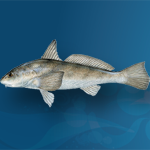
In my continuing effort to expand the Species Profile section of Florida Shore Fishing I have just posted a profile of the Whiting.
**Content:** In my continuing effort to expand the [Species Profile ](http://www.floridashorefishing.com/fish-profiles)section of Florida Shore Fishing I have just posted a profile of the [Whiting](http://www.floridashorefishing.com/fish-profiles/whiting). Here is a quick excerpt: > The Whiting is one of the most frequently caught fish from the Florida surf and is often caught in inlets, bays and harbors. The whiting is popular because of its very lightly flavored white meat. [](https://www.floridashorefishing.com/profile/dan/)##### Author: [Daniel Hagan](https://www.floridashorefishing.com/profile/dan/) Daniel Hagan has been fishing Florida’s shores since 1985 and writing about it for more than 20 years. As Managing Editor of FloridaShoreFishing.com, he shares firsthand experience covering surf and pier fishing, tackle, techniques, and Florida’s coastal species.  [Daniel Hagan](https://www.floridashorefishing.com/profile/dan) Daniel Hagan has been fishing Florida’s shores since 1985 and writing about it for more than 20 years. As Managing Editor of FloridaShoreFishing.com, he shares firsthand experience covering surf and pier fishing, tackle, techniques, and Florida’s coastal species. [](https://www.facebook.com/groups/FloridaShoreFishing "Facebook") **Categories:** News --- ### [Oil Spill Containment Setback](https://www.floridashorefishing.com/oil-spill-containment-setback) **Published:** May 10, 2010 **Author:** Daniel Hagan **Excerpt:**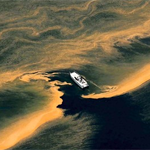
There has been a setback to the containment of the Gulf Oil Spill. The 5 story high container started to get filled with ice, preventing the oil from flowing and causing the container to become buoyant.
**Content:** There has been a setback to the containment of the Gulf Oil Spill. The 5 story high container started to get filled with ice, preventing the oil from flowing and causing the container to become buoyant. Here is the story as told by AP. [](https://www.floridashorefishing.com/profile/dan/)##### Author: [Daniel Hagan](https://www.floridashorefishing.com/profile/dan/) Daniel Hagan has been fishing Florida’s shores since 1985 and writing about it for more than 20 years. As Managing Editor of FloridaShoreFishing.com, he shares firsthand experience covering surf and pier fishing, tackle, techniques, and Florida’s coastal species.  [Daniel Hagan](https://www.floridashorefishing.com/profile/dan) Daniel Hagan has been fishing Florida’s shores since 1985 and writing about it for more than 20 years. As Managing Editor of FloridaShoreFishing.com, he shares firsthand experience covering surf and pier fishing, tackle, techniques, and Florida’s coastal species. [](https://www.facebook.com/groups/FloridaShoreFishing "Facebook") --- ### [Oil Spill Containment](https://www.floridashorefishing.com/oil-spill-containment) **Published:** May 6, 2010 **Author:** Daniel Hagan **Excerpt:**Efforts to stop the gulf oils spill from growing are underway. A 5 story containment box is being put in place as the federal government continues its closure on fishing in the area.
**Content:** *May 6, 2010 – Orlando, FL By: Daniel Eric*  As the Gulf of Mexico oil spill continues to grow efforts to stop the oil from flowing continue. Today’s efforts center on a 5 story high metal and concrete containment box that will be placed over the leak and then all oil will be pumped to a waiting tanker ship. The major concern of this first of its kind effort is the extreme depth. The leak is 1 mile under the surface of the water. The very high pressures found at these depths make it impossible to know if the containment box will work or if it will even hold up to the pressures. “What we’re undertaking is unprecedented,” said BP Chief Operating Officer Doug Suttles. “We’re landing a very large, essentially, metal building.” The operation to land the box over the leak is expected to take 2 days. It will be lowered by cranes and robotic submarines will attempt to guide it into place. If successful the tanker shrimp Enterprise will receive the oil on the surface. Enterprise can handle 5.4 million gallons. Federal officials have closed all fishing from Louisiana to the Florida Panhandle, but many recreational fishermen are also affected by the spill. Less than 2 miles off the coast in some parts, the spill has effectively put a close to all offshore fishing. [](https://www.floridashorefishing.com/profile/dan/)##### Author: [Daniel Hagan](https://www.floridashorefishing.com/profile/dan/) Daniel Hagan has been fishing Florida’s shores since 1985 and writing about it for more than 20 years. As Managing Editor of FloridaShoreFishing.com, he shares firsthand experience covering surf and pier fishing, tackle, techniques, and Florida’s coastal species.  [Daniel Hagan](https://www.floridashorefishing.com/profile/dan) Daniel Hagan has been fishing Florida’s shores since 1985 and writing about it for more than 20 years. As Managing Editor of FloridaShoreFishing.com, he shares firsthand experience covering surf and pier fishing, tackle, techniques, and Florida’s coastal species. [](https://www.facebook.com/groups/FloridaShoreFishing "Facebook") --- ### [The Effects of the Oil Spill](https://www.floridashorefishing.com/the-effects-of-the-oil-spill) **Published:** May 4, 2010 **Author:** Daniel Hagan **Excerpt:**On April 20th, Deepwater Horizon, a state-of-the-art drilling rig exploded and sank to the bottom of the Gulf of Mexico, causing a massive and on going oil spill. How will this affect Florida shore fishing?
**Content:** On April 20th, Deepwater Horizon, a state-of-the-art drilling rig exploded and sank to the bottom of the Gulf of Mexico. This event caused the well to rupture and begin to spew thousands of gallons of crude oil into the gulf a day. What impact will this have on the Florida Shore Fishing community? **Short Term** The Florida Panhandle and much of the big bend will likely feel an impact on their fishing soon. The oil slick will reach the shores and put a halt to all fishing, shore bound and off shore. The oil slick could possibly contaminate the gulf waters in this area for months if not years to come. There are some scientists that are predicting the slick to catch the loop, a current that runs south to the Florida Keys, and then catch the Gulf Stream. If this happens the entire coast of Florida could be affected the same way the Panhandle and Big Bend are. **Long Term** The only good thing that can come of this slick being so large is that it is spread out over a large area making the oil much less dense. The clean up process will be much faster because of this. However, if the slick reaches the entire coast of Florida fishing may be halted for up to a year, or more! [](https://www.floridashorefishing.com/profile/dan/)##### Author: [Daniel Hagan](https://www.floridashorefishing.com/profile/dan/) Daniel Hagan has been fishing Florida’s shores since 1985 and writing about it for more than 20 years. As Managing Editor of FloridaShoreFishing.com, he shares firsthand experience covering surf and pier fishing, tackle, techniques, and Florida’s coastal species.  [Daniel Hagan](https://www.floridashorefishing.com/profile/dan) Daniel Hagan has been fishing Florida’s shores since 1985 and writing about it for more than 20 years. As Managing Editor of FloridaShoreFishing.com, he shares firsthand experience covering surf and pier fishing, tackle, techniques, and Florida’s coastal species. [](https://www.facebook.com/groups/FloridaShoreFishing "Facebook") --- ## Pages ### [Florida Shore Fishing | Tips, Species, Bait & Fishing Spots](https://www.floridashorefishing.com/) **Published:** August 15, 2026 **Author:** Daniel Hagan **Content:** # CATCH MORE FISH FROM FLORIDA’S SHORES Beaches, piers, bridges, inlets and more. Expert tips, proven techniques and the best locations for Florida shore anglers. [ Facebook Group ](https://www.facebook.com/groups/FloridaShoreFishing/)  LOCAL KNOWLEDGE Real spots and seasonal patterns  Practical Advice Simple tips that actually work  For All Anglers Beginners to pros welcome  Updated Often Fresh content & current info ## FISH BY SPECIES [](https://www.floridashorefishing.com/fish-profiles/whiting) [WHITING](https://www.floridashorefishing.com/fish-profiles/whiting) Best baits, rigs and techniques for whiting. [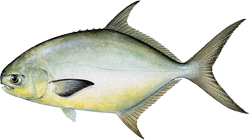](https://www.floridashorefishing.com/how-to-catch-pompano) [Pompano](https://www.floridashorefishing.com/how-to-catch-pompano) Best baits, rigs and techniques for pompano. [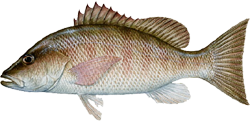](https://www.floridashorefishing.com/how-to-catch-pompano) [Mangrove Snapper](https://www.floridashorefishing.com/fishing/mangrove-snapper) Best baits, rigs and techniques [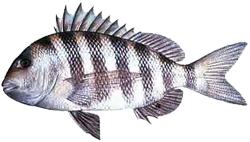](https://www.floridashorefishing.com/fishing-for-sheepshead) [Sheepshead](https://www.floridashorefishing.com/fishing-for-sheepshead) Best baits, rigs and techniques for Sheepshead. [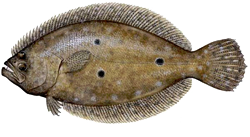](https://www.floridashorefishing.com/how-to-catch-flounder) [Flounder](https://www.floridashorefishing.com/how-to-catch-flounder) Best baits, rigs and techniques for flounder. ## POPULAR FLORIDA GUIDES [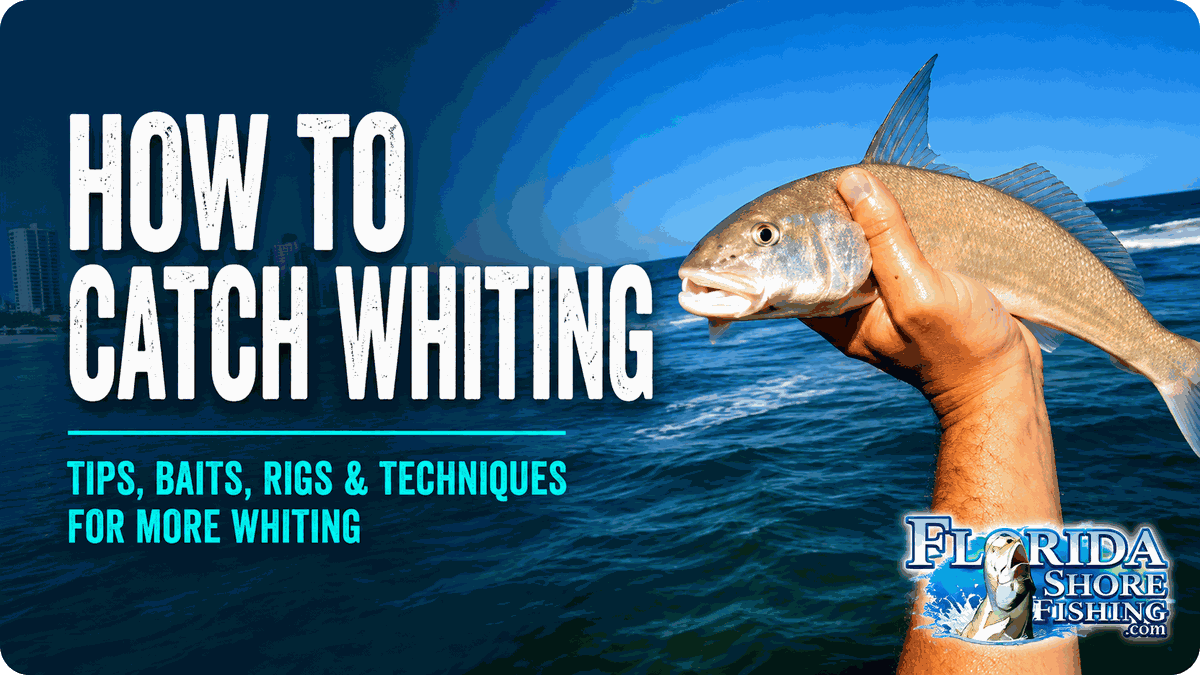](https://www.floridashorefishing.com/how-to-catch-whiting)Catch Florida whiting using the right bait, rigs, tackle, and surf-fishing techniques. [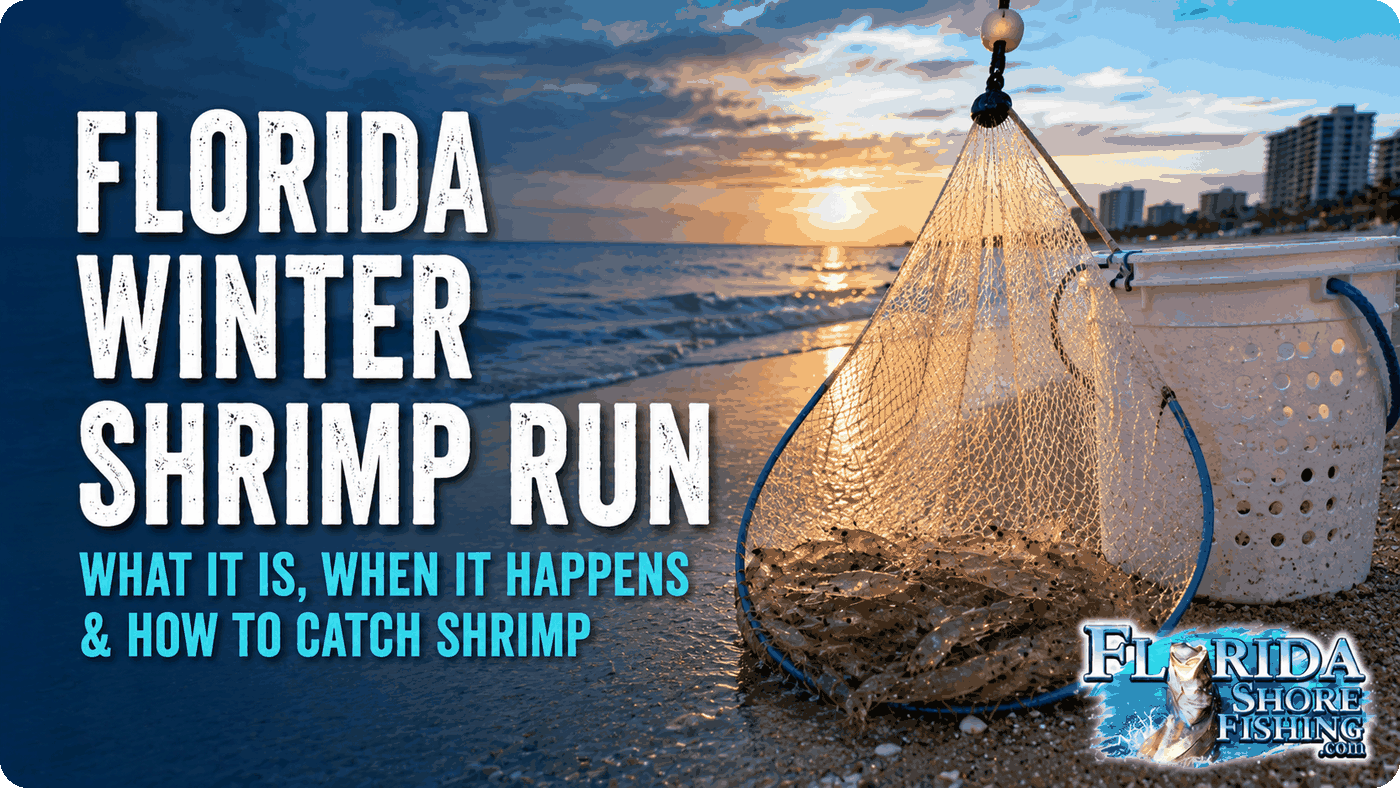](https://www.floridashorefishing.com/florida-winter-shrimp-run)Learn when, where, and how to catch shrimp during Florida’s winter run. [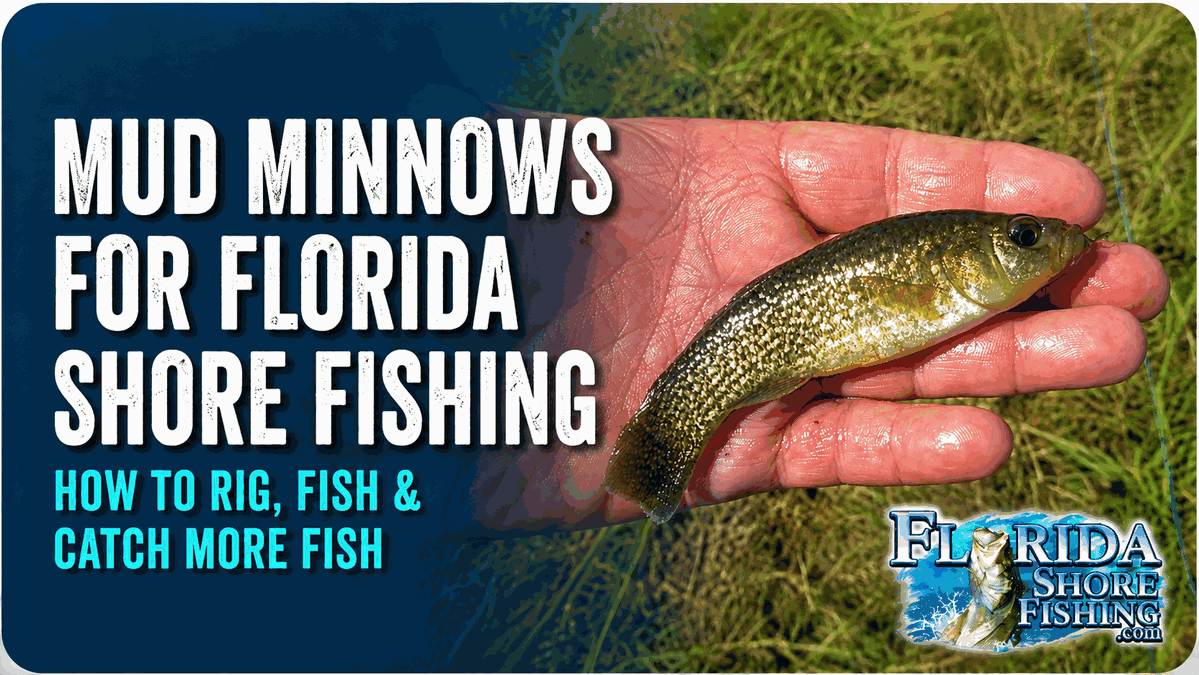](https://www.floridashorefishing.com/mud-minnows)Learn how to catch, keep, rig, and fish mud minnows for Florida gamefish. [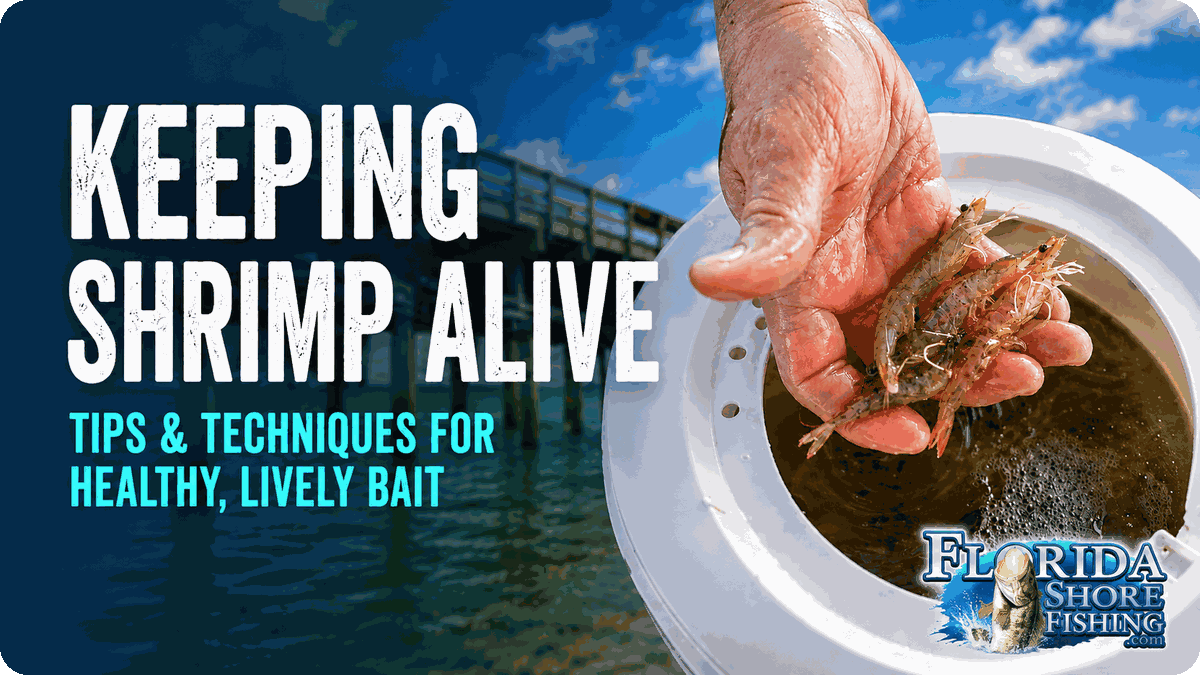](https://www.floridashorefishing.com/keeping-shrimp-alive)Learn how to keep live shrimp healthy by controlling heat, oxygen, and overcrowding. ## LATEST ARTICLES [](# "Next") [](# "Previous") [ ](https://www.floridashorefishing.com/best-baits-for-mangrove-snapper-from-shore) ### [ Best Baits for Mangrove Snapper From Shore ](https://www.floridashorefishing.com/best-baits-for-mangrove-snapper-from-shore) [ ](https://www.floridashorefishing.com/best-bait-for-sheepshead-in-florida-6-proven-choices) ### [ Best Bait for Sheepshead in Florida: 6 Proven Choices ](https://www.floridashorefishing.com/best-bait-for-sheepshead-in-florida-6-proven-choices) [ ](https://www.floridashorefishing.com/best-whiting-rig-for-florida-surf-fishing) ### [ Best Whiting Rig for Florida Surf Fishing ](https://www.floridashorefishing.com/best-whiting-rig-for-florida-surf-fishing) [ ](https://www.floridashorefishing.com/best-bait-for-whiting-in-florida) ### [ Best Bait for Whiting in Florida ](https://www.floridashorefishing.com/best-bait-for-whiting-in-florida) [ ](https://www.floridashorefishing.com/15-mistakes-florida-shore-anglers-make-and-how-to-avoid-them) ### [ 15 Mistakes Florida Shore Anglers Make (And How to Avoid Them) ](https://www.floridashorefishing.com/15-mistakes-florida-shore-anglers-make-and-how-to-avoid-them) [ ](https://www.floridashorefishing.com/how-to-catch-flounder) ### [ How to Catch Flounder in Florida: The Complete Shore Angler’s Guide ](https://www.floridashorefishing.com/how-to-catch-flounder) [ ](https://www.floridashorefishing.com/best-florida-fish-to-catch-at-night-during-the-summer) ### [ Best Florida Fish to Catch at Night During the Summer ](https://www.floridashorefishing.com/best-florida-fish-to-catch-at-night-during-the-summer) [ ](https://www.floridashorefishing.com/fishing-for-sheepshead) ### [ Fishing for Sheepshead ](https://www.floridashorefishing.com/fishing-for-sheepshead) [ ](https://www.floridashorefishing.com/top-10-florida-bridge-fishing-techniques) ### [ Ultimate Florida Bridge Fishing Guide (2026): How to Catch More Fish from Florida Bridges ](https://www.floridashorefishing.com/top-10-florida-bridge-fishing-techniques) [ ](https://www.floridashorefishing.com/snook-fishing-how-to-catch-snook) ### [ How to Catch Snook: The Complete Florida Shore Fishing Guide ](https://www.floridashorefishing.com/snook-fishing-how-to-catch-snook) ### ABOUT FLORIDA SHORE FISHING Florida Shore Fishing helps anglers catch more fish from Florida’s beaches, piers, bridges, inlets and shorelines. Whether you’re new to saltwater fishing or have spent years fishing the coast, you’ll find practical information built around fishing from shore. Our guides cover Florida fishing techniques, seasonal patterns, bait, rigs, tackle and locations, with straightforward advice you can actually use on your next trip. ### CATCH MORE FLORIDA FISH Florida’s coast offers opportunities to catch everything from snook, redfish and speckled trout to whiting, pompano, flounder, sheepshead, snapper and tarpon. Explore our species guides to learn when and where to target Florida’s most popular saltwater fish, along with the best baits, rigs and techniques for each species. You’ll also find guides for surf fishing, pier and bridge fishing, inlets, jetties and other productive shore-fishing locations. ### PLAN YOUR NEXT FISHING TRIP Successful Florida shore fishing changes with the seasons. Water temperature, tides, weather, baitfish movements and seasonal migrations can all influence what’s biting and where you should fish. Use our fishing guides and seasonal information to decide what to target, choose the right bait and tackle, and find the fishing approach that fits the conditions. From your first trip to the beach to your next night on a bridge or pier, Florida Shore Fishing is here to help you spend less time guessing and more time fishing. --- ### [Mangrove Snapper Profile: Identification, Habitat, Diet & Size](https://www.floridashorefishing.com/fish-profiles/mangrove-snapper) **Published:** July 28, 2010 **Author:** Daniel Hagan **Content:** Florida Fish Profile # Mangrove Snapper (Gray Snapper) A species reference covering identification, habitat, diet, size, behavior, similar species, and why mangrove snapper are one of Florida’s most accessible and popular inshore gamefish. *Lutjanus griseus* · Family Lutjanidae ## Mangrove Snapper at a Glance Common NameMangrove Snapper, Gray SnapperScientific Name*Lutjanus griseus*FamilyLutjanidae — SnappersHabitatMangroves, docks, bridges, seawalls, reefs, rocky areas, seagrass beds, estuaries, and other structureTypical SizeMany inshore fish are under 18 inches, although considerably larger fish occurTypical LocationClose to structure and coverDietSmall fish, shrimp, crabs, and other crustaceansTable QualityExcellent ## What Is a Mangrove Snapper? Mangrove snapper are one of Florida’s most familiar inshore snapper species. Although Florida anglers almost universally call them mangrove snapper, the species is officially known as the gray snapper. Their scientific name is *Lutjanus griseus*, and they belong to the snapper family Lutjanidae. They are found throughout Florida’s coastal waters and can live in an unusually wide variety of environments, ranging from mangrove-lined estuaries and seagrass beds to bridges, rocky shorelines, coral reefs, and offshore structure. Mangrove snapper are particularly important to shore anglers because younger and medium-sized fish regularly live within casting distance of land. Bridges, piers, seawalls, docks, mangrove shorelines, jetties, and inlets can all provide suitable habitat. ## Mangrove Snapper Identification Mangrove snapper have a relatively slender but powerful body, a pointed snout, and a large mouth equipped with sharp canine teeth. Their coloration can vary considerably depending on their age, surroundings, and water conditions. Adults are commonly gray, olive-gray, greenish, brownish, or slightly copper-colored. Small reddish-orange spots may form subtle horizontal rows along the sides. The fins are generally darker than the body and may have reddish or dark margins. ### The Canine Teeth One of the most noticeable features of a mangrove snapper is the pair of enlarged canine teeth near the front of the upper jaw. These teeth are part of the reason snapper are so effective at grabbing small fish, shrimp, and other prey around structure. **Identification Tip:** Look for a pointed snout, relatively slender snapper-shaped body, large mouth, and prominent canine teeth. Juvenile mangrove snapper often have a dark stripe running from the snout through the eye toward the upper portion of the gill cover. ## Juvenile Mangrove Snapper Young mangrove snapper can look noticeably different from larger adults. Juveniles frequently display a dark brown or black stripe extending from the snout through the eye and toward the upper edge of the gill cover. This dark eye stripe becomes less obvious as the fish matures. Young fish may also show stronger body markings and color patterns than adults. Juvenile mangrove snapper spend much of their early lives in protected inshore environments such as mangrove shorelines, tidal creeks, estuaries, seagrass beds, canals, and other shallow habitats that provide abundant food and protection from larger predators. ## Mangrove Snapper or Another Snapper? Florida is home to several snapper species, and smaller fish can occasionally be difficult to distinguish. Cubera snapper and schoolmaster snapper are two species most likely to cause confusion. SpeciesScientific NameCommon Identification FeaturesMangrove Snapper*Lutjanus griseus*Gray, olive, or brownish body; prominent canine teeth; juveniles often have a dark stripe through the eye.Cubera Snapper*Lutjanus cyanopterus*Similar overall appearance but develops into a much larger, heavier-bodied snapper with extremely large canine teeth.Schoolmaster Snapper*Lutjanus apodus*Usually distinguished by yellow fins, a yellowish coloration, and pale vertical bars along the body. **Mangrove vs. Cubera:** One of the most reliable technical differences is the vomerine tooth patch on the roof of the mouth. Mangrove snapper have an anchor-shaped tooth patch, while cubera snapper have a more triangular-shaped patch. ## How Big Do Mangrove Snapper Get? Most mangrove snapper caught from Florida’s shorelines, bridges, piers, canals, and other inshore areas are relatively modest in size. Fish under 18 inches are common in these environments, particularly where juvenile and young adult snapper use protected habitat. The species is capable of growing considerably larger. FWC notes that gray snapper are commonly found up to about 24 inches and 10 pounds, while exceptional fish can exceed the sizes normally encountered by shore anglers. Larger mangrove snapper are often associated with deeper water, reefs, wrecks, rock piles, and other offshore structure, although good-sized fish can also live around Florida bridges, inlets, docks, and deep shoreline structure. ## Mangrove Snapper Habitat Few Florida gamefish are comfortable in as many different coastal environments as mangrove snapper. They occur from shallow estuaries to offshore reefs and are strongly associated with structure throughout much of their lives. ### Common Mangrove Snapper Habitat - Mangrove shorelines and mangrove roots - Bridges and bridge pilings - Docks - Piers - Seawalls - Rock piles and jetties - Inlets - Seagrass beds - Estuaries and tidal creeks - Canals - Coral and artificial reefs - Offshore wrecks and hard structure For Florida shore anglers, their willingness to live around bridges, docks, mangroves, seawalls, and inlets makes them one of the most accessible members of the snapper family. ## Why Do Mangrove Snapper Live Around Mangroves? Mangrove shorelines provide exactly what young snapper need: food, shade, current, and a maze of submerged roots that offers protection from larger predators. Small fish, shrimp, crabs, and other prey live in and around mangrove habitat, creating a natural feeding area for juvenile snapper. The roots also create countless hiding places where smaller fish can quickly escape danger. As mangrove snapper grow, many begin using larger structure and deeper water, but the close association between this species and Florida’s mangrove habitat is strong enough that it provides the fish’s most familiar common name. ## Can Mangrove Snapper Live in Freshwater? Mangrove snapper are saltwater fish, but they have an impressive tolerance for changing salinity. Juveniles frequently move into brackish estuaries, tidal rivers, canals, and creeks where freshwater mixes with saltwater. Gray snapper have even been documented entering freshwater environments in South Florida. This ability to tolerate a wide range of salinity helps explain why mangrove snapper can be found in so many different Florida inshore environments. ## What Do Mangrove Snapper Eat? Mangrove snapper are opportunistic predators that feed on both fish and crustaceans. Their diet changes somewhat as they grow, with smaller juveniles relying heavily on small crustaceans and larger snapper consuming increasing amounts of fish. ### Common Mangrove Snapper Food Sources - Small baitfish - Shrimp - Crabs - Small crustaceans - Amphipods - Copepods - Other small marine animals Their natural diet and preference for feeding close to cover help explain why mangrove snapper are commonly found wherever baitfish and crustaceans concentrate around Florida’s coastal structure. See our full [Best Baits for Mangrove Snapper](https://www.floridashorefishing.com/best-baits-for-mangrove-snapper-from-shore) article. ## Mangrove Snapper Behavior Mangrove snapper are structure-oriented predators. During daylight hours they frequently remain close to mangrove roots, pilings, rocks, reefs, ledges, and other forms of cover. They are often found in groups, particularly when young, although larger fish can become more cautious and difficult to approach. Gray snapper are also active nocturnal feeders. Fish that spend daylight hours holding tightly around structure may move into nearby open areas, seagrass beds, or sandy bottoms to feed after dark. This combination of structure-oriented daytime behavior and increased feeding activity during low-light periods is an important part of how mangrove snapper use Florida’s inshore habitat. ## Why Mangrove Snapper Stay Close to Structure Structure provides mangrove snapper with both protection and an efficient place to feed. Bridge pilings, mangrove roots, rocks, dock pilings, reefs, and seawalls interrupt current and create small areas where shrimp, baitfish, crabs, and other prey can collect. At the same time, those structures provide immediate cover if a predator approaches. A mangrove snapper rarely needs to travel far from its shelter to find food, which helps explain why the species can become so strongly associated with individual pieces of structure. ## Mangrove Snapper Distribution Mangrove snapper have a broad western Atlantic distribution extending from the eastern United States through the Gulf of Mexico, Caribbean, and southward along the Atlantic coast of South America. Florida sits near the heart of excellent mangrove snapper habitat, and the species occurs along both the Atlantic and Gulf coasts of the state. Their ability to use estuaries, mangroves, seagrass beds, canals, bridges, reefs, and offshore structure allows mangrove snapper to occupy an unusually broad range of Florida coastal environments. ## Mangrove Snapper Are Members of the Snapper Family Mangrove snapper belong to the family Lutjanidae, a group that includes many of Florida’s most recognizable reef and coastal gamefish. Genus*Lutjanus*Species*griseus*FamilyLutjanidaeCommon Family NameSnappers ## Are Mangrove Snapper Good to Eat? Mangrove snapper are widely considered excellent table fare and are one of Florida’s most popular food fish. Their meat is generally: - White - Firm - Mild - Slightly sweet - Versatile for cooking Mangrove snapper can be grilled, baked, fried, blackened, pan-seared, or used in fish tacos and many other seafood dishes. ## Are Mangrove Snapper Good Fighting Fish? Mangrove snapper are strong, fast fish for their size, particularly when hooked close to structure. Instead of making a long open-water run, a hooked mangrove snapper often tries to return immediately to the mangrove roots, bridge pilings, rocks, dock supports, or other cover it was using before the strike. This quick burst of power makes even relatively small snapper entertaining on light tackle and helps larger fish earn a reputation as surprisingly difficult opponents in tight quarters. ## Why Mangrove Snapper Are Great for Florida Shore Anglers Mangrove snapper are particularly well suited to shore fishing because so much of their preferred habitat is accessible without a boat. Florida shore anglers can encounter them around: - Bridges - Fishing piers - Jetties - Inlets - Docks - Seawalls - Canals - Mangrove-lined shorelines Their accessibility, strong fight, excellent table quality, and willingness to live around easily reached structure make mangrove snapper one of Florida’s most rewarding inshore species. ## Why Mangrove Snapper Matter to Florida Shore Anglers Mangrove snapper occupy a unique place in Florida shore fishing. They are true members of the snapper family, yet anglers do not need an offshore boat or a trip to a distant reef to encounter them. A bridge piling, mangrove shoreline, dock, inlet, or seawall can put an angler within a few feet of fish that share many of the same instincts and characteristics as their offshore relatives. They also teach one of the most important lessons in inshore fishing: structure matters. Mangrove snapper use cover for protection, ambush opportunities, current breaks, and access to food. For Florida shore anglers, few species combine accessibility, challenge, food quality, and year-round inshore opportunity as well as the mangrove snapper. ## Want to Catch Mangrove Snapper From Shore? This fish profile focuses on the biology, identification, habitat, and behavior of mangrove snapper. For rigs, bait, tackle, locations, and fishing techniques, visit our complete shore-fishing guide. [How to Catch Mangrove Snapper in Florida](https://www.floridashorefishing.com/fishing/mangrove-snapper) --- ### [How to Catch Mangrove Snapper in Florida: Complete Inshore Fishing Guide](https://www.floridashorefishing.com/fishing/mangrove-snapper) **Published:** June 11, 2026 **Author:** Daniel Hagan **Content:** [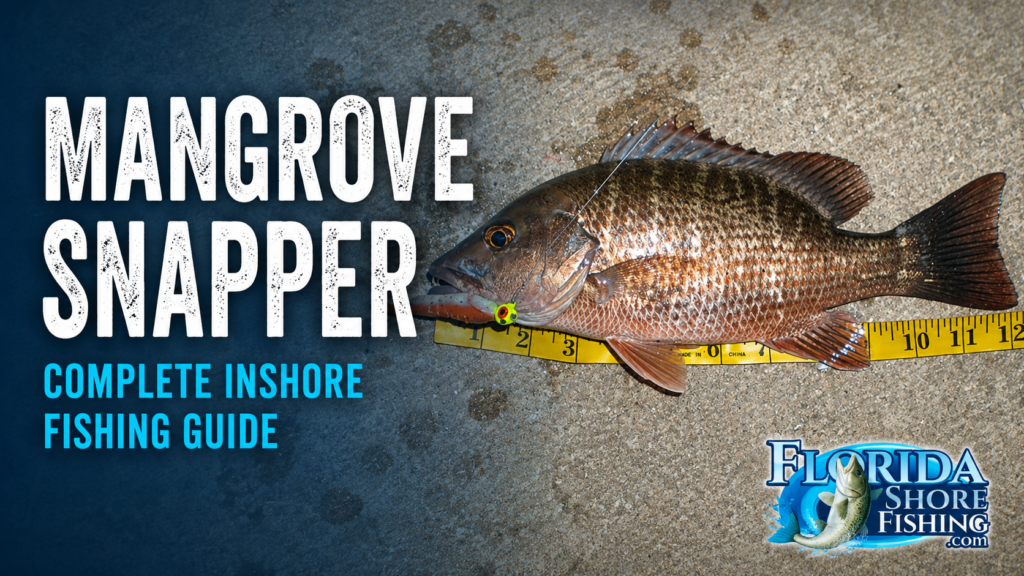](http://www.floridashorefishing.com/wp-content/uploads/2026/08/FSF-Featured-Mangrove-Snapper.png) [Mangrove snapper](https://www.floridashorefishing.com/fish-profiles/mangrove-snapper) are one of the best fish for Florida shore anglers to target. They are widely distributed, aggressive when feeding, excellent on the dinner table, and—unlike many other snapper species—you don’t need an offshore boat to catch them. You can find mangrove snapper around **bridges, piers, docks, mangrove shorelines, inlets, rock piles, oyster bars, seawalls, and other structure** throughout much of Florida. They’re also a fish that rewards anglers who pay attention to the details. Mangrove snapper have excellent eyesight, spend much of their time close to structure, and have a habit of grabbing a bait and immediately heading for cover. The difference between getting bites and actually landing fish can come down to leader size, bait presentation, current, hook size, and where you place your cast. This guide is designed to serve as the **Florida Shore Fishing mangrove snapper hub**. We’ll cover the fundamentals of finding and catching mangrove snapper from shore-accessible locations and point you toward more detailed guides on bait, rigs, tackle, locations, and techniques. ## Mangrove Snapper Quick Guide CategoryRecommendationBest LocationsBridges, piers, docks, mangroves, inlets and rock structureBest Natural BaitsMud minnows, live shrimp, small baitfish and small crabsBest Artificial BaitsSmall scented shrimp, soft plastics and small swimbaitsRodMedium-light to medium spinning rodReel2500–3000 size spinning reelMain Line10–20 lb braidLeader12–20 lb fluorocarbonPopular RigsKnocker rig and fish finder/Carolina rigKey StrategyFish close to structure and use the currentDifficultyBeginner to intermediate Your existing page already recommends light inshore tackle and fluorocarbon leaders, and that’s a good foundation to retain. Mangrove snapper are highly structure-oriented, so you need enough power to control a hooked fish without making your presentation unnecessarily heavy. ## What Is a Mangrove Snapper? [Mangrove snapper](https://www.floridashorefishing.com/fish-profiles/mangrove-snapper) (*Lutjanus griseus*) are also commonly called **gray snapper**, and some Florida anglers simply call them “mangos.” They’re one of the snapper species most accessible to Florida inshore and shore anglers. FWC describes gray snapper as coastal fish associated with structure such as **reefs, mangroves, and seagrass**, with juveniles sometimes entering freshwater. They feed primarily on crustaceans and small fish. Young mangrove snapper spend much of their lives in protected coastal habitats. As the fish grow, larger individuals increasingly utilize deeper and offshore structure. That’s good news for Florida shore fishermen. The smaller fish aren’t simply occasional visitors to inshore water. Florida’s estuaries and structure provide exactly the habitat juvenile mangrove snapper need. ## How to Identify Mangrove Snapper Mangrove snapper can vary considerably in appearance. Depending on the water, habitat, and individual fish, their coloration may range from gray and brown to bronze or olive, sometimes with reddish or orange coloration along the sides. Look for several important characteristics: - A streamlined snapper-shaped body - Two prominent canine teeth near the front of the upper jaw - Dark or reddish borders along the dorsal fins - Gray, brown, bronze, or olive coloration - Reddish-orange spotting or coloration along the sides - A dark stripe running from the snout through the eye on younger fish FWC notes that mangrove snapper can be confused with species such as cubera snapper and schoolmaster, making proper identification important. For a more detailed look at identification, biology, habitat, and similar species, visit our **Mangrove Snapper Fish Profile**. ## Where to Find Mangrove Snapper in Florida If you remember only one thing about locating mangrove snapper, remember this: **Find structure.** Mangrove snapper are strongly associated with cover. Your current Florida Shore Fishing content identifies piers, bridges, rock piles, wrecks, mangrove overhangs, and other hard structure as productive inshore habitat. For shore anglers, some of the best places include: ### Bridges Florida bridges can provide almost everything mangrove snapper want. Pilings provide cover. Barnacles and other organisms create an ecosystem around the structure. Current carries food past the fish, and deeper channels underneath many bridges give snapper access to different depths. Don’t automatically cast as far away from the bridge as possible. The fish you’re trying to catch may be directly underneath you. ### Piers Piers are another excellent option. Concentrate on pilings, cross-members and other submerged structure rather than randomly casting into open water. A pier near deeper water or strong tidal movement can be particularly productive. ### Docks Residential and public docks provide shade and cover while attracting baitfish, shrimp, crabs, and other food. Mangrove snapper may hold surprisingly tight to dock pilings. Accuracy becomes more important than casting distance. ### Mangrove Shorelines The fish didn’t get their common name by accident. Mangrove roots create complicated underwater structure that provides both food and protection for juvenile fish. FWC describes mangroves as important habitat providing food and shelter to juvenile fish, crustaceans, and shellfish. Present a bait near submerged roots without putting it so deep into the cover that every hooked fish immediately breaks you off. ### Inlets and Passes Florida’s inlets combine structure, current, bait, and deeper water. Look around rocks, bridge pilings, seawalls, jetties, channel edges, and current breaks. ### Rock Piles and Seawalls Hard structure doesn’t need to be enormous. A relatively small rock pile surrounded by otherwise featureless bottom can concentrate fish. The same applies to seawalls, particularly when deeper water or current is nearby. ### Oyster Bars and Shell Bottom Oyster-covered structure creates feeding opportunities and hiding places, but it also creates one major problem for anglers: Abrasion. Once a mangrove snapper gets your leader into oysters or barnacle-covered structure, the fight can end very quickly. ## Current Is One of the Keys to Finding Mangrove Snapper Finding structure is only half the equation. The next question should be: **What is the current doing?** Mangrove snapper are ambush predators. Structure allows them to hold in an advantageous position while moving water delivers potential food. Look for places where structure changes the current. These include: - Eddies behind pilings - Current seams - Protected pockets - Scoured holes - Channel edges - Points where current changes direction - Areas immediately adjacent to strong flow Your existing hub correctly emphasizes the relationship between current and structure. A bait presented naturally through one of these feeding areas is usually much more effective than a bait simply sitting somewhere nearby. ## Do Mangrove Snapper Stay on the Bottom? Not always. This is an important distinction. Mangrove snapper are commonly associated with the lower part of the water column, but they can suspend above the bottom and throughout the water column when actively feeding. If you’re confident fish are around but your bottom presentation isn’t producing, experiment with depth. The snapper may be several feet above your bait. This is particularly worth remembering around deep bridge pilings, docks and piers. ## Best Time to Catch Mangrove Snapper Mangrove snapper can be caught throughout the year in Florida, but location and behavior change with conditions. Inshore fishing is often especially productive during warmer periods. Your older Florida Shore Fishing guide notes that warmer water brings fish into productive inshore areas, while cooler conditions can push fish toward deeper water. Tidal movement can be even more important than the time displayed on your watch. Moving water activates feeding opportunities around structure. Instead of thinking only in terms of “morning” or “afternoon,” learn how the tide affects the location you’re fishing. A bridge that seems lifeless at slack water can become completely different once the current begins moving. ## Best Bait for Mangrove Snapper If your goal is simply to catch mangrove snapper consistently, **natural bait should be your starting point**. Mangrove snapper naturally eat crustaceans and small fish. See our full [Best Baits for Mangrove Snapper](https://www.floridashorefishing.com/best-baits-for-mangrove-snapper-from-shore) article Some of the best options are: 1. **Mud minnows** 2. **Live shrimp** 3. **Pilchards / Greenbacks** 4. **Small pinfish** 5. **Finger mullet** 6. **Fresh cut bait** 7. **Small crabs** See our full [Best Baits for Mangrove Snapper](https://www.floridashorefishing.com/best-baits-for-mangrove-snapper-from-shore) article ### Mud Minnows Mud minnows are my favorite bait when specifically targeting inshore mangrove snapper. They’re extremely hardy, stay lively on the hook, and naturally occur around many of the same bridges, docks, mangroves and other inshore structure where snapper feed. In my experience, mud minnows will often outfish live shrimp for mangrove snapper while also avoiding much of the nuisance bycatch that constantly picks at shrimp. ### Live Shrimp Live shrimp are probably the most popular bait for inshore mangrove snapper, and for good reason. They’re readily available, easy to fish and mangrove snapper readily eat them. Shrimp can be especially effective when snapper are picky or ignoring larger baitfish. The downside is that almost everything eats shrimp, so expect more bait stealing and unwanted bycatch. ### Pilchards, Pinfish and Finger Mullet Small live baitfish are another excellent option. Pilchards or greenbacks, small pinfish and finger mullet all produce mangrove snapper, particularly when they match the baitfish naturally present where you’re fishing. Keep them relatively small. You’re trying to imitate the prey inshore snapper are already feeding on, not offer the biggest bait possible. ### Fresh Cut Bait Small pieces of fresh pilchard, mullet, pinfish or other local baitfish can also catch mangrove snapper. Fresh cut bait releases scent into moving water, helping snapper locate your presentation around structure. Use small pieces rather than large chunks and leave the hook point exposed. ### Small Crabs Small crabs are an underrated Mangrove Snapper bait, particularly around bridges, rocks, oyster-covered structure and mangrove shorelines. Mud crabs and other appropriately sized crabs resemble prey snapper naturally encounter in these areas. Keep the presentation small and natural, especially when targeting typical inshore fish. ## Best Artificial Lures for Mangrove Snapper Mangrove snapper aren’t limited to natural bait. They can be caught consistently on artificial lures, particularly when they’re actively feeding. Your existing page identifies scented shrimp, curl-tail grubs, soft-plastic shrimp, jerkbaits, baitfish imitations and small paddle tails as productive choices. The key is **downsizing**. Try: - Small scented shrimp - 2- to 3-inch paddle tails - Small curl-tail grubs - Shrimp imitations - Small jerkbaits - Mud minnow imitations - Small baitfish profiles A small jig head paired with a soft plastic is one of the simplest approaches. Use only enough weight to control the lure. Cast past or slightly up-current of the structure and work the lure through the strike zone. Be ready. A snapper may hit the lure and immediately turn toward the structure. ## Best Rod and Reel for Mangrove Snapper You don’t need offshore snapper equipment to catch inshore mangrove snapper. For most Florida shore situations, a good starting setup is: **Rod:** 7-foot medium-light or medium spinning rod **Reel:** 2500–3000 spinning reel **Main line:** 10–20 lb braided line **Leader:** 12–20 lb fluorocarbon Your current hub recommends a medium-light spinning rod and 2500–3000 reel, with 10–20 pound braid and a fluorocarbon leader in roughly the 12–20 pound range. The exact setup should depend on the structure. Open water beside a pier may allow you to fish relatively light. Barnacle-covered bridge pilings are another story. You need enough power to stop the fish before it reaches something capable of cutting your leader. ## Why Fluorocarbon Leader Matters Mangrove snapper can be frustratingly leader-sensitive. Clear water can make this worse. Fluorocarbon gives you a relatively low-visibility presentation while also providing valuable abrasion resistance around rocks, pilings, oysters and docks. But don’t automatically reach for extremely heavy leader because you’re fishing structure. Heavy leader may survive abrasion better, but it can also reduce bites. Think of leader selection as a balancing act: **Use the lightest leader that gives you a realistic chance of landing the fish around the structure you’re fishing.** If you’re getting broken off repeatedly, go heavier. If you’re not getting bites in clear water, consider going lighter. ## Best Hooks for Mangrove Snapper Small hooks are usually better than oversized hooks for inshore mangrove snapper. The exact hook depends on your bait, but **1/0 to 2/0 circle hooks** are a useful starting range for many live-bait presentations. Match the hook to the bait rather than selecting it based solely on the fish. A small live shrimp shouldn’t be overwhelmed by a huge hook. Likewise, a larger baitfish may require something stronger. Keep the hook point exposed and allow the bait to move naturally. ## Best Rigs for Mangrove Snapper You don’t need an elaborate rig. Two simple setups cover a large percentage of Florida inshore situations. ### Fish Finder Rig The fish finder rig, often called a Carolina rig, is one of the most versatile. A basic version consists of: - Main line - Sliding egg sinker - Bead - Barrel swivel - 12–20 inches of fluorocarbon leader - Circle hook The sinker should be **just heavy enough to control the presentation**. Too much weight makes the rig less natural. ### Knocker Rig The knocker rig is particularly useful around structure. Instead of stopping above a swivel, the egg sinker slides down until it reaches the hook. It’s compact, simple, and excellent for getting a bait down near bridges, docks, rocks and pilings. The existing Florida Shore Fishing hub already covers both the fish finder and knocker rigs, making them natural candidates for separate supporting articles that link back to this hub. ## How to Catch Mangrove Snapper From Shore Once you’ve found productive structure, resist the temptation to simply throw your bait into the deepest water you can reach. Look at the structure and current first. Position yourself so the bait can approach the fish naturally. When possible, cast **slightly up-current** and allow the water to carry the bait toward the structure. This accomplishes two things. First, it makes your bait behave more like natural prey. Second, it allows you to cover water rather than leaving the bait motionless in one location. Pay close attention as your bait enters the area immediately around the structure. That’s often where the bite happens. ## How to Catch Mangrove Snapper From Bridges Bridges deserve special attention because they’re one of Florida’s best shore-accessible snapper habitats. Look for: - Pilings - Shadow lines - Current breaks - Deep channels - Rock around bridge bases - Eddies - Areas where bait accumulates Try dropping a bait alongside a piling or allowing it to sweep naturally toward one. You often don’t need a long cast. The challenge is what happens after the bite. A bridge snapper may have only a few feet to travel before reaching barnacles, concrete or other line-cutting structure. Keep the rod ready and apply pressure quickly. ## How to Catch Mangrove Snapper From Piers Piers work on the same basic principle. **Fish the structure, not just the water around it.** Pilings create cover and alter current. They also support marine life that attracts bait. Fish different depths until you establish a pattern. If everyone is fishing the bottom and getting no bites, try presenting a shrimp or small baitfish higher in the water column. Also pay attention to where other anglers are hooking fish. A pattern may develop around one particular set of pilings or one side of the pier because of current direction. ## How to Catch Mangrove Snapper Around Mangroves Fishing actual mangrove shorelines requires accuracy. You want your bait close enough to the roots to reach the fish without placing it somewhere you have virtually no chance of landing one. Cast parallel to mangrove edges when possible. Look for: - Points - Small openings - Deeper pockets - Creek mouths - Undercut shorelines - Current sweeping past roots A live shrimp or mud minnow presented naturally along these edges can be extremely effective. ## How Mangrove Snapper Bite The bite can vary dramatically. Sometimes you’ll get a hard strike followed by an immediate run toward cover. Other times, especially with pressured fish, you’ll feel subtle taps. Your response depends partly on the hook. With a conventional J-hook, you’ll generally need to set the hook. With a circle hook, **don’t make a hard hookset**. Begin reeling and smoothly increase pressure. The hook is designed to rotate into the corner of the fish’s mouth as the line tightens. ## Getting Mangrove Snapper Away From Structure Hooking one is only half the job. The first few seconds of the fight are often the most important. A mangrove snapper doesn’t need to make a 100-yard run to beat you. It may need only three feet. If that three feet puts your line against a barnacle-covered piling, oyster shell, rock or mangrove root, the fight may be over. Once hooked: **Keep steady pressure on the fish.** Get it moving away from structure immediately. Don’t give unnecessary slack. Use the rod to change the fish’s direction. Once you’ve pulled it into relatively open water, you can relax slightly and enjoy the fight. ## What to Do When Mangrove Snapper Won’t Bite Mangrove snapper can go from aggressive to incredibly frustrating. If you know fish are present but aren’t getting bites, change the presentation before abandoning the location. Try: - A smaller hook - Lighter fluorocarbon - A longer leader - Less sinker weight - A smaller bait - Fresh bait - A different depth - Casting farther from the structure and drifting toward it - Switching from baitfish to shrimp - Switching from natural bait to a small scented lure Your current guide makes the same important point: downsizing hooks and weight and lengthening the fluorocarbon leader can improve a presentation when fish become cautious. Don’t change everything simultaneously. Change one variable and see whether the fish respond. ## Common Mangrove Snapper Fishing Mistakes ### Fishing Too Far From Structure Mangrove snapper like cover. Casting into empty water because it’s easier isn’t necessarily going to catch more fish. ### Using Too Much Weight You need enough weight to control the bait—not enough to anchor a small boat. Let the bait move naturally whenever conditions allow. ### Using Leader That’s Too Heavy Structure tempts anglers to use extremely heavy leader. Sometimes that’s necessary. But in clear water, heavy leader can dramatically reduce bites. ### Using Oversized Baits and Hooks Inshore mangrove snapper aren’t giant fish. Match your tackle to the fish you’re actually targeting. ### Ignoring the Current A great piece of structure can fish poorly from the wrong angle. Think about where the current is carrying food. ### Giving the Fish Too Much Line Around heavy structure, hesitation can cost you. Once the fish is hooked, start controlling it. ## Mangrove Snapper Fishing Strategy for Beginners If you’re completely new to targeting mangrove snapper, don’t overcomplicate it. Start with this: Find a public pier, bridge, dock, inlet or shoreline with obvious structure. Use a medium spinning rod with braided line and fluorocarbon leader. Rig a small live shrimp or mud minnow on a simple knocker or fish finder rig. Use only enough weight to control your bait. Find moving water. Present the bait close to structure. When a fish eats, get it away from cover. That’s enough to start catching mangrove snapper. As you gain experience, you can refine leader size, bait selection, hook size, current positioning and presentation. ## Mangrove Snapper Fishing FAQ ### What is the best bait for mangrove snapper? Mud minnows and live shrimp are two excellent choices for inshore mangrove snapper. Small finger mullet, pinfish, sardines, crabs and fresh cut bait can also work well. Your existing Florida Shore Fishing content has long highlighted mud minnows as a particularly productive inshore bait. ### What is the best rig for mangrove snapper? A **knocker rig or fish finder rig** will cover most situations. Use the fish finder rig when you want more natural bait movement and the knocker rig when you need a simple, compact presentation around structure. ### What size hook should I use for mangrove snapper? For typical inshore fish, a 1/0 or 2/0 hook is a useful starting point. Adjust according to the size of your bait and the fish you’re encountering. ### Do mangrove snapper bite artificial lures? Yes. Small scented shrimp, paddle tails, grubs and other compact soft plastics can catch mangrove snapper. Keep the lure relatively small and work it close to structure. ### Can you catch mangrove snapper from shore? Absolutely. That’s one of the reasons they’re such an important species for Florida Shore Fishing. Bridges, piers, docks, inlets, mangrove shorelines, seawalls and rock structure can all put shore anglers within reach of mangrove snapper. ### Do mangrove snapper stay on the bottom? Not necessarily. Although they’re strongly associated with structure and often feed near the bottom, mangrove snapper can suspend throughout the water column. ### Is incoming or outgoing tide better for mangrove snapper? Either can produce fish. **Moving water is usually more important than simply choosing incoming versus outgoing.** Learn how each tide interacts with the particular structure you’re fishing. ### Why do I keep losing mangrove snapper? Structure is probably the answer. Snapper frequently head directly toward pilings, rocks, oysters, roots and other cover after being hooked. Use appropriate leader, keep steady pressure on the fish, and try to turn it before it reaches abrasive structure. ## Build Your Mangrove Snapper Fishing Strategy Mangrove snapper are almost perfectly suited to Florida shore fishing. They’re widespread, structure-oriented, willing to eat a variety of baits, fun on light tackle, and available from places anglers can reach without a boat. The formula isn’t complicated: **Find structure. Find moving water. Use appropriately light tackle. Present a small bait naturally. Be ready to pull the fish away from cover.** Once you understand those fundamentals, mangrove snapper become much easier to target consistently. --- ### [GD Archive Item](https://www.floridashorefishing.com/gd-archive-item) **Published:** September 14, 2026 **Author:** Daniel Hagan **Content:** ## [GD Archive Item](https://www.floridashorefishing.com/gd-archive-item "View: GD Archive Item") id is missing --- ### [GD Archive](https://www.floridashorefishing.com/gd-archive) **Published:** September 14, 2026 **Author:** Daniel Hagan **Content:** Search for Near Search {“hide_search_input”:””,”hide_near_input”:”1″,”input_size”:””,”bar_flex_wrap”:””,”bar_flex_wrap_md”:””,”bar_flex_wrap_lg”:””,”input_border”:””,”input_border_opacity”:””,”input_rounded_size”:””,”btn_bg”:””,”btn_rounded_size”:””,”btn_rounded_size_md”:””,”btn_rounded_size_lg”:””,”bg”:””,”mt”:””,”mr”:””,”mb”:”3″,”ml”:””,”pt”:””,”pr”:””,”pb”:””,”pl”:””,”border”:””,”rounded”:””,”rounded_size”:””,”rounded_size_md”:””,”rounded_size_lg”:””,”shadow”:””,”css_class”:””} No listings were found matching your selection. Something missing? Why not [add a listing?](https://www.floridashorefishing.com/add-listing/bait_shop/). --- ### [Change Password](https://www.floridashorefishing.com/change) **Published:** September 14, 2026 **Author:** Daniel Hagan --- ### [Profile](https://www.floridashorefishing.com/profile) **Published:** September 14, 2026 **Author:** Daniel Hagan **Content:** --- ### [Users](https://www.floridashorefishing.com/users) **Published:** September 14, 2026 **Author:** Daniel Hagan **Content:** Sort By###### Sort Options Grid 1 Grid 2 Grid 3 Grid 4 Grid 5 [  ](https://www.floridashorefishing.com/profile/74lovebug/ "74lovebug") [  ](https://www.floridashorefishing.com/profile/74lovebug/ "74lovebug") - #### [ 74lovebug ](https://www.floridashorefishing.com/profile/74lovebug/) [  ](https://www.floridashorefishing.com/profile/aaronfeeli/ "AaronFeeli") [  ](https://www.floridashorefishing.com/profile/aaronfeeli/ "AaronFeeli") - #### [ AaronFeeli ](https://www.floridashorefishing.com/profile/aaronfeeli/) [  ](https://www.floridashorefishing.com/profile/aaronisobe/ "AaronIsobe") [  ](https://www.floridashorefishing.com/profile/aaronisobe/ "AaronIsobe") - #### [ AaronIsobe ](https://www.floridashorefishing.com/profile/aaronisobe/) [  ](https://www.floridashorefishing.com/profile/aaronrj3/ "aaronrj3") [  ](https://www.floridashorefishing.com/profile/aaronrj3/ "aaronrj3") - #### [ aaronrj3 ](https://www.floridashorefishing.com/profile/aaronrj3/) [  ](https://www.floridashorefishing.com/profile/aaronthalk/ "AaronThalk") [  ](https://www.floridashorefishing.com/profile/aaronthalk/ "AaronThalk") - #### [ AaronThalk ](https://www.floridashorefishing.com/profile/aaronthalk/) [  ](https://www.floridashorefishing.com/profile/abasratso/ "abasratso") [  ](https://www.floridashorefishing.com/profile/abasratso/ "abasratso") - #### [ abasratso ](https://www.floridashorefishing.com/profile/abasratso/) [  ](https://www.floridashorefishing.com/profile/abauman/ "abauman") [  ](https://www.floridashorefishing.com/profile/abauman/ "abauman") - #### [ abauman ](https://www.floridashorefishing.com/profile/abauman/) [  ](https://www.floridashorefishing.com/profile/abercormnah/ "AbercormNah") [  ](https://www.floridashorefishing.com/profile/abercormnah/ "AbercormNah") - #### [ AbercormNah ](https://www.floridashorefishing.com/profile/abercormnah/) [  ](https://www.floridashorefishing.com/profile/abromappore/ "AbRomappore") [  ](https://www.floridashorefishing.com/profile/abromappore/ "AbRomappore") - #### [ AbRomappore ](https://www.floridashorefishing.com/profile/abromappore/) [  ](https://www.floridashorefishing.com/profile/abusellkes/ "Abusellkes") [  ](https://www.floridashorefishing.com/profile/abusellkes/ "Abusellkes") - #### [ Abusellkes ](https://www.floridashorefishing.com/profile/abusellkes/) ## Posts navigation - 1 - [2](https://www.floridashorefishing.com/wp-cron.php/page/2?doing_wp_cron=1789510464.9952070713043212890625) - [3](https://www.floridashorefishing.com/wp-cron.php/page/3?doing_wp_cron=1789510464.9952070713043212890625) - … - [88](https://www.floridashorefishing.com/wp-cron.php/page/88?doing_wp_cron=1789510464.9952070713043212890625) - [Older posts ](https://www.floridashorefishing.com/wp-cron.php/page/2?doing_wp_cron=1789510464.9952070713043212890625) --- ### [Users List Item](https://www.floridashorefishing.com/user-list-item) **Published:** September 14, 2026 **Author:** Daniel Hagan **Content:** --- ### [Login](https://www.floridashorefishing.com/login) **Published:** September 14, 2026 **Author:** Daniel Hagan **Content:** ### Login Username or Email \* Password \* Remember Me Login [Create account](https://www.floridashorefishing.com/register) [Forgot password?](https://www.floridashorefishing.com/forgot) --- ### [Account](https://www.floridashorefishing.com/account) **Published:** September 14, 2026 **Author:** Daniel Hagan --- ### [Forgot Password?](https://www.floridashorefishing.com/forgot) **Published:** September 14, 2026 **Author:** Daniel Hagan **Content:** ### Forgot Password? Username or Email \* Submit [Login](https://www.floridashorefishing.com/login) [Create account](https://www.floridashorefishing.com/register) --- ### [Reset Password](https://www.floridashorefishing.com/reset) **Published:** September 14, 2026 **Author:** Daniel Hagan **Content:** ### Reset Password You can not access this page directly. Follow the password reset link you received in your email. To request new password reset link [visit here](https://www.floridashorefishing.com/forgot). [Login](https://www.floridashorefishing.com/login) [Create account](https://www.floridashorefishing.com/register) $( 'body' ).on( 'keyup', 'input\[name=password\], input\[name=confirm\_password\]', function( event ) { var $form = $(this).closest('form'); if( ! $form.hasClass('uwp-login-form') ) { uwp\_checkPasswordStrength( $form.find('input\[name=password\]'), $form.find('input\[name=confirm\_password\]'), $form.find('#uwp-password-strength'), $form.find('button\[type="submit"\], input\[type="submit"\]'), \['black', 'listed', 'word'\] ); } } ); }); --- ### [Register](https://www.floridashorefishing.com/register) **Published:** September 14, 2026 **Author:** Daniel Hagan **Content:** ### Register #### Heads Up! User registration is currently not allowed. First Name \* Last Name \* Username \* Email \* Password \* Confirm Password \* Create account [Login](https://www.floridashorefishing.com/login) $( 'body' ).on( 'keyup', 'input\[name=password\], input\[name=confirm\_password\]', function( event ) { var $form = $(this).closest('form'); if( ! $form.hasClass('uwp-login-form') ) { uwp\_checkPasswordStrength( $form.find('input\[name=password\]'), $form.find('input\[name=confirm\_password\]'), $form.find('#uwp-password-strength'), $form.find('button\[type="submit"\], input\[type="submit"\]'), \['black', 'listed', 'word'\] ); } } ); }); --- ### [GD Details](https://www.floridashorefishing.com/gd-details) **Published:** September 14, 2026 **Author:** Daniel Hagan **Content:** [Previous](https://www.floridashorefishing.com/gd-archive-item) [Next](https://www.floridashorefishing.com/register) --- ### [Add Listing](https://www.floridashorefishing.com/add-listing) **Published:** September 14, 2026 **Author:** Daniel Hagan **Content:** You must login to post. [Login](https://www.floridashorefishing.com/login?redirect_to=https%3A%2F%2Fwww.floridashorefishing.com%2Fwp-cron.php%3Fdoing_wp_cron%3D1789510464.9952070713043212890625 "Login") --- ### [Search page](https://www.floridashorefishing.com/search) **Published:** September 14, 2026 **Author:** Daniel Hagan **Content:** Search for Near Search {“hide_search_input”:””,”hide_near_input”:””,”input_size”:””,”bar_flex_wrap”:””,”bar_flex_wrap_md”:””,”bar_flex_wrap_lg”:””,”input_border”:””,”input_border_opacity”:””,”input_rounded_size”:””,”btn_bg”:””,”btn_rounded_size”:””,”btn_rounded_size_md”:””,”btn_rounded_size_lg”:””,”bg”:””,”mt”:””,”mr”:””,”mb”:3,”ml”:””,”pt”:””,”pr”:””,”pb”:””,”pl”:””,”border”:””,”rounded”:””,”rounded_size”:””,”rounded_size_md”:””,”rounded_size_lg”:””,”shadow”:””,”css_class”:””} No listings were found matching your selection. Something missing? Why not [add a listing?](https://www.floridashorefishing.com/add-listing/bait_shop/). --- ### [Terms and Conditions](https://www.floridashorefishing.com/terms-and-conditions) **Published:** September 14, 2026 **Author:** Daniel Hagan **Content:** ENTER YOUR SITE TERMS AND CONDITIONS HERE --- ### [Location](https://www.floridashorefishing.com/location) **Published:** September 14, 2026 **Author:** Daniel Hagan **Content:** [ Tampa Bay & West Central Florida](https://www.floridashorefishing.com/bait_shop/category/tampa-bay-west-central-florida) 1 [ Southeast Florida](https://www.floridashorefishing.com/bait_shop/category/southeast-florida) 1 [ Central East Coast](https://www.floridashorefishing.com/bait_shop/category/central-east-coast) 1 [ Uncategorized](https://www.floridashorefishing.com/bait_shop/category/uncategorized) 0 [ Florida Panhandle](https://www.floridashorefishing.com/bait_shop/category/florida-panhandle) 0 [ Big Bend & Nature Coast](https://www.floridashorefishing.com/bait_shop/category/big-bend-nature-coast) 0 [ Southwest Florida](https://www.floridashorefishing.com/bait_shop/category/southwest-florida) 0 [ Florida Keys](https://www.floridashorefishing.com/bait_shop/category/florida-keys) 0 [ Northeast Florida](https://www.floridashorefishing.com/bait_shop/category/northeast-florida) 0 Loading… No Records Found Sorry, no records were found. Please adjust your search criteria and try again. Maps failed to load Sorry, unable to load the Maps API. - Central East Coast - Southeast Florida - Tampa Bay & West Central Florida Search for Near Search {“hide_search_input”:””,”hide_near_input”:””,”input_size”:””,”bar_flex_wrap”:””,”bar_flex_wrap_md”:””,”bar_flex_wrap_lg”:””,”input_border”:””,”input_border_opacity”:””,”input_rounded_size”:””,”btn_bg”:””,”btn_rounded_size”:””,”btn_rounded_size_md”:””,”btn_rounded_size_lg”:””,”bg”:””,”mt”:””,”mr”:””,”mb”:3,”ml”:””,”pt”:””,”pr”:””,”pb”:””,”pl”:””,”border”:””,”rounded”:””,”rounded_size”:””,”rounded_size_md”:””,”rounded_size_lg”:””,”shadow”:””,”css_class”:””} ### [Juno Bait – Juno Beach](https://www.floridashorefishing.com/bait_shop/juno-bait-juno-beach "View: Juno Bait – Juno Beach") Juno Bait Juno Beach, Florida 📍 12770 US 1 Juno Beach, Florida 33408 ☎ (561) 694-2797 🌐 Visit Website ↗ ◷ Hours Mon – Fri: 7:00 AM – 6:00 PM Sat: 6:00 AM – 6:00 PM Sun: 6:00 AM – 5:00 PM About the Shop Juno Bait is a full-service bait and tackle shop serving Juno Beach and northern Palm [Read more…](https://www.floridashorefishing.com/bait_shop/juno-bait-juno-beach#post_content) ### [Riviera Bait & Tackle – St. Pete](https://www.floridashorefishing.com/bait_shop/riviera-bait-tackle-st-pete "View: Riviera Bait & Tackle – St. Pete") Riviera Bait & Tackle Saint Petersburg, Florida 📍 1106 94th Avenue North Saint Petersburg, Florida 33702 ☎ (727) 954-6365 🌐 Visit Website ↗ ◷ Hours Mon – Sat: 6:00 AM – 7:00 PM Sun: 6:00 AM – 5:00 PM About the Shop Riviera Bait & Tackle is a locally owned bait and tackle shop serving anglers in St. Petersburg and [Read more…](https://www.floridashorefishing.com/bait_shop/riviera-bait-tackle-st-pete#post_content) ### [The Fishing Hole – Daytona Beach](https://www.floridashorefishing.com/bait_shop/the-fishing-hole-daytona-beach "View: The Fishing Hole – Daytona Beach") The Fishin’ Hole Daytona Beach, Florida 📍 450 North Beach Street Daytona Beach, Florida 32114 ☎ (386) 252-9804 🌐 Visit Website ↗ ◷ Hours Mon – Sat: 7:00 AM – 7:00 PM Sat: 6:00 AM – 7:00 PM Sun: 6:00 AM – 6:00 PM About the Shop The Fishin’ Hole has been serving Daytona Beach anglers since 1959 from its [Read more…](https://www.floridashorefishing.com/bait_shop/the-fishing-hole-daytona-beach#post_content) --- ### [Whiting (Fish) - All you need to know about whiting](https://www.floridashorefishing.com/fish-profiles/whiting) **Published:** May 31, 2010 **Author:** Daniel Hagan **Content:** # Whiting – Fish Profile 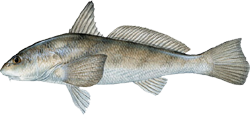 Florida Fish Profile # Whiting (Gulf Kingfish) A species reference covering identification, habitat, diet, size, behavior, similar species, and the whiting’s important place in Florida’s surf zone. *Menticirrhus littoralis* · Family Sciaenidae ## Whiting at a Glance Common Name Whiting, Gulf Kingfish Scientific Name *Menticirrhus littoralis*Family Sciaenidae — Drums and Croakers Habitat Beaches, surf zones, sandy and muddy bottoms, inlets, bays, and estuaries Maximum Length About 19 inches Typical Location On or near the bottom Diet Marine worms, crustaceans, shrimp, and other small bottom-dwelling prey Table Quality Excellent ## What Is a Florida Whiting? The fish Florida anglers commonly call a **whiting** is actually a member of the kingfish group within the drum family. This profile focuses primarily on the Gulf kingfish, one of the familiar bottom-feeding species found along Florida’s coastline. Rather than chasing prey near the surface, whiting spend much of their time searching sandy and muddy bottoms for small crustaceans, marine worms, and other food. Whiting belong to the family **Sciaenidae**, which also includes red drum, black drum, croakers, and several other familiar Florida coastal species. ## Whiting Identification Gulf kingfish have a relatively slender, elongated body with muted gray to grayish-brown coloration along the upper portion of the body and a lighter, silvery underside. Unlike some closely related kingfish species, Gulf kingfish generally lack strong dark vertical bars across their sides. ### The Chin Barbel One of the easiest features to identify is the **single short barbel beneath the lower jaw**. This small whisker-like sensory organ helps the fish locate worms, crustaceans, and other prey along the bottom. **Identification Tip:** If you’re trying to identify a Florida whiting, look underneath the lower jaw. The small chin barbel is one of the most useful features to check. ## Whiting or Kingfish? The name “whiting” can be confusing because Florida anglers commonly use it for several closely related kingfish species in the genus *Menticirrhus*. Depending on where you’re fishing, you may encounter Gulf kingfish, southern kingfish, or northern kingfish. Species Scientific Name Common Identification Features **Gulf Kingfish***Menticirrhus littoralis*Generally plain gray or silvery sides without strong dark bars. **Southern Kingfish***Menticirrhus americanus*Often shows diffuse or irregular markings along the body. **Northern Kingfish***Menticirrhus saxatilis*Usually has more noticeable dark bars and distinctive markings toward the shoulder. ## How Big Do Whiting Get? Whiting aren’t especially large fish compared with many other Florida saltwater species. Gulf kingfish can reach approximately **19 inches in length**, although many of the fish encountered by Florida surf anglers are smaller. Their relatively modest size makes whiting particularly enjoyable on light spinning tackle. ## Whiting Habitat Whiting are coastal bottom-dwelling fish strongly associated with sandy and muddy environments. Juvenile Gulf kingfish are especially common in the surf zone, which is one reason they are such a familiar catch for Florida beach anglers. ### Common Whiting Habitat - Sandy beaches - Surf zones - Beach troughs - Sandy coastal bottoms - Muddy bottoms - Inlets - Bays - Harbors - Estuarine areas ## Why Are Whiting Often So Close to Shore? The surf zone may look rough, but it provides ideal feeding conditions for whiting. Breaking waves constantly disturb the sand, exposing tiny crustaceans, worms, and other bottom-dwelling organisms. Whiting can move through the shallow troughs running parallel to the beach and feed on prey uncovered by the waves. **Florida Shore Fishing Tip:** Whiting frequently feed much closer to the beach than anglers expect. Long casts are not always necessary to reach them. ## What Do Whiting Eat? Gulf kingfish are primarily bottom feeders. Their natural diet consists largely of small animals living in or just above sandy and muddy bottoms. ### Common Whiting Food Sources - Marine worms - Small crustaceans - Shrimp - Tiny crabs - Other bottom-dwelling invertebrates - Occasionally very small fish Their natural feeding habits explain why shrimp, sand fleas, and other crustacean-based baits are so productive for anglers targeting whiting. ## Whiting Behavior Whiting are considered **demersal fish**, meaning their lives are closely associated with the bottom. Their body structure, mouth position, feeding behavior, and sensory chin barbel are all suited to searching the sand and mud for food. Whiting often travel through beach troughs and other shallow coastal depressions where waves and current continually expose potential prey. ## Whiting and the Florida Surf Zone Few Florida fish are as closely associated with surf fishing as whiting. Florida’s sandy beaches provide the combination of habitat and food that these fish prefer. Wave action moves sand, uncovers prey, and creates troughs that whiting can use as natural travel corridors. Because these troughs frequently run parallel to shore, whiting can move up and down the beach while remaining within relatively shallow water. This is why beach anglers should avoid assuming that fish are always farther offshore. ## Whiting Distribution Gulf kingfish have a broad western Atlantic distribution and are well established throughout Florida’s coastal waters. Florida’s enormous amount of sandy shoreline provides extensive habitat for the species on both the Atlantic and Gulf coasts. The abundance of suitable surf-zone habitat makes whiting one of the more accessible coastal species for Florida shore anglers. ## What Is the Whiting’s Chin Barbel For? The small projection underneath a whiting’s lower jaw is much more important than it may appear. The barbel functions as a sensory organ that helps the fish locate prey while searching along the bottom. This is particularly valuable in the surf zone, where waves can churn the sand and reduce underwater visibility. Instead of depending exclusively on sight, a whiting can use sensory information to investigate the bottom for potential food. ## Whiting Are Members of the Drum Family Whiting belong to the **Sciaenidae** family, commonly known as the drum and croaker family. Other familiar Florida members of this family include red drum and black drum. Classification Whiting Genus *Menticirrhus*Species *littoralis*Family Sciaenidae Common Family Name Drums and Croakers ## Are Whiting Good to Eat? Whiting are considered excellent table fare and have long been popular with Florida shore anglers. Their meat is generally: - White - Mild - Delicate - Light in flavor Whiting can be prepared in several ways, including frying, baking, pan-searing, and using the fillets in fish tacos. Because the flesh is relatively delicate, avoid overcooking it. ## Are Whiting Good Fighting Fish? Whiting don’t produce the long, powerful runs associated with fish such as snook, pompano, or jack crevalle. However, they can provide surprisingly enjoyable action when caught on appropriately light tackle. Many anglers encounter whiting while using heavy surf equipment designed for larger species. On lighter spinning tackle, even an average whiting can provide an entertaining fight. ## Why Whiting Are Great for Beginning Anglers Whiting are one of the best saltwater fish for someone learning to fish Florida’s coastline. They’re relatively accessible, commonly found close to shore, and don’t require highly specialized fishing equipment. Learning to recognize and understand whiting also teaches beginners important lessons about coastal fish behavior. ### Whiting Can Help Anglers Learn - How beach troughs work - How bottom-feeding fish behave - Why bait naturally collects in certain areas - How surf conditions affect fish location - How to identify similar saltwater species ## Why Whiting Matter to Florida Shore Anglers Whiting probably won’t receive the attention given to tarpon, snook, redfish, or trophy pompano. But as a Florida shore-fishing species, they’re difficult to overlook. They’re accessible, commonly found in suitable habitat, excellent to eat, and can be encountered without owning a boat. Most importantly, the habitat they prefer is directly accessible to anyone who can walk onto one of Florida’s sandy beaches. For many anglers, whiting are one of the first saltwater species they learn to catch consistently. Ready to Fish for Them? ## Learn How to Catch Whiting This page is designed as a reference for understanding the whiting itself. If you’re looking for fishing tactics, rigs, bait, tackle, and locations, continue to our dedicated Florida Shore Fishing whiting guides. [**How to Catch Whiting**](#) Our complete whiting fishing hub covering rigs, bait, tackle, locations, and techniques. [**Surf Fishing for Whiting**](#) Learn how to find and catch whiting specifically from Florida beaches. [**Catching Whiting with Fresh Shrimp**](#) Learn how to use one of the simplest and most effective whiting baits. --- ### [Welcome to FloridaShoreFishing.com](https://www.floridashorefishing.com/welcome-to-floridashorefishing-com) **Published:** July 13, 2015 **Author:** Daniel Hagan **Content:** #### RECENT ARTICLES  ### [ Best Baits for Mangrove Snapper From Shore ](https://www.floridashorefishing.com/best-baits-for-mangrove-snapper-from-shore)  ### [ Best Bait for Sheepshead in Florida: 6 Proven Choices ](https://www.floridashorefishing.com/best-bait-for-sheepshead-in-florida-6-proven-choices) 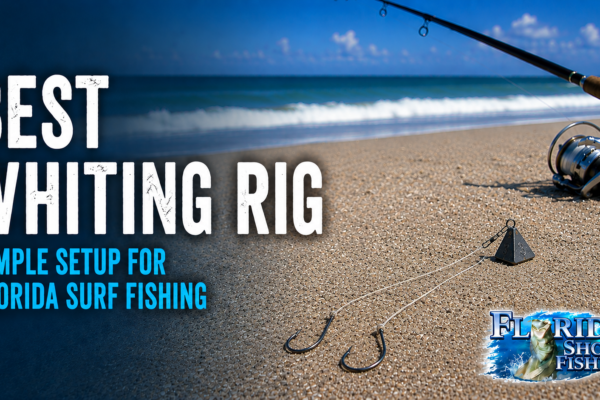 ### [ Best Whiting Rig for Florida Surf Fishing ](https://www.floridashorefishing.com/best-whiting-rig-for-florida-surf-fishing) 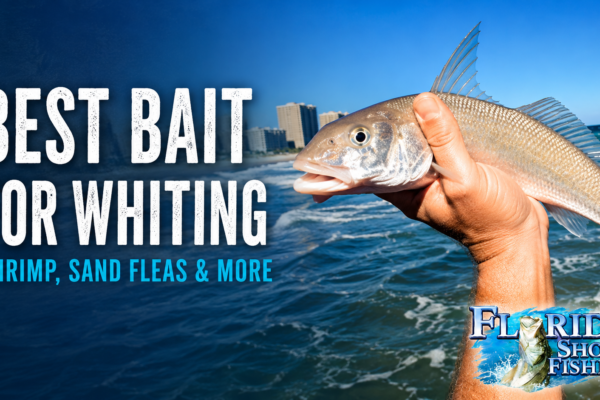 ### [ Best Bait for Whiting in Florida ](https://www.floridashorefishing.com/best-bait-for-whiting-in-florida)  ### [ 15 Mistakes Florida Shore Anglers Make (And How to Avoid The... ](https://www.floridashorefishing.com/15-mistakes-florida-shore-anglers-make-and-how-to-avoid-them) 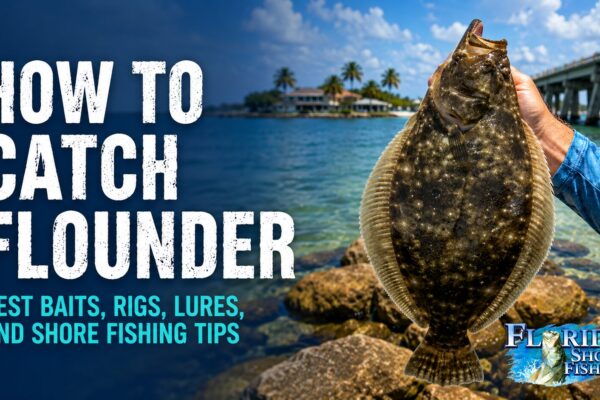 ### [ How to Catch Flounder in Florida: The Complete Shore Angler&... ](https://www.floridashorefishing.com/how-to-catch-flounder) 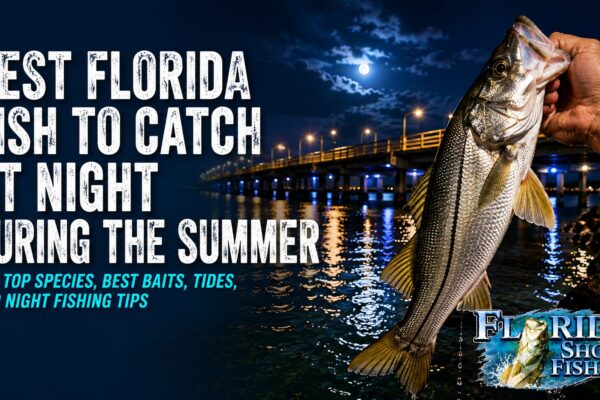 ### [ Best Florida Fish to Catch at Night During the Summer ](https://www.floridashorefishing.com/best-florida-fish-to-catch-at-night-during-the-summer) 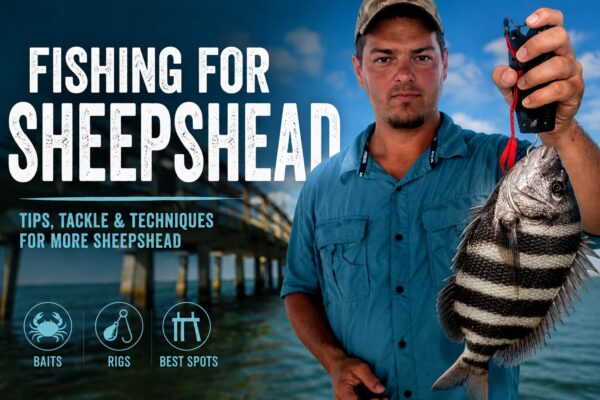 ### [ Fishing for Sheepshead ](https://www.floridashorefishing.com/fishing-for-sheepshead) 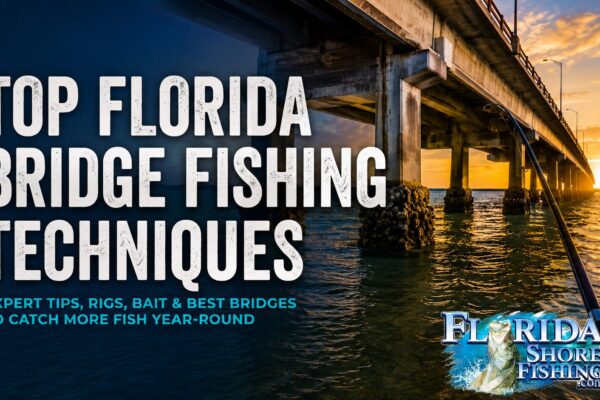 ### [ Ultimate Florida Bridge Fishing Guide (2026): How to Catch M... ](https://www.floridashorefishing.com/top-10-florida-bridge-fishing-techniques) 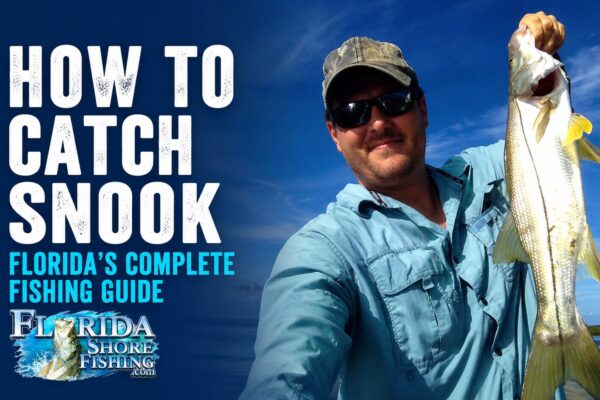 ### [ How to Catch Snook: The Complete Florida Shore Fishing Guide ](https://www.floridashorefishing.com/snook-fishing-how-to-catch-snook) Florida Shore Fishing is your complete resource for catching more fish from Florida's beaches, piers, flats, inlets, and shorelines. Whether you're a beginner learning the basics or an experienced angler looking to refine your techniques, you'll find expert guides covering fish species, bait and lures, seasonal fishing patterns, tackle recommendations, fishing locations, and proven strategies for targeting snook, redfish, speckled trout, flounder, pompano, and more. Our goal is to provide practical, easy-to-follow advice that helps anglers spend less time guessing and more time catching fish along Florida's diverse coastline. #### FEATURED ARTICLES  ### [ Best Baits for Mangrove Snapper From Shore ](https://www.floridashorefishing.com/best-baits-for-mangrove-snapper-from-shore)  ### [ Best Bait for Sheepshead in Florida: 6 Proven Choices ](https://www.floridashorefishing.com/best-bait-for-sheepshead-in-florida-6-proven-choices)  ### [ Best Whiting Rig for Florida Surf Fishing ](https://www.floridashorefishing.com/best-whiting-rig-for-florida-surf-fishing)  ### [ Best Bait for Whiting in Florida ](https://www.floridashorefishing.com/best-bait-for-whiting-in-florida)  ### [ 15 Mistakes Florida Shore Anglers Make (And How to Avoid The... ](https://www.floridashorefishing.com/15-mistakes-florida-shore-anglers-make-and-how-to-avoid-them)  ### [ How to Catch Flounder in Florida: The Complete Shore Angler&... ](https://www.floridashorefishing.com/how-to-catch-flounder)  ### [ Best Florida Fish to Catch at Night During the Summer ](https://www.floridashorefishing.com/best-florida-fish-to-catch-at-night-during-the-summer)  ### [ Fishing for Sheepshead ](https://www.floridashorefishing.com/fishing-for-sheepshead)  ### [ Ultimate Florida Bridge Fishing Guide (2026): How to Catch M... ](https://www.floridashorefishing.com/top-10-florida-bridge-fishing-techniques)  ### [ How to Catch Snook: The Complete Florida Shore Fishing Guide ](https://www.floridashorefishing.com/snook-fishing-how-to-catch-snook) Our Featured Articles highlight some of the most valuable fishing guides on Florida Shore Fishing, covering proven techniques, seasonal patterns, bait and lure strategies, fish species, and top fishing destinations across the state. These hand-picked resources are designed to help anglers of all skill levels improve their success on the water with practical advice, expert insights, and real-world fishing knowledge. If you're not sure where to start, these featured guides are the perfect place to begin your Florida shore fishing journey. #### HOW-TO ARTICLES  ### [ Best Baits for Mangrove Snapper From Shore ](https://www.floridashorefishing.com/best-baits-for-mangrove-snapper-from-shore)  ### [ Best Bait for Sheepshead in Florida: 6 Proven Choices ](https://www.floridashorefishing.com/best-bait-for-sheepshead-in-florida-6-proven-choices)  ### [ Best Whiting Rig for Florida Surf Fishing ](https://www.floridashorefishing.com/best-whiting-rig-for-florida-surf-fishing)  ### [ Best Bait for Whiting in Florida ](https://www.floridashorefishing.com/best-bait-for-whiting-in-florida)  ### [ 15 Mistakes Florida Shore Anglers Make (And How to Avoid The... ](https://www.floridashorefishing.com/15-mistakes-florida-shore-anglers-make-and-how-to-avoid-them)  ### [ How to Catch Flounder in Florida: The Complete Shore Angler&... ](https://www.floridashorefishing.com/how-to-catch-flounder)  ### [ Best Florida Fish to Catch at Night During the Summer ](https://www.floridashorefishing.com/best-florida-fish-to-catch-at-night-during-the-summer)  ### [ Fishing for Sheepshead ](https://www.floridashorefishing.com/fishing-for-sheepshead)  ### [ Ultimate Florida Bridge Fishing Guide (2026): How to Catch M... ](https://www.floridashorefishing.com/top-10-florida-bridge-fishing-techniques)  ### [ How to Catch Snook: The Complete Florida Shore Fishing Guide ](https://www.floridashorefishing.com/snook-fishing-how-to-catch-snook) The How-To category is packed with step-by-step fishing guides designed to help anglers improve their skills and catch more fish from Florida's shores. From selecting the right bait and lures to mastering casting techniques, reading water conditions, rigging tackle, and targeting specific species, these practical tutorials break down proven fishing methods into easy-to-follow instructions. Whether you're new to Florida shore fishing or looking to sharpen your expertise, these how-to articles provide the knowledge and confidence needed for more productive days on the water. ### Ad --- ### [Pompano (fish)](https://www.floridashorefishing.com/fish-profiles/pompano) **Published:** May 4, 2010 **Author:** Daniel Hagan **Content:** One of the most prized fish on the table, the Pompano is also one of the best fighters, pound for pound, that can be caught from the shore. Easily confused with Permit, the Pompano can be distinguished by its yellow belly and shorter fins. **Species Name**Trachinotus carolinus**Size**Pompano average 1 pound and are common up to 2lbs.**Food Value**One of the very best. Pompano is prized for its firm tasty meat and is top of the list for many inshore anglers.**Fight**One of the best fights pound-for-pound. Compared to other fish its size it is faster and stronger. The Pompano uses its flat sides and large forked tail to its advantage and when matched with lighter gear will real off a very nice first run.**Equipment**Pompano are very good at detecting thick line and large hooks. A spinning or bait casting rig with a 10-15lb leader works best for this fish.**Baits**Nothing out fishes live sand fleas, a pompanos favorite meal. They will, however, happily accept shrimp, clams and fiddler crabs. Pompano will take jigs and some flies.**Limits**[Check with FWC for current Pompano Regulations](https://myfwc.com/fishing/saltwater/recreational/) *Although we try to keep our database up to date, be sure to check with the FWC before harvesting any regulated fish.* **Useful Links** - [How to Catch Pompano](http://www.floridashorefishing.com/how-to-catch-pompano) - [How to Catch Pompano Infographic](http://www.floridashorefishing.com/how-to-catch-pompano-infographic) --- ### [Flounder](https://www.floridashorefishing.com/fish-profiles/flounder) **Published:** July 17, 2015 **Author:** Daniel Hagan **Content:** 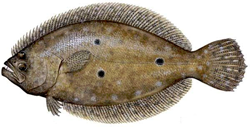The “Flounder” is famous as one of the best tasting fish in the ocean, and in Florida there are 2 species (Southern and Gulf Flounder) that are nearly identical and both are frequently referred to simply as Flounder.**Species Name**Southern Flounder (Paralichthys lethostigma) | Gulf Flounder (Paralichthys albiguttata)**Size**Southern Flounder can reach over 20lbs, Gulf Flounder rarely reach 5lbs.**Food Value**Excellent. One of the best tasting fish found in the ocean.**Fight**Flounder are not very strong and their fight does not lead to much suspense.**Equipment**A good flounder rig would comprise of a medium-light action rod, a spinning real rated for between 8-12lb line, 10lb braid with a 12lb leader of fluorocarbon.**Baits**Live finger mullet and mud minnows are the two most productive baits for flounder. Live shrimp and other small bait fish also work well.**Limits**[Check with the FWC for current Flounder Regulatoins](https://myfwc.com/fishing/saltwater/recreational/flounder/)*Although we try to keep our database up to date, be sure to check with the FWC before harvesting any regulated fish.* --- ### [Black Drum: Florida Fish Species Profile](https://www.floridashorefishing.com/fish-profiles/blackdrum) **Published:** May 4, 2010 **Author:** Daniel Hagan **Content:** 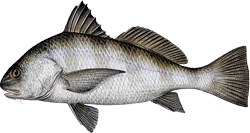The **black drum (*Pogonias cromis*)** is one of Florida’s most recognizable and interesting inshore saltwater fish. Closely related to redfish, black drum are powerful bottom feeders that can grow to impressive sizes and are commonly found in waters accessible to shore anglers. From bridges and docks to oyster beds and river mouths, black drum can be found throughout Florida’s coastal waters. They’re particularly appealing to shore fishermen because they don’t require complicated techniques to catch. Put the right natural bait near the bottom in an area holding drum, and you have an excellent chance of hooking one. ## Black Drum Identification Black drum change considerably in appearance as they mature. Young black drum typically have a gray or silvery body marked by **four to six dark vertical bars**. These markings can make juveniles look somewhat similar to sheepshead, but the bars generally become less noticeable as black drum grow older. Adult fish usually develop a darker gray, bronze, or nearly black coloration with a noticeably high, arched back. One of the easiest ways to identify a black drum is to look underneath its lower jaw. Black drum have several short **chin barbels**, which resemble small whiskers. They use these sensitive barbels to help locate food along the bottom. Sheepshead don’t have these barbels, making this an easy way to distinguish the two species. Black drum also have powerful teeth located farther back in their mouths that allow them to crush hard-shelled prey such as oysters and other shellfish. ## How Big Do Black Drum Get? Black drum are the largest members of the drum family, and they can grow much larger than many anglers realize. According to the Florida Fish and Wildlife Conservation Commission (FWC), black drum can reach **67 inches in length**. Florida’s state-record black drum weighed an impressive **96 pounds** and was caught near Fernandina Beach. The fish commonly encountered by Florida shore anglers are considerably smaller, but hooking a large black drum from a bridge, pier, or shoreline can result in a serious fight. Black drum can also be surprisingly long-lived. FWC reports that they may live **35 years or longer**. ## Where Do Black Drum Live? Black drum are primarily bottom-dwelling fish associated with Florida’s inshore and estuarine environments, although adults can also occur offshore. Some of the best places to find them include: - Bridges and bridge pilings - Docks and piers - Oyster beds - River mouths - Bays - Lagoons - Channels - Inlets - Estuaries Juvenile black drum are particularly associated with estuaries. For Florida shore fishermen, bridges and docks can be excellent places to start. Structure often holds the shellfish and crustaceans black drum naturally eat, while tidal current carries additional food through the area. ## What Do Black Drum Eat? Black drum are primarily bottom feeders with a diet that makes them perfectly suited to Florida’s estuaries. Their natural prey includes: - Oysters - Mussels - Crabs - Shrimp - Small fish - Other bottom-dwelling invertebrates Their powerful crushing teeth allow them to break apart shellfish that many other fish can’t easily consume. You’ll often find black drum feeding around oyster beds, pilings, rocks, and other areas where crustaceans and shellfish are plentiful. ## Best Baits for Black Drum Because black drum rely heavily on crustaceans and shellfish, natural bait is usually the easiest way to target them. Excellent black drum baits include **shrimp, blue crabs, sand fleas, and cut bait**. FWC specifically recommends keeping the bait close to the bottom because that’s where drum normally feed. Fresh or live shrimp is an especially convenient option for shore anglers because it’s readily available at bait shops throughout Florida. Crab can be an outstanding choice when specifically targeting larger drum. Whatever bait you choose, presentation is important. You generally want the bait sitting naturally on or very close to the bottom rather than floating several feet above the fish. ## Black Drum Fishing Tackle You don’t necessarily need extremely heavy equipment to catch black drum. The ideal setup depends on the size of the fish, current, and amount of nearby structure. FWC notes that spinning or baitcasting equipment using **15- to 30-pound-test line** is suitable for most situations. From shore, a medium-heavy spinning rod paired with braided main line and a fluorocarbon leader provides a versatile setup. Around bridges, oyster beds, rocks, and pilings, heavier leader material can provide valuable abrasion resistance. A simple bottom rig is often all that’s required. Use enough weight to keep your bait near the bottom without unnecessarily overpowering the presentation. ## Black Drum Behavior Black drum belong to the drum family, a group of fish famous for their ability to produce sound. They can create distinctive drumming noises using specialized muscles associated with their swim bladder. An angler handling a freshly caught drum may sometimes actually hear or feel these vibrations. Black drum are also capable of forming schools, and discovering one fish can therefore be a good reason to continue fishing the same area. Their spawning period occurs primarily during **winter and early spring in nearshore waters**. ## Are Black Drum Good to Eat? Smaller legal black drum can provide good table fare when properly handled and prepared. Many anglers prefer smaller fish because their meat generally has a better texture than that of very large, older drum. Large black drum are impressive sport fish, and releasing oversized fish is often the better option. If you’re keeping a legal black drum, place it on ice quickly and clean it properly to maintain the quality of the meat. ## Black Drum vs. Sheepshead Juvenile black drum are sometimes confused with sheepshead because both can display prominent vertical black bars. Fortunately, there’s an easy way to tell them apart. Look at the mouth and chin. **Black drum have barbels underneath the lower jaw. Sheepshead do not.** Sheepshead also possess very noticeable incisor-like teeth, while black drum lack those prominent front teeth. As black drum mature, identification usually becomes much easier because their juvenile vertical bars fade and their bodies become substantially larger and darker. ## Florida Black Drum Regulations [Check with FWC for current regulations](https://myfwc.com/fishing/saltwater/recreational/black-drum/) ## Black Drum Quick Facts **Scientific Name:** *Pogonias cromis* **Family:** Sciaenidae (drum family) **Habitat:** Bays, estuaries, lagoons, river mouths, oyster beds, docks, bridges and nearshore waters **Diet:** Oysters, mussels, crabs, shrimp, fish and other invertebrates **Maximum Length:** Up to 67 inches **Florida State Record:** 96 pounds **Lifespan:** 35 years or more **Best Shore Baits:** Shrimp, crab, sand fleas and cut bait Black drum may not get quite as much attention as their redfish cousins, but they’re an excellent species for Florida shore anglers. They’re widespread, grow exceptionally large, fight hard, and can be caught from many places that don’t require access to a boat. For anglers fishing Florida’s bridges, docks, inlets and estuaries, the black drum is definitely a species worth getting to know. --- ### [Bait and Lures](https://www.floridashorefishing.com/bait-and-lures) **Published:** June 14, 2026 **Author:** Daniel Hagan **Content:** #### All Bait and Lures Articles  ### [ Best Baits for Mangrove Snapper From Shore ](https://www.floridashorefishing.com/best-baits-for-mangrove-snapper-from-shore)  ### [ Best Bait for Sheepshead in Florida: 6 Proven Choices ](https://www.floridashorefishing.com/best-bait-for-sheepshead-in-florida-6-proven-choices)  ### [ Best Bait for Whiting in Florida ](https://www.floridashorefishing.com/best-bait-for-whiting-in-florida)  ### [ How to Keep Bait Fish Alive – A Quick Guide ](https://www.floridashorefishing.com/how-to-keep-bait-fish-alive) 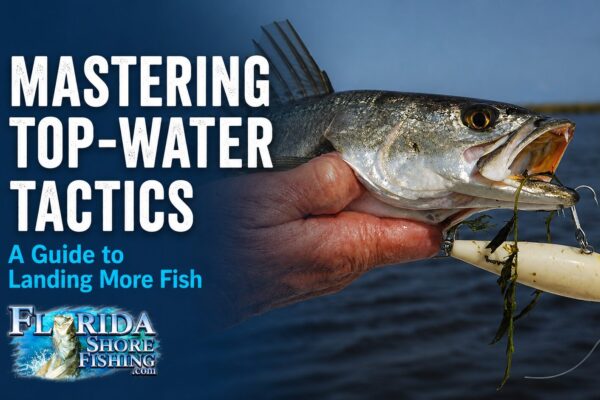 ### [ Mastering Top Water Tactics: A Guide to Landing More Fish ](https://www.floridashorefishing.com/mastering-top-water-tactics-a-guide-to-landing-more-fish)  ### [ Keeping Shrimp Alive ](https://www.floridashorefishing.com/keeping-shrimp-alive) Success in Florida shore fishing often comes down to choosing the right bait or lure for the conditions and target species. This collection of bait and lure articles covers everything from fishing with live and frozen shrimp to mastering paddle tail soft plastics, topwater presentations, and keeping baitfish alive longer. Whether you're targeting speckled trout, redfish, snook, or other inshore species, these guides provide proven techniques, tackle recommendations, and practical tips to help you catch more fish from Florida's beaches, piers, flats, and shorelines. #### All Bait Articles  ### [ Best Baits for Mangrove Snapper From Shore ](https://www.floridashorefishing.com/best-baits-for-mangrove-snapper-from-shore)  ### [ Best Bait for Sheepshead in Florida: 6 Proven Choices ](https://www.floridashorefishing.com/best-bait-for-sheepshead-in-florida-6-proven-choices)  ### [ Best Bait for Whiting in Florida ](https://www.floridashorefishing.com/best-bait-for-whiting-in-florida)  ### [ How to Keep Bait Fish Alive – A Quick Guide ](https://www.floridashorefishing.com/how-to-keep-bait-fish-alive)  ### [ Keeping Shrimp Alive ](https://www.floridashorefishing.com/keeping-shrimp-alive) 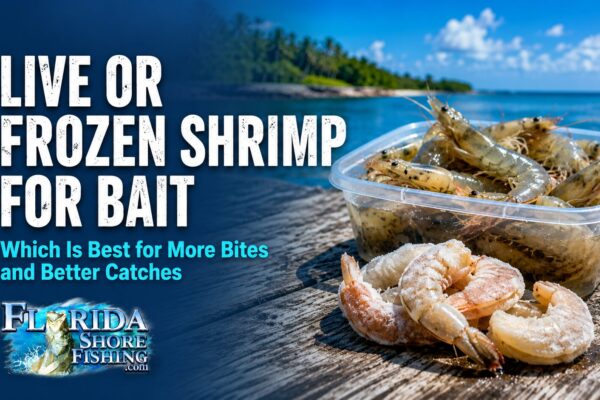 ### [ Live or Frozen Shrimp for Bait ](https://www.floridashorefishing.com/live-or-frozen-shrimp-for-bait) Live bait remains one of the most effective ways to catch fish from Florida's shores, offering a natural presentation that attracts everything from snook and redfish to speckled trout and flounder. In this collection of live bait fishing articles, you'll learn how to select, rig, store, and fish popular baits such as shrimp, baitfish, and other natural offerings. Whether you're fishing beaches, piers, flats, or inshore waters, these expert tips and proven techniques will help you keep bait alive longer, trigger more strikes, and land more fish. #### All Bait Lure Articles  ### [ Mastering Top Water Tactics: A Guide to Landing More Fish ](https://www.floridashorefishing.com/mastering-top-water-tactics-a-guide-to-landing-more-fish) 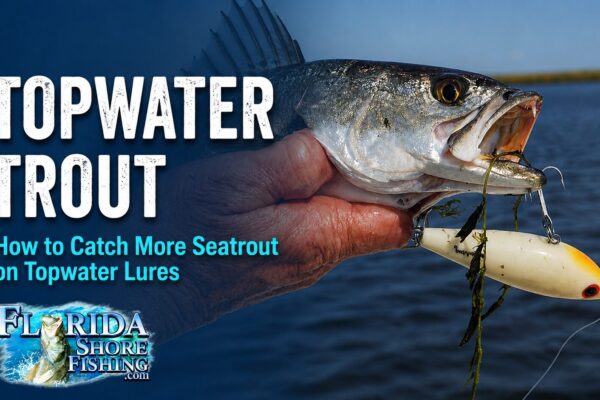 ### [ Topwater Trout ](https://www.floridashorefishing.com/topwater-trout) Artificial lures are a versatile and effective way to target Florida's most popular inshore species while covering more water and actively searching for fish. This collection of lure fishing articles explores proven techniques for fishing paddle tails, topwater plugs, jigs, spoons, and other artificial baits from beaches, piers, flats, and shorelines. Learn how to match lures to conditions, improve your retrieval techniques, and trigger more strikes from snook, redfish, speckled trout, flounder, and other game fish. Whether you're new to artificial lures or looking to refine your approach, these guides will help you fish smarter and catch more fish. --- ### [Mike Savedow Footer](https://www.floridashorefishing.com/mike-savedow-footer) **Published:** April 30, 2014 **Author:** Daniel Hagan **Content:** *This Regional Report has been brought to you by:*### Captain Mike Savedow – Edgewater River Guide, Inc. Since 2003 Phone: 386-689-3781 Email: EdgewaterRiverGuide@cfl.rr.com --- ### [contacts](https://www.floridashorefishing.com/contacts) **Published:** December 14, 2011 **Author:** Daniel Hagan **Content:** **Contact Us** Your Name (required) Your Email (required) Subject Your Message SPAM STOPPER Which is greater 2 or 8? Δ --- ### [Categories](https://www.floridashorefishing.com/categories) **Published:** March 20, 2019 **Author:** Daniel Hagan **Content:** #### How To 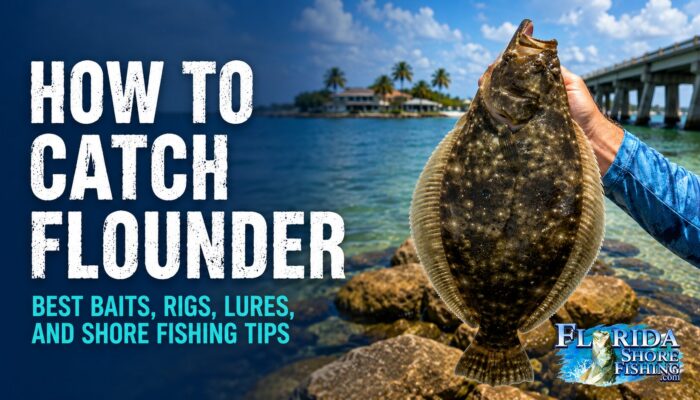 [Featured](https://www.floridashorefishing.com/category/featured)[Fishing Articles](https://www.floridashorefishing.com/category/fishing-articles)[How To](https://www.floridashorefishing.com/category/how-to) August 6, 20260 ### [ How to Catch Flounder in Florida: The Complete Shore Angler’s Guide ](https://www.floridashorefishing.com/how-to-catch-flounder) 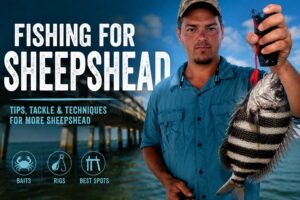 July 16, 20260 ### [ Fishing for Sheepshead ](https://www.floridashorefishing.com/fishing-for-sheepshead)  July 14, 20260 ### [ Ultimate Florida Bridge Fishing Guide (2026): How to Catch More Fish from Florida Bridges ](https://www.floridashorefishing.com/top-10-florida-bridge-fishing-techniques)  June 18, 20260 ### [ How to Catch Snook: The Complete Florida Shore Fishing Guide ](https://www.floridashorefishing.com/snook-fishing-how-to-catch-snook)  June 15, 20260 ### [ How to Read a Florida Beach Like a Fish: Finding Troughs, Cuts, and Sandbars ](https://www.floridashorefishing.com/how-to-read-a-florida-beach-like-a-fish-finding-troughs-cuts-and-sandbars) #### Recent 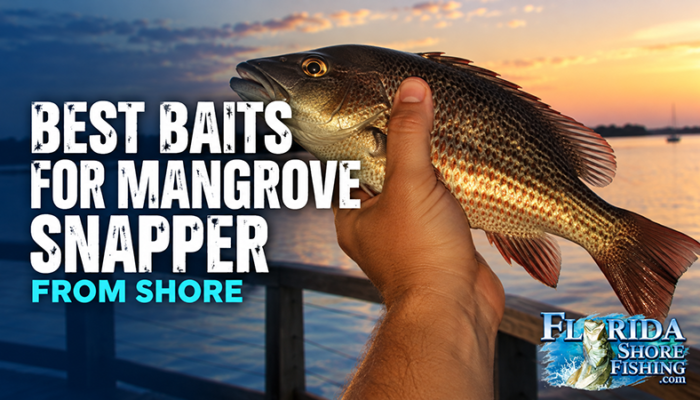 [Bait](https://www.floridashorefishing.com/category/bait/bait-bait)[Bait and Lures](https://www.floridashorefishing.com/category/bait)[Fishing Articles](https://www.floridashorefishing.com/category/fishing-articles) September 15, 20260 ### [ Best Baits for Mangrove Snapper From Shore ](https://www.floridashorefishing.com/best-baits-for-mangrove-snapper-from-shore)  September 10, 20260 ### [ Best Bait for Sheepshead in Florida: 6 Proven Choices ](https://www.floridashorefishing.com/best-bait-for-sheepshead-in-florida-6-proven-choices)  August 17, 20260 ### [ Best Whiting Rig for Florida Surf Fishing ](https://www.floridashorefishing.com/best-whiting-rig-for-florida-surf-fishing)  August 13, 20260 ### [ Best Bait for Whiting in Florida ](https://www.floridashorefishing.com/best-bait-for-whiting-in-florida)  August 11, 20260 ### [ 15 Mistakes Florida Shore Anglers Make (And How to Avoid Them) ](https://www.floridashorefishing.com/15-mistakes-florida-shore-anglers-make-and-how-to-avoid-them) #### Blog ![]() [Blog](https://www.floridashorefishing.com/category/blog) July 19, 20160 ### [ Editors Blog: July 2016 ](https://www.floridashorefishing.com/editors-blog-july-2016) ![]() January 5, 20160 ### [ Editors Blog: Welcome to 2016 ](https://www.floridashorefishing.com/editors-blog-welcome-to-2016) ![]() June 26, 20150 ### [ Editors Blog: 10/26/2015 ](https://www.floridashorefishing.com/editors-blog-10262015) ![]() May 20, 20150 ### [ Wanted: Bait and Tackle Listings ](https://www.floridashorefishing.com/wanted-bait-and-tackle-listings) ![]() March 29, 20150 ### [ Live Bait vs. Lure Fishing ](https://www.floridashorefishing.com/live-bait-vs-lure-fishing) --- ### [Dock and Pier Fishing](https://www.floridashorefishing.com/dock-and-pier-fishing) **Published:** January 16, 2016 **Author:** Daniel Hagan **Content:** [  ](http://www.floridashorefishing.com/wp-content/uploads/2011/12/112811-red-flounder.jpg) [ 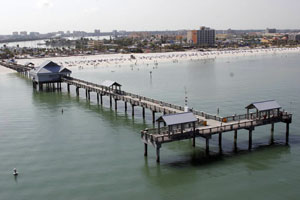 ](http://www.floridashorefishing.com/wp-content/uploads/2010/09/pier60.png) [  ](http://www.floridashorefishing.com/wp-content/uploads/2010/05/carl-night.png) **Featured Dock and Pier Fishing Articles** - [Top 10 Pier Fishing Tips](http://www.floridashorefishing.com/top-10-pier-fishing-tips) - Some of the best fishing to be found along Florida’s coasts is found fishing from a pier. Florida offers a wide range of public and private piers all along its shores... - [Cool Water Pier Fishing](http://www.floridashorefishing.com/cool-water-pier-fishing) - When the water starts to cool off here in Florida one of the most popular spots to fish is from piers. They offer protection from the cold water and the structure attracts fish... - [Fish UNDER the Pier](http://www.floridashorefishing.com/pier-fishing-fish-under-the-pier) - The Florida Coast and its Inter Coastal Waterway are littered with great quality fishing piers. From private piers, to free public piers, there are all types and sizes... **Other Dock and Pier Fishing Articles** - more to come soon... --- ### [How To Catch](https://www.floridashorefishing.com/how-to-catch) **Published:** January 16, 2016 **Author:** Daniel Hagan **Content:** **Featured How-To-Catch Articles** - **[How to Catch Whiting](http://www.floridashorefishing.com/how-to-catch-whiting)** - Along the coasts of Florida lurks one of the most popular fish for shore bound anglers to catch. It is not the biggest fish in the ocean, but it is highly regarded for flavor as well as its year-round presence… - **[How to Catch Mangrove Snapper](http://www.floridashorefishing.com/fishing/mangrove-snapper)** - One of the most popular, and tasty fish that can be caught with out a boat is the Mangrove Snapper. Inshore they average from 10-14 inches and weigh around a pound… - **[How to Catch Sheepshead](http://www.floridashorefishing.com/fishing-for-sheepshead)** - Sheepshead are an inshore member of the porgy family. They are a thick, flat fish that has prominent black bars on its white to greyish body, giving the Sheepshead one of its nicknames, the convict fish… **Other How-To-Catch Articles** - [How to Catch Flounder](http://www.floridashorefishing.com/how-to-catch-flounder) - [How to Catch Speckled Sea Trout](http://www.floridashorefishing.com/how-to-catch-speckled-sea-trout) - [How to Catch Redfish](http://www.floridashorefishing.com/how-to-catch-redfish) - [How to Catch Pompano](http://www.floridashorefishing.com/how-to-catch-pompano) - [How to Catch Black Drum](http://www.floridashorefishing.com/how-to-catch-black-drum) - [How to Catch Snook](http://www.floridashorefishing.com/snook-fishing-how-to-catch-snook) - [How to Catch Inshore Blue Fish](http://www.floridashorefishing.com/how-to-catch-inshore-bluefish) --- ### [Fish Profiles](https://www.floridashorefishing.com/fish-profiles) **Published:** May 5, 2010 **Author:** Daniel Hagan **Content:** # Florida Shore Fishing Fish Profiles --- Click the image for full profile! [](http://www.floridashorefishing.com/fish-profiles/blackdrum)[Black Drum](/fish-profiles/blackdrum) [](http://www.floridashorefishing.com/fish-profiles/pompano)[Pompano](/fish-profiles/pompano) [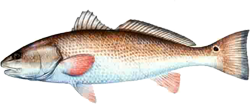](http://www.floridashorefishing.com/fish-profiles/redfish)[Redfish](/fish-profiles/redfish) [](http://www.floridashorefishing.com/fish-profiles/sheepshead)[Sheepshead](/fish-profiles/sheepshead) [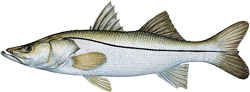](http://www.floridashorefishing.com/fish-profiles/snook)[Snook](/fish-profiles/snook) [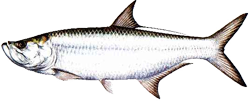](http://www.floridashorefishing.com/fish-profiles/tarpon)[Tarpon](/fish-profiles/tarpon) [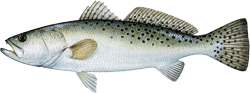](http://www.floridashorefishing.com/fish-profiles/trout)[Speckled Sea Trout](/fish-profiles/trout) [](http://www.floridashorefishing.com/fish-profiles/whiting)[Whiting](/fish-profiles/whiting) [](http://www.floridashorefishing.com/fish-profiles/mangrove-snapper)[Mangrove Snapper](/fish-profiles/mangrove-snapper) [](http://www.floridashorefishing.com/fish-profiles/flounder)[Flounder](http://www.floridashorefishing.com/fish-profiles/flounder) --- ### [Bait and Tackle](https://www.floridashorefishing.com/bait-and-tackle) **Published:** May 5, 2010 **Author:** Daniel Hagan **Content:** # Florida Bait and Tackle Shops [Suggest a Shop](http://www.floridashorefishing.com/suggest-a-shop)## East Central Florida **FEATURED** [**Donald’s Bait and Tackle** ](http://donaldsbaitandtackle.com/) - Phone: 386-760-1871 Address: 3514 S.Atlantic Ave, Daytona Beach Shores, Florida 32128 - Donald’s World Famous Bait & Tackle – The most convenient bait and tackle store to the ramps at the Dunlawton Bridge in Port Orange FL. **Daytona Beach / Ponce Inlet** - **Fishin’ Shack Bait & Tackle** – 3514 S.Atlantic Ave, Daytona Beach Shores, Florida 32128 - **Bait Shack** – 79 Dunlawton Ave. Port Orange, FL 32127 - Fisherman’s Stop – 929 North Beach St. Daytona Beach FL 32117 - **Inlet Harbor** – 133 Inlet Harbor Rd. Ponce Inlet, FL 32127 **Sebastian Inlet** - **Whitey’s** – 9030 S Highway A1A, Melbourne Beach, FL 32951 - **Reel ‘Em In Bait & Tackle** – 1671 US Highway 1, South Sebastian, FL 32958 ## Florida Keys **Key West** - **Key West Bait & Tackle –** 241 Margaret St. Old Town Key West ## North East Florida **St. Augustine** - **Oldest City Bait & Tackle –** 1949 A1A S, St. Augustine, FL 32080 ## Panhandle **East Point** - **Fisherman’s Choice Bait –** 330 U.S. 98, East Point, FL 32328 ## South West Florida **Boca Grande** - **TNT Shrimp and Sea Food –** 4369 El Jobean, Port Charlote FL 33953 **Ft. Myers** - **Bait ‘N’ Wait of Ft. Myers –** 17885 SanCarlos Blvd. Ft Myers FL 33931 - **Guts & Glory Bait Shop –** 17637 San Carlos Blvd Fort Myers Beach, FL 33931 ## South Florida **Miami** - **Gordon’s Bait & Tackle –** 2627 Southwest 27th ave. Miami, Fl 33133 - **Kendall Bait and Tackle –** 9402 S Dixie Highway Miami, FL 33156-2934 - Baitmasters of South Florida – 6911 NE 3rd Ave, Miami, FL 33138 **Ft. Lauderdale** - **Bill Boyds Tackle Shop –** 407 N. Andrews Ave. Ft. Lauderdale FL 33301 ## West Central Florida **Clearwater / St. Pete** - **Clearwater Bait & Tackl**e – 2999 Gulf to Bay Blvd. Clearwater, FL 33759 - **Bait House** – Clearwater City Marina Clearwater, FL 33755 - **SEMINOLE STREET BAIT HOUSE** – 190 Seminole St Clearwater, FL 33755 - **OSPREY BAY OUTDOORS** – 160 N Belcher Rd Clearwater, FL 33765 - **TOMS TACKLE SHO**P – 1625 N Fort Harrison Ave Clearwater, FL 33755 **Sarasota** - **All About Fishing –** 1115 S. Tamiami Trail Sarasota, FL 34236 [Suggest a Shop](http://www.floridashorefishing.com/suggest-a-shop) More to come soon! --- ### [Forum](https://www.floridashorefishing.com/forum) **Published:** December 13, 2011 **Author:** Daniel Hagan --- ### [Subscribe](https://www.floridashorefishing.com/subscribe) **Published:** July 13, 2015 **Author:** Daniel Hagan **Content:** Get Updates Via Email **Subscribe to FloridaShoreFishing.com** FloridaShoreFishing.com frequently ads new articles and blog posts to our website. If you subscribe to our feed via email, every time we add new content of a new blog post you will be notified by email. **WE WILL NEVER SPAM YOU!** We promise to NEVER send you spam and we promise to keep your email address 100% private, used ONLY to send you the updates! Get Updates Via Email --- ### [Fishing Techniques](https://www.floridashorefishing.com/fishing-techniques) **Published:** January 16, 2016 **Author:** Daniel Hagan **Content:** Featured Fishing Techniques Articles - [How to Keep Bait Shrimp Alive](http://www.floridashorefishing.com/keeping-shrimp-alive) - One of the absolute best baits for fishing in Florida waters is live shrimp. Live shrimp can be bought at most bait shops near the coast in Florida and are fairly affordable… - [Live or Frozen Shrimp for Bait](http://www.floridashorefishing.com/live-or-frozen-shrimp-for-bait) - The most popular bait used from Florida Shores is by far Shrimp. Live Shrimp can be found in just about any bait shop throughout the state and froze shrimp can be found in even more locations… - [Mangrove Snapper Rig](http://www.floridashorefishing.com/mangrove-snapper-rig) - A frequent question that I am asked is what rig do I use to catch Mangrove Snapper from Piers or Docks, and it is pretty simple. Mangrove Snapper have fairly good eyesight and are very skilled bait thieves.. More Fishing Techniques Articles - [To Free-Line or Not To Free-Line](http://www.floridashorefishing.com/to-free-line-or-not-to-free-line) - [Top Water Tactics to Land More Fish](http://www.floridashorefishing.com/top-water-tactics-to-land-more-fish) - [Circle Hooks for Sheepshead](http://www.floridashorefishing.com/circle-hook-sheepshead) - [When to Use Circle Hooks](http://www.floridashorefishing.com/when-to-use-a-circle-hook) - [Live Bait vs. Lure Fishing](http://www.floridashorefishing.com/live-bait-vs-lure-fishing) - [Berkley Gulp Shrimp for Flounder](http://www.floridashorefishing.com/berkley-gulp-shrimp-for-flounder) - [Mangroves and Mud Minnows](http://www.floridashorefishing.com/mangroves-and-mud-minnows) --- ### [Suggest a Shop](https://www.floridashorefishing.com/suggest-a-shop) **Published:** August 18, 2015 **Author:** Daniel Hagan **Content:** If you would like to suggest a bait and tackle shop, please fill out the form bellow! **Error:** Contact form not found. --- ### [Sheepshead](https://www.floridashorefishing.com/fish-profiles/sheepshead) **Published:** May 31, 2010 **Author:** Daniel Hagan **Content:** The **Sheepshead** gets its name from its mouth full of teeth that resemble those of its namesake. The large protruding teeth are used for cracking and crushing shellfish of all types. A very strong fish that is also quite tasty. **Species Name**Archosargus probatocephalus**Size**Average **Sheepshead** range from 1 pound to around 4 pounds. Fairly common up to 7 pounds and maxing out around 20 pounds.**Food Value**One of the absolute best. The Sheepshead diet of shellfish gives the meat a similar flavor.**Fight**A very strong fish with a very soft bite. Sheepshead use their flat shape to their advantage and can pull quite hard.**Equipment**Just about any saltwater equipment will work but the most important part of the rig is the hook. Sheepshead are also known as convict fish because of their stripes and ability to steal bait. A small, strong and VERY sharp hook will help increase hookups.**Baits**Fiddler crabs are the best bait. Cut shrimp, clams, oysters and cut blue crab also work well.**Limits**Min: 12″ Bag limit: 15**Useful Links** - [How to Catch Sheepshead](http://www.floridashorefishing.com/how-to-catch-sheepshead) - [Sheepshead – My love hate relationship – Editors Blog](http://www.floridashorefishing.com/sheepshead-my-love-hate-relationship) *Although we try to keep our database up to date, be sure to check with the FWC before harvesting any regulated fish.* --- ### [Snook](https://www.floridashorefishing.com/fish-profiles/snook) **Published:** May 4, 2010 **Author:** Daniel Hagan **Content:** Snook are not only prized for their sporty fight but they are also quite fine table fare. Because of this they have been over fished and strict limits have been placed on them.**Species Name**Centropomus undecimalis**Size**Averages 5-15lbs but can reach 50+**Food Value**One of the highest ranked fish! The filets are comparably larger than most other fish of the same size and a white and quite light. .**Fight**Also ranked high. Snook have been known to use power, speed and athletic jumps to shake a hook. The larger fish are quite strong and will challenge any angler.**Equipment**Snook are perfect to challenge spinning gear and baitcasters. When fishing passes with live bait light ocean gear will get great action with the bigger fish. Because of strict slots and limits circle hooks are recommended. **Baits**Croakers, mullet and pinfish top the list of live baits. Other live fish and shrimp will also work well. Snook are quite aggressive toward lures and can be caught on flies as well.**Limits**Slot: 28"-32" Bag Limit: 1 (Snook stamp required) *Although we try to keep our database up to date, be sure to check with the FWC before harvesting any regulated fish.* --- ### [Advertise](https://www.floridashorefishing.com/advertise) **Published:** April 13, 2014 **Author:** Daniel Hagan **Content:** **Why Advertise on FloridaShoreFishing.com** FloridaShoreFishing.com is a highly targeted website catering to those who fish from the shore in Florida. Our audience is highly engaged in learning about techniques, locations, effective lures and much more related to fishing in Florida. **Demographic Stats** - 96% of visitors are from the USA - 81% of visitors are from Florida - 84% of visitors are Male - 8% of visitors are planning to visit Florida **Traffic Statistics** Monthly Averages - 8,000 Visitors - 18,000 Page Views *Monthly Traffic Growth* - 25.7% Growth (Q2 growth compared to Q1) - 2.5% Growth in Page Views Per Visit (Q2 Month to Month growth average) **Advertising Options** **Please [contact us](/contacts) to find out our current advertising options!** --- ### [Redfish](https://www.floridashorefishing.com/fish-profiles/redfish) **Published:** May 4, 2010 **Author:** Daniel Hagan **Content:** The Redfish, also known as the Red Drum, is one of the best inshore fighters. They are also one of the best on the table, making this fish the top of the list for many anglers.**Species Name**Sciaenops ocellatus**Size**Averages 2-12bs, common up to 30lbs but can reach 90+**Food Value**One of the best, up to about 10 pounds. Larger fish loose the firmness and become course.**Fight**Redfish display both brute strength and stamina. They are well known for long, strong runs that are followed up only by another run!**Equipment**For smaller Redfish spinning and baitcasting gear is plenty. The larger fish require a little bit strong gear. For the largest fish small ocean gear will get action and large spinning and baitcasting gear will be a challenge for the anger. **Baits**Live finger mullet are the best but many small live fish will produce. Live shrimp and small crabs work well too. Redfish will often take spoons, jigs, plugs and flies.**Limits**Slot: 18"-27" Bag Limit: 1 *Although we try to keep our database up to date, be sure to check with the FWC before harvesting any regulated fish.* --- ### [Trout](https://www.floridashorefishing.com/fish-profiles/trout) **Published:** May 4, 2010 **Author:** Daniel Hagan **Content:** The Spotted Sea Trout is one of Florida’s more popular inshore game fish. With flashy, and splashy fights and a very good meat the Trout is on the top of the list for many anglers.**Species Name**Cynoscion nebulosus**Size**Averages 1-2bs, common at 5lbs but can reach 15+**Food Value**Very good when in the slot. Larger fish are often full of worms and the meat is less firm.**Fight**A fun, flashy fight. Trout spend a lot of time on the top of the water splashing. They are aggressive, but only the larger trout can pull off any line on a run.**Equipment**Trout are not the strongest fish in the ocean so spinning and baitcasting gear will be more than enough to land this fish. They are spunky, so they are quite fun on lighter gear with line less than 10 pound test.**Baits**Live shrimp is the best bait for trout, but finger mullet are a close second. They are aggressive towards most smaller bait fish and are also aggressive towards many lures.**Limits**Slot: 15″-20″ Bag Limit: 4 or 5 (Depends on region)*Although we try to keep our database up to date, be sure to check with the FWC before harvesting any regulated fish.* --- ### [Quick Tip Archive](https://www.floridashorefishing.com/quick-tip-archive) **Published:** June 9, 2014 **Author:** Daniel Hagan **Content:** We frequently post Quick Tips on our [Social Media Pages](/social-media), here is an archive of those tips: - Quick Tip: Sheepshead have VERY tough mouths, make sure to use an ultra sharp hook and when a bite is detected set the hook hard! --- - Quick Tip: When fishing for flounder patients is vital. Once a strike is detected, allow a few seconds before setting the hook! --- - Quick Tip: As the waters cool off with the onset of winter, the fish slow down, your bait presentation should slow down as well --- - Quick Tip: Hot water will reduce live baits life span. Keep the water cool and your bait will live longer! --- - Quick Tip: Black Drum feed primary by scent. Using fresh peeled shrimp will often work better than live shrimp. --- - Quick Tip: Mangrove Snapper are almost always found near cover and run for that cover when hooked. Pull the fish away from the cover quickly! --- - Quick Tip: When using frozen shrimp, make sure they are fresh. They will stay on the hook longer than shrimp frozen multiple times! \#Fishing --- - Quick Tip: Fluorocarbon is more abrasion resistant than monofiliment, and more expensive. Use it as a leader to help prevent breakoffs #Fishing --- --- ### [Social Media](https://www.floridashorefishing.com/social-media) **Published:** June 9, 2014 **Author:** Daniel Hagan **Content:** --- [ **Follow Us on Twitter**](https://twitter.com/FLShoreFishing) – Tips and tricks that are less than 140 Characters – Updates from FloridaShoreFishing.com --- [ **Become our Facebook Friend**](https://www.facebook.com/FLShoreFishing) – Message us anytime for answer to your questions – Updates from FloridaShoreFishing.com --- [**Follow Us with an RSS Reader**](/feed) – Read every update instantly with your favorite RSS reader – Add us to your list! ---  **Get our Feed Via Email** – Get every update to FloridaShoreFishing.com in your email box *(No SPAM Guaranteed)* – Enter your email address: --- --- ### [Haulover Canal](https://www.floridashorefishing.com/haulover-canal) **Published:** May 10, 2014 **Author:** Daniel Hagan **Content:** ## Haulover Canal **Florida Shore Fishing Info:** - [Haulover Canal – Free Line for Success](http://www.floridashorefishing.com/haulover-free-line) **Address:** Courtenay Pkwy N Titusville, FL **Common Catches:** Redfish, Black Drum, Trout, Snook, Jack, Shrimp **Amenities**: Boat Ramp **Pictures:** 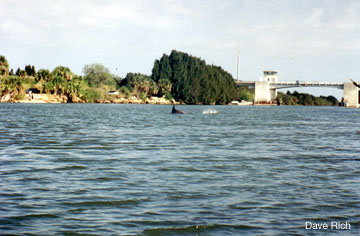 **Reports:** - N/A --- ### [Fishing Holes](https://www.floridashorefishing.com/fishing-holes) **Published:** May 5, 2010 **Author:** Daniel Hagan **Content:** **East Central** - [Canaveral National Seashore](http://www.floridashorefishing.com/canaveral-national-seashore) - [Haulover Canal](http://www.floridashorefishing.com/haulover-canal) - [Cocoa Beach Fishing Pier](http://www.floridashorefishing.com/fishing-holes/cocoa-beach-fishing-pier) - [Inlet Harbor Fishing Pier](http://www.floridashorefishing.com/fishing-holes/inlet-harbor-fishing-pier) - [Ponce Inlet Light House Point Park](http://www.floridashorefishing.com/fishing-holes/ponce-inlet-lighthouse-point-park) - [Sunglow Fishing Pier](http://www.floridashorefishing.com/fishing-holes/sunglow-fishing-pier) - [New Smyrna North Causeway Pier](http://www.floridashorefishing.com/fishing-holes/north-causeway-fishing-pier) **West Central** - [Pier 60](http://www.floridashorefishing.com/fishing-holes/pier-60) **South West** - [Ft. Myers Beach Fishing Pier](http://www.floridashorefishing.com/fishing-holes/ft-myers-beach-fishing-pier) If you know of any fishing holes you would like to see listed, please contact us using the link at the top of the page! --- ### [sheepshead header](https://www.floridashorefishing.com/sheepshead-header) **Published:** March 31, 2014 **Author:** Daniel Hagan **Content:** ## More Sheepshead Info --- - [Sheepshead – Fish Profile](http://www.floridashorefishing.com/fish-profiles/sheepshead) - [How To Catch Sheepshead](/how-to-catch-sheepshead) - [Circle Hook for Sheepshead](http://www.floridashorefishing.com/circle-hook-sheepshead) - [Sheepshead Blog Posts](http://www.floridashorefishing.com/?s=sheepshead+blog) --- ### [Blog](https://www.floridashorefishing.com/blog) **Published:** March 31, 2014 **Author:** Daniel Hagan **Content:** Our editors Blog --- ## [Editors Blog: July 2016](https://www.floridashorefishing.com/editors-blog-july-2016) Welcome to the July 2016 edition of Florida Shore Fishing Editors Blog. In this blog entry I am going to write about whats new here at FloridaShoreFishing.com and a brief preview of whats coming in the near future, but first, a quick story about one of my recent fishing trips. Sunglow Pier – July 10th July \[…\][Read More »](https://www.floridashorefishing.com/editors-blog-july-2016) --- ## [Editors Blog: Welcome to 2016](https://www.floridashorefishing.com/editors-blog-welcome-to-2016) FloridaShoreFishing.com would like to welcome our readers to 2016. In this, our second edition of the Editors Blog, I will be giving a look back at the year that was 2015 here and FloridaShoreFishing.com and what is upcoming in 2016. The Year That Was Here are some of our highlights from 2015. Most Popular Content \[…\][Read More »](https://www.floridashorefishing.com/editors-blog-welcome-to-2016) --- ## [Editors Blog: 10/26/2015](https://www.floridashorefishing.com/editors-blog-10262015) Welcome to the first edition of FloridaShoreFishing.com’s Editors Blog. This blog will is intended to be a monthly update from the editor on what is new, what is coming soon and any thing else related to FloridaShoreFishing.com. Whats New Online Magazine Format Our loyal readers may have noticed over the past few months we have \[…\][Read More »](https://www.floridashorefishing.com/editors-blog-10262015) --- ## [Wanted: Bait and Tackle Listings](https://www.floridashorefishing.com/wanted-bait-and-tackle-listings) FloridaShoreFishing.com is looking to expand its Bait and Tackle List. If you are an owner/employee of a bait and tackle shop, or simply know of one that you think should be on our list, please Contact Us (click here) Please include the following: Name of shop Location (address) Phone Number Any other information you would \[…\][Read More »](https://www.floridashorefishing.com/wanted-bait-and-tackle-listings) --- ## [Live Bait vs. Lure Fishing](https://www.floridashorefishing.com/live-bait-vs-lure-fishing) This is an editorial blog post by our editor Dan Hagan. One of the longest running debates among anglers is whether to use live bait or lures. The debate focuses on two points, the effectiveness and the enjoyability of both techniques. After many years of fishing from Florida’s Shores, I can say with great conviction \[…\][Read More »](https://www.floridashorefishing.com/live-bait-vs-lure-fishing) --- ## [Live blogging: 5/15/2014](https://www.floridashorefishing.com/live-blogging-5152014) 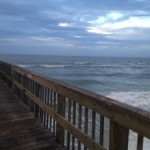Welcome to the live blog! I arrived at Sunglow Pier at 6:15 am. Seas are 2-4 feet with a heavy north current. Using live shrimp and mud minnows for bait! 6:30am: Bait in the water! 7:00am: 1/2 hour fight with a 5′ hammerhead shark! Got him to the pier and cut him off! Good fight! \[…\][Read More »](https://www.floridashorefishing.com/live-blogging-5152014) --- ## [The Summer Heat is Here](https://www.floridashorefishing.com/the-summer-heat-is-here) I woke up this morning with a plan to spend most of the day fishing Florida’s shores. Here is the plan I laid out for the day: Arrive at Dunlawton Flat Bridge 2 hours before sunrise to fish for trout/snook/flounder At sunrise move to Sunglow Pier for breakfast while fishing 1 hour before slack tide \[…\][Read More »](https://www.floridashorefishing.com/the-summer-heat-is-here) --- ## [Flattie Fishing](https://www.floridashorefishing.com/flattie-fishing) One of my favorite fish to eat is the Flounder. They have a light, flaky, subtly flavored meat that works well with any recipe calling for white meat fish. Another bonus is they are abundant during the warmer months around Florida’s Shores. Today I decided I would go on a hunt for some dinner. I \[…\][Read More »](https://www.floridashorefishing.com/flattie-fishing) --- ## [Just one of those days!](https://www.floridashorefishing.com/just-one-of-those-days) 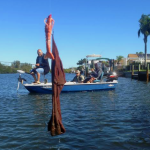I set out this morning with the intentions of catching a few Redfish and Trout in the Thousand Islands area of Coca Beach. I arrived at my “secret” spot around sun rise and started throwing an assortment of Gulp Alive lures in hopes of accomplishing my goal. After a few hours of failing to do so, \[…\][Read More »](https://www.floridashorefishing.com/just-one-of-those-days) --- ## [Sheepshead – My love hate relationship!](https://www.floridashorefishing.com/sheepshead-my-love-hate-relationship) 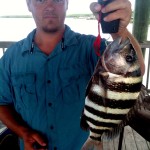I have been fishing Florida’s Shores for over 25 years now. I have learned many things, and have many things yet to learn. I have developed techniques and found fish that I love to catch. But there is one fish that I have grown to “Love to Hate” The Sheepshead! The Sheepshead is one of \[…\][Read More »](https://www.floridashorefishing.com/sheepshead-my-love-hate-relationship) --- --- ### [Whats Happening](https://www.floridashorefishing.com/whats-happening) **Published:** December 14, 2011 **Author:** Daniel Hagan **Content:** [](http://www.floridashorefishing.com/wp-content/uploads/2011/12/2013-newlook.png) ### New Year Brings a New Look With the coming of the New Year comes a new look and a new feel for FloridaShoreFishing.com The new design will not only allow for quicker and easier navigation of the site but it will also make it easier to find what you are looking for. All content will be grouped into categories and will be easily searchable. The new design should be active before the end of January. --- ### [Ft. Myers Beach Fishing Pier](https://www.floridashorefishing.com/fishing-holes/ft-myers-beach-fishing-pier) **Published:** February 2, 2012 **Author:** Daniel Hagan **Content:** ## Pier 60 – Clearwater Beach **Address:** 950 Estero Blvd. Ft. Myers Beach, FL 33931 **Common Catches:** Snook, Trout, Redfish, Flounder, Sheapshead, Tarpon, Snapper **Amenities**: Bait shop (with rental poles), gift-shop, nearby restaurants **Notes:** **Florida Shore Fishing Reports:** - N/A **Other Reports:** - N/A --- ### [Gallery](https://www.floridashorefishing.com/gallery) **Published:** December 19, 2011 **Author:** Daniel Hagan **Content:** ### Florida Shore Fishing Photo Gallery %%wppa%% --- ### [Join Florida Shore Fishing](https://www.floridashorefishing.com/join-florida-shore-fishing) **Published:** December 14, 2011 **Author:** Daniel Hagan **Content:**  # Help Wanted – Blogger Have you ever wanted to blog about fishing from Florida Shores? Florida Shore Fishing is looking for a volunteer blogger to contribute to the site. We are looking for an avid fishermen to blog about their fishing adventures, tips, fishing holes and anything else fishing related. The blogger will have an entire section of Florida Shore Fishing dedicated to them and have full access to this section for adding and removing content. If you are interested in blogging on Florida Shore Fishing, please fill out the form bellow and we will contact you soon! --- ### [Pier 60 - Clearwater Beach](https://www.floridashorefishing.com/fishing-holes/pier-60) **Published:** September 15, 2010 **Author:** Daniel Hagan **Content:** ## Pier 60 – Clearwater Beach **Address:** 1 Causeway Blvd. Clearwater Beach, FL 33767 **Common Catches:** Snook, Trout, Redfish, Flounder, Sheapshead, Tarpon, Snapper **Amenities**: Bait shop (with rental poles), resturant, bathrooms **Pictures:**  [](http://www.floridashorefishing.com/wp-content/uploads/2010/06/northcauseway.jpg) [](http://www.floridashorefishing.com/wp-content/uploads/2010/05/inletharbor.jpg) [](http://www.floridashorefishing.com/wp-content/uploads/2010/05/sunglow.jpg) **Notes:** **Florida Shore Fishing Reports:** - N/A **Other Reports:** - N/A --- ### [Ponce Inlet Lighthouse Point Park](https://www.floridashorefishing.com/fishing-holes/ponce-inlet-lighthouse-point-park) **Published:** September 14, 2010 **Author:** Daniel Hagan **Content:** ## Ponce Inlet Lighthouse Point Park **Address:** 500 S. Atlantic Ave Ponce Inlet, FL **Common Catches:** Redfish, Snook, Tarpon, Black Drum, Sheepshead, Blue Fish **Amenities**: 52 acher park, walking paths, beaches, security **Pictures:** 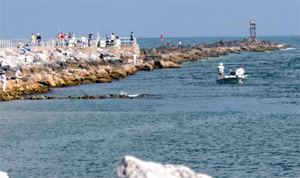 [](http://www.floridashorefishing.com/wp-content/uploads/2010/06/northcauseway.jpg) [](http://www.floridashorefishing.com/wp-content/uploads/2010/05/inletharbor.jpg) [](http://www.floridashorefishing.com/wp-content/uploads/2010/05/sunglow.jpg) **Notes:** $5.00 per car entry fee **Florida Shore Fishing Reports:** - N/A **Other Reports:** - N/A --- ### [Cocoa Beach Fishing Pier](https://www.floridashorefishing.com/fishing-holes/cocoa-beach-fishing-pier) **Published:** September 14, 2010 **Author:** Daniel Hagan **Content:** ## Cocoa Beach Fishing Pier **Address:** 401 Meade Ave Cocoa Beach, FL 32931 **Common Catches:** Whiting, Black Drum, Mangrove Snapper, Sheepshead, Snook, Flounder **Amenities**: Bait shop (with rental poles), resturant, parking **Pictures:** 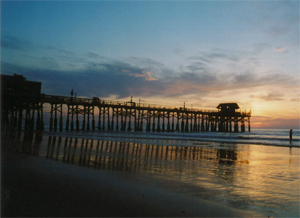 [](http://www.floridashorefishing.com/wp-content/uploads/2010/06/northcauseway.jpg) [](http://www.floridashorefishing.com/wp-content/uploads/2010/05/inletharbor.jpg) [](http://www.floridashorefishing.com/wp-content/uploads/2010/05/sunglow.jpg) **Notes:** **Florida Shore Fishing Reports:** - N/A **Other Reports:** - N/A --- ### [Fishing](https://www.floridashorefishing.com/fishing) **Published:** August 14, 2010 **Author:** Daniel Hagan --- ### [Canaveral National Seashore](https://www.floridashorefishing.com/fishing-holes/canaveral-national-seashore) **Published:** June 28, 2010 **Author:** Daniel Hagan **Content:** ## Canaveral National Seashore **Address:** 7600 South Atlantic Avenue New Smyrna Beach, FL 32169 **Common Catches:** Whiting, Black Drum, Pompano, Blue Fish, Shark **Amenities**: Nearby bait shops, great scenery. **Pictures:** [](http://www.floridashorefishing.com/wp-content/uploads/2010/06/canaveral.jpg) [](http://www.floridashorefishing.com/wp-content/uploads/2010/05/inletharbor.jpg) [](http://www.floridashorefishing.com/wp-content/uploads/2010/05/sunglow.jpg) **Notes:** **Florida Shore Fishing Reports:** - N/A **Other Reports:** - N/A --- ### [North Causeway Fishing Pier](https://www.floridashorefishing.com/fishing-holes/north-causeway-fishing-pier) **Published:** June 28, 2010 **Author:** Daniel Hagan **Content:** ## New Smyrna North Causeway Fishing Pier **Address:** 500 North Causeway New Smyrna Beach, FL 32169 **Common Catches:** Black Drum, Mangrove Snapper, Sheepshead, Snook, Flounder, Trout **Amenities**: Very close parking. Baitshop within a 2 minute drive. **Pictures:** [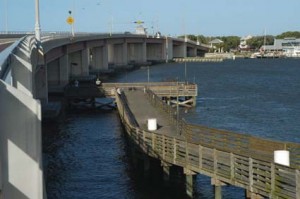](http://www.floridashorefishing.com/wp-content/uploads/2010/06/northcauseway.jpg) [](http://www.floridashorefishing.com/wp-content/uploads/2010/05/inletharbor.jpg) [](http://www.floridashorefishing.com/wp-content/uploads/2010/05/sunglow.jpg) **Notes:** **Florida Shore Fishing Reports:** - N/A **Other Reports:** - N/A --- ### [Inlet Harbor Fishing Pier ](https://www.floridashorefishing.com/fishing-holes/inlet-harbor-fishing-pier) **Published:** May 10, 2010 **Author:** Daniel Hagan **Content:** **Address:** 133 Inlet Harbor Road Ponce Inlet, FL 32127 **Common Catches:** Black Drum, Mangrove Snapper, Bluefish, Whiting, Sharks **Amenities**: Frozen Bait, Live Bait, Gift Shop, Full Bar, Restaurant, Seating, Covered Fishing Area, Cleaning Stations. **Pictures:** [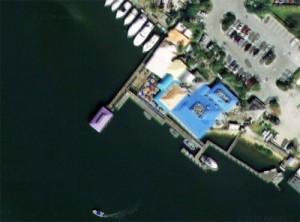](http://www.floridashorefishing.com/wp-content/uploads/2010/05/inletharbor.jpg) [](http://www.floridashorefishing.com/wp-content/uploads/2010/05/sunglow.jpg) **Notes:** **Florida Shore Fishing Reports:** - N/A **Other Reports:** - N/A --- ### [Sunglow Fishing Pier](https://www.floridashorefishing.com/fishing-holes/sunglow-fishing-pier) **Published:** May 10, 2010 **Author:** Daniel Hagan **Content:** **Address:** 3701 South Atlantic Avenue Daytona Beach, FL 32117 **Common Catches:** Black Drum, Pompano, Trout, Whiting, Sharks **Amenities**: Frozen Bait, Gift Shop, Full Bar, Restaurant, Seating, Cleaning Stations. **Pictures:** [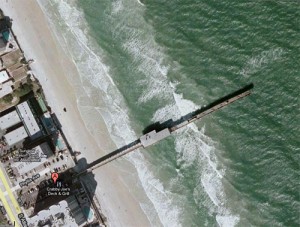](http://www.floridashorefishing.com/wp-content/uploads/2010/05/sunglow.jpg) **Notes:** **Florida Shore Fishing Reports:** - [Mixed Bag at Sunglow](http://www.floridashorefishing.com/mixed-bag-at-sunglow) **Other Reports:** --- ### [Tarpon](https://www.floridashorefishing.com/fish-profiles/tarpon) **Published:** May 4, 2010 **Author:** Daniel Hagan **Content:** The Silver King is one of the largest and strongest inshore fish around. Famous for a spectacular fight with lots for runs and acrobatic jumps, the Tarpon is one of the top game fish.**Species Name**Megalops atlanticus**Size**Averages 50-75lbs but can reach near 300.**Food Value**None. Prized for its fight, not its meat.**Fight**The Tarpon is famous for its fight. It puts on a show for any angler who hooks into one. With strong runs and frequent jumps Tarpon are quite the challenge!**Equipment**Tarpon come in all sizes so the equipment should match the size of tarpon targeted. Larger tarpon require heavy ocean gear while medium size tarpon are fun on heavy baitcasting gear. Circle hooks are recommended to aid in a safe and healthy release. **Baits**Mullet and Squirrel Fish are the top live baits but tarpon will also take most small live fish and live crabs. They are known to take many lures and are often caught on flies.**Limits**Slot: none Bag Limit: 1 ($50.00 kill tag required to harvest fish) *Although we try to keep our database up to date, be sure to check with the FWC before harvesting any regulated fish.* --- ## Bait Shops ### [Juno Bait - Juno Beach](https://www.floridashorefishing.com/bait_shop/juno-bait-juno-beach) **Published:** September 14, 2026 **Author:** Daniel Hagan **Content:** # Juno Bait Juno Beach, Florida 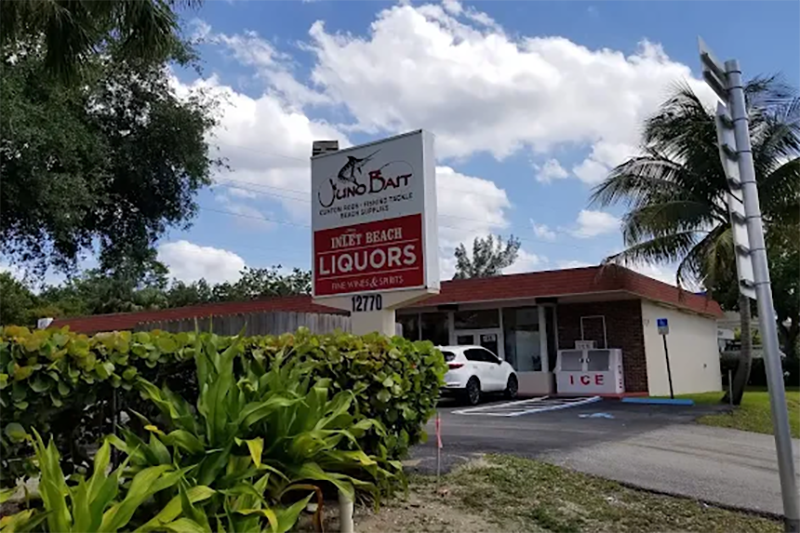 📍 12770 US 1 Juno Beach, Florida 33408 ☎ (561) 694-2797 🌐 [Visit Website ↗](http://JunoBait.com) ◷ **Hours** Mon – Fri: 7:00 AM – 6:00 PM Sat: 6:00 AM – 6:00 PM Sun: 6:00 AM – 5:00 PM ## About the Shop Juno Bait is a full-service bait and tackle shop serving Juno Beach and northern Palm Beach County. The shop carries a wide selection of bait, tackle, lures, rods, reels and fishing apparel for local inshore, surf, pier and offshore anglers. Juno Bait also offers reel and rod repair services and provides local fishing information through its regularly updated fishing reports. Its location makes it a convenient stop for anglers heading to the beaches, inlets, Intracoastal Waterway and other fishing areas around Juno Beach and Jupiter. ### 🐟 Bait Available - Live Bait - Frozen Bait - … More ### 🎣 Tackle & Services - Rods & Reels - Terminal Tackle - Rod Repair - Reel Repair - Local Fishing Advice ### 📍 Nearby Fishing - Juno Beach Pier - Juno Beach Surf - Jupiter Inlet - Loxahatchee River - Intracoastal Waterway ### ★ Shop Highlights - Full-service tackle shop - Rod & reel repairs - Local fishing knowledge - Inshore & offshore - Weekly Local Reports **Bait Shop Categories:** Southeast Florida --- ### [Riviera Bait & Tackle - St. Pete](https://www.floridashorefishing.com/bait_shop/riviera-bait-tackle-st-pete) **Published:** September 14, 2026 **Author:** Daniel Hagan **Content:** # Riviera Bait & Tackle Saint Petersburg, Florida 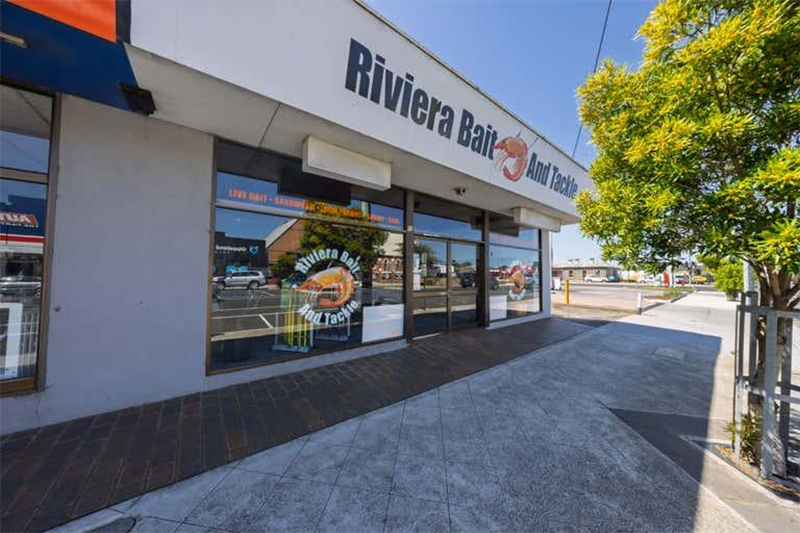 📍 1106 94th Avenue North Saint Petersburg, Florida 33702 ☎ (727) 954-6365 🌐 [Visit Website ↗](https://www.rivierabait.com/) ◷ **Hours** Mon – Sat: 6:00 AM – 7:00 PM Sun: 6:00 AM – 5:00 PM ## About the Shop Riviera Bait & Tackle is a locally owned bait and tackle shop serving anglers in St. Petersburg and the Tampa Bay area. The shop carries live shrimp, pinfish and fiddler crabs along with fishing tackle, lures, rods, reels, line and accessories for inshore and offshore fishing. Riviera also offers custom rod building, rod and reel repairs, line spooling and local fishing advice. Whether you’re targeting snook, redfish, speckled trout, sheepshead or other Tampa Bay species, the staff can help you choose the right bait and tackle for local conditions. ### 🐟 Bait Available - Live Shrimp - Live Pinfish - Live Fiddler Crabs - Frozen Bait ### 🎣 Tackle & Services - Rods & Reels - Terminal Tackle - Rod Repair - Reel Repair - Local Fishing Advice ### 📍 Nearby Fishing - Weedon Island Preserve - Gandy Bridge - St. Pete Pier - Tampa Bay Grass Flats - Skyway Fishing Pier ### ★ Shop Highlights - Locally owned shop - Custom rod building - Rod & reel repairs - Local fishing knowledge - Inshore & offshore **Bait Shop Categories:** Tampa Bay & West Central Florida --- ### [The Fishing Hole - Daytona Beach](https://www.floridashorefishing.com/bait_shop/the-fishing-hole-daytona-beach) **Published:** September 14, 2026 **Author:** Daniel Hagan **Content:** # The Fishin’ Hole Daytona Beach, Florida 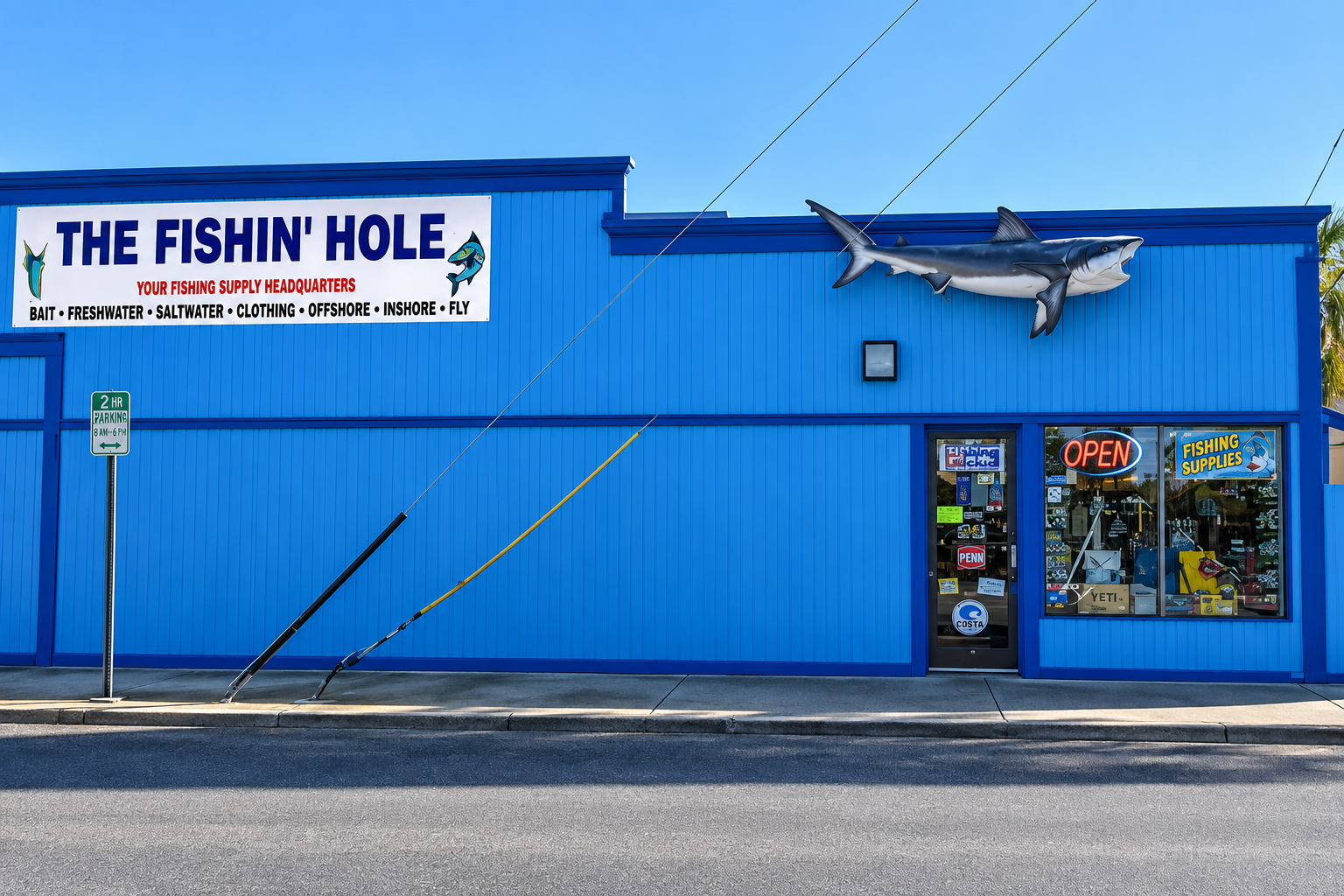 📍 450 North Beach Street Daytona Beach, Florida 32114 ☎ [(386) 252-9804](tel:3867614233) 🌐 [Visit Website ↗](https://www.rickstackleandbait.com/daytona-fishin-hole) ◷ **Hours** Mon – Sat: 7:00 AM – 7:00 PM Sat: 6:00 AM – 7:00 PM Sun: 6:00 AM – 6:00 PM ## About the Shop The Fishin’ Hole has been serving Daytona Beach anglers since 1959 from its location on North Beach Street near the Main Street Bridge. The shop carries fishing gear for inshore, offshore, freshwater and saltwater anglers, along with live and frozen bait, rods, reels, terminal tackle and other fishing supplies. The Fishin’ Hole also offers line spooling, reel parts, and rod and reel repair services. Its location near the Halifax River makes it a convenient stop for anglers heading to local bridges, beaches and other fishing areas around Daytona Beach. The staff is also known for providing local fishing information and helping anglers choose appropriate bait and tackle for current conditions. ### 🐟 Bait Available - Live Shrimp - Premium offshore bait - Frozen Bait ### 🎣 Tackle & Services - Rods & Reels - Terminal Tackle - Rod Repair - Reel Repair - Local Fishing Advice ### 📍 Nearby Fishing - Halifax River / Intracostal - Main Street Bridge - Main Street Pier - Daytona Beach Surf - Ponce Inlet ### ★ Shop Highlights - Serving Daytona since 1959 - Locally operated - Inshore and offshore tackle - Freshwater and saltwater gear - Knowledgeable local staff **Bait Shop Categories:** Central East Coast --- ## Tags ### [Pompano](https://www.floridashorefishing.com/tag/pompano) --- ### [Pompano Fish](https://www.floridashorefishing.com/tag/pompano-fish) --- ### [Whiting](https://www.floridashorefishing.com/tag/whiting) --- ### [Bluefish](https://www.floridashorefishing.com/tag/bluefish) --- ### [Tips](https://www.floridashorefishing.com/tag/tips) --- ### [Flounder](https://www.floridashorefishing.com/tag/flounder) --- ### [Seasonal](https://www.floridashorefishing.com/tag/seasonal) --- ### [How To](https://www.floridashorefishing.com/tag/how-to) --- ### [Mangrove Snapper](https://www.floridashorefishing.com/tag/mangrove-snapper) --- ### [Rig](https://www.floridashorefishing.com/tag/rig) --- ### [Live Bait](https://www.floridashorefishing.com/tag/live-bait) --- ### [Surf Fishing](https://www.floridashorefishing.com/tag/surf-fishing) --- ### [Infographic](https://www.floridashorefishing.com/tag/infographic) --- ### [Sheepshead](https://www.floridashorefishing.com/tag/sheepshead) --- ### [Gear](https://www.floridashorefishing.com/tag/gear) --- ### [Redfish](https://www.floridashorefishing.com/tag/redfish) --- ### [Sheepshead Fishing](https://www.floridashorefishing.com/tag/sheepshead-fishing) --- ### [Mud Minnows](https://www.floridashorefishing.com/tag/mud-minnows) --- ### [Top 10](https://www.floridashorefishing.com/tag/top-10) --- ### [Techniques](https://www.floridashorefishing.com/tag/techniques) --- ### [Reports](https://www.floridashorefishing.com/tag/reports) --- ### [Locations](https://www.floridashorefishing.com/tag/locations) --- ### [Snook](https://www.floridashorefishing.com/tag/snook) --- ### [Beach](https://www.floridashorefishing.com/tag/beach) --- ### [Shrimp](https://www.floridashorefishing.com/tag/shrimp) --- ### [Shrimp run](https://www.floridashorefishing.com/tag/shrimp-run) --- ### [Central Florida](https://www.floridashorefishing.com/tag/central-florida) --- ### [Peacock Bass](https://www.floridashorefishing.com/tag/peacock-bass) --- ### [South Florida](https://www.floridashorefishing.com/tag/south-florida) --- ### [Freshwater](https://www.floridashorefishing.com/tag/freshwater) --- ### [black drum](https://www.floridashorefishing.com/tag/black-drum) --- ### [drum](https://www.floridashorefishing.com/tag/drum) --- ### [live shrimp](https://www.floridashorefishing.com/tag/live-shrimp) --- ### [bait](https://www.floridashorefishing.com/tag/bait) --- ### [frozen shrimp](https://www.floridashorefishing.com/tag/frozen-shrimp) --- ### [frozen bait](https://www.floridashorefishing.com/tag/frozen-bait) --- ### [Minnow](https://www.floridashorefishing.com/tag/minnow) --- ### [beach fishing](https://www.floridashorefishing.com/tag/beach-fishing) --- ### [surf](https://www.floridashorefishing.com/tag/surf) --- ### [basics](https://www.floridashorefishing.com/tag/basics) --- ### [mullet](https://www.floridashorefishing.com/tag/mullet) --- ### [Mangrove](https://www.floridashorefishing.com/tag/mangrove) --- ### [Snapper](https://www.floridashorefishing.com/tag/snapper) --- ### [inshore](https://www.floridashorefishing.com/tag/inshore) --- ### [Pier](https://www.floridashorefishing.com/tag/pier) --- ### [pier fishing](https://www.floridashorefishing.com/tag/pier-fishing) --- ### [structure](https://www.floridashorefishing.com/tag/structure) --- ### [structure fishing](https://www.floridashorefishing.com/tag/structure-fishing) --- ### [lists](https://www.floridashorefishing.com/tag/lists) --- ### [rigs](https://www.floridashorefishing.com/tag/rigs) --- ### [tackle](https://www.floridashorefishing.com/tag/tackle) --- ### [crabs](https://www.floridashorefishing.com/tag/crabs) --- ### [catching live bait](https://www.floridashorefishing.com/tag/catching-live-bait) --- ### [trout](https://www.floridashorefishing.com/tag/trout) --- ### [sea trout](https://www.floridashorefishing.com/tag/sea-trout) --- ### [specks](https://www.floridashorefishing.com/tag/specks) --- ### [Spanish Mackerel](https://www.floridashorefishing.com/tag/spanish-mackerel) --- ### [Mackerel](https://www.floridashorefishing.com/tag/mackerel) --- ### [Winter](https://www.floridashorefishing.com/tag/winter) --- ### [top water](https://www.floridashorefishing.com/tag/top-water) --- ### [speckled trout](https://www.floridashorefishing.com/tag/speckled-trout) --- ### [piers](https://www.floridashorefishing.com/tag/piers) --- ### [Snook fishing](https://www.floridashorefishing.com/tag/snook-fishing) --- ### [Circle Hook](https://www.floridashorefishing.com/tag/circle-hook) --- ### [tecniques](https://www.floridashorefishing.com/tag/tecniques) --- ### [minnows](https://www.floridashorefishing.com/tag/minnows) --- ### [run](https://www.floridashorefishing.com/tag/run) --- ### [jigging](https://www.floridashorefishing.com/tag/jigging) --- ### [report](https://www.floridashorefishing.com/tag/report) --- ### [sunglow](https://www.floridashorefishing.com/tag/sunglow) --- ### [recipies](https://www.floridashorefishing.com/tag/recipies) --- ### [night fishing](https://www.floridashorefishing.com/tag/night-fishing) --- ### [review](https://www.floridashorefishing.com/tag/review) --- ### [lures](https://www.floridashorefishing.com/tag/lures) --- ### [gulp](https://www.floridashorefishing.com/tag/gulp) --- ### [jetty](https://www.floridashorefishing.com/tag/jetty) --- ### [blog](https://www.floridashorefishing.com/tag/blog) --- ### [main street pier](https://www.floridashorefishing.com/tag/main-street-pier) --- ### [bridge fishing](https://www.floridashorefishing.com/tag/bridge-fishing) --- ### [tools](https://www.floridashorefishing.com/tag/tools) --- ### [mosquito lagoon](https://www.floridashorefishing.com/tag/mosquito-lagoon) --- ### [cow nose ray](https://www.floridashorefishing.com/tag/cow-nose-ray) --- ### [Permit](https://www.floridashorefishing.com/tag/permit) --- ### [How to Catch](https://www.floridashorefishing.com/tag/how-to-catch) --- ### [Flats Fishing](https://www.floridashorefishing.com/tag/flats-fishing) --- ### [cold water](https://www.floridashorefishing.com/tag/cold-water) --- ## Bait Shop Categories ### [Tampa Bay & West Central Florida](https://www.floridashorefishing.com/bait_shop/category/tampa-bay-west-central-florida) --- ### [Southeast Florida](https://www.floridashorefishing.com/bait_shop/category/southeast-florida) --- ### [Central East Coast](https://www.floridashorefishing.com/bait_shop/category/central-east-coast) ---